White Spots on Maidenhair Fern: Causes, Checks & Fixes
Quick answer
White spots on Maidenhair Fern usually come from hard-water residue, powdery mildew, mealybugs, or fern scale-not random disease. First step: wipe one spot with a damp cloth and inspect with a hand lens before you spray anything.
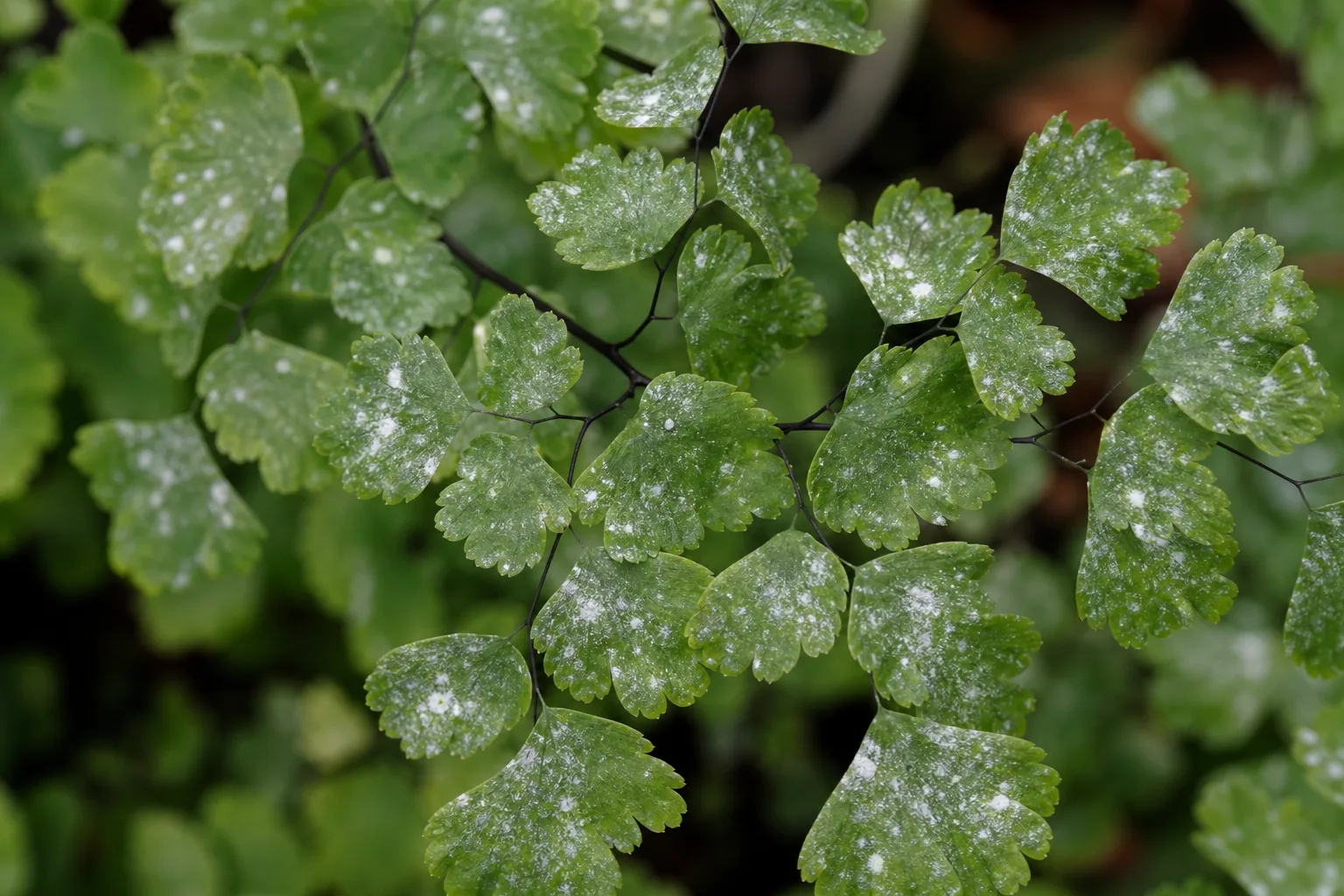
White Spots on Maidenhair Fern: Causes, Checks & Fixes
This guide covers white spots on Maidenhair Fern. See also the general White Spots guide, watering, and light pages for this plant.
White Spots on Maidenhair Fern: Causes, Checks & Fixes
Quick answer
White spots on Maidenhair Fern (Adiantum raddianum) rarely mean one disease. The same pale fleck can be hard-water mineral crust from misting or splashing, powdery mildew in stagnant humid air, mealybugs hiding in frond joints, or fern scale male covers that look like snowy dust on thin black stems.
First step: wipe one spot with a damp cloth and inspect with a hand lens. If the mark vanishes and does not return within days, you likely have residue-not an active infection. If the spot smears as dry powder and new patches appear on neighboring leaflets, suspect mildew. Cottony clumps with visible bodies beneath are pests. Flat white ridges that stay put when wiped may be scale.
Do not spray fungicide or insecticide until you know which pattern you have. Maidenhair Fern leaflets are paper-thin and react badly to the wrong treatment.
What white spots look like on Maidenhair Fern
Maidenhair Fern carries hundreds of small fan-shaped leaflets on wiry black rachises. White markings show up differently depending on cause:
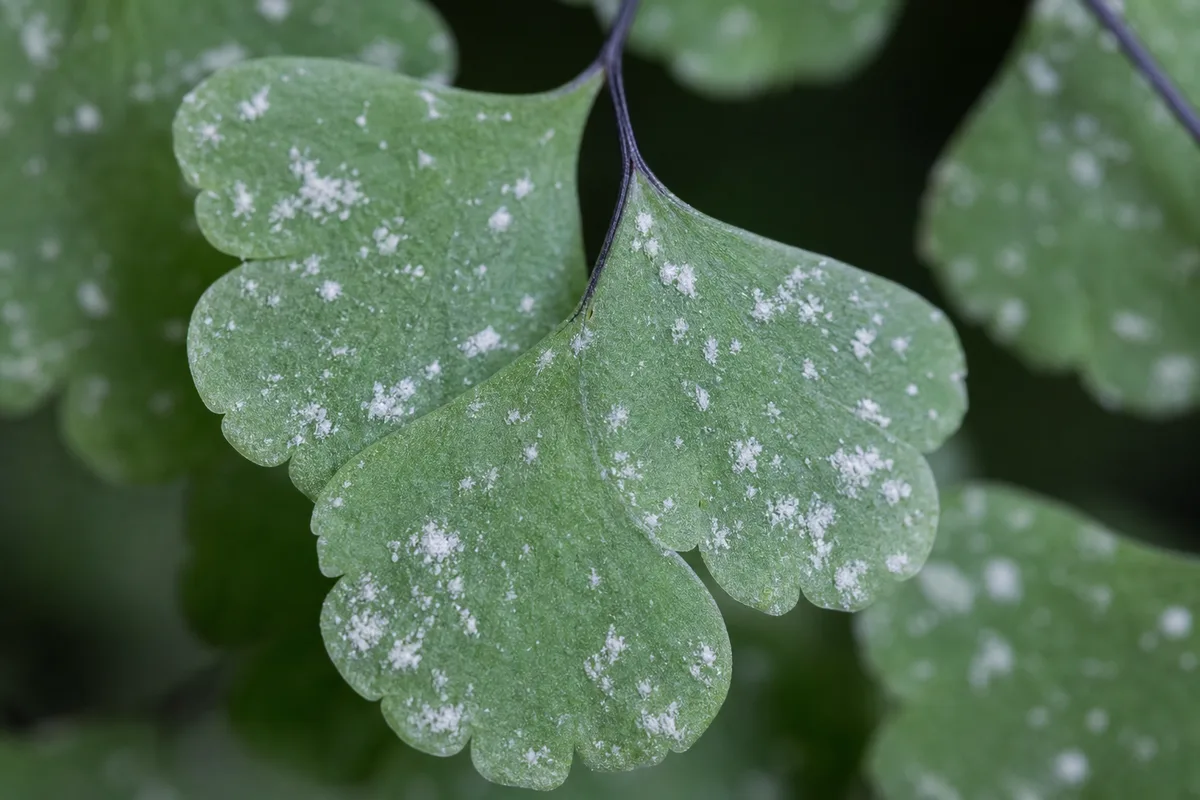
White Spots symptoms on Maidenhair Fern - compare with healthy tissue on the same plant.
Hard-water and salt residue:
- Chalky white specks or crust along leaflet tips, margins, or where droplets dried
- Spots feel gritty, not fluffy; they wipe off cleanly with a damp cloth
- Often strongest on upper leaflets that received mist or splash during watering
- No spread to new tissue over several days once wiping stops new deposits
Powdery mildew:
- Soft white or grayish powder on leaflet faces, sometimes spreading across a frond
- Circular patches that enlarge and merge over days
- Wipes off to reveal green tissue beneath; reappears on nearby leaflets if untreated
- Common in bathrooms, terrariums, and crowded humid shelves with poor airflow
Mealybugs:
- White cottony wax in clumps at frond bases, crown crevices, and stem joints
- Sticky honeydew on nearby leaflets; sooty mold may follow
- Visible oval pink-gray bodies under magnification when wax is disturbed
Fern scale:
- Small white elongated ridges or flecks on stems and leaflets-male covers of fern scale
- Does not wipe away like mineral dust; numerous males create a snowy flocking appearance
- Yellow spotting on leaflets and premature frond drop when populations rise
Spider mites (less common but possible):
- Fine pale stippling on leaflet undersides in very dry air, often with fine webbing
- Not a solid white spot-more a sandpaper texture when infestation is light
Do not confuse white spots with sori, the natural brown or rust-colored reproductive clusters arranged in rows on leaflet undersides. Sori are part of healthy fern anatomy, dry and papery-not chalky white flecks on the upper surface.
Why Maidenhair Fern gets white spots
Maidenhair Fern is a tropical fern that needs Maidenhair Fern light guide, consistently moist soil, and 60–80% humidity. That profile creates several white-spot triggers at once.
Tap water and misting habits top the list for indoor growers. Maidenhair Fern is sensitive to fluoride and salts in tap water-brown tips are the classic sign, but repeated misting or overhead splashing leaves calcium and magnesium deposits as white crust when droplets evaporate on thin leaflet tissue. Water spots from splashing can also leave pale leaf markings on foliage.
High humidity without airflow favors powdery mildew. The fern wants humid air, but sealed bathrooms, cloches, and packed plant shelves trap still, saturated conditions around overlapping fronds. Mildew spores colonize damp leaflet surfaces that never dry. Increasing air circulation helps lessen powdery mildew infection.
Hidden pests exploit the dense crown. Watch for scale and mealybugs on Maidenhair Fern-mealybugs and fern scale settle in frond joints, soil line crevices, and along black rachises where hundreds of leaflets meet. Soft new croziers offer easy feeding sites. Stressed or over-fertilized ferns push tender growth pests prefer.
Dry winter air can invite spider mites even on a humidity-loving fern if a heater dries the room while soil stays wet. Mite stippling is easy to miss on fine Maidenhair Fern foliage until webbing appears.
Foliar product residue from concentrated sprays or undiluted fertilizer foliar feeds can dry into pale spotting if leaflets are not rinsed afterward.
How to confirm the cause
Work through these checks in order:
- Wipe test - Dampen a soft cloth and gently rub one spot. Mineral residue disappears; mildew smears as powder; mealybugs leave waxy smears and exposed bodies; scale covers stay attached.
- Spread watch - Mark a spotted leaflet with a thread tie. Recheck in five to seven days. Growing or multiplying marks point to mildew or pests; static marks suggest residue or old damage.
- Location pattern - Tip and margin crust after misting suggests water quality. Uniform powder across leaflet faces suggests mildew. Clumps at joints suggest mealybugs. Snowy flecking along stems suggests fern scale.
- Sticky check - Honeydew makes leaflets shiny and tacky; mildew and mineral deposits do not.
- Underside inspection - Flip fronds and use a hand lens on leaflet backs, croziers, and crown. Mites, scale, and mealybugs often start where you do not look during casual watering.
- Neighbor scan - Check other plants sharing the humid zone. Powdery mildew and scale can move between susceptible houseplants in shared still air.
- Water history - Have you misted with tap water, showered the plant, or splashed mix during watering? Recent hard-water exposure strongly supports residue over infection.
If wiping removes all marks, leaflets stay green, and nothing returns for a week, switch to filtered or rainwater and adjust technique-no pesticide needed.
First fix for Maidenhair Fern
Wipe affected leaflets gently with a soft cloth dampened in lukewarm filtered water, then inspect every frond base with a hand lens.
This single step separates harmless crust from active problems without chemicals. Support delicate fronds with your hand while wiping-Maidenhair Fern leaflets tear easily. Work stem by stem from bottom to top so you do not miss crown crevices where mealybugs hide.
After wiping:
- If spots are gone and stay gone, switch water source and stop wetting foliage during routine care.
- If powder smears and reappears on new leaflets within days, isolate the plant and treat as powdery mildew-remove coated fronds before spraying.
- If cottony clumps or flat white scale covers remain, isolate and dab visible pests with alcohol on a swab, then plan targeted insecticidal soap per label.
Do not start with heavy neem oil, systemic insecticides, or Maidenhair Fern repotting guide on day one. Confirm the pattern first.
Step-by-step recovery by cause
Once you know what you are treating, follow the matching path:
Mineral residue
- Wipe all visible crust with filtered water on a soft cloth.
- Rinse fronds lightly in the sink with lukewarm filtered water; let drain fully.
- Water soil only at the base going forward-skip misting leaflets.
- Flush soil with filtered water if fertilizer salts may have splashed upward during watering.
- Recheck new growth weekly; tips should stay clean if water quality is corrected.
Powdery mildew
- Isolate Maidenhair Fern away from the collection.
- Cut heavily coated fronds at the soil line; bag and discard them. Individual infected leaves can be picked off and destroyed.
- Improve airflow with a low fan or more open placement while holding 60–80% humidity.
- Water soil directly; keep leaflets dry overnight.
- Apply a houseplant-labeled fungicide only if spread continues after culture changes; test one frond first.
Mealybugs
- Isolate the plant immediately.
- Alcohol-swab every visible cottony cluster on stems and frond bases.
- Wash fronds gently with lukewarm water.
- Apply insecticidal soap labeled for houseplants, covering joints and undersides.
- Repeat weekly for three to four weeks while monitoring clean new croziers.
Fern scale
- Isolate and inspect all ferns and palms nearby-fern scale affects many foliage houseplants.
- Scrape or brush off accessible scale covers with a soft toothbrush and soapy water.
- Apply horticultural oil or insecticidal soap per label, targeting stems and leaflet veins where covers attach.
- Repeat at label intervals; scale covers persist after insects die-judge progress by fewer live crawlers and clean new growth, not by old shells alone.
Hold fertilizer until new fronds open clean for two weeks. Feeding stressed Maidenhair Fern during active spotting rarely helps and can burn tender leaflets.
Recovery timeline
Expect roughly:
- Days 1–3: Wiping clears mineral crust immediately; isolation and pest removal stop spread to untouched fronds.
- Week 1–2: Mild mildew or light pest damage stabilizes once airflow improves or soap treatments begin. Old spotted leaflets remain marked until pruned.
- Weeks 3–4: Clean unfurling croziers confirm recovery. Maidenhair Fern typically sends new fronds from firm rhizomes within two to four weeks after culture stabilizes.
- Beyond one month: Persistent new white patches mean the true cause was misidentified or the humid microclimate still favors mildew or pests-re-run the wipe test and neighbor scan.
Damaged leaflet tissue does not turn green again. Judge success by powder-free, pest-free new growth-not by salvaging every old flecked frond.
Lookalike symptoms
Several pale markings mimic white spots on Adiantum raddianum:
Normal sori - Brown or rust rows on leaflet undersides for reproduction. Dry, patterned, and not on upper surfaces.
Sun bleaching - Pale washed-out patches on leaflets exposed to direct sun. Tissue feels papery, not powdery or crusty.
Dust or pollen - Even coating on pots and nearby surfaces; wipes off once with no return.
Fungal leaf spot - Brown or black lesions with yellow halos, not white powder or crust.
Collapsed frond senescence - Old fronds bleach as they die from underwatering on Maidenhair Fern or age; pattern follows whole fronds browning from tips inward, not isolated white flecks on green tissue.
Mistakes to avoid
- Spraying fungicide on hard-water crust - wastes product and stresses delicate leaflets.
- Treating uniform dust as mealybugs on Maidenhair Fern - confirm insects before alcohol or soap.
- Misting more when mildew is active-wet leaflets in stagnant air worsen fungal spread.
- Using undiluted alcohol or oil on entire fronds - Maidenhair Fern scorches easily; spot-treat pests and test one frond first.
- Ignoring scale because ferns “tolerate” low populations - moderate fern scale still causes yellow spotting and frond drop over time.
- Composting infected fronds indoors - spores and crawlers can reinfect the collection.
- Repotting on day one unless soil is clearly failing-rhizome disturbance slows recovery on a stressed fern.
Maidenhair Fern care cross-check
White spots often appear when humidity or water habits drift-not because the plant needs mystery chemicals. Verify:
- Light: Bright indirect light; not deep shade or direct sun that bleaches leaflets.
- Water: Consistently moist soil with filtered or rainwater; never bone-dry root ball.
- Humidity: 60–80% with gentle air movement-not a sealed steam box.
- Drainage: Moisture-retaining but well-draining mix; soggy soil weakens rhizomes and produces soft growth pests target.
- Temperature: 16–24°C (60–75°F); cold drafts cause mass frond drop that can look like spreading damage.
How to prevent white spots next time
- Use filtered or rainwater for watering and humidifying; avoid routine tap-water misting on leaflets.
- Water at the soil line with a narrow spout; keep foliage dry overnight.
- Run a small fan on low near plant shelves or space plants so air can circulate between fronds.
- Quarantine new plants two weeks before placing them in humid groupings.
- Inspect frond bases and crown crevices during weekly care with a hand lens.
- Sterilize scissors between plants when removing spotted or collapsed fronds.
- Dilute and rinse any foliar product according to label so residue cannot dry into pale spots.
When water quality, humidity, and airflow stay balanced, Maidenhair Fern keeps the glossy black-stemmed fronds it is grown for-and white flecks become rare, identifiable events instead of recurring mysteries.
When to worry
Escalate care when:
- Spots spread to new fronds weekly despite wiping, isolation, or treatment.
- New croziers distort or fail to open while white coating or pest wax increases.
- Sticky honeydew and sooty mold coat multiple fronds-sap feeders are active at scale.
- Yellow spotting and premature frond drop follow white flecking on stems-fern scale or heavy mite pressure may be advanced.
- Multiple plants in the same room develop similar patterns-your humid zone needs structural change.
- Soft rhizomes at the crown with sour-smelling soil-root stress may stack with foliar problems; inspect roots separately.
If rhizomes stay firm and clean croziers appear within a month, the plant is recovering. Mushy crowns with black roots rarely recover even when only part of the problem is surface spotting-discard to protect the collection.
Conclusion
White spots on Maidenhair Fern reward patience and close looking more than aggressive spraying. Hard-water crust, powdery mildew, mealybugs, and fern scale all look pale at a glance but behave differently under a damp cloth and hand lens. Wipe first, confirm the pattern, isolate if spread or pests are confirmed, then treat the specific cause while keeping humidity balanced and air moving. Judge recovery by clean new croziers-not by bleaching every old marked leaflet back to perfect green.
When to use this page vs other Maidenhair Fern guides
- Maidenhair Fern watering guide - Use for routine moisture checks before assuming white spots is the main issue.
- Maidenhair Fern problems hub - Browse all 55 common issues on this species.
- Mealybugs on Maidenhair Fern - Different entry point when symptoms overlap with white spots.
- Powdery Mildew on Maidenhair Fern - Different entry point when symptoms overlap with white spots.
- Black Spots on Maidenhair Fern - Different entry point when symptoms overlap with white spots.