Powdery Mildew on Maidenhair Fern: Causes, Checks & Fixes
Quick answer
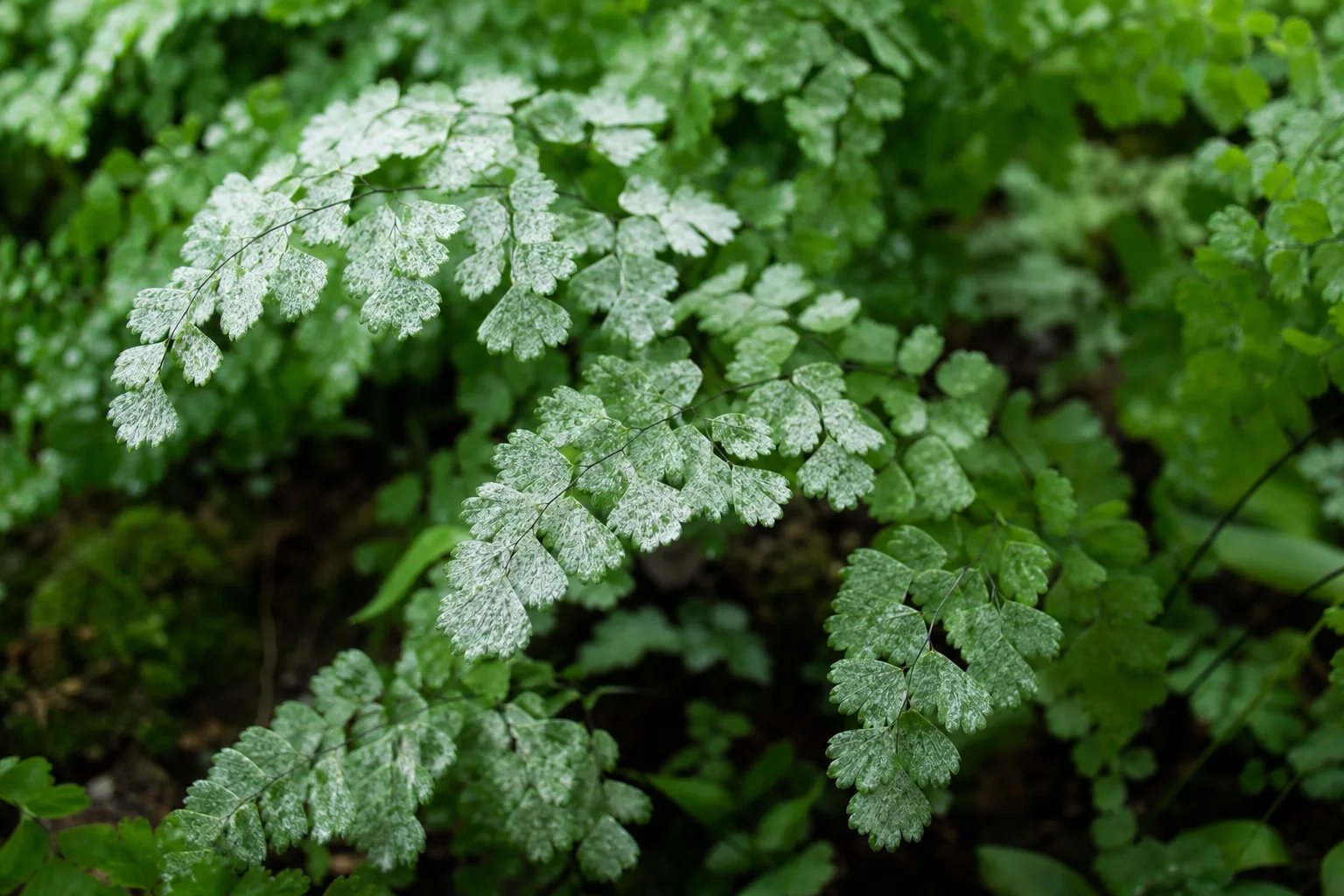
Powdery mildew on Maidenhair Fern shows as a white flour-like coating on delicate fan-shaped leaflets when humidity is high but air is still. First step: isolate the plant and remove affected fronds with clean scissors before you spray anything.
Powdery Mildew on Maidenhair Fern: Causes, Checks & Fixes
This guide covers powdery mildew on Maidenhair Fern. See also the general Powdery Mildew guide, watering, and light pages for this plant.
Powdery Mildew on Maidenhair Fern: Causes, Checks & Fixes
Quick answer
White flour on paper-thin Maidenhair Fern leaflets is usually powdery mildew-not rinseable dust-and do not mist or shower the plant to wash it off. Wet fan-shaped leaflets in stagnant humid air spread spores and dry slowly on Adiantum raddianum, which is why cultural correction comes before any spray.
Powdery mildew appears as a white, talcum-like coating on delicate fan-shaped leaflets carried on thin black stems. Unlike the immediate frond collapse that signals underwatering, mildew shows up when the plant gets the humidity it wants-but air around the foliage stays still and leaflets remain damp too long.
First step: isolate the plant and remove affected fronds with clean scissors. Bag and discard heavily coated leaflets before you reach for sprays. Powdery mildew spores travel easily in crowded, humid collections, and cutting out infected tissue plus stopping spread is the safest first response on a fern with paper-thin foliage.
What powdery mildew looks like on Maidenhair Fern
Powdery mildew is a fungal disease. The most obvious sign is a white powdery coating on the surfaces of infected leaves and stems-often starting as small spots that grow together into a continuous white film.
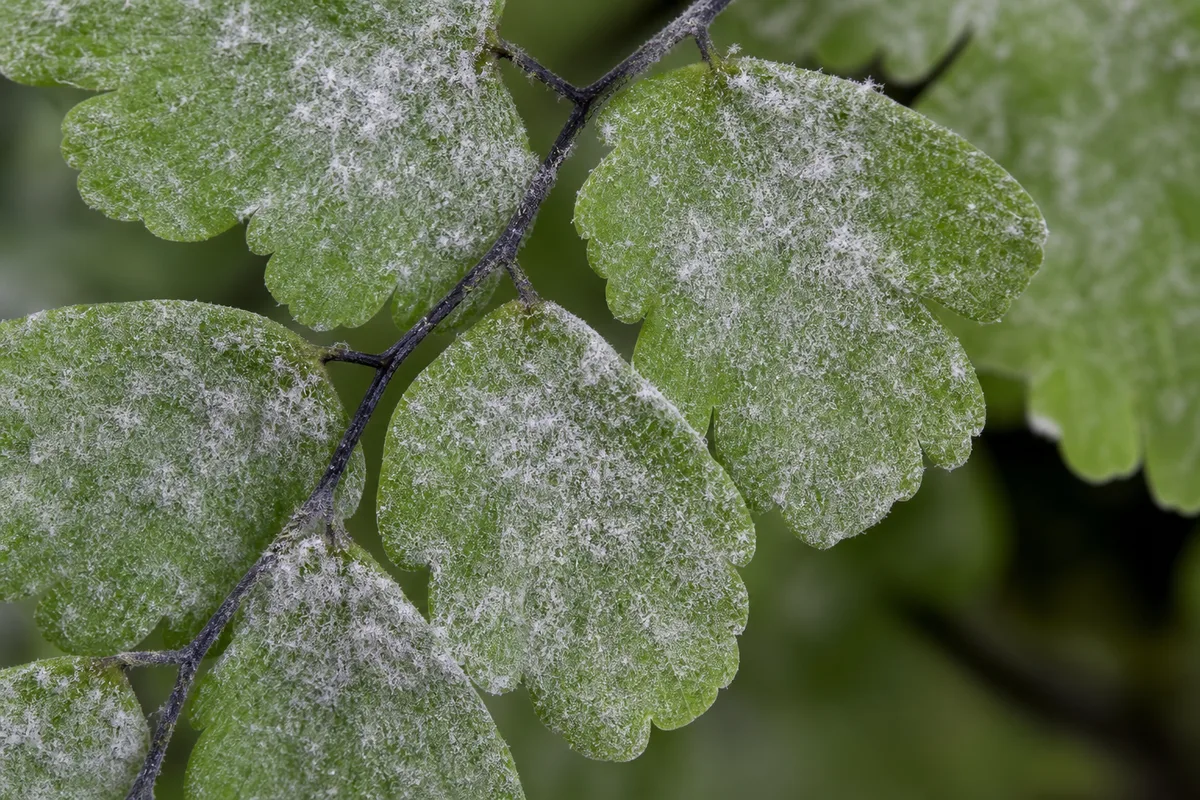
Powdery Mildew symptoms on Maidenhair Fern - compare with healthy tissue on the same plant.
On Maidenhair Fern, look for these patterns:
- White or grayish powder on individual fan-shaped leaflets, sometimes along the leaflet margin where moisture collects on the thin blade
- Circular or patchy growth that spreads across leaflets on the same frond over days, not a one-time dusting
- Distorted or stunted new croziers when infection reaches unfurling fronds during active growth
- Yellowing and premature drop of coated leaflets if the fungus persists on lower fronds
The coating sits on top of the leaflet surface. When you wipe it gently with a damp cloth, healthy light-green tissue remains underneath-unlike sun scorch, which bronzes and crisps leaflets permanently.
Mildew may also appear on the wiry black rachis and young croziers near the crown. It rarely starts on the soil surface alone; if white fuzz is only on potting mix, suspect mold from overwatering rather than powdery mildew on foliage.
Why Maidenhair Fern gets powdery mildew
Maidenhair Fern is a tropical fern from the Americas that needs bright indirect light, consistently moist soil, and high humidity. That combination makes it both rewarding and vulnerable: the same humid microclimate that keeps leaflet edges from crisping also favors fungal growth when air never moves.
High humidity without airflow is the leading trigger. Growers often push humidity above 60% with pebble trays, humidifiers, or grouped plant shelves-which Maidenhair Fern appreciates-but skip ventilation. Stagnant saturated air around dense overlapping fronds lets powdery mildew establish. Indoor powdery mildew thrives in cool, damp conditions with poor air circulation, a profile that matches many bathroom and terrarium setups where this fern is commonly placed. On Adiantum raddianum, hundreds of small leaflets on each triangular frond trap a humid boundary layer when a fan is absent.
Crowded placement compounds the problem. Multiple ferns on one shelf, terrarium domes left on too long, or plants pressed against a shower wall trap moisture between leaflets. When fronds overlap neighbors, inner surfaces stay damp for hours.
Leaf wetness from misting is a common mistake. Many Maidenhair Fern guides recommend humidity boosts, but misting leaflets in a closed room keeps them wet without drying. Avoid wetting leaves when watering and do not water from above-advice that matters doubly on a fern whose thin tissue dries slowly. If you already run a humidifier per the humidity guide, skip misting entirely during an active outbreak.
Overwatering plus humidity does not cause powdery mildew directly, but soggy peaty mix stresses rhizomes and produces weak, succulent new growth that infections colonize faster. Maidenhair Fern wants moist-not waterlogged-soil with sharp drainage. See overwatering and root rot if rhizomes soften at the crown.
Seasonal indoor swings matter too. Poor air circulation, low light, and cooler temperatures near 70°F favor indoor powdery mildew during winter when windows stay sealed and humidifiers run constantly beside plant groupings.
Confirm mildew vs. dust, minerals, mealybugs, and soil mold
Work through these checks before treating:
- Wipe test - Rub a white patch with a finger or cloth. Powdery mildew comes off as a dry white smear; the leaflet underneath stays green. Mineral deposits from hard water feel crusty along tips and do not spread.
- Spread pattern - Watch the same frond for three to five days. Mildew enlarges or appears on adjacent leaflets. Static dust does not grow.
- Insect check - Inspect frond joints and crown with a hand lens. Mealybugs form cottony white masses with visible oval bodies beneath; ferns are among houseplants commonly affected. Powdery mildew has no insects and feels like fine flour spread across the leaflet face.
- Airflow and placement - Is the plant in a bathroom without a fan, under a cloche, or packed on a humid shelf? Stagnant placement strongly supports mildew over random dust.
- Leaf wetness history - Have leaflets been misted, shower-sprayed, or splashed during watering? Wet foliage plus poor drying points to fungal risk.
- Neighbor plants - Check other plants in the same room for similar white coating. Powdery mildew can move between susceptible houseplants in shared humid air.
- Soil moisture - Stick a finger into the top centimeter of mix. Soggy soil with powder means fix drainage alongside airflow; bone-dry soil with powder still points to mildew, not drought stress alone.
Symptom lookalike comparison
| What you see | Spreads? | Wipe test | Likely cause |
|---|---|---|---|
| Soft white powder on leaflet faces | Yes, within days | Smears; returns | Powdery mildew |
| White cottony clumps in frond joints | Slow, localized | Waxy threads; insects underneath | Mealybugs |
| Even dust on pots and walls | No | Clean cloth removes all | Household dust |
| Crispy white crust along leaflet tips | No | Gritty; does not spread | Hard-water minerals |
| White fuzz only on potting mix | No leaflet coating | N/A | Mold on soil |
| Brown spots with yellow halos | Irregular patches | No uniform powder | Leaf spot disease |
If the white coating is uniform dust from construction or pollen with no spread, and the plant otherwise looks healthy, you may not need fungicide-just rinse leaflets gently and improve cleaning. When spread and location fit the checks above, treat as powdery mildew.
First fix for Maidenhair Fern
Isolate the plant and remove affected fronds with clean scissors.
Move Maidenhair Fern away from healthy plants. Cut heavily coated fronds at the soil line or where the rachis emerges from the crown-bag and discard them; do not compost indoors. Individual infected leaves can be picked off and destroyed, and on a fern with many small leaflets, removing whole fronds is often faster than leaf-by-leaf picking.
This single step lowers the spore load immediately and limits spread to the rest of your collection. Do not start by misting more, showering the whole plant at night, or Maidenhair Fern repotting guide on day one. Those add moisture or stress without confirming how far the fungus has spread.
After removal:
- Place the pot where a small fan passes air across the canopy at low speed-not blasting directly on delicate leaflets.
- Water at the soil line only using filtered or rainwater per the watering guide.
- Hold fertilizer until new croziers unfurl clean for two weeks.
Why misting and showering fail on paper-thin leaflets
Maidenhair Fern leaflets are only a few cells thick. Misting or showering coated foliage spreads spores to neighboring fronds and the crown while keeping tissue wet for hours-the opposite of what you need during an outbreak. Do not mist plants and avoid wetting leaves when watering; on Adiantum raddianum, the safe humidity path is a humidifier plus airflow, not wetting the blade surface. Bottom-watering or a narrow spout at the soil line keeps fronds dry while the root ball stays evenly moist.
Fungicide escalation when cultural fixes fail
Wait five to seven days after isolation, frond removal, and airflow correction. Inspect new croziers. If white powder appears on fresh growth despite dry foliage and improved spacing, escalate to a labeled fungicide:
- Potassium bicarbonate products labeled for powdery mildew on ornamentals effectively eradicate powdery mildew fungi. Products containing potassium bicarbonate can injure powdery mildew infected plants-use with caution and not on advanced disease. On Maidenhair Fern, test one lower frond first; paper-thin leaflets show burn faster than thick-leaved houseplants.
- Sulfur products work as preventives applied before infection spreads widely. Do not apply sulfur when the temperature is near or higher than 90°F, and do not apply it within two weeks of an oil spray. Sulfur can damage sensitive ornamentals-patch-test before treating the full crown.
- Neem oil or horticultural oil labeled for ornamentals can control mild to moderate infections when applied to all leaf surfaces. Never apply oil within two weeks of sulfur, when temperatures are above 90°F, or on water-stressed plants. Warm terrariums and grow lights amplify oil burn on delicate fern tissue.
Paper-thin leaflet test-patch protocol:
- Mix and apply per label directions only.
- Spray one frond and wait 48 hours under your normal light setup.
- Watch for pale spots, curling, or leaflet collapse before treating the full plant.
- Repeat only at label intervals-typically seven to fourteen days until spread stops.
Read every label for indoor houseplant use. When cultural controls fail across a humidifier shelf or closed terrarium, contact your local extension office for region-specific product guidance.
Step-by-step recovery
Once the plant is isolated and infected fronds are removed, work through these steps in order:
- Improve airflow - Shift the fern from a sealed humid corner to an open room that still holds 60–80% humidity, or run a fan on low near the canopy.
- Stop wetting foliage - Skip misting until new growth opens clean for at least two weeks.
- Hold humidity, add movement - Keep the range Maidenhair Fern needs using a humidifier, but pair it with airflow. Methods that lower humidity or increase air circulation lessen infection chances on indoor plants.
- Apply treatment if spread continues - After culture improves, use potassium bicarbonate, sulfur, or neem oil per product label and the test-frond protocol above.
- Repeat at label intervals - Most fungicides need reapplication every seven to fourteen days until the coating stops spreading.
- Monitor new croziers - Recovery is judged by clean emerging fronds, not by old coated tissue turning green again. Old damaged leaflets stay marked until you remove them.
- Hold fertilizer - Skip feeding until new growth looks healthy for two weeks. Fertilizer on stressed foliage does not clear mildew and can burn tender new leaflets.
If rhizomes soften at the soil line or the pot smells sour while mildew is present, check roots separately-overwatering may be stacking with fungal stress. Let the top centimeter of soil dry slightly before the next drink and confirm the pot drains freely.
Recovery timeline
Expect a realistic timeline like this:
- Days 1–3: Isolation and frond removal should stop rapid spread to untouched leaflets. Light powder may look unchanged on remaining tissue; the goal is no new patches.
- Week 1–2: Small existing spots may dry and flake off after removal and one or two treatment cycles. Yellowing on heavily infected leaflets may continue as those fronds senesce.
- Weeks 3–4: New croziers unfurling without powder confirm the environment is corrected. Old scarred fronds remain until pruned.
- Beyond one month: If fresh growth still arrives coated, reassess humidity sources, neighbor plants, or consider a different fungicide class per label.
Maidenhair Fern rebounds from the crown when rhizomes stay firm-new fronds typically emerge within two to four weeks after culture stabilizes. Patience with stable care beats repeated heavy spraying on delicate foliage.
Mistakes to avoid
- Misting more to “help humidity” while mildew is active-wet leaflets in stagnant air worsen fungal problems.
- Showering the plant at night and letting foliage stay wet until morning.
- Spraying fungicide before improving airflow-chemicals alone rarely hold if the room stays saturated and still.
- Keeping infected plants in a mixed humidifier zone with other ferns and calatheas without isolation.
- Removing only the visible powder with a cloth without fixing culture-spores remain and recolonize.
- Applying oil sprays in bright direct sun or warm terrariums-Maidenhair Fern scorches easily; treat in indirect light and test one frond first.
- Repotting immediately unless soil is clearly failing-rhizome disturbance on a stressed plant slows recovery.
- Feeding to “boost recovery” while mildew is still spreading on new growth.
Maidenhair Fern care cross-check
Powdery mildew is often a humidity-and-air problem on an otherwise correctly watered Maidenhair Fern. Cross-check these basics while you treat:
- Light: Bright indirect light-not deep shade or harsh direct sun per the light guide. Leggy pale fronds in low light produce soft tissue that infections spread through faster.
- Water: Even moisture; never let the root ball dry out. Soggy mix weakens rhizomes even when air humidity is high.
- Humidity: Target 60–80%, not a steam room. Use humidifiers in open air, not sealed boxes long term.
- Temperature: Keep within the 16–24°C (60–75°F) comfort zone. Cold drafts cause mass frond drop that people sometimes misread as disease spread.
- Drainage: Moisture-retaining but well-draining mix in a pot with open drainage holes per the soil guide. Humidity at the leaflets cannot compensate for waterlogged roots.
How to prevent powdery mildew next time
Prevention on Maidenhair Fern is about balanced humidity-not maximum humidity in stagnant air:
- Run a small fan on low near plant shelves, or space plants so air can circulate between them.
- Water soil directly with a narrow spout; avoid splashing foliage.
- Skip routine misting if you already use a humidifier-double-dosing moisture on leaflets adds risk without benefit.
- Terrarium culture: Open dome vents daily for at least fifteen minutes, or crack the lid overnight so leaflets dry. Closed terrariums without air exchange trap the same stagnant layer that triggers mildew on fan-shaped foliage.
- Quarantine new plants for two weeks before placing them in humid groupings.
- Sterilize scissors between plants when pruning browned or infected fronds.
- Remove collapsed old fronds promptly to reduce moisture-trapping debris at the crown.
- During winter, avoid sealing plants under plastic domes for weeks unless you open them daily for air exchange.
When humidity stays in the 60–80% band with gentle movement, Maidenhair Fern keeps the delicate black-stemmed fronds it is grown for-and powdery mildew becomes uncommon. For baseline culture, see the Maidenhair Fern care overview.
When to worry
Escalate care when:
- Coating spreads to new fronds weekly despite isolation and airflow changes.
- More than a third of foliage is coated or yellowing.
- Growing croziers collapse or distort heavily, suggesting the fungus is outrunning new tissue.
- Multiple plants in the same room develop white patches simultaneously-your humid zone needs structural change, not single-plant treatment.
- Soft rhizomes at the crown combine with sour-smelling soil-possible root rot stacked with mildew; inspect roots and reduce watering.
- No clean new growth after four weeks of corrected culture and labeled treatment.
If the rhizome base is firm but only a few clean fronds remain, the plant can recover from the crown. If rhizomes are mushy and roots are black, discard the plant to protect the collection-Maidenhair Fern rarely tolerates severe crown failure even when only part of the problem is mildew.
Conclusion
On paper-thin Adiantum raddianum leaflets, powdery mildew is almost always a humidity-without-airflow problem-not a mystery pathogen. Confirm with a wipe test, isolate, remove coated fronds before any spray, and judge recovery by clean new croziers-not by salvaging every old powdered leaflet.
When to use this page vs other Maidenhair Fern guides
- Maidenhair Fern watering guide - Use for routine moisture checks before assuming powdery mildew is the main issue.
- Maidenhair Fern problems hub - Browse all 55 common issues on this species.
- White Spots on Maidenhair Fern - Different entry point when symptoms overlap with powdery mildew.