Mold on Soil on Maidenhair Fern: Causes, Checks & Fixes
Quick answer
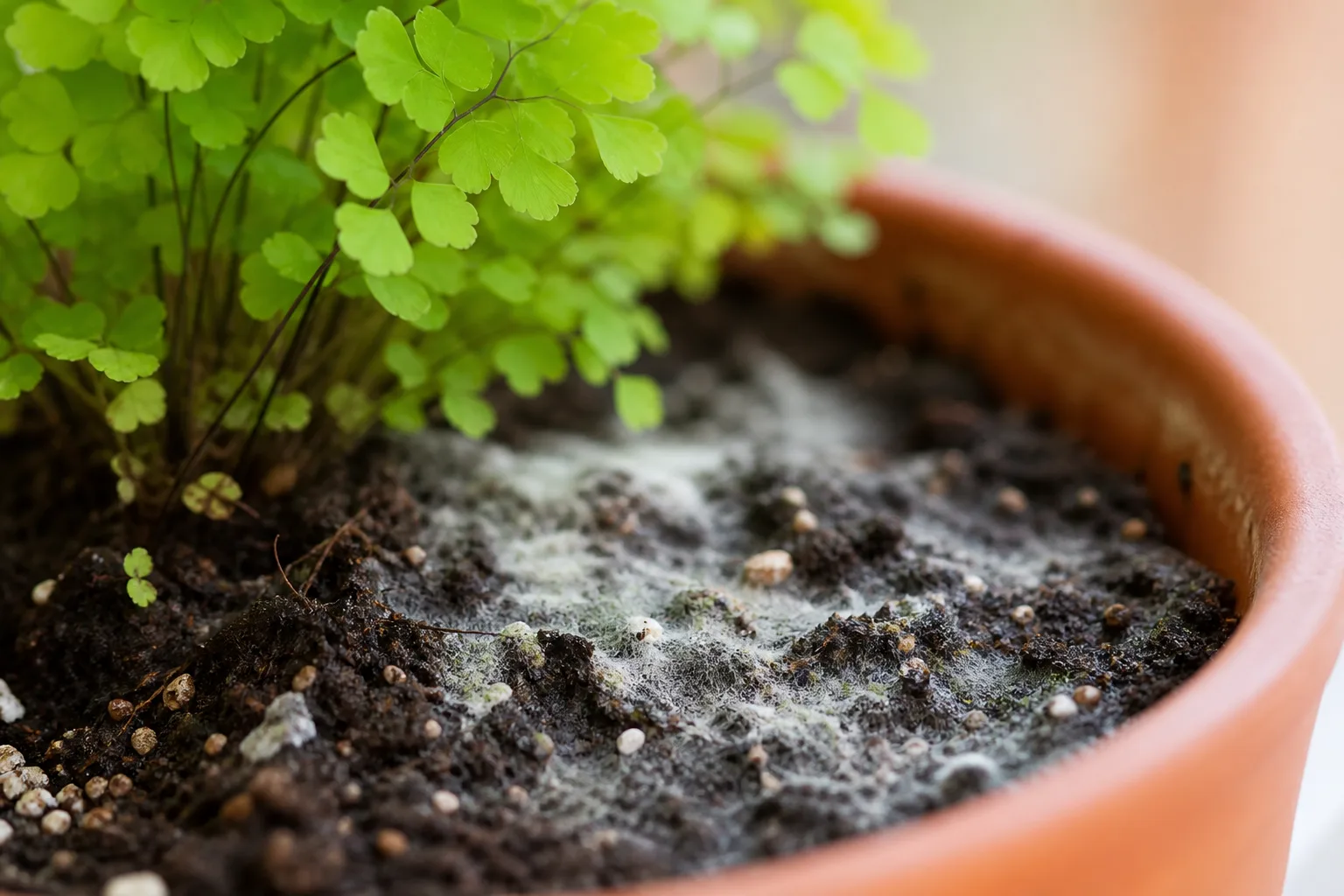
Surface mold on Maidenhair Fern (*Adiantum raddianum*) soil is usually harmless saprophytic fungus on a wet organic top layer - common when growers keep fine roots moist. First step: scrape the fuzz, improve airflow, let the top centimeter (~½ inch) dry slightly, and avoid waterlogging the root ball.
Mold on Soil on Maidenhair Fern: Causes, Checks & Fixes
This guide covers mold on soil on Maidenhair Fern. See also the general Mold on Soil guide, watering, and light pages for this plant.
Mold on Soil on Maidenhair Fern: Causes, Checks & Fixes
Quick answer
White or gray fuzzy patches on the soil surface of your Maidenhair Fern (Adiantum raddianum) almost always mean the top layer of mix has stayed wet too long - not that the fronds have a leaf disease. Saprotrophic fungi feed on organic matter in damp peat and bark; Clemson Extension distinguishes this white or yellow mold-like growth from harmless salt crust on pot rims. A smooth green film on the same wet surface is usually algae, not mold - both signal the same moisture problem.
The tension every Maidenhair grower faces: roots should not be allowed to dry out, yet a permanently soggy surface breeds mold and fungus gnats. The fix is brief surface dry-down while the root ball stays evenly moist - not drought-stressing the fern to kill fuzz.
First step: scrape off the moldy top centimeter (~½ inch) with a spoon, discard it in the trash, improve airflow around the pot base, and wait until the new surface feels barely dry before the next thorough drink.
What mold on soil looks like on Maidenhair Fern
Typical saprophytic mold:
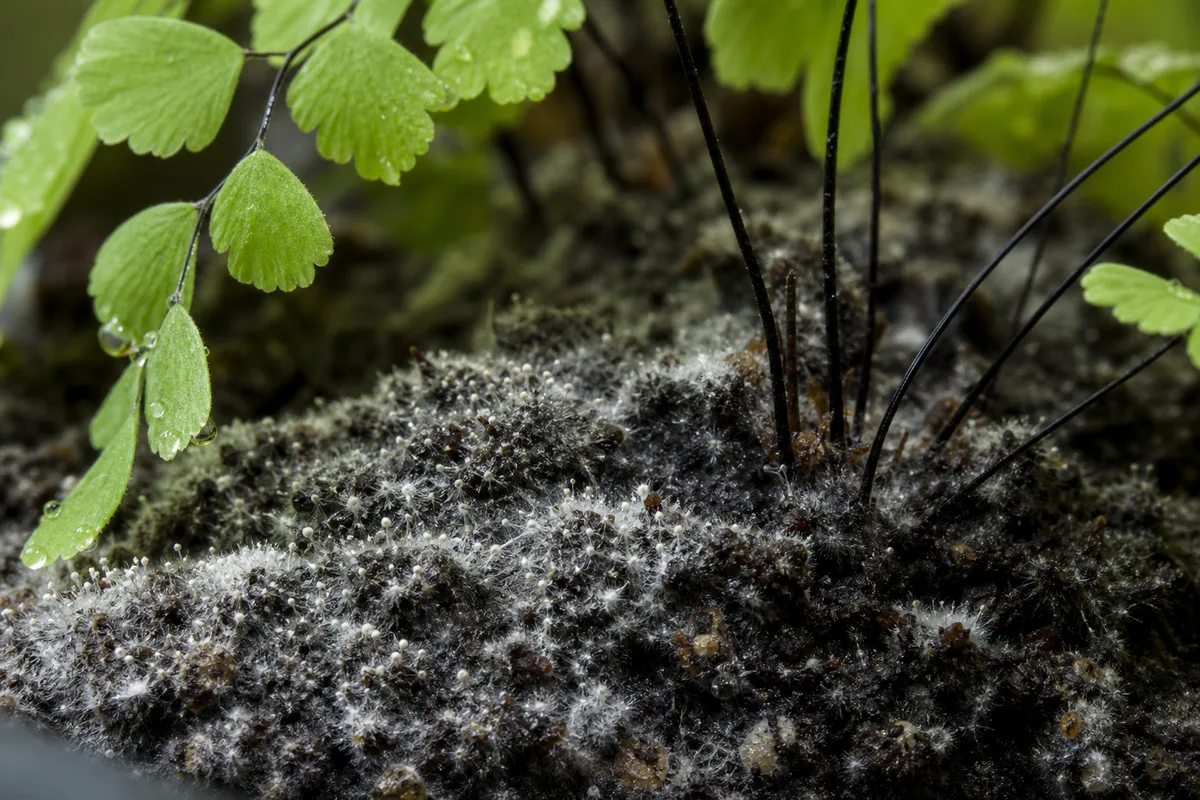
Mold on Soil symptoms on Maidenhair Fern - compare with healthy tissue on the same plant.
- White, gray, or pale green fuzzy patches flat across the soil top
- Re-growth within days after scraping if moisture habits stay unchanged
- Musty smell when disturbed - distinct from sour root rot
- Co-occurrence with fungus gnats hovering when you tap the pot
- Healthy black wiry stipes and green pinnae above - mold stays on soil, not stems
Green surface film (often algae):
- Smooth green layer on soil and sometimes the pot rim in low light
- Algae and fungi can grow together or separately on wet media; neither usually harms roots directly
- Still points to chronically moist surface conditions - same fix as white fuzz
Not soil mold:
- Cottony clumps on black stems at frond bases → mealybugs, not soil fuzz
- Dry white powder on leaflets → powdery mildew on foliage, not substrate
- Yellow limp fronds with sour smell on heavy wet soil → root rot priority, even if mold is present
Mold on Maidenhair Fern does not form structured cotton patches on the characteristic black wiry stipes - it stays on the mix surface.
Why Maidenhair Fern soil gets moldy
Adiantum raddianum spreads by creeping rhizomes with hair-fine roots that need moist to wet, well-drained soil. That biology explains why mold appears here more predictably than on drought-tolerant houseplants - growers water often to protect roots, but the surface can stay wet between drinks if evaporation lags.
Constantly wet surface - Watering on a calendar before the top centimeter (~½ inch) dries keeps organic mix ideal for spores. The Maidenhair watering guide recommends checking pot weight and surface moisture, not a fixed schedule.
Peat- or compost-rich mix - Organic matter feeds saprophytic fungi in stagnant moisture. Fallen frond bits on wet soil add more food.
Terrarium, bathroom, and high-humidity placement - NC State notes this fern does well in bathrooms and terrariums where air at frond level stays humid. Humidity on leaflets does not require a constantly wet soil top; closed glass and steamy rooms trap still air at pot level and slow surface dry-down.
Poor airflow - Dense Maidenhair fronds arch over the rim, trapping humid still air. Crowded shelf placement worsens this.
Overwatering overlap - Over-watering and poor drainage encourage fungus gnats and root stress alongside surface mold. See overwatering on Maidenhair Fern when fronds yellow on heavy wet soil.
Decorative covers and cachepots - Impermeable stones or pots without drainage trap moisture at the shallow root zone this fern prefers.
Mold vs. lookalikes on Maidenhair Fern
| Sign | Location | Texture / smell | What it usually means |
|---|---|---|---|
| Saprophytic mold | Soil surface only | White/gray fuzz; musty when scraped | Wet organic top layer - culture fix |
| Green algae | Soil surface, pot rim | Smooth green film | Same wet surface; low light + moisture |
| Mealybugs | Black stems, frond bases | Cottony clumps on plant tissue | Pest - not soil fungus |
| Powdery mildew | Leaflets | Dry white powder on leaves | Foliage disease - not soil fuzz |
| Root rot | Root zone, crown | Sour smell; mushy rhizome | Urgent - root rot rescue |
How to confirm the cause
Work through these checks in order:
- Visual ID - Fuzzy flat patches on soil only; scrape easily with a spoon. Green smooth film = likely algae.
- Surface moisture - Is the top centimeter (~½ inch) wet for days without drying? Press a finger in; clinging dampness confirms chronic wetness.
- Pot weight - Lift the pot. Heavy days after you thought you watered lightly means water is not exiting or the mix holds too much moisture at the surface.
- Plant health - Firm green fronds and upright black stipes suggest nuisance mold. Yellow limp fronds with sour smell suggest rot.
- Gnats present? - Small flies confirm persistently wet culture; see fungus gnats on Maidenhair Fern if swarms persist after dry-down.
- Exclude mealybugs - Cotton on stems, not uniform soil fuzz.
- Return test - Scrape mold away. Re-growth within three to five days on still-wet soil means the environment is unchanged.
First fix for Maidenhair Fern
Scrape, aerate, and adjust surface moisture - do not drought-stress the fern.
Remove the top centimeter (~½ inch) of moldy soil and replace with fresh airy mix matching your existing blend - coco coir, fine bark, and compost per the soil guide. Scrape gently without damaging surface rhizomes.
Let the new surface dry slightly before the next watering while keeping the root ball moist through thorough drinks when you do water. Let surface soil dry as much as possible between waterings, without letting the plants wilt - on Maidenhair, that means the top centimeter only, not the entire root ball.
Improve airflow - space plants, crack terrarium vents, run a fan on low nearby (not blasting delicate fronds), or thin crowded fronds at the base.
Empty saucers and cachepots after every watering. Remove fallen frond debris weekly.
Do not fungicide-drench cosmetic surface mold on healthy plants. Maidenhair fern is non-toxic to cats and dogs, but bag scraped soil away from pets that dig in pots.
Step-by-step recovery
- Scrape moldy surface soil; dispose in trash, not an indoor compost pile.
- Top-dress with a thin layer of fresh airy mix if needed.
- Verify drain holes; discard standing saucer or cachepot water the same day.
- Wait until the top centimeter (~½ inch) is barely dry before the next water - check with finger and pot weight.
- Increase gentle airflow around the pot base; open terrarium vents if enclosed.
- Try bottom-watering if top pours keep the surface soggy: set the pot in a tray of water until the mix wicks moisture up, then remove and drain fully within a few hours. The root ball hydrates while the surface may stay drier than with repeated top watering.
- Monitor for gnats - deploy yellow traps if flies appear; drying the upper mix is the primary larval control.
- If sour smell or mushy rhizomes appear during cleanup, unpot and follow root rot treatment instead of only scraping again.
Recovery timeline
Surface mold clears within days once the top dries between waterings. Re-growth within a week means conditions remain too wet - tighten surface dry-down further without letting the entire root ball desiccate.
Frond health should remain stable throughout - mold removal alone does not stress Maidenhair Fern if moisture balance holds. Collapsing fronds within hours of a dry surface mean you dried too deep; water thoroughly and review the watering guide.
Fungus gnat adults may take two to three weeks to taper as the upper mix dries consistently.
What not to do
Do not let the entire root ball dry completely to kill mold - roots must not be allowed to dry out, and fronds can collapse within hours on this fern.
Do not cover soil with impermeable decorative stones that trap moisture at the shallow root zone.
Do not mist the soil surface to wash mold away - extra surface moisture feeds the problem.
Do not scrape repeatedly without changing watering and airflow - spores are always present; visible growth returns when the surface stays wet.
Avoid fungicide drenches for cosmetic surface mold on otherwise healthy plants.
How to prevent mold on soil next time
Water when the top centimeter (~½ inch) is barely dry; use airy mix with bark and coco coir. Be sure the plant’s pot drains well and avoid letting plants stand in water.
Remove fallen frond debris during weekly checks. Maintain 60%+ humidity on fronds while allowing brief surface dry-down - humidity on leaflets does not require a constantly wet soil top.
In terrariums, balance humidity with ventilation so the soil surface can breathe. In bathrooms, ensure the pot still gets Maidenhair Fern light guide so transpiration and evaporation stay balanced.
Bottom-water occasionally if top watering chronically wets the surface. Match pot material to your room - plastic retains surface moisture longer than terracotta in the same watering rhythm.
Maidenhair Fern care cross-check
| Care factor | Mold-prevention target | Related guide |
|---|---|---|
| Surface moisture | Top centimeter dries briefly; root ball stays moist | Watering |
| Drainage | Saucers emptied; no standing cachepot water | Overwatering |
| Pests | Dry upper mix controls gnat larvae | Fungus gnats |
| Escalation | Sour smell, mushy rhizome → rot protocol | Root rot |
| Overview | Full species care hub | Maidenhair Fern |
Moist roots plus a briefly dry surface prevents mold without contradicting this fern’s water needs - the same adjustment that controls fungus gnats in damp conditions.
When to worry
Worry when mold cleanup reveals mushy rhizomes, sour odor, or yellow collapsing fronds - pivot to root rot treatment. Surface mold on green stable fronds is a culture fix, not a crisis.
Treat as urgent when mold returns within days after scraping, gnats swarm heavily, and new croziers stall on constantly wet soil - that combination points to chronic overwatering heading toward root failure.
Conclusion
Mold on Maidenhair Fern soil signals a wet organic surface on a moisture-loving fern with fine roots - scrape it, improve airflow, let the top centimeter (~½ inch) dry slightly between thorough drinks, and consider bottom-watering if top pours keep the surface soggy. Green algae on the same wet layer needs the same dry-down fix. Prevent recurrence with airy mix, drainage discipline, debris removal, and terrarium or bathroom ventilation so frond humidity does not trap a permanently wet soil top.
When to use this page vs other Maidenhair Fern guides
- Maidenhair Fern watering guide - Use for routine moisture checks before assuming mold on soil is the main issue.
- Maidenhair Fern problems hub - Browse all 55 common issues on this species.
- Overwatering on Maidenhair Fern - Different entry point when symptoms overlap with mold on soil.
- Root Rot on Maidenhair Fern - Different entry point when symptoms overlap with mold on soil.
- Slow Growth on Maidenhair Fern - Different entry point when symptoms overlap with mold on soil.