Salt Build Up on Maidenhair Fern: Causes, Checks & Fixes
Quick answer
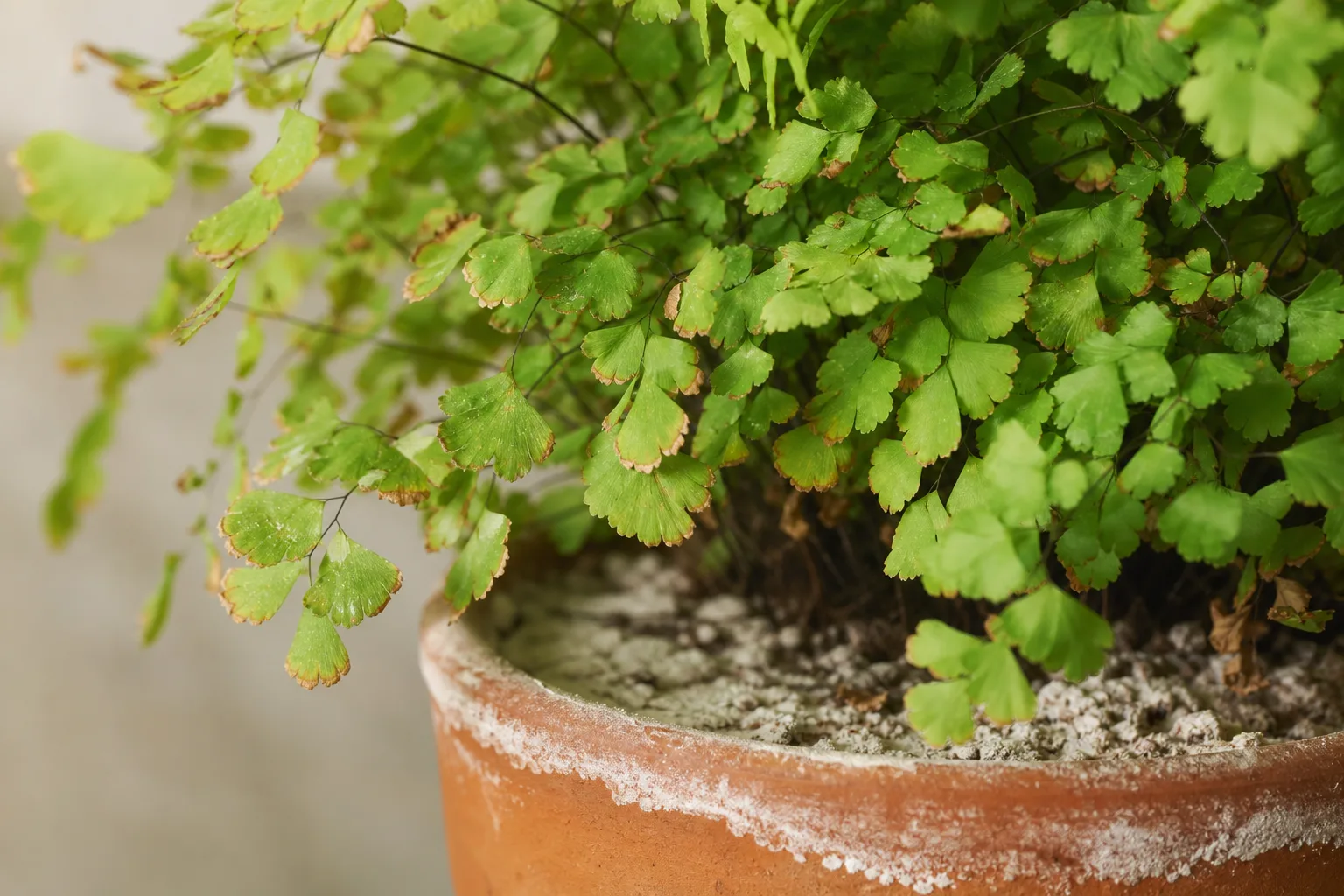
Salt build up on Maidenhair Fern shows as white crust on soil or pot rims, brown frond tips, and wilt despite moist mix. Scrape the surface crust, flush the pot with several volumes of plain filtered or rainwater, and pause fertilizer for 4–6 weeks.
Salt Build Up on Maidenhair Fern: Causes, Checks & Fixes
This guide covers salt build-up on Maidenhair Fern. See also the general Salt Build-up guide, watering, and light pages for this plant.
Salt Build Up on Maidenhair Fern: Causes, Checks & Fixes
Quick answer
Salt build up on Maidenhair Fern (Adiantum raddianum) is concentrated soluble minerals in the root zone - from tap water, fertilizer, and evaporated moisture - not a separate disease. This page covers chronic mineral accumulation in containers. If fronds browned within days of a recent feed, start with the fertilizer burn guide instead.
First step: scrape the white crust from the soil surface, then flush the pot with plain filtered or rainwater until at least two to three pot volumes drain freely through open holes.
| What you notice | Likely cause | Fix first |
|---|---|---|
| White crust + tip burn; hard tap or bottom watering; no recent heavy feed | Salt buildup (this page) | Scrape crust, flush 2–3 pot volumes, pause feed 4–6 weeks |
| Tip burn + crust within days of feeding | Fertilizer burn | Stop feed immediately, flush, hold fertilizer longer |
| Feed has no effect; pale growth; crust may be absent | Nutrient lockout | Check pH and feed timing before flushing again |
| Crispy tips, no crust; RH below 50% | Low humidity | Humidifier at frond height first |
| Tips brown, no thick crust; filtered water already | Fluoride or water chemistry | Switch water source; see brown tips |
Maidenhair Fern has fine, moisture-loving roots that lose uptake ability when salts compete for water in the mix. White crust on soil or pot edges, brown crispy frond tips, and fronds that wilt despite moist soil are the classic indoor pattern.
What salt build up looks like on Maidenhair Fern
The most obvious sign is a white or gray crystalline crust on the soil surface, around the pot rim, or on unglazed clay exteriors. On Maidenhair Fern, salt damage often shows on delicate fan-shaped pinnae before anywhere else because the plant transpires heavily and has little tissue buffer.
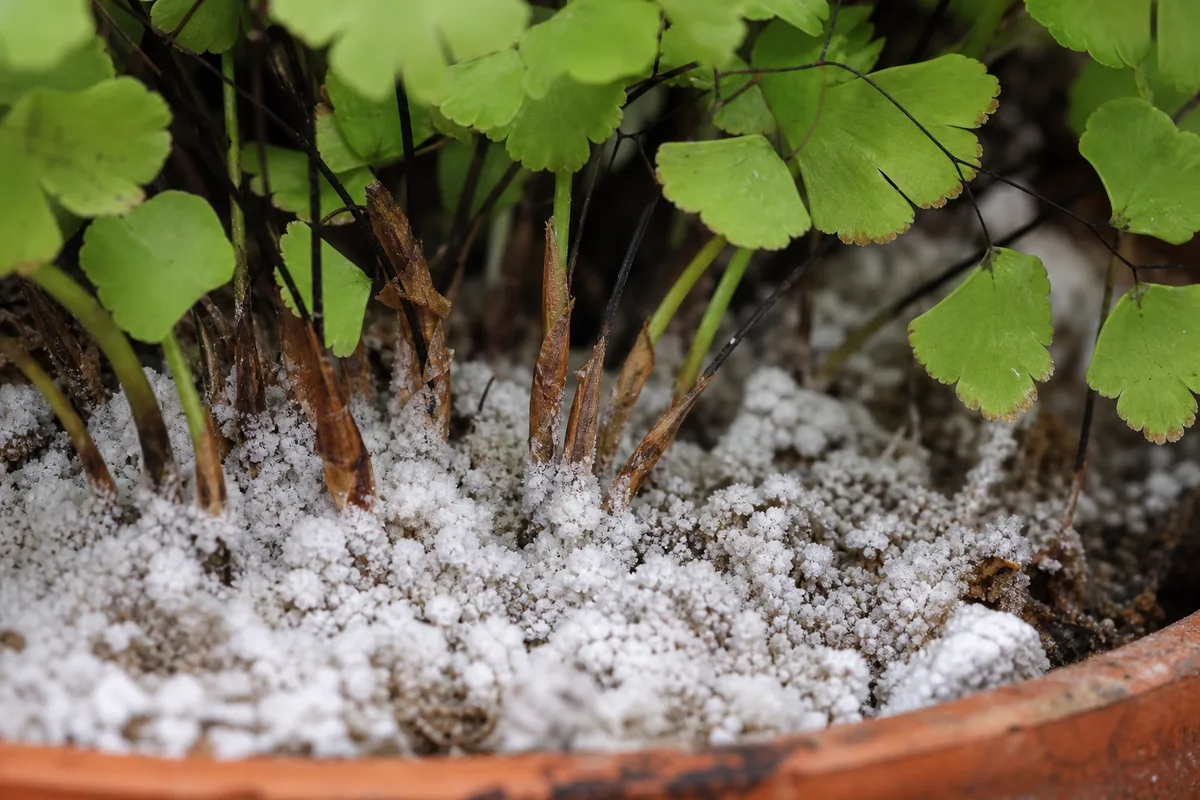
Salt Build-up symptoms on Maidenhair Fern - compare with healthy tissue on the same plant.
You may also see:
- Brown, dry frond tips and margins on otherwise green leaflets
- Frond wilt or collapse even when the mix feels damp - salt-damaged roots cannot move water
- Stunted or pale new fronds emerging from the rhizome crown
- Lower frond drop as salts concentrate in older tissue
- White ring at the soil line or around drainage holes - especially common in bottom-watered cachepots where the crown sits close to the mix
Burned frond tissue does not green up again. Recovery means new clean fronds from the crown while crust stops reforming.
Why Maidenhair Fern gets salt build up
Maidenhair Fern is already sensitive to minerals in tap water and excess fertilizer. When salts accumulate in a closed pot, this species shows damage faster than tougher foliage plants because its roots are fine and its fronds are thin.
Common triggers on this plant:
Hard or softened tap water
Calcium, sodium, and other dissolved minerals stay behind as water evaporates from the soil surface. This fern is often grown with filtered or rainwater for good reason - stacked tap minerals push tips brown even without overfeeding. Repeated softened-water use can accumulate sodium that eventually injures fine roots.
Fertilizer without leaching
Half-strength monthly feed is enough in spring and summer per the fertilizer guide, but salts from every application accumulate unless you periodically flush the mix with plain water. Ferns are very sensitive to over fertilizing, and salt buildup worsens the problem when leaching is skipped.
Bottom watering and cachepots
Salts rise and crystallize at the soil surface when water is absorbed from below. On a fern with a low crown sitting close to the mix, crust at the soil line can damage emerging fronds. Bottom watering after synthetic fertilizer is a common path to chronic buildup on this species.
Stale, unreplaced mix
A Maidenhair Fern repotted every 1–2 years can sit in the same pot long enough for years of minerals to load the root zone. Peat-heavy mix that has broken down also holds salts more tightly near the surface. See the repotting guide for timing before mix becomes compacted and salt-loaded.
Saucers left full
When drained water is reabsorbed, salts washed toward the bottom of the pot are pulled back into the root zone - the opposite of leaching. This trap is easy to miss because the fronds still look wet while salt concentration climbs.
Terrariums and enclosed culture
High humidity slows evaporation from leaflets but concentrates minerals at the crown line where soil meets air in a closed container. Fine fern roots at the surface see salt spikes faster than roots deeper in open pots. Leach terrarium plantings every two to three months if you use tap water or feed at all.
Pots without free drainage
Closed or poorly drained containers trap salts because water never moves through the full soil column. Pair with the poor drainage and no drainage hole guides if water sits in the bottom.
How to confirm the cause
Do not assume every white spot is salt. Mold-like fungal growth on wet soil can look pale but feels soft and fuzzy, not hard and crystalline - see mold on soil for the texture check. Confirm in this order:
- Crust texture - Hard, gritty white or gray crystals that scrape off dry point to salts; soft cottony growth does not.
- Water and feed history - Hard tap water, bottom watering, or regular fertilizer without leaching raises salt risk.
- Moisture vs. wilt - Limp fronds with wet soil and crust suggest salt-blocked uptake; crisp fronds with light dry pot suggest underwatering.
- Crust location - Surface and rim deposits fit salt buildup; uniform tip browning without crust may be low humidity alone.
- Timing - Crust that thickens over months fits gradual accumulation; sudden collapse right after one heavy feed may overlap with fertilizer burn.
If crust is absent and tips browning slowly in a dry room, check humidity and water chemistry on the brown tips page before flushing.
Salt buildup vs. fertilizer burn vs. nutrient lockout
| Signal | Salt buildup | Fertilizer burn | Nutrient lockout |
|---|---|---|---|
| Onset | Weeks to months | Days after feeding | Weeks of poor response to feed |
| Crust | Often thick on rim and surface | Common after heavy feed | May be absent |
| Water history | Hard tap, bottom water, no leaching | Recent full-strength or dry-soil feed | Alkaline mix, wrong pH, overfeed history |
| Wilt with wet soil | Common | Common after acute burn | Less common |
| First fix | Scrape, flush, pause feed 4–6 weeks | Stop feed, flush immediately | Test pH; adjust before more fertilizer |
| Sibling guide | This page | Fertilizer burn | Nutrient lockout |
First fix for Maidenhair Fern
Scrape the visible salt crust from the soil surface - remove no more than about a quarter inch of mix - then flush the pot with plain room-temperature filtered or rainwater until at least two to three pot volumes run freely from drainage holes. Empty saucers completely after each pass.
Do not repot on day one unless crust is thick, roots are already soft, or two flushes fail to stop decline. Leaching addresses most mild-to-moderate buildup without disturbing fine roots.
Hold all fertilizer for 4–6 weeks after flushing. Resume half-strength monthly feed only when new fronds appear in active spring or summer growth per the fertilizer guide.
Step-by-step recovery
- Move the pot to a sink or tub where water can drain freely.
- Scrape white crust gently - avoid damaging crown fronds or surface roots.
- Water deeply with plain water until excess drains; wait five minutes, then repeat until two to three pot volumes have passed through.
- Empty saucers immediately - never let the fern sit in runoff.
- Place in stable bright indirect light and 60%+ humidity while roots recover.
- Trim fully browned fronds at soil level once the plant stabilizes, not during active collapse.
- If crust returns within two weeks, unpot, inspect roots, and repot firm sections into fresh airy mix without fertilizer for one month per the repotting guide.
Replace scraped surface mix with a thin layer of fresh potting blend if roots were briefly exposed.
Recovery timeline
Mild salt buildup with intact roots often shows new clean fronds in 2–4 weeks under stable humidity and indirect light. Judge success by emerging growth and crust staying off the surface, not immediate fullness.
A typical open-pot recovery: bottom-watered maidenhair in hard tap water, white rim crust, one scrape-and-flush cycle with filtered water, saucer emptied after every pass. New pinnae emerged without tip burn at roughly three weeks; old browned margins stayed crisp until trimmed.
Severe salt damage - mass frond collapse, dead root tips, crown softening - may require repotting into fresh media even after leaching. On Maidenhair Fern, division of any firm rhizome section with healthy attached fronds is the salvage path when the main crown fails.
Lookalike symptoms
- Low humidity alone - Crispy tips without white crust, often uniform across the plant; improves above 60% humidity on the low humidity guide.
- Fertilizer burn after recent feeding - Similar tip browning and crust, but tied to a feed within days; flushing still helps, but pause feed longer on the fertilizer burn page.
- Fluoride in tap water - Tip browning without thick crust; switching water source helps without heavy leaching - see brown tips.
- Underwatering - Immediate frond collapse with light, dry pot and no salt ring.
- Overwatering / root rot - Yellow limp fronds, sour smell, mushy roots - not tip-only crisping with hard white crust. See root rot.
- Saprophytic mold on soil - Soft white or yellow growth on constantly wet surface, not gritty crystals.
Mistakes to avoid
Do not feed hoping to “green up” a salt-stressed fern - that adds more minerals. Do not bottom water after synthetic fertilizer. Do not scrape more than a quarter inch of mix or you risk crown damage. Do not leave saucers full. Do not repot and fertilize the same week. Avoid leaching with the same hard tap water that caused buildup unless filtered water is unavailable - repeated hard-water flushes can leave salts behind.
How to prevent salt build up next time
Leach the pot with clear plain water every four to six months in open containers - every two to three months in terrariums or cachepots - even when feeding modestly. Use filtered or rainwater for routine drinks if tap minerals already stress this fern per the watering guide. Top-water until excess drains, then empty saucers every time.
Feed half-strength balanced liquid fertilizer monthly in spring and summer only. Skip winter feed, never fertilize dry or stressed plants, and leach before resuming feed after a flush cycle. Repot every 1–2 years into fresh moisture-retentive but airy mix before old soil becomes compacted and salt-loaded.
Maidenhair Fern care cross-check
This fern wants steady moisture and clean water, not mineral-heavy nutrition. A plant leached rarely but fed monthly in hard tap water will crust and brown tips while sitting in wet mix - a confusing pattern that looks like overwatering but is salt blockage.
| What you find | Likely cause | Next step |
|---|---|---|
| White crust + limp fronds + wet soil | Salt buildup | Scrape and flush - this page |
| Wet soil + sour smell + yellowing | Root rot | Root rot guide - do not flush harder |
| No crust + RH below 50% | Low humidity | Low humidity |
| Crust days after feeding | Fertilizer burn | Fertilizer burn |
| Tips brown, no crust, filtered water | Fluoride / water quality | Brown tips |
If growth is slow but tips stay green, check light and humidity on the overview before adding fertilizer. If tips brown with crust despite good humidity, water chemistry and leaching matter more than another misting session.
When to worry
Escalate if the crown softens, fronds blacken from the base after flushing, or wilt persists despite moist soil and two thorough leaches. Repot into fresh mix if crust returns within days, root tips feel dead and brittle, or the plant collapses faster than humidity or drought would explain.
If two full flush cycles plus repot into fresh mix fail and crust still returns within a week, contact your local cooperative extension office or master gardener helpline with photos of the crust, your water source, and feeding schedule - persistent salt injury on fine fern roots sometimes needs a lab soil test or professional diagnosis beyond home leaching.
Related Maidenhair Fern guides
- Fertilizer burn on Maidenhair Fern - acute tip burn and crust after recent feeding
- Nutrient lockout on Maidenhair Fern - when feed has no effect despite adequate dosing
- Brown tips on Maidenhair Fern - tip burn routing for humidity vs. water quality
- Low humidity on Maidenhair Fern - crispy fronds without mineral crust
- Maidenhair Fern fertilizer guide - half-strength seasonal feeding without salt stacking
- Maidenhair Fern watering guide - top-water rhythm and saucer discipline
- Root rot on Maidenhair Fern - when wet soil and wilt are not salt-related
- Poor drainage on Maidenhair Fern - trapped salts when water never moves through mix
- Maidenhair Fern overview - full care hub and habitat context