Fertilizer Burn on Maidenhair Fern: Causes, Checks & Fixes
Quick answer
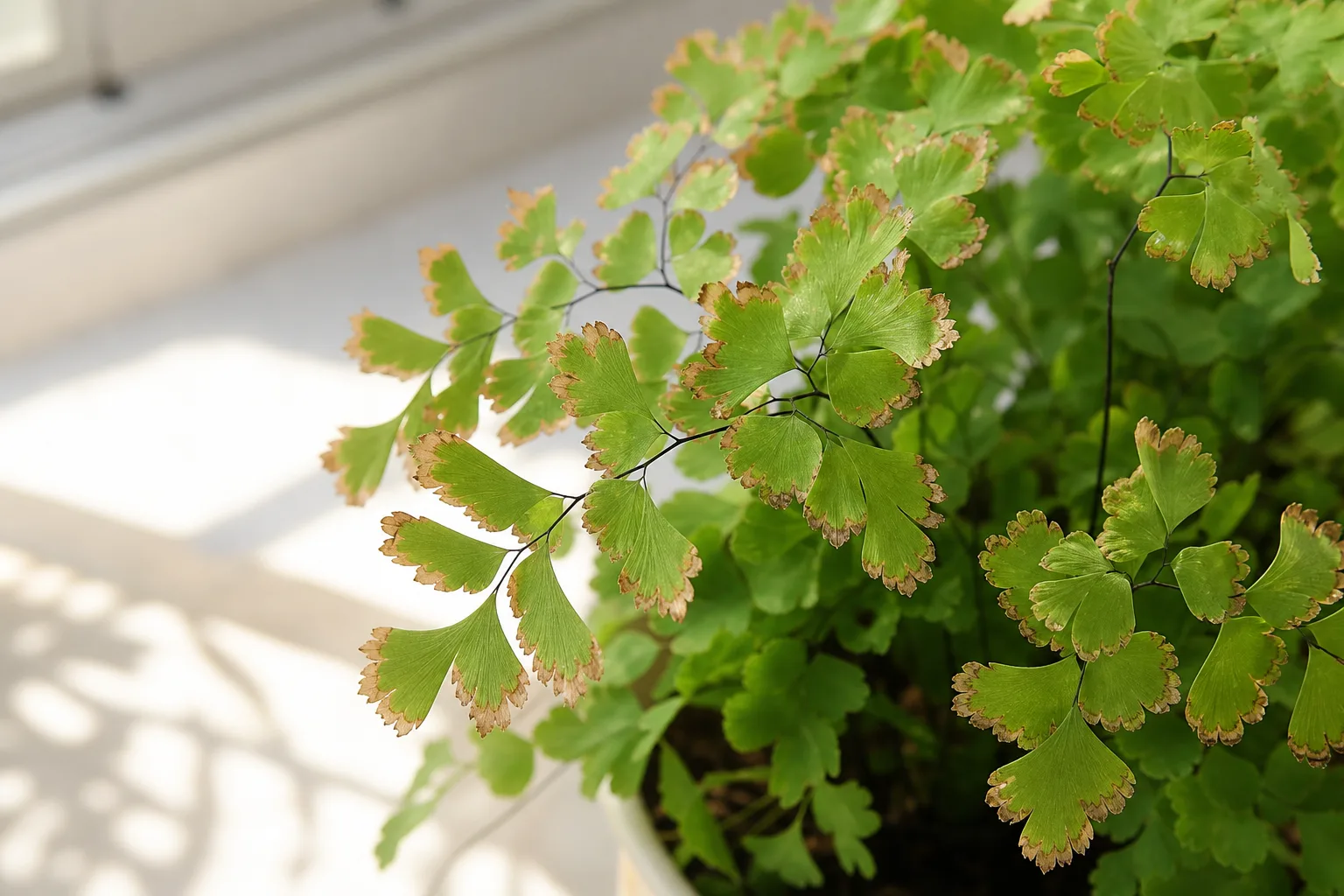
Maidenhair Fern fertilizer burn shows as brown crispy frond tips and edges after feeding, often with white salt crust on the soil. Stop fertilizer immediately, flush the pot with several volumes of plain water, and hold feed for 4–6 weeks.
Fertilizer Burn on Maidenhair Fern: Causes, Checks & Fixes
This guide covers fertilizer burn on Maidenhair Fern. See also the general Fertilizer Burn guide, watering, and light pages for this plant.
Fertilizer Burn on Maidenhair Fern: Causes, Checks & Fixes
Quick answer
Fertilizer burn on Maidenhair Fern is excess soluble salts in the root zone - not a mystery nutrient gap. First step: stop all fertilizer immediately and flush the pot with plain water until several pot volumes drain freely, then hold feed for 4–6 weeks.
Maidenhair Fern has fine, moisture-loving roots that cannot tolerate concentrated fertilizer salts. When salts build up after too-strong feed, repeated applications, or fertilizer on dry soil, delicate fronds brown at tips and margins while roots lose their ability to absorb water.
What fertilizer burn looks like on Maidenhair Fern
The classic sign is brown, dry frond tips and edges on otherwise green leaflets - often appearing within days of feeding. On Maidenhair Fern, the damage shows on thin, fan-shaped pinnae first because the plant transpires heavily and has little tissue buffer.
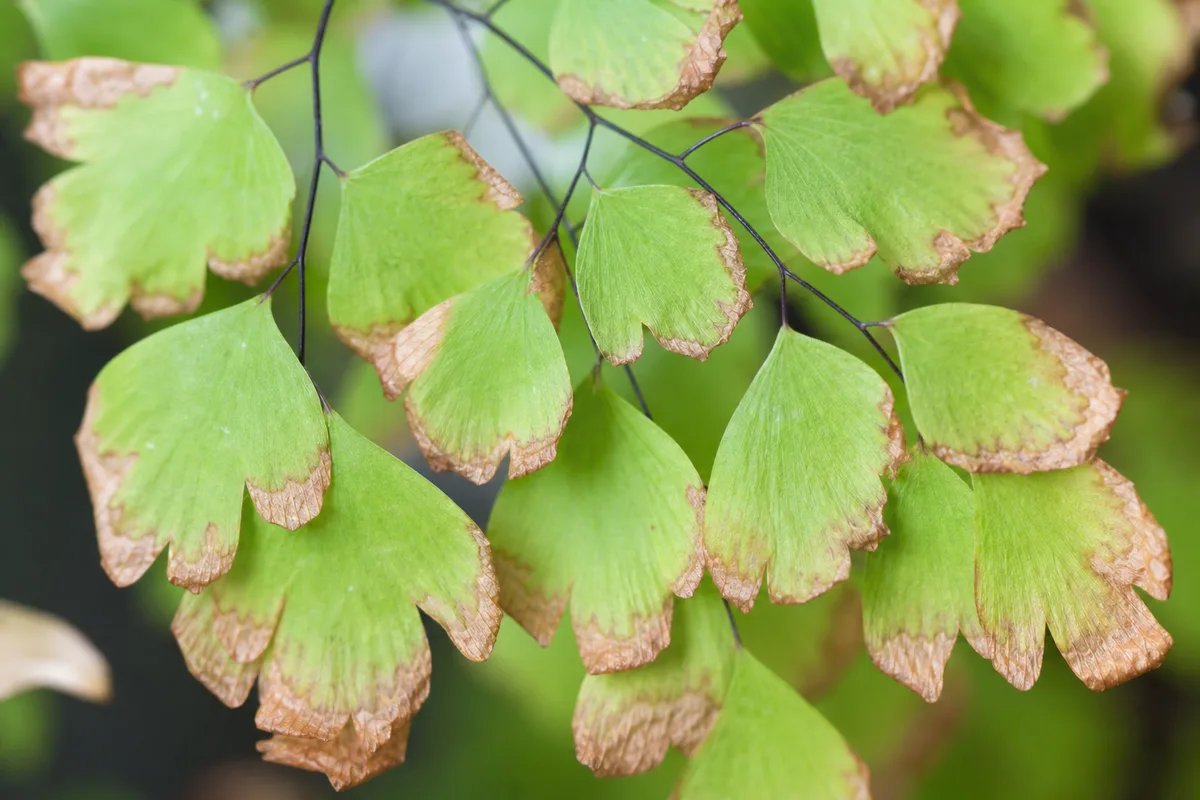
Fertilizer Burn symptoms on Maidenhair Fern - compare with healthy tissue on the same plant.
You may also see:
- White crust on the soil surface or around the pot rim
- Sudden frond wilt despite moist mix - salt-damaged roots cannot move water
- Mass frond drop after a heavy or dry-soil feed
- Stunted new growth with pale or small emerging fronds
Burned tissue does not green up again. Healthy new fronds emerging from the rhizome crown are the real recovery signal.
Why Maidenhair Fern gets fertilizer burn
Ferns are very sensitive to over fertilizing - Maidenhair Fern is among the least forgiving indoor ferns because its roots are fine and its fronds are thin. Clemson Extension notes that ferns need cautious feeding and that excess fertilizer causes more harm than skipping a dose.
Common triggers on Maidenhair Fern overview:
Full-strength or frequent feeding. Indoor labels often assume bright greenhouse light. Half-strength monthly in spring and summer is enough for Maidenhair Fern - doubling the dose or feeding every watering concentrates salts fast.
Fertilizing dry soil. Concentrated nutrients hit dry fine roots directly. This fern needs consistently moist but well-drained soil, but “moist” does not mean “feed when the top feels dry.” Water with plain water first, then feed a day later on damp mix.
Bottom watering with synthetic fertilizer. Salts rise and crystallize at the soil surface. UMD Extension links bottom watering to salt crust and stem damage at the soil line - risky on a fern with a low crown.
Stale, salt-loaded mix. Years in the same pot without leaching lets minerals accumulate from both fertilizer and hard tap water. Maidenhair Fern is already sensitive to fluoride and minerals in tap water; stacked salts push tips brown faster.
Feeding a stressed plant. Newly repotted, drought-shocked, or heat-stressed ferns cannot process nutrients. Fertilizer on damaged roots accelerates burn.
How to confirm the cause
Do not assume every brown tip is fertilizer burn. Maidenhair Fern browns from low humidity, fluoride in tap water, and underwatering on Maidenhair Fern too. Confirm in this order:
- Feeding history - Did you fertilize in the last 7–14 days? Was it full strength, on dry soil, or extra frequent?
- Salt signs - White crust on soil surface or pot exterior?
- Symptom timing - Tip burn that appeared right after feeding points to salts; slow edge browning over weeks may be humidity or water chemistry.
- Soil moisture vs. wilt - Limp fronds with wet soil after recent feeding suggests root salt damage, not drought.
- Cross-check humidity and water - Below 50% humidity or heavy tap water can mimic burn on tips alone without crust.
If you have not fed in months and see no salt crust, look at humidity, watering, and light before flushing.
First fix for Maidenhair Fern
Stop fertilizer immediately and flush the soil with plain water - run at least two to three pot volumes through open drainage holes until water runs clear, then empty saucers completely.
Scrape visible white crust from the soil surface before flushing. Use room-temperature filtered or rainwater if your tap is hard - this fern already struggles with mineral buildup.
Do not repot on day one unless the pot is tiny and heavily crusted. Flushing addresses most mild-to-moderate burn without disturbing fine roots.
Hold all fertilizer for 4–6 weeks minimum. Resume only when new fronds appear and the plant is actively growing in spring or summer.
Step-by-step recovery
- Stop feeding - remove slow-release pellets from the soil surface if present.
- Scrape off white salt crust gently without damaging crown fronds.
- Water deeply with plain water until excess drains; repeat 2–3 times over one hour.
- Empty saucers after each flush - never leave the fern standing in runoff.
- Move to stable Maidenhair Fern light guide and 60%+ humidity while roots recover.
- Trim fully browned fronds at soil level once the plant stabilizes - not before, unless they are clearly dead.
- Resume half-strength monthly feed only after clean new growth emerges.
If fronds continue collapsing after two thorough flushes, unpot and inspect roots. Firm pale roots can stay; repot into fresh airy mix without adding fertilizer for one month.
Recovery timeline
Mild burn with intact roots often shows new clean fronds in 2–4 weeks under stable humidity and indirect light. Judge success by emerging growth, not immediate fullness.
Severe salt damage - mass collapse, soft roots, crown decline - may not recover even after flushing. UMD Extension recommends replacing growing media in smaller pots with very high salts. On Maidenhair Fern, division of any firm rhizome section with attached healthy fronds is the salvage path.
Lookalike symptoms
- Low humidity - Crispy tips without white crust, often uniform across the plant; improves with humidity above 60%.
- Fluoride or hard tap water - Tip browning without recent feeding; switch to filtered or rainwater.
- Underwatering - Immediate frond collapse with light, dry pot and no salt crust.
- overwatering on Maidenhair Fern / root rot on Maidenhair Fern - Yellow limp fronds, sour smell, mushy roots - not tip-only crisping after feed.
- Direct sun scorch - Bleached or tan patches on fronds facing the window, not tied to fertilizer timing.
Mistakes to avoid
Do not feed hoping to “revive” a browning fern - that worsens salt load. Do not use full-strength outdoor fertilizer indoors. Do not fertilize in autumn or winter when growth slows. Do not apply fertilizer to dry soil or directly onto fronds. Avoid bottom watering after synthetic feeds. Do not repot and fertilize the same week.
How to prevent fertilizer burn next time
Feed half-strength balanced liquid fertilizer monthly during spring and summer only. Water with plain water the day before feeding so roots are already moist. Leach the pot with clear water every four to six months to prevent salt buildup even when doses are modest.
Skip fertilizer after Maidenhair Fern repotting guide for 4–6 weeks, during heat waves, and whenever fronds are dropping. Pair feeding with filtered or rainwater if tap minerals already brown tips. Never stack fertilizer with other stress fixes - correct light, humidity, and watering first.
Maidenhair Fern care cross-check
This fern is a light feeder in a high-maintenance environment. It wants steady moisture and humidity, not heavy nutrition. A plant pushed with monthly full-strength feed in a dim room will burn while barely growing - salts accumulate faster than the fern uses them.
If growth is slow but tips are green, check light and humidity before adding more fertilizer. Pale fronds with good care may need repotting into fresh mix, not stronger feed.
When to worry
Escalate if the crown softens, fronds blacken from the base after flushing, or the plant collapses within 48 hours of a feed. Repot into fresh mix if two flushes fail to stop decline and salt crust returns within days.
Conclusion
Maidenhair Fern fertilizer burn is soluble salt damage - visible as crispy frond tips, white soil crust, and wilt despite moist mix after feeding. Stop fertilizer, flush several pot volumes of plain water through drainage holes, and pause feed for weeks. Prevent recurrence with half-strength monthly feeding on moist soil, seasonal pauses, and regular leaching - this fern rewards restraint, not extra nutrients.
When to use this page vs other Maidenhair Fern guides
- Maidenhair Fern watering guide - Use for routine moisture checks before assuming fertilizer burn is the main issue.
- Maidenhair Fern problems hub - Browse all 55 common issues on this species.
- Salt Build-up on Maidenhair Fern - Different entry point when symptoms overlap with fertilizer burn.
- Brown Tips on Maidenhair Fern - Different entry point when symptoms overlap with fertilizer burn.