No Drainage Hole on Maidenhair Fern: Causes, Checks & Fixes
Quick answer
Maidenhair Fern needs moist roots with oxygen, not a sealed water reservoir. First step: move the plant to a pot with open drainage holes and empty any cachepot runoff within 30 minutes of watering.
No Drainage Hole on Maidenhair Fern: Causes, Checks & Fixes
This guide covers no drainage hole on Maidenhair Fern. See also the general No Drainage Hole guide, watering, and light pages for this plant.
No Drainage Hole on Maidenhair Fern: Causes, Checks & Fixes
Quick answer
Maidenhair Fern needs moist roots with oxygen, not a sealed water reservoir at the pot base. First step: move the plant to a container with open drainage holes and empty any cachepot or saucer runoff within 30 minutes of watering.
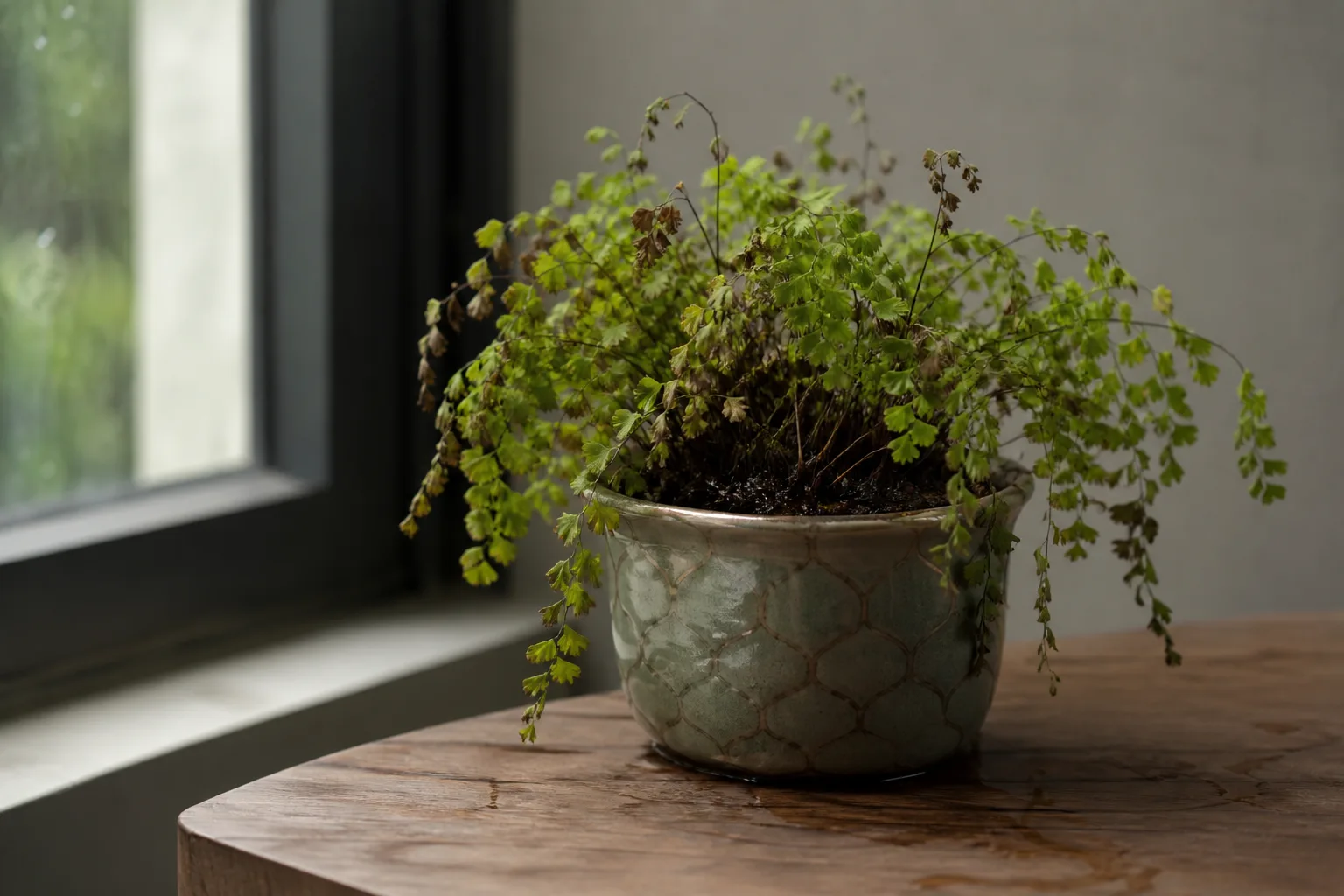
This fern is often sold in pretty glazed pots without holes. Because Maidenhair Fern needs consistently moist but well-drained mix, caregivers water frequently - and without an exit path, every drink adds to a hidden pool that suffocates fine fern roots within days.
What no drainage hole stress looks like on Maidenhair Fern
Above ground, trapped water mimics both overwatering on Maidenhair Fern and drought. Fronds yellow, wilt, or blacken at the base while the pot feels heavy and surface mix stays damp. That mismatch - limp foliage on wet soil - is the signature of root dysfunction, not thirst.
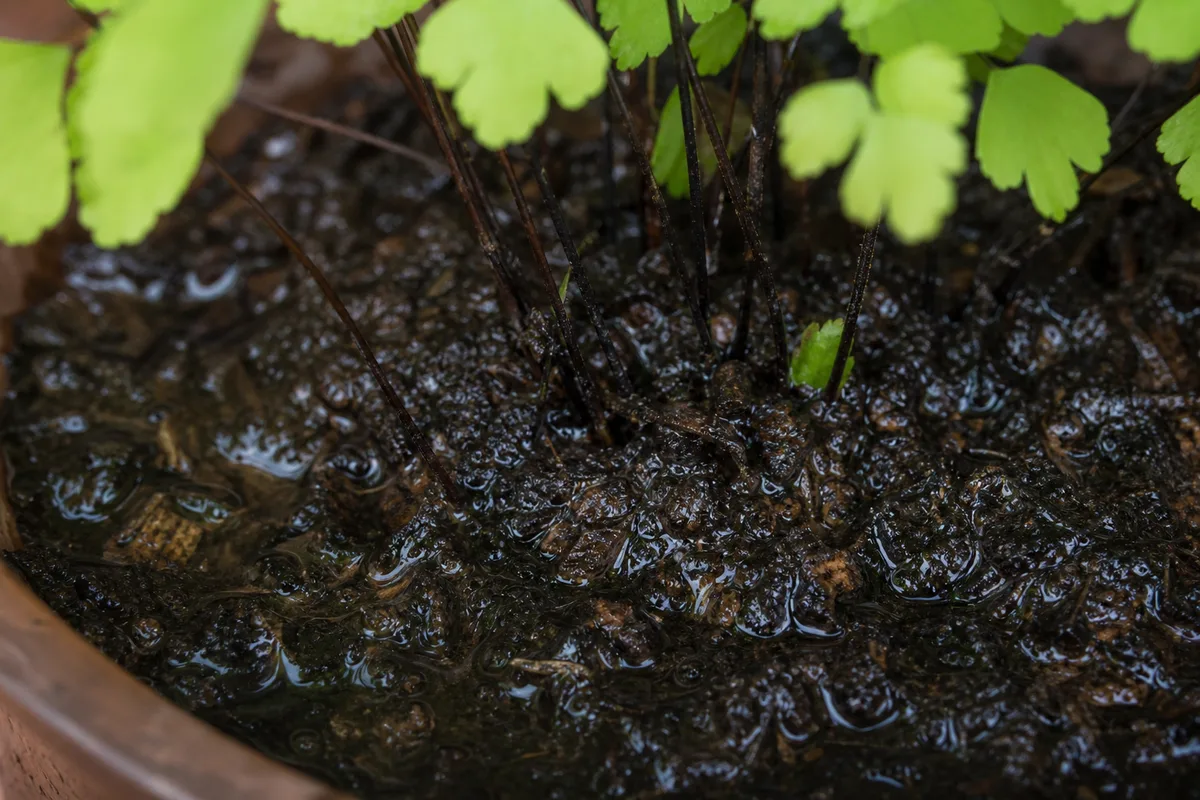
No Drainage Hole symptoms on Maidenhair Fern - compare with healthy tissue on the same plant.
Chronic cases show sour or musty smell when you lift the plant, white mold or algae on the soil surface, and fungus gnats hovering over permanently damp mix. Advanced failure brings mass frond collapse and soft dark tissue at the rhizome crown.
Below ground, healthy Maidenhair Fern roots are pale and firm. Roots sitting in a sealed bottom layer turn brown, slimy, or translucent and break apart when rinsed.
Why Maidenhair Fern is especially vulnerable
Maidenhair Fern fine roots need steady moisture plus air. The species wants moist soil and roots that should not dry out, but stagnant water at the pot base creates anaerobic conditions where decay fungi thrive.
Hole-less decorative pots are the most common trigger. Caregivers water to keep the fern from drying - exactly what Maidenhair Fern overview needs - but water has nowhere to exit.
Cachepots and sealed saucers recreate the same problem. An inner nursery pot may drain briefly, then the outer shell refills and the root zone reabsorbs standing water.
Oversized hole-less containers surround a small root ball with wet mix that never dries. Maidenhair Fern tolerates slight root confinement; excess empty soil in a large sealed pot stays soggy for weeks.
Low light plus sealed pots slows water use while watering continues on habit. The fern transpires little, so mix stays saturated even when the caregiver is trying to prevent dryness.
How to confirm the cause
Do not assume every struggling Maidenhair Fern has a drainage problem. Confirm in this order:
- Pot base inspection - Are there functional drain holes? Push a skewer through to check for root or debris blockages.
- Cachepot check - Lift the inner pot after watering. Is water sitting in the outer shell?
- Exit test - Water until a small amount should drain. Does any water leave within a few minutes?
- Wilting vs. moisture - Limp yellow fronds with heavy wet soil point to trapped water, not underwatering on Maidenhair Fern.
- Smell and roots - Sour odor or mushy roots on unpotting confirm advanced damage.
Underwatering shows a light dry pot and immediate frond crisping with firm white roots - the opposite pattern.
First fix for Maidenhair Fern
Repot into a clean container with open drainage holes - or drill holes in a suitable rigid pot - then water once and discard all runoff.
Slide the fern out and inspect roots. If mix smells sour or roots are mushy, trim decayed tissue with sterilized scissors, discard saturated soil, and repot in fresh airy moist mix sized to the remaining root mass. If roots are still firm and mix is only slightly wet, moving to a holed pot and correcting watering may be enough without full Maidenhair Fern repotting guide.
Never leave the plant in a sealed decorative pot long term. Use the decorative container as a sleeve: lift the holed nursery pot out after watering and pour away trapped water.
Step-by-step recovery
- Remove the fern from the sealed or blocked container.
- Test drain holes with a skewer; drill 3–5 holes in rigid ceramic if safe, or transfer to a standard nursery pot.
- If roots smell sour, rinse away old mix and trim soft tissue until only firm roots remain.
- Repot into airy moisture-retaining mix - coco coir, fine bark, and compost - in a pot sized to roots, not frond spread.
- Water until a small amount exits the holes; empty saucers and cachepots completely.
- Place in Maidenhair Fern light guide with 60%+ humidity while roots stabilize.
- Resume watering when the top centimeter feels barely dry - moist recovery, never waterlogged.
- Hold fertilizer until new fronds appear, usually 2–4 weeks in stable conditions.
Cut collapsed fronds at soil level to reduce stress on reduced roots.
Recovery timeline
Mild drainage stress with firm roots may show new fronds in 2–4 weeks once holes are open and runoff is discarded. Judge success by firm new growth, not immediate fullness.
Severe crown rot often kills Maidenhair Fern within days despite repotting. If the rhizome is soft, salvage any firm division with attached healthy fronds rather than expecting the whole plant to rebound.
Lookalike symptoms
- Simple overwatering with working drainage - Holes exist and saucers are emptied, but watering is too frequent for light level.
- Underwatering - Dry light pot, crispy collapse, firm roots.
- Low humidity shock - Tip browning and frond desiccation with intact roots when unpotting.
- root rot on Maidenhair Fern from compacted mix - Drainage holes present but mix stays wet due to heavy soil, not missing holes.
What not to do
Do not add a gravel layer and call it fixed - without exit holes, water still pools above the gravel. Do not keep watering a wilting fern in a sealed pot. Do not repot into an oversized decorative container without holes because this fern “likes moisture.” Do not leave runoff sitting in cachepots overnight. Avoid fertilizing stressed roots immediately after fixing drainage.
How to prevent drainage problems next time
Grow Maidenhair Fern only in pots with functional drain holes for long-term indoor care. Use decorative outer pots as removable sleeves and empty them after every watering. Size containers to the root ball - one to two inches wider at most when repotting. Check holes monthly for root blockages. Match watering to pot weight and light, not fear of this fern’s moisture needs.
Maidenhair Fern care cross-check
Drainage prevention means moist with oxygen, not dry OR swampy. A fern watered every two days in a dim bathroom will still fail if the pretty pot has no holes. Fix the container before adjusting humidity trays or misting routines.
When to worry
Escalate immediately if water pools after every watering, the crown softens, fronds blacken from the base upward, or the plant collapses within 48 hours of wilting. Early yellowing with a firm crown and green new fronds still allows a drainage rescue if caught before roots turn mushy.
Conclusion
No drainage hole on Maidenhair Fern turns good watering intentions into root suffocation. Confirm by checking pot exits and cachepot water, move the plant to open drainage, discard runoff, and repot only if roots or mix show rot. Prevent recurrence with holed nursery pots inside decorative sleeves, appropriate pot size, and watering tied to how the container dries - not a sealed reservoir at the bottom.
When to use this page vs other Maidenhair Fern guides
- Maidenhair Fern watering guide - Use for routine moisture checks before assuming no drainage hole is the main issue.
- Maidenhair Fern problems hub - Browse all 55 common issues on this species.