Nutrient Lockout on Maidenhair Fern: Causes, Checks & Fixes
Quick answer
Nutrient lockout on Maidenhair Fern shows as pale, stunted fronds or brown tips even when you feed regularly - usually from salt buildup, hard water minerals, or depleted mix blocking uptake. First step: stop fertilizer and flush the pot with plain water through moist soil.
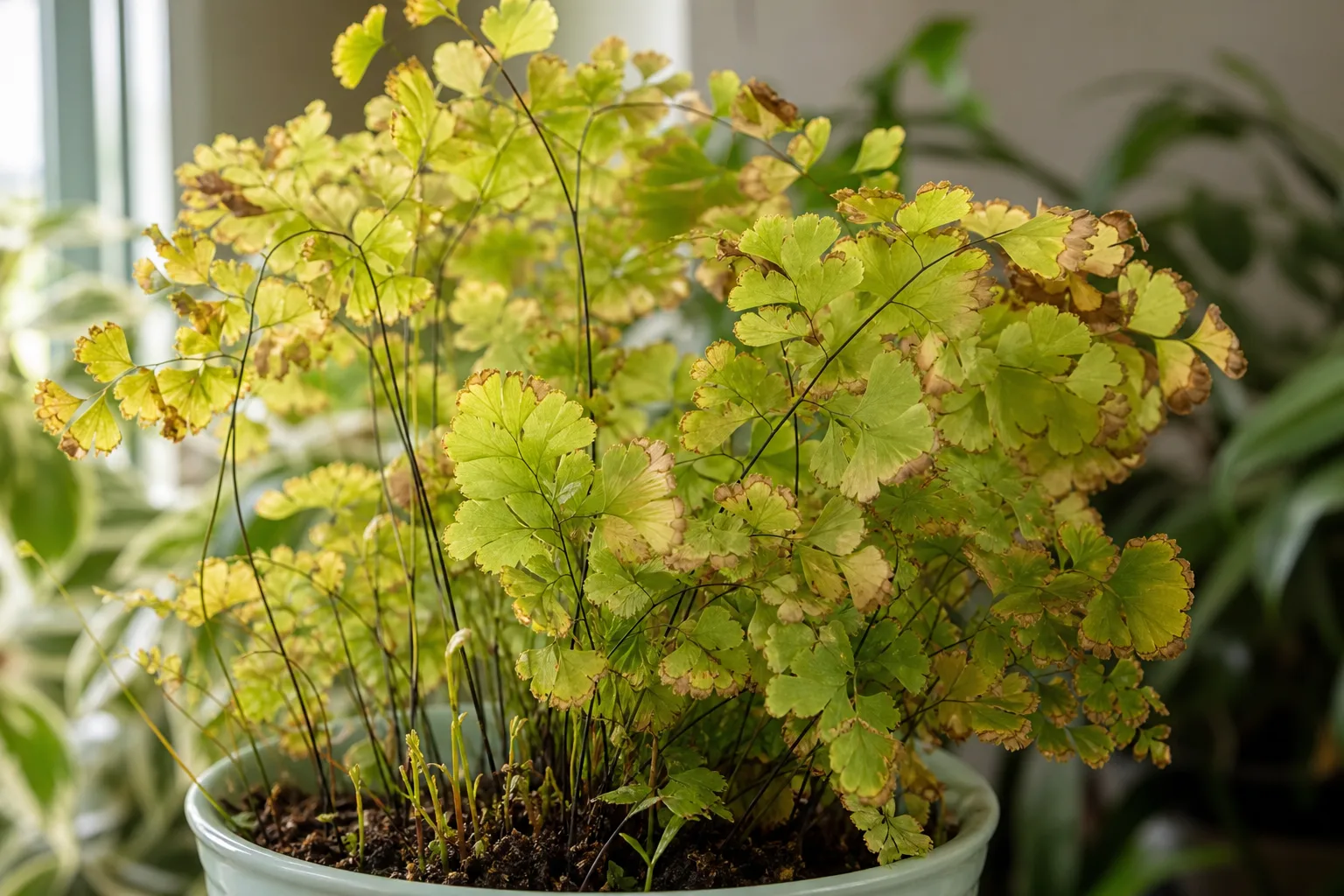
Nutrient Lockout on Maidenhair Fern: Causes, Checks & Fixes
This guide covers nutrient lockout on Maidenhair Fern. See also the general Nutrient Lockout guide, watering, and light pages for this plant.
Nutrient Lockout on Maidenhair Fern: Causes, Checks & Fixes
Quick answer
Nutrient lockout on Maidenhair Fern means minerals are in the pot but roots cannot absorb them - so the plant looks hungry even when you feed it. On Maidenhair Fern overview, lockout usually traces to salt buildup from fertilizer or hard water, pH drift in old peat-based mix, or feeding when the fern cannot use nutrients (dry roots, winter rest, or active stress).
First fix: stop all fertilizer and flush the pot with plain lukewarm water through already-moist soil. Pour at least twice the pot volume until water runs freely from the drain holes, then empty saucers. Hold feed for four to six weeks and watch new croziers - not old fronds - for improvement.
What nutrient lockout looks like on Maidenhair Fern
Maidenhair Fern (Adiantum raddianum) has delicate, fan-shaped leaflets on black wiry stems. Lockout does not always yellow whole fronds the way overwatering on Maidenhair Fern does. Watch for these patterns:
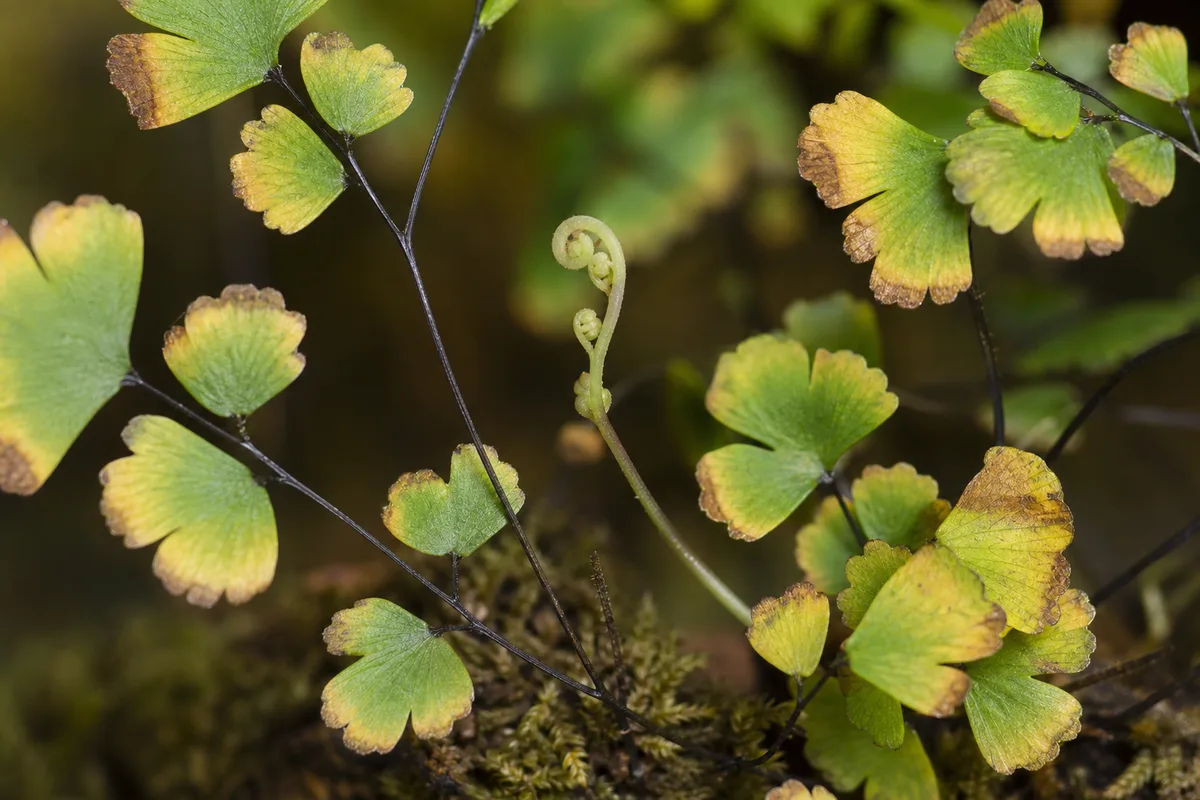
Nutrient Lockout symptoms on Maidenhair Fern - compare with healthy tissue on the same plant.
- Pale or washed-out green fronds across the plant despite regular feeding
- Stunted new croziers that open smaller than usual or stall before fully unfurling
- Brown crispy leaflet tips that appear or worsen after a fertilizer application
- White or tan salt crust on the soil surface, pot rim, or drainage hole
- Wilting or limp fronds paired with adequate soil moisture - roots damaged by salts cannot take up water
- Symptoms that persist or worsen when you add more fertilizer
Older black-stemmed fronds may stay green while new growth fails - a clue that uptake is blocked rather than the whole plant starving. Compare with overwatering, which yellows whole fronds with soggy, sour-smelling mix. Low humidity browns leaflet edges on existing fronds without the salt crust or post-feeding flare.
Why Maidenhair Fern gets nutrient lockout
Salt sensitivity. Ferns are very sensitive to over fertilizing, and Maidenhair Fern is among the least forgiving houseplants for heavy feeding. Soluble salts from fertilizer concentrate in potting mix as water evaporates. When salt levels climb, they inhibit water uptake and burn fine fern roots - creating deficiency symptoms even when nutrients are physically present.
Hard or softened tap water. Minerals in tap water add to the salt load with every watering. Softened water contains especially high dissolved minerals and should be avoided for houseplants. Over months, this shifts soil chemistry and can lock out iron, manganese, and other micronutrients Maidenhair Fern needs for deep green fronds.
pH drift in aging mix. This species grows best in slightly acidic mix around pH 6.0–7.0. As peat-based mix ages and salts accumulate, pH can drift. When pH moves outside the range where nutrients stay soluble, roots cannot access what’s already in the soil - classic lockout, not true deficiency.
Filtered or rainwater without replenishment. Many growers use filtered or rainwater to protect delicate leaflets from fluoride burn. That is wise, but it also means fewer minerals enter the mix. Skipping fertilizer during active growth while leaching salts with pure water can leave the root zone chemically depleted in a different way - pale growth with no salt crust.
Feeding at the wrong time. Maidenhair Fern sometimes benefits from a winter rest. Fertilizer applied when growth has slowed lets salts accumulate because the plant uses little. Feeding dry soil or a drought-stressed fern concentrates fertilizer at root tips and causes immediate burn.
How to confirm nutrient lockout
Work through these checks before adding supplements:
- Fertilizer history - Have you fed within the last month? Did symptoms worsen after the last dose? Lockout often follows over-feeding or full-strength doses.
- Salt inspection - White crust on soil surface, pot rim, or clay pot exterior points to soluble salt buildup.
- Water source - Hard tap water, softened water, or heavy liquid fertilizer use all raise salt risk.
- Mix age - Has the fern stayed in the same potting mix for two or more years without Maidenhair Fern repotting guide?
- Moisture and roots - Soil should be evenly moist, not bone dry or waterlogged. Gently unpot if needed: tan, firm roots suggest lockout; mushy roots suggest rot instead.
- New vs old growth - Stalled croziers with healthy lower fronds fits uptake failure. Whole-plant yellowing with wet soil points elsewhere.
- Response test - If pale fronds appeared after you increased feeding, lockout is more likely than deficiency.
True nitrogen deficiency on a fern is uncommon in fresh mix. On Maidenhair Fern, environmental stress - roots must never dry out, light must stay bright but indirect - causes more pale growth than simple hunger. Fix lockout chemistry before assuming a single missing nutrient.
First fix for Maidenhair Fern
Stop fertilizer immediately and flush the pot with plain water.
Water the fern lightly if soil is dry, then run lukewarm plain water through the mix until at least twice the pot volume drains out. Leach by pouring a lot of water and letting it drain completely, keeping water moving through the soil to wash salts out. Empty saucers so the pot never sits in runoff.
Do not fertilize during or right after flushing - you would wash away any feed and stress roots further. Place the fern back in Maidenhair Fern light guide with 60–80% humidity. Resume watering when the top centimeter is barely dry, using filtered or rainwater if that is your normal practice.
Step-by-step recovery
- Halt all fertilizer - including slow-release pellets hidden in the mix.
- Flush salts - twice the pot volume of plain water through moist soil; repeat once after a week if crust was heavy.
- Scrape surface crust - if a thick salt layer sits on top of the mix, remove it gently before flushing.
- Stabilize moisture - keep soil consistently moist but not stagnant; never let the root ball dry out during recovery.
- Wait four to six weeks - watch for new croziers opening with normal color and size.
- Repot if needed - if the fern has not been repotted in two or more years, move it into fresh airy mix (compost, coco coir, fine bark) after flushing.
- Resume feeding cautiously - only when new growth is steady, use half-strength balanced liquid fertilizer monthly through spring and summer.
If croziers keep browning at the crown after flush and repot, inspect for root rot on Maidenhair Fern from prior overwatering - a separate problem that also blocks uptake.
Recovery timeline
Expect two to four weeks before new fronds show clear improvement after a successful flush. Brown-tipped leaflets on old fronds will not heal - trim damaged edges only after the plant stabilizes.
Severe salt damage with mostly dead root tips gives a poorer outlook. Maidenhair Fern may still recover if firm rhizome tissue remains and new croziers emerge within a month. If the crown collapses and no new growth appears after six weeks, salvage any firm divisions rather than continuing to feed.
Lookalike symptoms
- Overwatering / root rot - Whole fronds yellow with wet, sour mix and mushy roots. Flushing alone will not fix decayed roots.
- Low humidity - Crispy margins on existing fronds in dry air, without salt crust or post-feeding timing.
- Too much direct sun - Scorched patches on sun-facing leaflets; leaves may scorch in direct sun.
- Calcium deficiency - Distorted, twisted croziers with brown spots on new leaflets specifically; narrower than general lockout.
- Under-fertilizing - Pale growth in fresh mix with no salt crust and no feeding for a full growing season. Fix with diluted feed, not flush.
What not to do
Do not add more fertilizer to pale fronds - that deepens lockout on salt-sensitive fern roots. Do not use full-strength doses or slow-release pellets in small pots. Do not flush bone-dry soil; moisten lightly first so water moves through the mix instead of channeling. Do not repot and feed on the same day. Avoid Epsom salt, iron drenches, or random supplements until the root zone is flushed and stable - guessing the missing nutrient often worsens chemical imbalance.
How to prevent nutrient lockout next time
Feed Maidenhair Fern lightly and only during active growth - half-strength balanced liquid fertilizer monthly in spring and summer, paused in autumn and winter. Use consistently moist but well-drained potting soil and repot every one to two years so mix does not become a salt trap.
Leach soil every four to six months with plain water even when you feed carefully. Prefer rainwater, distilled, or filtered water over softened tap. Water the day before feeding so fertilizer never hits dry roots. Treat fertilizer as maintenance for a healthy fern - not a rescue for stressed, wilted, or newly repotted plants.
Maidenhair Fern care cross-check
Nutrient lockout rarely appears in isolation on this species. Pale fronds plus dry soil point to underwatering on Maidenhair Fern first. Pale fronds plus wet soil may be rot, not lockout. If light is too dim, the fern grows slowly and uses so little fertilizer that salts build from water minerals alone. Align bright indirect light, steady moisture, and light feeding - then lockout becomes uncommon.
When to worry
Treat as urgent when fronds brown within days of fertilizing, a thick salt ring encircles the pot, or multiple new croziers die at the crown while you keep feeding. Mild pale growth with light surface crust and firm roots gives you time to flush and pause feed without repotting immediately.
Conclusion
Nutrient lockout on Maidenhair Fern looks like hunger but acts like poisoning - salts or pH drift block uptake while you keep adding feed. Confirm salt crust, fertilizer timing, and water quality, then flush with plain water and stop feeding for four to six weeks. Judge success by new green croziers, not old damaged fronds. Prevent recurrence with half-strength monthly feeding in summer only, regular leaching, and fresh mix on a one- to two-year cycle.
When to use this page vs other Maidenhair Fern guides
- Maidenhair Fern watering guide - Use for routine moisture checks before assuming nutrient lockout is the main issue.
- Maidenhair Fern problems hub - Browse all 55 common issues on this species.