Drooping Fronds on Maidenhair Fern: Causes, Checks & Fixes
Quick answer
Drooping Maidenhair Fern (*Adiantum raddianum*) fronds usually trace to dry roots, failing wet roots, or low humidity - not a single watering mistake. Lift the pot, probe the top centimeter, and check room air before you soak or withhold.
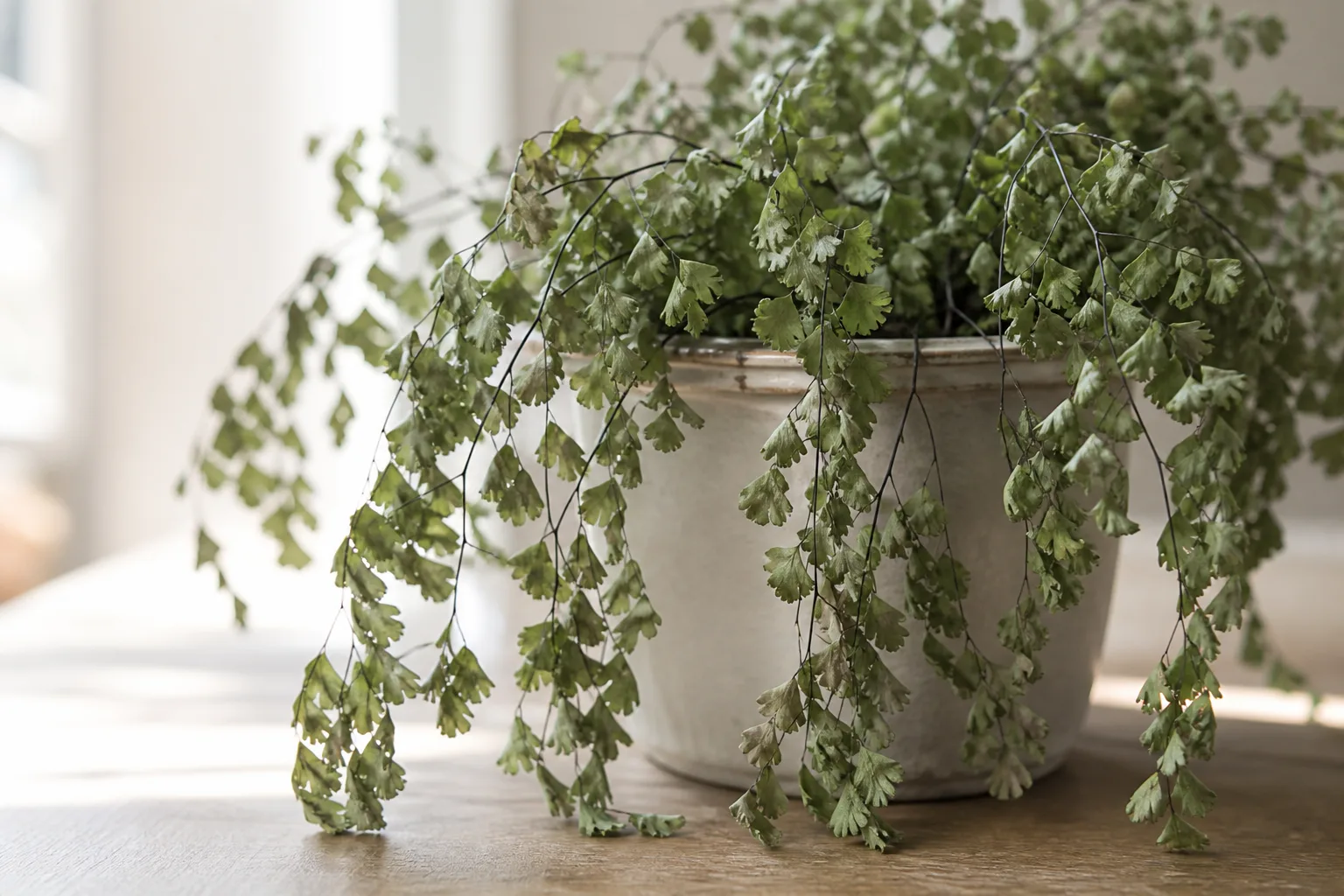
Drooping Fronds on Maidenhair Fern: Causes, Checks & Fixes
This guide covers drooping leaves on Maidenhair Fern. See also the general Drooping Leaves guide, watering, and light pages for this plant.
Drooping Fronds on Maidenhair Fern: Causes, Checks & Fixes
Quick answer
Drooping fronds on Maidenhair Fern (Adiantum raddianum) are gradual limpness - thin fan-shaped leaflets lose turgor over days, not the same-day collapse you see on acute wilt. The three common branches look similar from across the room but need opposite fixes: dry roots want a soak; failing roots on wet soil want inspection, not another drink; adequate soil moisture with dry air wants humidity, not more water.
First step: lift the pot and probe the top centimeter before you touch the watering can.
| What you find | Likely cause | First action |
|---|---|---|
| Light pot, dry mix 1 cm down, dull limp leaflets | Underwatering | Soak thoroughly; drain; humidify 60–80% |
| Heavy pot, wet surface for days, yellow limp fronds | Root rot / overwatering | Stop watering; unpot; inspect roots |
| Moist appropriate soil, limp fronds, air below 50% | Low humidity only | Humidifier or bathroom placement |
| Surface moist but core dry, water runs off edges | Hydrophobic dry-down | Bottom-soak until mix rewets |
| Evening limpness, glossy leaflets firm by morning | Normal relaxation | No fix needed - monitor |
Use this page when fronds have been gradually losing shine and firmness over days. For sudden collapse within hours, see wilting on Maidenhair Fern. For soak rhythm and seasonal intervals, see the Maidenhair Fern watering guide.
What drooping fronds look like on Maidenhair Fern
Healthy Adiantum raddianum fronds arch gracefully on wiry black stipes with firm, glossy fan-shaped leaflets. Problem drooping shows:
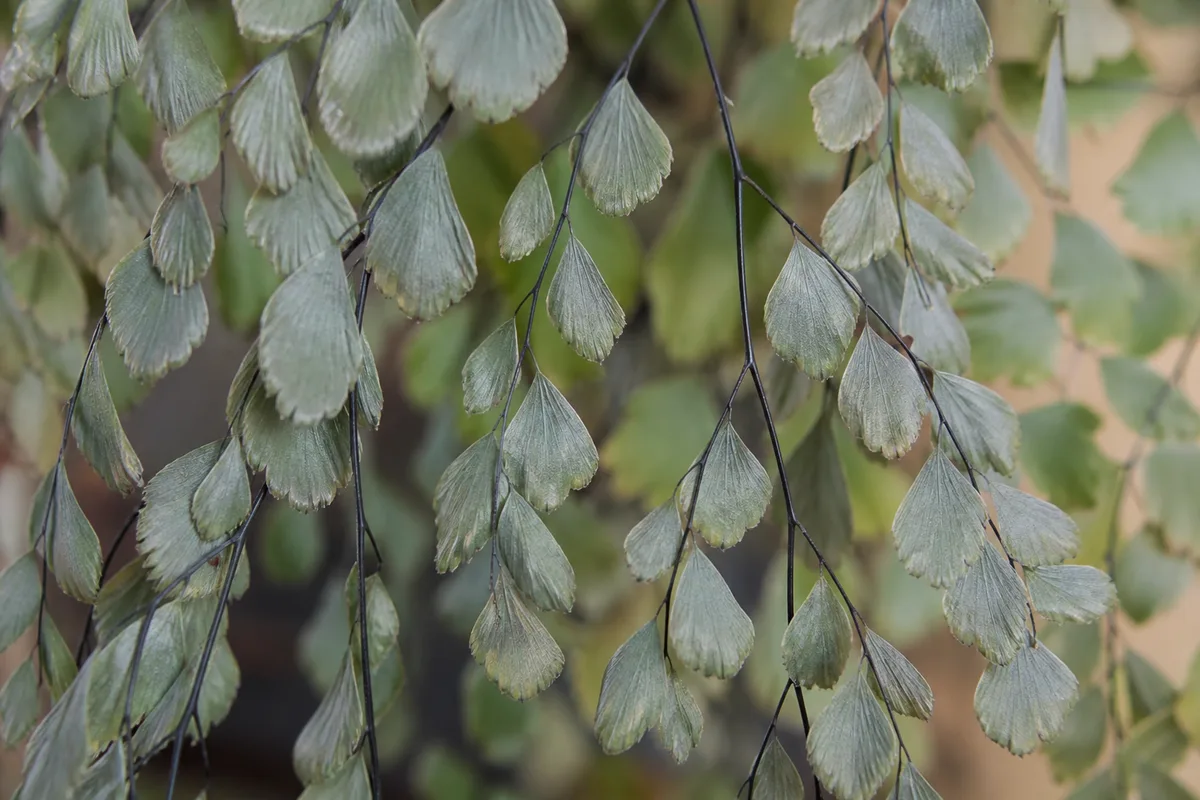
Drooping Leaves symptoms on Maidenhair Fern - compare with healthy tissue on the same plant.
- Limp hanging leaflets that lose their fan geometry and hang flat
- Dull gray-green color instead of bright green
- Fronds touching pot rim or soil from weakness, not natural trailing habit
- Progression to crisp brown if drought continues unchecked over days
- Yellow limp fronds with wet, heavy soil when roots are failing
Distinguish from normal soft arch - healthy fronds curve downward but leaflets stay turgid and reflective. Slight evening relaxation with recovery by morning is also normal; all-day limpness with dull tissue is not.
Why Maidenhair Fern fronds droop
Underwatering and dry root ball - NC State Extension is explicit: roots should not be allowed to dry out. Maidenhair stores little water in its rhizome; fronds die back quickly if soils are allowed to dry out. On this species, droop often appears before crisping - a warning window tougher houseplants do not give you.
Root rot and the wet-soil paradox - Damaged roots cannot transport water; fronds droop despite wet soil. Over-watering and poor drainage can cause root rot. Fine maidenhair roots suffocate in stagnant mix faster than thick-rooted houseplants.
Low humidity without soil drought - This fern needs a very humid atmosphere. Dry air accelerates transpiration from membranous leaflets; fronds flag even when a surface probe reads moist. This is the false underwatering loop - adding water to already-wet mix worsens rot while the real limiter is air dryness.
Heat and draft desiccation - Avoid placing the plant in drafty areas or near heat registers. Rapid water loss from leaflets outpaces root uptake when soil moisture is otherwise adequate.
Hydrophobic dry-down after drought - Repeated dry cycles can repel water at the surface while the core stays bone dry. You water, fronds stay limp, and the pot still feels light - a trap that mimics rot but needs rewetting, not root surgery. See dry hydrophobic soil when water beads off crusted mix.
Recent repotting shock - Root disturbance pauses uptake briefly; droop 1–3 days after repotting with firm roots on inspection usually resolves with stable moisture and humidity.
Terrarium vs. open-pot droop
Closed terrariums and bathrooms raise humidity around fronds but change how you read soil moisture. In glass, the top centimeter may stay visually damp while the root ball dries if ventilation is poor - lift the pot, do not trust surface color alone. Open pots in dry winter rooms often show humidity-only droop with appropriate soil weight; a humidifier fixes what misting cannot sustain. Gardeners’ World notes maidenhair suits steamy bathrooms and bottle gardens when open-air humidity falls short.
Drooping vs. wilting vs. normal posture
Both drooping and wilting trace to moisture failure on Adiantum raddianum, and pot-weight triage is the same first step. The difference is speed, leaflet texture, and urgency.
| Normal arch | Drooping (this page) | Wilting | |
|---|---|---|---|
| Onset | Always present | Days to weeks | Hours to one day |
| Leaflet feel | Firm, glossy, fan-shaped | Soft, dull, may still curve | Flat, limp, may crisp fast |
| Pot context | Appropriate weight | Dry, wet, or humid-only | Usually dry or wet emergency |
| Owner urgency | None | Adjust rhythm over days | Same-day action |
| Best guide | Overview | This page | Wilting |
If fronds have been gradually losing shine for two weeks, stay here. If every frond was firm Tuesday and flat by Wednesday morning, switch to the wilting guide.
How to confirm the cause
Work through these checks in order:
- Pot weight - Light and dry: underwatering likely. Heavy and wet for days: inspect roots before any drink.
- Soil probe at 1 cm - Dry confirms drought. Wet surface for days with limp yellow fronds suggests rot.
- Humidity estimate - Below 50% with moist soil and limp fronds points to air dryness, not thirst. Use a hygrometer rather than guessing.
- Tip condition - Crisp leaflet edges with droop suggest humidity stress or inconsistent water.
- Smell - Sour odor at the crown supports rot over drought.
- Time of day - Morning recovery after evening limpness may be humidity-only; all-day droop needs deeper check.
- Recent events - Missed watering, heat spike, repot, move near AC vent, or watering while mix was already saturated?
Wet-soil vs. dry-soil vs. humidity-only decision matrix
| Signal | Dry-soil droop | Wet-soil droop | Humidity-only droop |
|---|---|---|---|
| Pot weight | Light | Heavy | Moderate - often normal |
| Top 1 cm moisture | Dry | Wet for days | Appropriate |
| Frond color | Gray-green → crisp brown | Yellow-green limp | Dull limp, tips may crisp |
| Smell | Neutral | Sour possible | Neutral |
| Timeline | Days after dry-down | Days of heavy watering | Weeks in dry winter air |
| First fix | Soak + humidify | Stop water; inspect roots | Humidifier; maintain soil rhythm |
First fix for Maidenhair Fern
Match action to confirmed cause - never water blindly on limp fronds.
If dry and light: Soak thoroughly until mix is evenly moist; drain completely; raise humidity to 60–80% with a humidifier or pebble tray. Trim fronds that fully crisped - they will not rehydrate.
If wet and heavy: Stop watering. Unpot, trim mushy roots, repot in fresh airy mix from the soil guide. Do not add water until the top centimeter dries slightly. Escalate to root rot rescue if crown tissue softens or smell is sour.
If moisture normal but air is dry: Run humidifier targeting 60–80% or move to bathroom with bright indirect light. Pots may be set in a tray of wet pebbles - but pebble trays alone rarely sustain maidenhair in dry winter homes; a humidifier is more reliable.
If hydrophobic dry-down suspected: Bottom-soak the pot for 20–30 minutes or water very slowly in stages until the core rewets and weight increases - then resume the barely-dry top-centimeter rhythm.
Step-by-step recovery
Dry path:
- Lift pot; confirm light weight and dry mix at 1 cm depth.
- Soak at the sink until water runs freely from drainage holes; drain 15 minutes.
- Set humidifier targeting 60–80% or place on wet pebbles.
- Trim fully crisped fronds at soil line.
- Check weight daily; water when top centimeter is barely dry per the watering guide.
Wet path:
- Stop all watering; empty saucers and cachepots.
- Unpot; rinse roots; trim brown mushy tissue with clean scissors.
- Repot into fresh airy mix; firm rhizome at prior depth.
- Hold water until top centimeter dries slightly, then resume light drinks.
- Expect new croziers in 2–4 weeks if sufficient firm root mass remains.
Humidity-only path:
- Confirm moist appropriate soil with pot-weight check - do not soak again.
- Run humidifier or move to bathroom with bright indirect light.
- Avoid misting as a substitute - water beads off maidenhair leaflets.
- Reassess in 24–48 hours; fronds should show firmness if air was the limiter.
Sample recovery timeline (editorial case)
A 10 cm maidenhair in an open living-room pot showed two weeks of dull, limp fronds with appropriate pot weight and moist top centimeter - classic humidity-only droop in dry winter air (~35% RH). A humidifier set to 65% and consistent top-centimeter watering (no extra soaks) produced firmer leaflets within 48 hours. Fully crisped frond tips were trimmed at soil line; new croziers appeared at day 21. Timeline aligns with typical humidity correction on Adiantum raddianum when roots remain firm.
Recovery timeline
Early droop from thirst often perks within hours of soaking if leaflets have not crisped. Root rot recovery takes 2–4 weeks for new fronds if sufficient firm roots remain.
Humidity correction shows improvement on new growth in 3–7 days; existing limp tissue may not fully firm. Fronds that turned fully black within 24 hours of severe drought do not recover - judge success by new crozier growth, not old tissue.
Causes to rule out
- Normal graceful arch - Curve with turgid, glossy leaflets is healthy.
- Nighttime posture - Slight evening relaxation without crisping; recovery by morning.
- Acute wilt - Hours-to-one-day collapse fits wilting rather than gradual droop.
- Pest stippling - Spider mites cause speckling before heavy droop; inspect undersides.
- Light stress - Weak turgor in dim corners; see not enough light when droop pairs with pale, stretched fronds.
What not to do
Do not water wet rotting soil when fronds droop - the overwatering trap worsens root failure. Do not mist once and ignore dry root balls. Do not soak again when soil is already moist and air is dry - fix humidity first. Avoid moving drooping ferns to direct sun. Do not fertilize limp plants before correcting moisture.
How to prevent drooping next time
Check soil daily; water when the top centimeter is barely dry using pot weight from the watering guide, not a calendar. Use consistently moist but well-drained potting soil - RHS notes moist but well-drained conditions for this species. Maintain 60–80% humidity via humidifier in dry rooms. Keep temperature stable at 16–24°C (60–75°F) away from heat registers.
Terrarium and bathroom growers: open briefly after watering so the top centimeter can breathe while the root ball stays damp.
Maidenhair Fern care cross-check
Drooping is early warning on this fern - act before fronds crisp or crown collapses. Align these four factors as one system:
| Factor | Check | Guide |
|---|---|---|
| Water rhythm | Top 1 cm barely dry; pot weight | Watering |
| Humidity | 60–80%; humidifier in dry rooms | Low humidity |
| Drainage | Holes open; saucers emptied | Soil |
| Placement | Bright indirect; no heat registers | Overview |
When to worry
Escalate when droop progresses to black fronds within 24 hours - that urgency fits underwatering or acute wilt, not gradual droop alone. Wet-soil droop with sour smell and yellow limp tissue needs same-day root inspection - treat as root rot if crown tissue softens.
Mild evening droop in dry air is lower urgency if morning fronds recover with glossy leaflets. Repeated soaks on a light pot that no longer perk fronds suggest root damage even when rot signs are subtle.
How this guide was verified
This guide focuses on gradual frond droop on Maidenhair Fern - distinct from acute wilt and from the watering hub’s rhythm advice. Recommendations were checked against extension and botanical references, including NC State Extension Adiantum raddianum, Missouri Botanical Garden, RHS, BBC Gardeners’ World, and University of Minnesota Extension. Inline citations sit next to the claims they support.
Author: sai-ananth · Reviewer: LeafyPixels Review Board · Reviewed: June 2026
Related Maidenhair Fern guides
- Maidenhair Fern overview - species basics and placement
- Watering - pot-weight checks, seasonal intervals, terrarium nuance
- Wilting - acute same-day collapse triage
- Underwatering - dry root ball failure patterns
- Overwatering - wet-soil intervention before rot
- Root rot - crown rescue and repot steps
- Low humidity - dry air droop with moist soil
- Dry hydrophobic soil - water-repellent mix after drought