Pot Too Large on Maidenhair Fern: Causes, Checks & Fixes
Quick answer
An oversized pot keeps Maidenhair Fern's fine roots in waterlogged outer soil. First, compare the root ball to the container - if a wide ring of mix stays wet for days, downsize into a pot only 2–5 cm wider with fresh airy mix.
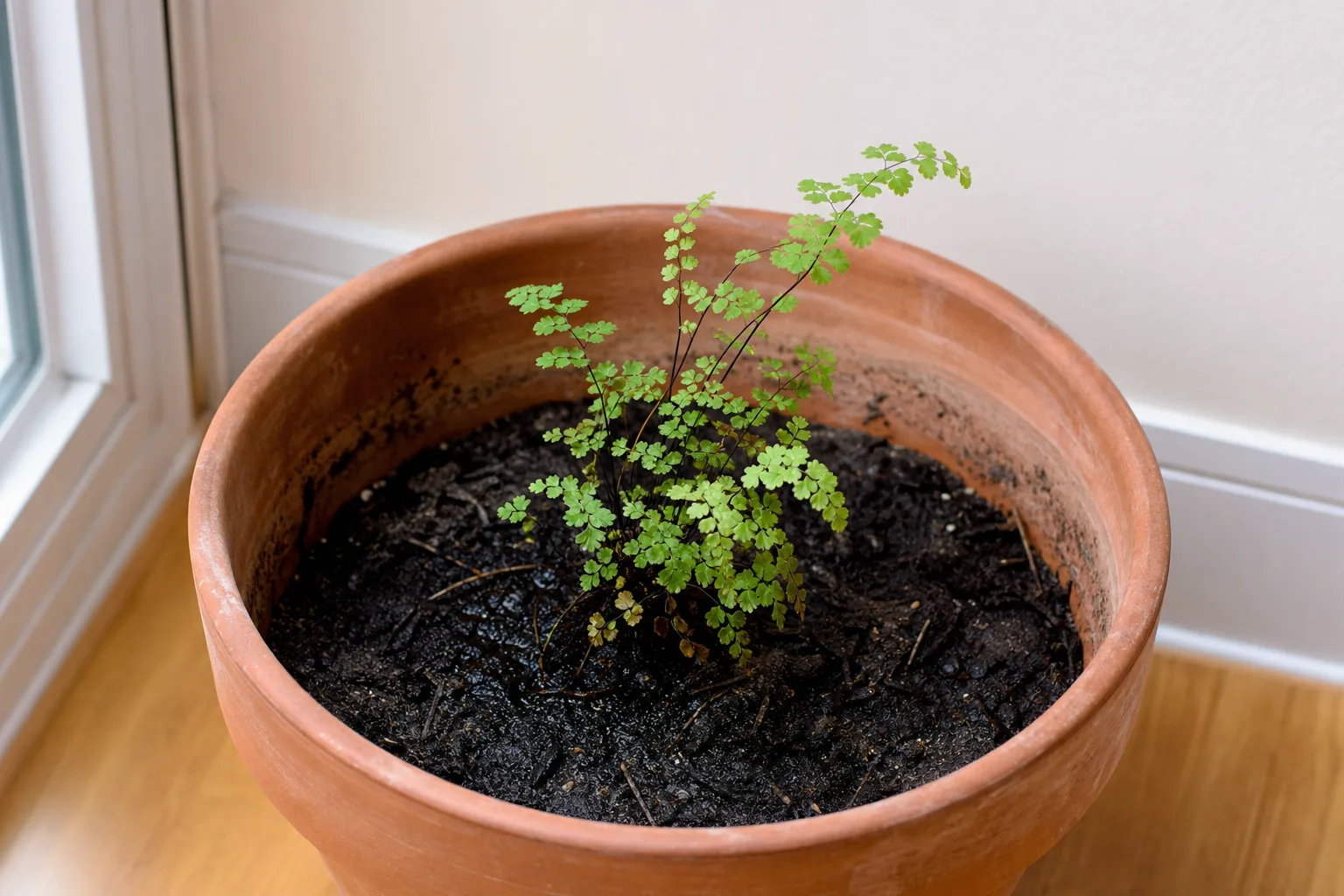
Pot Too Large on Maidenhair Fern: Causes, Checks & Fixes
This guide covers pot too large on Maidenhair Fern. See also the general Pot Too Large guide, watering, and light pages for this plant.
Pot Too Large on Maidenhair Fern: Causes, Checks & Fixes
Quick answer
A pot that is too large for Maidenhair Fern keeps fine roots sitting in wet soil they never reach. First step: compare the root ball to the container - if a wide outer ring of mix stays damp for days while fronds yellow or wilt, downsize into a pot only 2–5 cm wider with fresh airy moist mix.
Maidenhair Fern needs steady root-zone moisture with oxygen. When excess soil volume holds water longer than the plant can use it - especially in dim corners or after a well-meaning “upgrade” to a decorative bowl - roots suffocate and fronds fail despite wet mix.
What pot too large looks like on Maidenhair Fern
The warning signs mimic overwatering on Maidenhair Fern, which makes this problem easy to misread. Above ground, you may see yellowing fronds, limp blackening leaflets, or stalled new growth even though you water carefully. The pot feels heavy for days and the surface mix may look evenly damp rather than drying at the top centimeter between drinks.
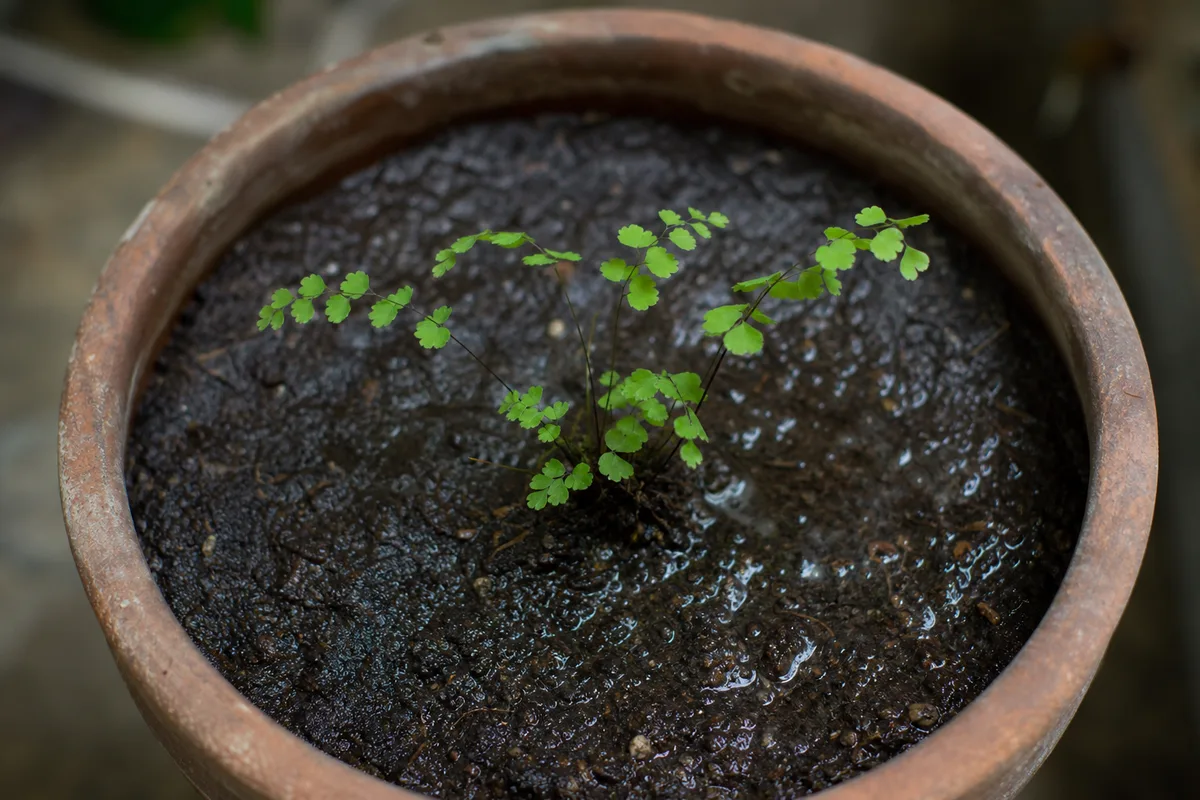
Pot Too Large symptoms on Maidenhair Fern - compare with healthy tissue on the same plant.
A telltale pattern is the wet-outer, stressed-plant mismatch: the soil at the pot walls stays dark and cool while the small root ball in the center may actually be under-used. Fronds wilt as if thirsty, yet probing the edges shows persistent moisture.
Below ground, healthy Maidenhair Fern roots are pale and fibrous. In an oversized pot, outer mix turns sour and roots at the center may brown while untouched soil around the perimeter breeds fungus gnats or green algae on the surface.
Why Maidenhair Fern gets pot too large problems
Excess soil volume holds moisture around a small root system. A small plant in an overlarge container may suffer because the relatively large volume of soil stays saturated for a long time after watering. Maidenhair Fern’s shallow, fine roots cannot colonize a big wet ring fast enough to dry it out.
Well-meaning repot upgrades are a common trigger. Owners jump from a 10 cm nursery pot to a wide decorative planter “for growth room.” Ferns prefer the next size up only - not a dramatic jump.
Cachepots and sealed decorative shells multiply the effect. Inner pots drain into standing water, or a bowl with no holes turns the entire soil mass into a reservoir. Maidenhair Fern needs open drainage; trapped runoff keeps outer mix anaerobic.
Moisture-retaining mix in a big pot is especially risky. Coco coir and peat hold water well - correct for this fern in a snug container, but dangerous when surrounded by inches of unused, wet substrate.
Low light slows water use while the oversized pot still holds volume. The fern transpires little, so the same pot that worked in Maidenhair Fern light guide becomes a swamp in a dim bathroom.
How to confirm the cause
Work through these checks before Maidenhair Fern repotting guide:
- Pot-to-root ratio - Slide the plant out gently. Is the root ball much smaller than the pot, with wide empty or wet soil on the sides?
- Moisture pattern - Does outer mix stay wet 3+ days while you expected the top centimeter to cycle?
- Drainage path - Are holes blocked? Does a cachepot hold runoff?
- Wilting vs. wetness - Limp fronds with heavy, damp soil suggest root dysfunction from waterlogging, not simple thirst.
- Root condition - Firm pale roots support oversizing as the stressor; mushy brown roots mean rot may already be advanced.
Rule out pure underwatering on Maidenhair Fern (light pot, crispy collapse, dry root ball) and low humidity (tip browning with firm roots and appropriately sized pot).
First fix for Maidenhair Fern
Confirm the size mismatch, then downsize into a snug pot with fresh airy mix - do not keep watering a wet oversized container hoping fronds perk up.
Remove the fern and measure the root mass. Choose a clean pot only 2–5 cm wider in diameter than the root ball, with open drainage. Discard waterlogged outer soil; keep a small cushion of fresh mix around the roots, not a deep moat.
If roots are firm, repot at the same depth, water lightly once, and empty saucers completely. If you find mushy roots, trim them before downsizing - treat as early root rot on Maidenhair Fern recovery with high humidity afterward.
Step-by-step recovery
- Water lightly the day before so the root ball holds together, then unpot carefully.
- Shake away soggy outer mix; inspect roots and trim any soft brown tissue.
- Select a pot one size up from the root ball - not from the old oversized container.
- Fill with fresh airy mix (coco coir, fine bark, compost) and settle the fern at the prior depth.
- Water until a small amount drains; discard all runoff.
- Place in bright indirect light with 60%+ humidity; skip fertilizer for 2–4 weeks.
- Resume watering when the top centimeter is barely dry - judge by pot weight, not calendar.
Cut collapsed fronds at soil level to reduce stress on reduced roots. Do not bare-root the plant; fine fern root hairs tear easily.
Recovery timeline
Maidenhair Fern with firm roots after downsizing may show new fronds in 2–4 weeks when humidity and light are stable. Success means fresh green growth and a pot that dries predictably at the surface between waterings.
If the crown softens or fronds blacken from the base within days, rot has likely reached the rhizome - downsizing may not save the plant. Mild yellowing that stops spreading and new pinnae unfurling signal improvement.
Lookalike symptoms
- Overwatering in a correctly sized pot - Same wilt-and-wet pattern, but root ball fills most of the container. Fix Maidenhair Fern watering guide, not pot size.
- Root rot from blocked drainage - Mushy roots and sour smell; pot may be correctly sized but holes are sealed. Clear drainage first.
- Low humidity - Crisp leaflet edges and desiccation with intact, firm roots.
- Transplant shock - Temporary wilt after any repot; roots should look healthy when checked after a few days.
What not to do
Do not respond to limp fronds by watering more - that deepens waterlogging in unused soil. Do not jump to an even larger pot “to stabilize” a wobbly fern. Avoid filling the bottom with gravel; it does not improve drainage and can keep roots wetter. Do not fertilize stressed roots immediately after downsizing. Do not let the root ball dry completely during recovery - this fern needs moist mix with oxygen, not drought or swamp.
How to prevent pot-too-large problems next time
Size up one step when roots circle the bottom or water runs straight through - typically every 1–2 years in spring. Use pots with drainage holes and empty saucers within 30 minutes of watering. Match container width to root mass, not frond spread; Maidenhair Fern’s airy foliage can extend well beyond a modest pot.
Prefer shallow-ish pots when possible - roots are relatively shallow. In low light, err slightly smaller rather than larger so mix cycles faster.
Maidenhair Fern care cross-check
Pot size and watering work together. A fern on a rigid every-two-days schedule in an oversized dim-corner pot will stay waterlogged even with “correct” mix. After downsizing, relearn how fast the new pot dries before locking in a routine.
When to worry
Escalate if the crown feels soft, mix smells sour despite downsizing plans, or fronds collapse within 48 hours of wilting. A slightly oversized pot with firm roots and green new growth can wait for spring to repot - but do not leave a fern in sodden outer soil through a cool, low-light winter.
Conclusion
Pot too large on Maidenhair Fern is a container mismatch, not a mysterious fern temperament problem. Confirm wet unused soil around a small root ball, downsize with fresh airy mix, and water when the top centimeter dries slightly while keeping humidity high. Right-sized pots let this moisture-loving fern stay evenly damp without drowning in soil it cannot use.
When to use this page vs other Maidenhair Fern guides
- Maidenhair Fern watering guide - Use for routine moisture checks before assuming pot too large is the main issue.
- Maidenhair Fern problems hub - Browse all 55 common issues on this species.