Repotting Stress on Maidenhair Fern: Causes, Checks & Fixes
Quick answer
Repotting stress on Maidenhair Fern shows as frond collapse, browning leaflet edges, or stalled fiddleheads within days of disturbing roots-normal when the rhizome is firm and mix drains well. First step: keep bright indirect light stable, raise humidity immediately, and maintain evenly moist (not soggy) mix with daily touch checks-no fertilizer or second repot for two to three weeks.
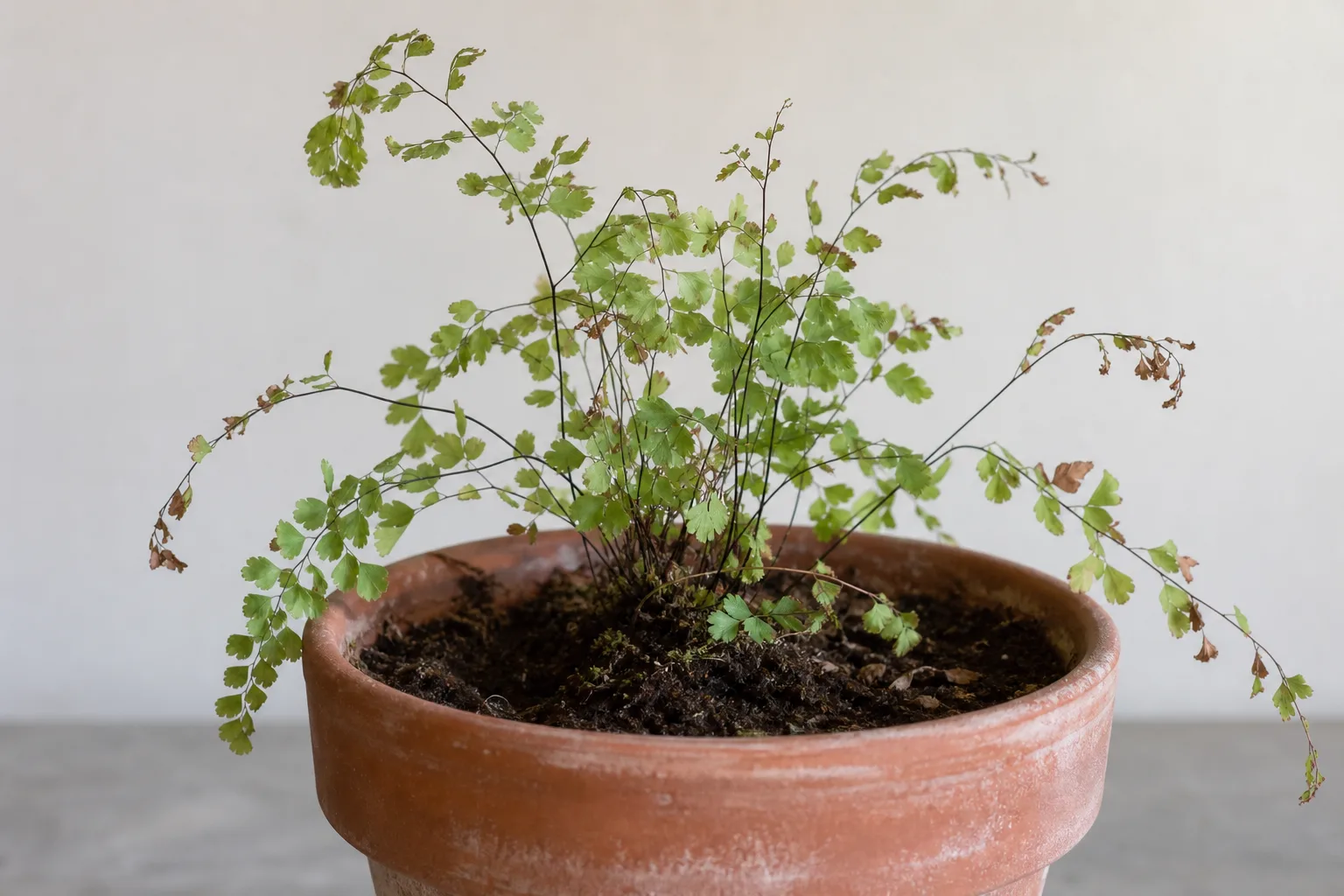
Repotting Stress on Maidenhair Fern: Causes, Checks & Fixes
This guide covers repotting stress on Maidenhair Fern. See also the general Repotting Stress guide, watering, and light pages for this plant.
Repotting Stress on Maidenhair Fern: Causes, Checks & Fixes
Quick answer
Repotting stress on Maidenhair Fern (Adiantum raddianum) appears as frond collapse, browning leaflet edges, or paused fiddleheads within days of disturbing roots-while rhizomes at the soil line stay firm and the mix drains without staying waterlogged.
First step: keep bright indirect light stable, raise humidity immediately, and maintain evenly moist (not soggy) mix with daily touch checks. Hold fertilizer, skip a second repot, and avoid moving the plant between rooms for two to three weeks while roots settle.
Maidenhair fern is less forgiving of care swings than tough foliage plants. Repotting breaks fine root hairs, shifts how fast the pot dries, and often coincides with a new room or water source-each change alone can trigger mass frond drop. For the preventive repot workflow, see the Maidenhair Fern repotting guide. Baseline moisture rhythm lives in the watering guide.
What repotting stress looks like on Maidenhair Fern
Typical post-repot signs:
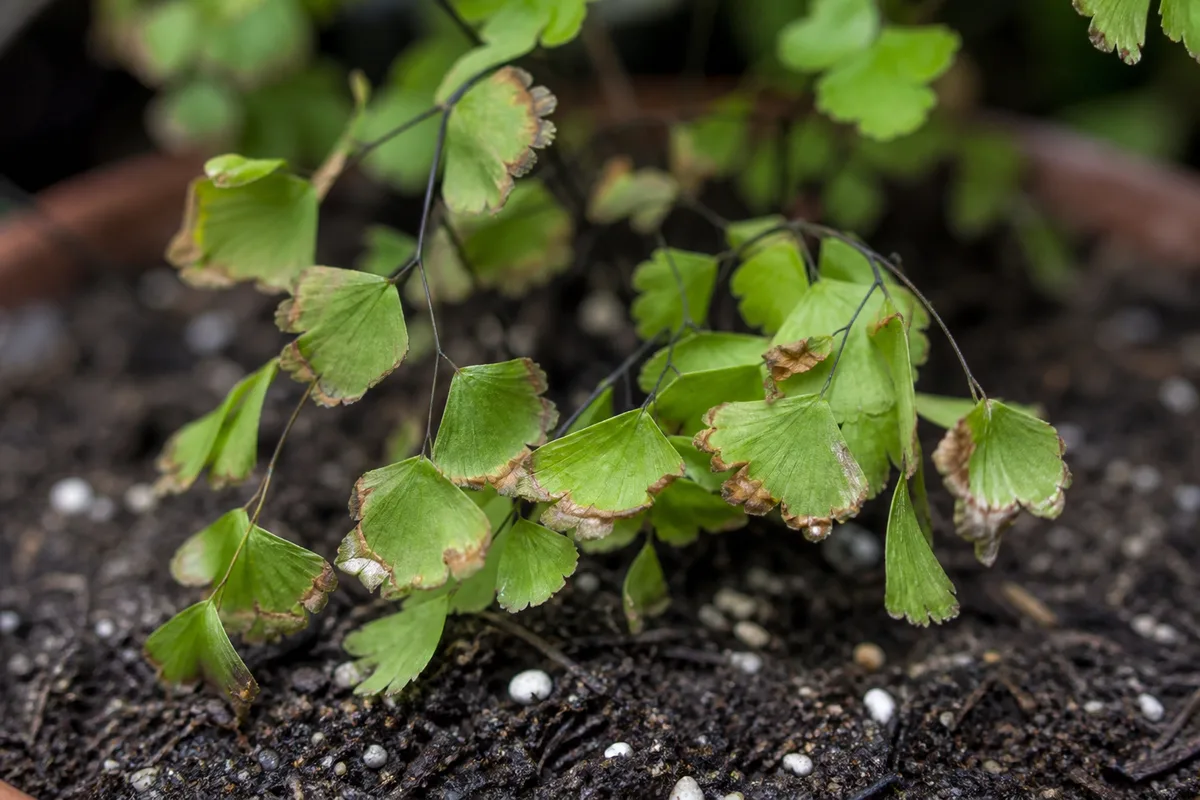
Repotting Stress symptoms on Maidenhair Fern - compare with healthy tissue on the same plant.
- Delicate black-stemmed fronds droop or curl within hours to days after repotting
- Leaflet edges turn brown or crisp, sometimes starting at tips and spreading inward
- Existing fronds collapse while the plant looks otherwise structurally intact
- New fiddleheads pause for one to three weeks even in warm spring weather
- The pot may feel lighter or heavier than expected as roots readjust to new mix volume
What still looks healthy:
- Rhizomes and crown tissue feel firm-not soft or mushy
- Mix smells earthy or neutral, not sour or stagnant
- Drainage holes release water without the pot sitting in a saucer of runoff
- Some lower fronds may die while upper crown tissue stays green at the base
Versus root rot after a bad repot:
- Progressive blackening at the crown with sour-smelling soil
- Rhizome softness when pressed gently
- Yellowing that spreads up stems while mix stays wet for days
- Wilt that worsens despite stable humidity-not a temporary afternoon droop
Versus simple underwatering:
- Collapse often follows a dry spell or missed watering, not necessarily a recent repot
- Mix pulls away from pot walls; pot feels very light
- Recovery after one thorough soak can be rapid if roots were never damaged
Maidenhair fern can drop fronds dramatically when disturbed-what looks like total failure is often a temporary pause if the crown is firm and conditions stabilize quickly. The black wiry rachis on collapsed fronds will not straighten again; new growth must come from the crown.
Why Maidenhair Fern gets repotting stress
Root disturbance severs fine root hairs that absorb water. Until replacements grow, fronds lose turgor even when the rhizome still holds moisture. That uptake gap is normal after repotting; maidenhair fern shows it faster than succulents because its membranous, thin leaflets lose water quickly.
This species needs consistently moist but well-drained soil-roots must never dry out. When fresh mix dries unevenly or a larger pot holds wet pockets, the plant swings between drought shock and soggy stress in the same week.
Humidity matters as much as soil moisture. Fern leaf drop often follows sharp changes in humidity, light, or watering rhythm-exactly what repotting triggers when you also move the pot to a new windowsill or bathroom.
NC State Extension notes Adiantum raddianum spreads by creeping rhizomes with fine feeder roots and rates it high maintenance indoors. Disturbing that shallow root zone during repot removes the delicate hairs that keep pinnae hydrated-recovery depends on rhizome health, not on how many old fronds remain upright.
Common repot mistakes on maidenhair fern:
- Oversized pots that stay wet in the center while the surface feels dry - see pot too large
- Heavy peat-only mix without bark or perlite for oxygen
- Terra cotta that wicks moisture away from delicate surface roots faster than you can rewet
- Aggressive root teasing on a plant that prefers minimal disturbance
- Stacking changes-new pot, new room, tap water switch, and division in one session
- Immediate fertilizer hoping to “boost” a shocked plant
Repotting during winter rest or right after purchase adds a second stress layer. RHS recommends propagating by division of rhizomes in early spring-the same window that gives repotted ferns the best chance to root out before dry indoor air peaks in summer.
Terrarium and cachepot traps after repot
NC State Extension notes this fern does well in bathrooms and terrariums where humidity is higher-and Gardeners’ World calls maidenhair ideal for steamy bathrooms or bottle gardens. Those placements help fronds but complicate post-repot recovery:
- Closed terrariums have no drain exit; limited evaporation keeps fresh mix wet longer while severed root hairs struggle to take up water.
- Decorative cachepots trap runoff from the inner pot-sympathy watering after frond collapse creates standing water at the root zone.
- Bathroom repots often pair high humidity with dim light; the fern transpires slowly while mix stays saturated.
After repot in enclosed or nested containers, water lightly at the pot edge, ventilate briefly so fronds do not stay constantly wet, and empty any outer reservoir immediately. High humidity around leaves does not replace oxygen at soggy roots-if mix smells sour, switch to the root rot guide, not more misting.
Lookalike symptoms to rule out
| What you see | Likely cause | First check |
|---|---|---|
| Collapse within days of repot, firm rhizome, neutral smell | Repotting stress (this page) | Stabilize humidity and moisture; wait for fiddleheads |
| Wet heavy pot, sour smell, soft rhizome, progressive blackening | Root rot after bad repot | Unpot; trim decay; repot into airy mix sized to roots |
| Light dry pot, rapid crisp collapse, no recent repot | Underwatering | Soak thoroughly; raise humidity |
| Tip browning over days, moist appropriate soil, no repot timing | Low humidity | Humidifier at frond height |
| Gradual tip burn on older fronds, hard tap water | Fluoride or mineral burn | Filtered or rainwater; not sudden mass collapse |
| Stippling, fine webbing on leaflet undersides | Spider mites | Magnify undersides before treating |
| Wet soil for days after sympathy watering post-repot | Overwatering lookalike | Stop watering; inspect roots |
Rule of thumb: symptoms tied to a repot event within the past week plus a firm rhizome point here. Soft rhizome plus sour wet mix points to root rot regardless of timing.
How to confirm the cause
Work through these checks in order:
- Timing - Did frond collapse or browning start within a week of repotting, division, or a major mix change? Stress tied to that event is the leading suspect. If you repotted because of root-bound circling roots, confirm the new pot and mix were not oversized.
- Crown firmness - Press gently at soil level. Firm rhizome tissue supports a stress diagnosis; softness points to rot.
- Moisture pattern - Is the top centimeter barely dry before you water again, or is mix soggy for days? Maidenhair needs steady moisture-not a swamp.
- Pot size and drainage - Did you move up more than one to two inches in diameter? Are drainage holes clear and is the pot out of standing water?
- Environmental shifts - Did repot coincide with a new room, drafty window, or switch from filtered to straight tap water?
- Smell test - Earthy mix is fine; sour odor means rot, not mere shock.
- New growth scan - Any tiny green fiddleheads emerging from the crown? That is the best sign roots are recovering even while old fronds look terrible.
If symptoms predated repotting, or rot signs appear, do not label the problem simple transplant stress-address the underlying cause first.
First fix for Maidenhair Fern
Keep the repotted fern in stable bright indirect light, raise humidity around it immediately, and maintain evenly moist mix with a daily touch check-without fertilizing or moving it again for two to three weeks.
Place the pot on a pebble tray, near a humidifier, or in the most humid stable room you have-bathroom or grouped plant shelf if light there is adequate. Avoid direct sun on recovering fronds; bright filtered light is enough while roots re-establish.
Water when the top centimeter feels barely dry, using tepid filtered or rainwater if your tap is hard. One thorough soak after repot is fine; the mistake is letting the root ball go bone dry because the plant “looks wet enough” on the surface, or watering daily into a heavy mix that never dries. Delicate ferns should not be allowed to dry out completely even when fronds look droopy.
Do not repot again, divide further, or prune heavily on day one. Do not fertilize-a shocked fern cannot use nutrients and salts can burn delicate roots.
Step-by-step recovery
After stabilizing humidity and moisture:
- Remove only fully dead fronds-all brown, crispy, and detached easily. Leave partially green fronds unless they are clearly mushy; they may still photosynthesize lightly.
- Confirm drainage-empty saucers and cachepots after watering; never let the pot sit in runoff.
- Hold placement steady-if you must adjust light, acclimate gradually over several days rather than bouncing between rooms.
- Monitor daily-touch the mix surface each morning; weight the pot to learn its moist vs. dry feel in the new container.
- Wait before the next intervention-give two to three weeks for new fiddleheads before repotting, dividing again, or changing mix.
- Resume light feeding only after new growth-half-strength balanced liquid once monthly at earliest, and only if fronds look stable.
If the mix stays wet for more than three days while fronds keep collapsing, stop watering and inspect roots-prolonged sogginess after repot is rot, not shock waiting out. Use the overwatering workflow for early wet-cycle fixes; escalate to root rot when crown tissue softens.
Division at repot - extra caution
Dividing rhizomes at repot doubles stress. Only divide vigorous plants in spring, giving each section firm rhizome tissue, several fronds, and feeder roots-then pot into the 50% compost, 30% coco coir, 20% fine bark blend in a pot only slightly larger than each division. Hold fertilizer four to six weeks. If every section collapses despite firm tissue, stabilize humidity before attempting another split.
Recovery timeline
Days 1–7: Frond droop may continue or worsen slightly as roots settle. Firm crown with neutral-smelling mix is expected.
Weeks 2–3: First new fiddleheads often appear on plants that were repotted correctly. Old collapsed fronds will not reopen.
Weeks 3–4: Steady new green growth means recovery is underway. Trim remaining dead fronds for appearance once replacement fronds unfurl.
Beyond four weeks: If no new growth emerges and the crown softens, assume root damage or rot-not lingering benign stress-and inspect roots before the plant declines further.
A typical indoor recovery: repotted in spring into the soil-guide blend; fronds collapsed by day two; humidity held at roughly 70% with a humidifier at crown height; first green croziers around day 18. Judge success by new fiddleheads and stable moisture rhythm, not by reviving bent black stems.
Mistakes to avoid
Do not let the root ball dry out “to reduce stress”-maidenhair fern cannot tolerate dry roots even when fronds look droopy.
Do not water on a calendar without touching the mix; repot changes drying speed unpredictably.
Do not move the plant daily hunting for a perfect spot-each relocation resets acclimation.
Do not fertilize, mist heavily at night, or repot again within the same month unless rot is confirmed.
Do not use an oversized pot hoping the plant will “grow into it”-oversize containers lead to overwatering problems.
Do not assume total frond loss means the plant is dead. A firm crown with stable care can push new growth from rhizomes even when all visible fronds collapse.
Do not repot into dense bagged potting soil without bark and coir-see dry hydrophobic soil if fresh peat repels water unevenly after repot.
How to prevent repotting stress next time
- Repot in spring when new growth starts, not during winter rest unless mix is failing
- Water thoroughly a day or two before unpotting so the root ball slides out with minimal tearing
- Move up only one pot size-one to two inches wider-and use a pot only slightly larger than the rootball
- Use the 50/30/20 airy mix from the soil guide-not straight heavy potting soil
- Keep crown depth the same; burying rhizomes deeper invites rot
- Loosen circling roots gently; avoid aggressive washing unless rot is present
- Change one variable at a time-do not repot, relocate, and switch water type the same week
- Hold fertilizer four to six weeks after repot even when growth resumes
Follow the full preventive workflow in the repotting guide. If circling roots triggered the repot, read root-bound on Maidenhair Fern for timing signs.
When to worry - escalate to root rot
Treat as urgent when the rhizome softens, stems blacken at the base, or sour smell develops within a week of repot-unpot, trim mushy roots, and repot into fresh airy mix sized to the remaining root mass. That is rot rescue on the root rot page, not wait-and-see stress.
Also urgent if fronds continue collapsing after two weeks despite stable humidity, correct moisture, and firm crown-inspect roots before assuming patience will solve it.
Low urgency: temporary droop on a firm plant in an appropriately sized pot with good drainage and rising humidity-hold steady before stacking more fixes.
Switch to root rot on Maidenhair Fern when:
- Most roots are brown and mushy after unpotting
- Crown or rhizome tissue feels soft, not just wet soil
- Fronds blacken from the base while mix stays saturated despite drainage fixes
This page covers timing-linked transplant pause with a firm rhizome. Root rot covers below-soil salvage when tissue is already failing.
Related Maidenhair Fern guides
- Maidenhair Fern repotting guide - preventive repot workflow
- Maidenhair Fern watering guide - pot-weight checks and moisture rhythm
- Root rot on Maidenhair Fern - escalation when rhizome tissue fails
- Overwatering on Maidenhair Fern - sympathy-watering lookalike after repot
- Root-bound on Maidenhair Fern - upstream trigger for repot
- Best soil for Maidenhair Fern - 50/30/20 mix and drainage tests
- Low humidity on Maidenhair Fern - tip-burn lookalike without repot timing
- Pot too large on Maidenhair Fern - oversize container trap
- Maidenhair Fern overview - full care hub