Root Bound on Maidenhair Fern: Causes, Checks & Fixes
Quick answer
Maidenhair Fern tolerates a slightly snug pot but stalls when roots replace most of the soil. First step: slide the plant out and confirm a dense circling root mat-then repot one size up in fresh airy moist mix during spring growth.
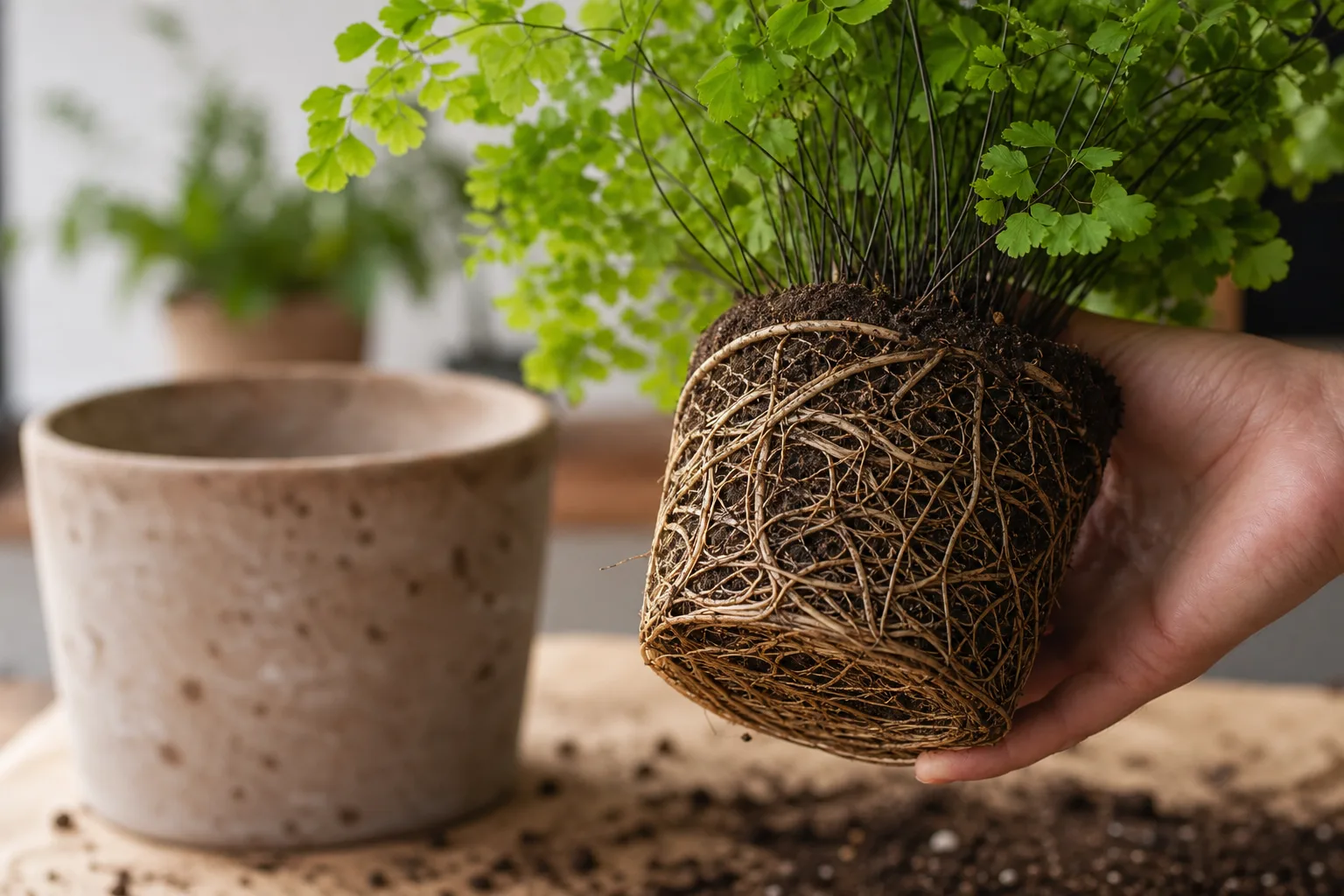
Root Bound on Maidenhair Fern: Causes, Checks & Fixes
This guide covers root bound on Maidenhair Fern. See also the general Root Bound guide, watering, and light pages for this plant.
Root Bound on Maidenhair Fern: Causes, Checks & Fixes
Quick answer
Maidenhair Fern (Adiantum raddianum) spreads from short creeping rhizomes and needs soil that stays moist without waterlogging. A slightly snug pot is fine for a while, but when roots replace most of the mix, the fern cannot hold steady moisture and fronds begin to fail. First step: gently unpot and look for circling roots filling the bottom third of the root ball. If binding is confirmed, repot one size up in fresh airy moist mix during [active spring growth](https://extension.psu.edu/[Maidenhair Fern repotting guide](/plants/maidenhair-fern/repotting/)-houseplants)-not on the same day you also change light, humidity, and pruning.
What root bound looks like on Maidenhair Fern
Above soil, a root-bound Maidenhair often looks like chronic thirst or humidity failure. Delicate pinnae wilt within hours of watering, then briefly perk up-only to collapse again. New fronds may unfurl smaller than older ones, with thinner black stems, because the depleted root zone cannot supply the constant moisture this fern requires. NC State Extension notes that roots should not be allowed to dry out; a bound root ball dries unevenly even when you water faithfully.
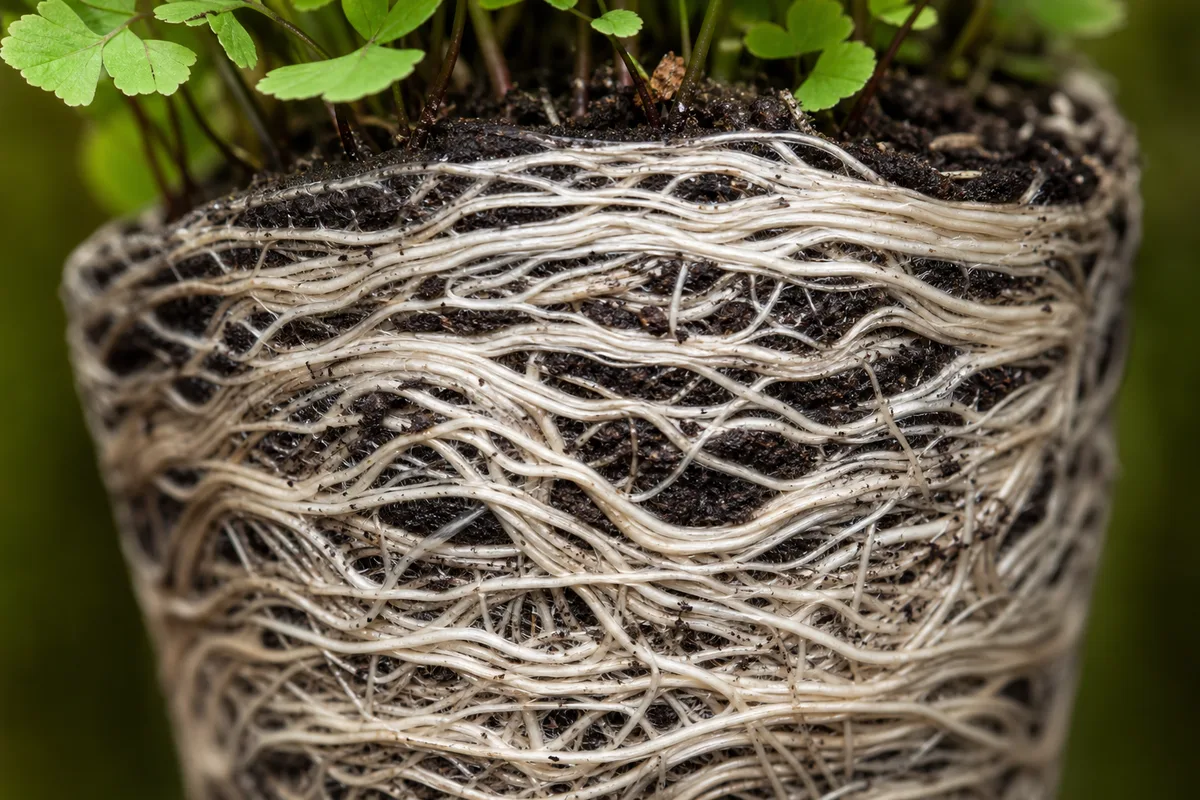
Root Bound symptoms on Maidenhair Fern - compare with healthy tissue on the same plant.
Other telltales include:
- Very fast dry-down - the pot weighs almost nothing one to two days after a full drink, despite Maidenhair’s normal need for consistently moist mix
- Water runs straight through - liquid pours from the drain hole without soaking in, a sign the root mat has little soil left to retain moisture
- Visible roots - pale or tan tips at drainage holes or a dense mat pressing against the pot wall
- Stalled fronds - no new leaves for several weeks during spring or summer despite adequate indirect light
- Surface collapse - soil level drops and creeping rhizomes sit higher than the surrounding mix
Mild outer circling with steady new glossy fronds is acceptable. Panic is warranted when several signs stack together and the root ball feels more like a solid plug than soil with roots.
Why Maidenhair Fern gets root bound
Maidenhair Fern grows from creeping rhizomes that spread horizontally and sends fine roots into every corner of a container. In Maidenhair Fern light guide with regular watering, roots can fill a pot every one to two years-the typical repot interval listed for Maidenhair Fern overview. Because growth is moderate rather than explosive, owners often keep the same pot too long while fronds still look presentable at the tips.
Common contributors on this fern:
- Decorative cache pots that hide a nursery container going root-bound for multiple seasons
- Fast summer drying in warm bathrooms or terrariums, which accelerates root expansion while top growth looks modest
- Top watering only without ever checking drain holes for circling roots
- Skipping spring repot because old fronds still look lacey even though the mix is mostly roots
- Organic mix breakdown - coco coir and bark decompose over time, leaving less volume for moisture retention as roots expand
Severe binding is not the same as healthy slight snugness. Maidenhair can perform with roots touching pot walls until the bottom third is mostly roots and almost no mix.
How to confirm the cause
Do not repot on suspicion alone. Confirm in this order:
- Dry-down speed - Has the pot started drying much faster than last season without a light or heat change?
- Drain-hole check - Peer under the pot for pale root tips or a mat pressed against the hole.
- Lift test - A mature Maidenhair in a small pot may lift out easily when roots grip the walls; that resistance supports binding.
- Unpot inspection - Slide the plant out after watering the day before. Penn State Extension advises repotting when roots circle the root ball or the bottom third is so dense you see little potting mix.
- Root texture - Firm white or tan roots confirm binding. Brown, mushy, sour-smelling tissue means root rot on Maidenhair Fern from wet depleted mix-not binding alone.
- Humidity cross-check - Crisp frond edges in dry air mimic binding stress, but roots may still be loose with plenty of mix. Raise humidity first if air is clearly below 60% and roots look sparse.
underwatering on Maidenhair Fern in an oversized pot shows the opposite: a heavy pot, collapsed fronds, and loose roots with empty mix around them.
First fix for Maidenhair Fern
Unpot to confirm binding, then repot one size up in fresh airy moist mix during spring or early summer.
Water the day before so the root ball holds together. Tilt the pot and support the frond base-never pull delicate pinnae. Once out, tease circling roots at the bottom and sides so they point outward. Do not bare-root the entire ball; Maidenhair’s fine roots desiccate quickly and ferns are sensitive to transplant stress.
Choose a clean pot only 2–5 cm wider than the current one with open drainage. Illinois Extension recommends a container slightly larger than the current pot to avoid excess moisture around a small root zone. Fill with your normal blend-coco coir, fine orchid bark, and perlite-pre-moistened so it absorbs water evenly.
Set rhizomes at the same depth as before; burying the crown too deep invites rot, while leaving roots above grade dries them in room air. Backfill gently, water until a small amount drains, and empty saucers completely. Keep bright indirect light, raise humidity to 60–80%, and hold fertilizer for at least a month while roots settle.
Step-by-step recovery
- Water lightly the day before repotting.
- Unpot and confirm circling roots; trim only dead or mushy sections with sterilized scissors.
- Tease the outer root mat; leave the center intact.
- Repot one size up with fresh pre-moistened airy mix.
- Water once lightly, then maintain consistently moist-not soggy-soil.
- Skip fertilizer until new fronds unfurl cleanly.
- Remove crisp collapsed fronds at soil level after two weeks if the crown stays firm-new growth emerges from the rhizome, not old pinnae.
If the clump is large and healthy, division at repotting in very early spring gives each section roots and fronds for backup plants. Each division needs at least a few fronds and attached rhizome tissue.
Recovery timeline
Mild binding corrected in spring often shows the first new glossy pinnae within two to four weeks. Temporary frond wilt or a brief pause in unfurling for one to two weeks after repot is normal transplant stress-not binding returning.
Judge recovery by new frond production, not old tissue. Crisp or yellow existing fronds will not revert; fresh pinnae should open at normal size if light and humidity are adequate. Full root re-establishment in the new volume typically takes four to six weeks in warm bright conditions.
If wilting persists beyond three weeks with sour soil smell, unpot again and inspect for rot from overwatering on Maidenhair Fern in fresh mix that has not yet been colonized by roots.
Lookalike symptoms
- Underwatering - Light pot, dry mix throughout, firm pale roots with space in the pot
- Root rot - Mushy roots, sour smell, wilting with constantly wet mix
- Low humidity - Crisp frond margins with otherwise normal root ball and soil volume
- Fluoride or dry-air browning - Tip browning on otherwise stable roots and pot weight
- Seasonal winter pause - Slower frond production below 16°C (60°F) with firm rhizomes and normal dry-down
Causes to rule out
Before blaming the pot, rule out a Maidenhair Fern watering guide that no longer matches dry-down speed, a container without drainage holes, or a recent move away from bright indirect light. Maidenhair in dim corners will stall even in a correctly sized pot. Tap water with fluoride can brown tips while roots remain healthy-switch to filtered or rainwater before repotting for that issue alone.
Mistakes to avoid
Do not respond to wilt by watering daily without checking roots-saturated depleted mix can rot fine fern roots. Do not jump two pot sizes to avoid future repotting; excess wet mix invites rot before roots fill the space. Do not fertilize immediately after repotting to “boost” a stressed fern. Do not bare-root and scrub every inch unless rot requires it. Do not repot in deep winter unless roots are mushy or the crown is failing-wait for very early spring when new growth emerges.
Maidenhair Fern care cross-check
Root-bound prevention aligns with bright indirect light, daily moisture checks, 60–80% humidity, and repotting every one to two years in spring. A Maidenhair that dries in one to two days in summer likely needs space or fresh mix-not more frequent shallow drinks. Pair repot with a humidity assessment: binding stress and dry-air damage look similar at the frond tips but need different fixes.
How to prevent root bound next time
Schedule a spring root check annually. Refresh mix or move up one pot size when roots circle the bottom third or dry-down outpaces your watering rhythm. Use moisture-retaining but free-draining mix and pots with drainage. Avoid keeping the same nursery pot for multiple growing seasons just because trailing fronds look elegant-the rhizome mat below may be exhausted while top growth masks the problem.
When to worry
Escalate if water floods through without soaking, roots form a solid plug with no visible soil, fronds collapse daily despite corrected repotting, or unpotting reveals extensive mushy roots. Early binding with firm pale roots is a routine spring task. Divide the clump before repotting if the root mass is mostly gone or the rhizome crown feels soft.
Conclusion
Root bound on Maidenhair Fern means roots have outgrown the available soil volume-not a mysterious humidity failure alone. Confirm by unpotting, repot one size up with fresh airy moist mix in active growth season, and maintain steady moisture while roots re-establish. Prevent recurrence with annual spring checks and pot upgrades before water runs straight through and new fronds stop appearing.
When to use this page vs other Maidenhair Fern guides
- Maidenhair Fern watering guide - Use for routine moisture checks before assuming root bound is the main issue.
- Maidenhair Fern problems hub - Browse all 55 common issues on this species.