Blight on Maidenhair Fern: Causes, Checks & Fixes
Quick answer
Blight on Maidenhair Fern is usually Botrytis gray mold on wet, decaying fronds in stagnant humid air. First step: isolate the plant and cut every mushy or fuzzy frond back to the soil line with clean scissors.
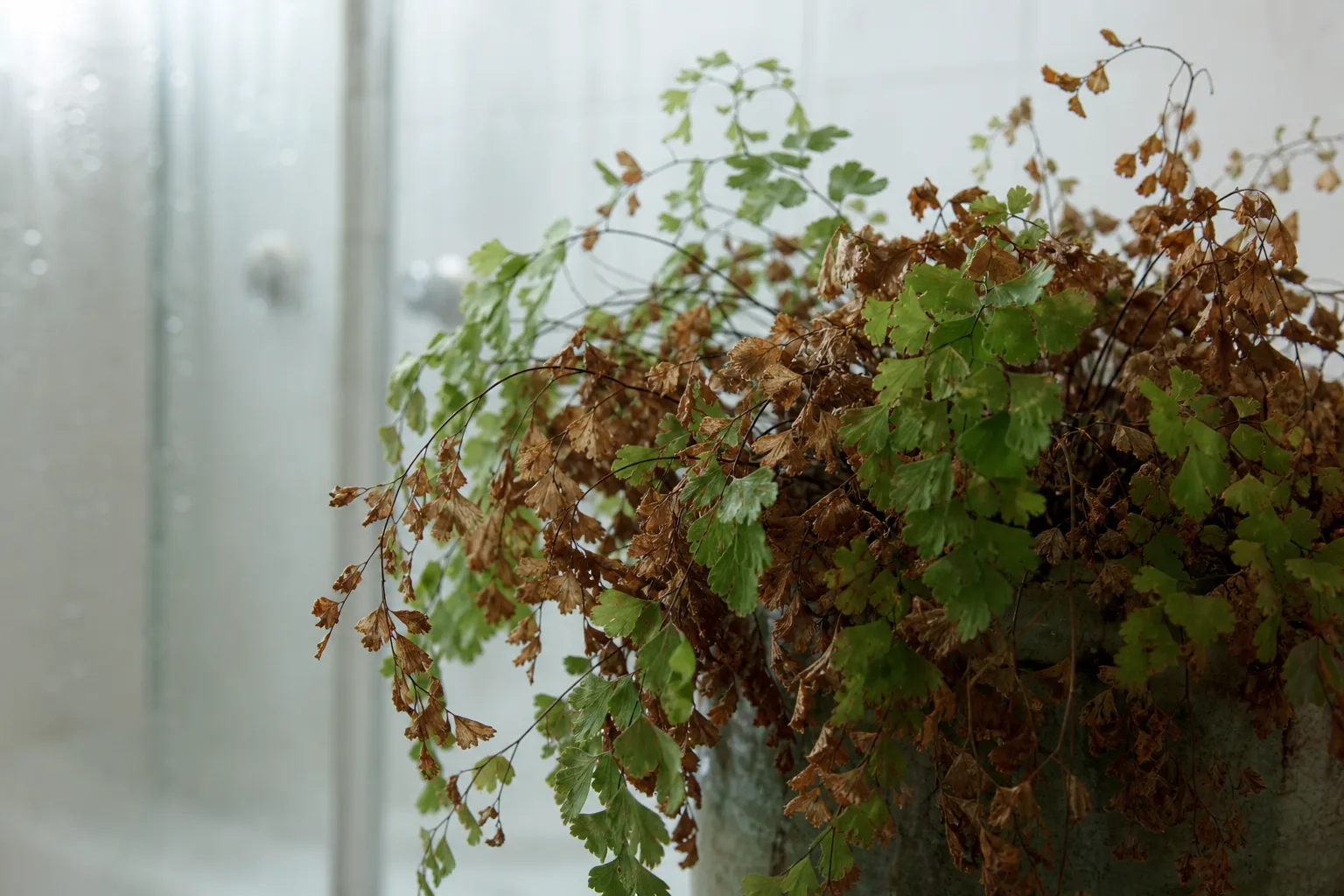
Blight on Maidenhair Fern: Causes, Checks & Fixes
This guide covers blight on Maidenhair Fern. See also the general Blight guide, watering, and light pages for this plant.
Blight on Maidenhair Fern: Causes, Checks & Fixes
Quick answer
Blight on Maidenhair Fern almost always means Botrytis blight - gray mold caused by the fungus Botrytis cinerea attacking wet, senescent, or injured frond tissue. This fern needs high humidity and moist soil, which makes it easy to accidentally create the opposite problem: fronds that stay wet for hours in still air. That combination is exactly where gray mold thrives.
First step: isolate the plant and cut every mushy, water-soaked, or fuzzy frond back to the soil line. Do not mist, shower, or repot on day one. Removing infected tissue and drying the foliage environment stops most home outbreaks before fungicide is needed.
What blight looks like on Maidenhair Fern
Maidenhair Fern (Adiantum raddianum) carries delicate fan-shaped leaflets on thin black stipes. When blight hits, the damage is fast and soft - not the slow crisp browning you see from dry air.
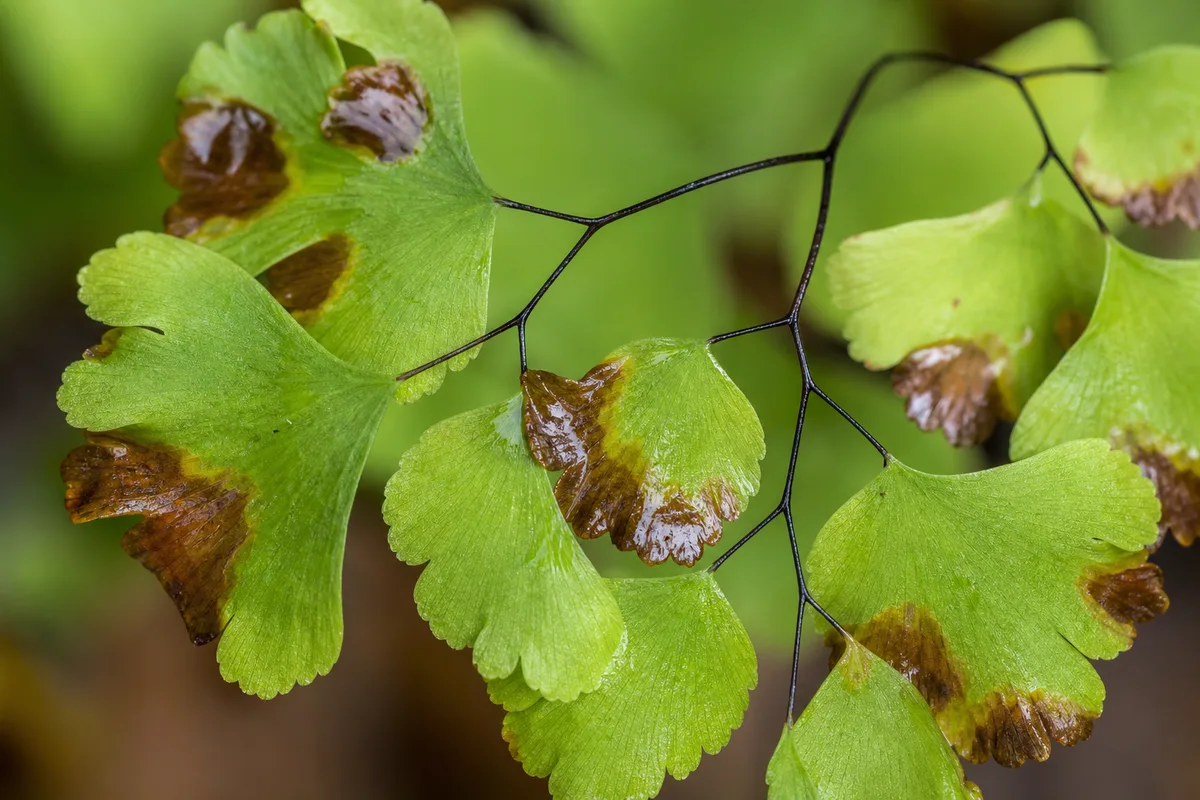
Blight symptoms on Maidenhair Fern - compare with healthy tissue on the same plant.
Typical Botrytis blight signs:
- Water-soaked tan or brown patches on leaflet edges that spread across a frond within days
- Collapsed, limp fronds that feel wet rather than dry and brittle
- Gray or brown fuzzy mold visible on dead tissue - especially on fronds that were already yellowing or brown
- Rapid spread from one side of the crown or from lower fronds resting on wet soil
- Musty odor near heavily infected tissue
Blight often starts on already dying fronds - brown tips from a missed watering, cold draft damage, or old lower leaves left attached. The fungus colonizes that necrotic tissue first, then moves to younger pinnae touching it.
This differs from low-humidity brown tips, which are dry and papery with no fuzz. It also differs from underwatering on Maidenhair Fern collapse, where the whole plant wilts suddenly but soil is dry and tissue is not moldy.
Why Maidenhair Fern gets blight
Maidenhair Fern is built for humid forest floors - consistently moist roots that should not be allowed to dry out, Maidenhair Fern light guide, and atmospheric humidity above 60%. Growers often meet that need by misting fronds, grouping plants in bathrooms, or sealing pots inside terrariums. Those tactics raise humidity but can also keep leaflet surfaces wet too long when airflow is poor.
Botrytis blight develops when high humidity combines with prolonged leaf wetness and cool stagnant air. The pathogen spreads via airborne spores and water splash, colonizing wounded or dead tissue before moving into live fronds.
Maidenhair-specific triggers include:
- Evening misting or overhead watering that leaves lacy fronds damp overnight
- Dead brown fronds left on the plant instead of trimmed promptly - common entry points for gray mold
- Crowded terrariums or dense plant shelves where fronds overlap and never dry
- Cool drafty windows combined with wet foliage - Botrytis favors roughly 60–70°F with humidity above 85%
- Stress from recent Maidenhair Fern repotting guide or root damage, which weakens new frond production while old tissue decays
The paradox is real: this fern dies without humidity, but humidity on wet leaves in still air invites blight. The fix is humid air around the plant with dry frond surfaces - not less moisture at the roots.
How to confirm the cause
Work through these checks in order:
- Tissue texture - Blight patches are soft and water-soaked. Sun scorch and dry-air browning feel crisp. Underwatering wilt comes with light, dry soil.
- Fuzzy sign - Look with a hand lens or bright light for gray mold on collapsed fronds. No fuzz with dry brown edges suggests environmental stress, not blight.
- Timing - Did spots appear after misting, showering the plant, or several humid days with no airflow?
- Starting point - Inspect brown fronds resting against live growth or frond tips touching wet soil. Botrytis often begins on senescent tissue.
- Spread rate - Leaf-spot infections can be slow. Blight patches that enlarge daily across multiple fronds strongly suggest Botrytis.
- Soil and roots - Sour smell, mushy crown, and black roots point to root rot on Maidenhair Fern. Firm rhizomes with mold only on frond surfaces fit blight better.
- Neighbor plants - Similar fuzzy patches on ferns or African violets in the same humid tray support a fungal blight diagnosis.
If fronds collapsed overnight but soil is bone dry and there is no mold, correct underwatering first before cutting healthy tissue.
First fix for Maidenhair Fern
Isolate the plant and remove every infected or dead frond at the soil line with clean, sharp scissors.
Bag trimmed tissue and discard it in household trash - not compost indoors. Wipe scissors with rubbing alcohol before touching other plants. This single sanitation step removes the spore source Botrytis needs to keep spreading.
After removal:
- Stop misting fronds entirely until new growth stays clean for two weeks
- Water at the soil surface only, early in the day, so any splash dries quickly
- Increase airflow - open a terrarium vent, space the pot away from neighbors, or run a fan on low nearby
- Keep humidity high at the pot level with a pebble tray or humidifier aimed at the room, not the leaf surface
Hold fertilizer until you see firm new fronds emerging unstained.
Step-by-step recovery
- Daily inspection - Check the crown each morning for new water-soaked spots. Remove affected fronds the same day.
- Dry-frond discipline - If you must raise humidity, use a humidifier or pebble tray rather than spraying leaves.
- Trim contact points - Cut lower fronds that rest on soil or overlap neighbors so air reaches between pinnae.
- Light adjustment - Move to bright indirect light where the pot dries predictably. Weak light slows recovery and prolongs leaf wetness after watering.
- Monitor roots - Keep soil consistently moist but not swampy. A waterlogged root ball during blight recovery invites root rot on an already stressed fern.
- Escalate only if needed - If gray mold returns on new fronds after two weeks of dry foliage and sanitation, a houseplant-labeled fungicide may help - but cultural fixes come first.
Recovery timeline and what to expect
Badly infected fronds will not recover - they should be gone. Healthy rhizome tissue can push new fronds in two to four weeks once the environment stabilizes. Judge success by:
- No new water-soaked spots on emerging fronds
- Firm black stipes and bright green new pinnae
- Stopped spread - existing damage stays static while new growth stays clean
Signs the problem is worsening:
- Gray fuzz reaching the crown center
- Most new fronds collapsing before fully opening
- Soft, dark rhizome tissue at soil line
- Multiple plants in the same tray developing spots simultaneously
If the crown goes soft or every new frond dies before opening, propagation from any remaining healthy rhizome section may be the last option - but many maidenhairs recover when blight is caught before crown invasion.
Lookalike symptoms
| What you see | Likely cause | Key difference |
|---|---|---|
| Dry brown leaflet tips | Low humidity or fluoride in tap water | Crisp, not water-soaked; no gray fuzz |
| Sudden full-plant wilt | Underwatering | Dry soil; no mold on tissue |
| Irregular black spots with yellow halos | Fungal leaf spot | Slower spread; may lack gray mold |
| White powder on fronds | Powdery mildew (uncommon on ferns) | Dry powder, not fuzzy on wet tissue |
| Sour soil, yellow limp fronds | Root rot | Damage starts below soil; fronds may not show mold |
Mistakes to avoid
- Misting blighted fronds to “help humidity” - this feeds Botrytis
- Leaving brown fronds attached because the plant looks sparse - decaying tissue is the fungus food source
- Showering the whole plant before confirming blight - water splash spreads spores
- Repotting immediately - unnecessary unless roots are clearly rotting; repotting stress plus wet crown tissue worsens blight
- Fertilizing a recovering fern - new salts on stressed tissue burn pinnae and slow regrowth
How to prevent blight next time
Maidenhair Fern care that prevents blight keeps roots moist, air moving, and fronds dry between waterings:
- Remove browned fronds as soon as they appear - do not wait for a full trim session
- Water soil only; skip overhead sprays and evening misting
- Space pots so lacy fronds do not nest against neighbors or wet saucers - ample air circulation reduces fungal spread
- In terrariums, leave vents open or run brief daily airflow so condensation does not pool on pinnae
- Quarantine new ferns before placing them in humid groupings
- Sterilize scissors between plants when trimming delicate ferns
High humidity and blight prevention are compatible when humidity comes from the room or pebble tray, not from water sitting on leaflet surfaces for hours.
When to worry
Escalate quickly if gray mold reaches the crown, rhizomes feel soft at soil line, or blight jumps to multiple plants in one humid display. Mild spotting on a few lower fronds after one misting mistake is manageable with sanitation and dry-frond habits.
A single Maidenhair Fern with firm rhizomes and clean new frond tips emerging after two weeks of corrected care is on track - even if older damaged pinnae never fully recover.
When to use this page vs other Maidenhair Fern guides
- Maidenhair Fern watering guide - Use for routine moisture checks before assuming blight is the main issue.
- Maidenhair Fern problems hub - Browse all 55 common issues on this species.