Stem Rot on Jasmine: Causes, Checks & Fixes
Quick answer
Stem rot on jasmine turns the base of twining stems mushy-usually from chronically wet mix, burying the stem at repot, or fungal entry through frost or pruning wounds. First step: press the stem base to confirm softness, then cut back to firm green wood with sterilized pruners.
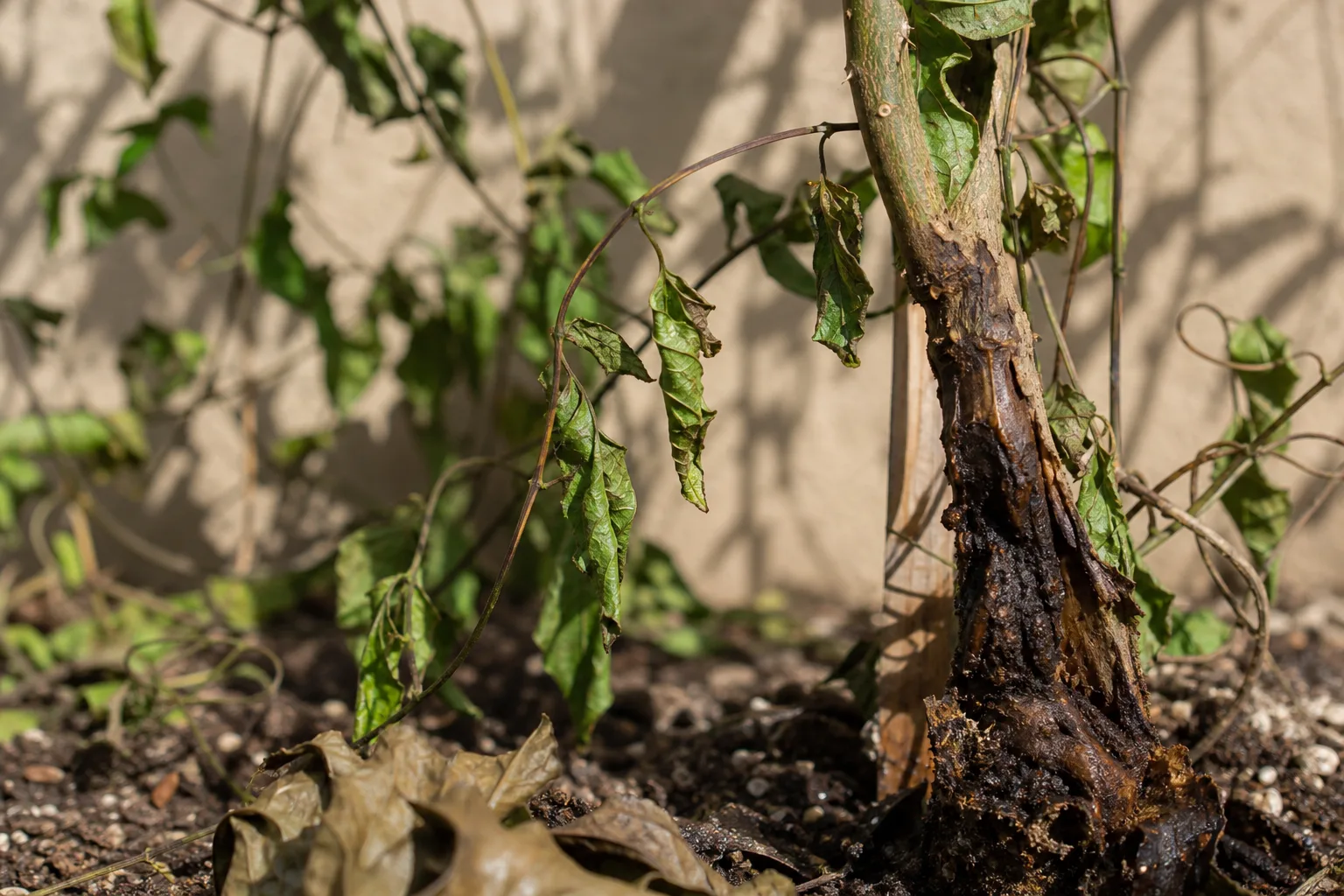
Stem Rot on Jasmine: Causes, Checks & Fixes
This guide covers stem rot on Jasmine. See also the general Stem Rot guide, watering, and light pages for this plant.
Stem Rot on Jasmine: Causes, Checks & Fixes
Quick answer
Stem rot on jasmine (Jasminum officinale and related summer-flowering climbers) attacks the base of twining stems at the soil line or entry points through wounds-not healthy mid-stem tissue high on the vine. The problem is almost always cultural: mix that stays wet too long, a stem buried deeper than it was originally planted, or damp organic matter piled against the crown after Jasmine repotting guide or mulching.
First step: press the stem base gently with a finger. If tissue collapses, feels waterlogged, or smells sour, confirm stem or crown rot and cut back to firm green cambium with sterilized pruners before you repot, fertilize, or increase watering. Jasmine can look thirsty while the base rots-wilting leaves with wet mix are a classic mismatch.
Why jasmine gets stem rot
Common jasmine is a vigorous twining climber that needs fertile, well-drained soil in sun or partial shade. Indoors and on sheltered patios, growers often give it peat-heavy bagged mix in a pot that holds water far longer than the vine uses it-especially during the cool winter semi-rest when houseplants and glasshouse jasmines need only very light watering in winter. Roots sit in oxygen-poor, saturated mix; pathogens then colonize the crown where stem meets soil.
Overwatering during slow growth is the leading trigger. Jasmine pushes soft new shoots in spring and summer but slows sharply in cool months when it sets buds for the next bloom cycle. Watering on a summer schedule while the plant rests leaves unabsorbed moisture around the base-exactly where crown rots often start at the soil line.
Planting or repotting too deep mimics the same problem. Covering the root flare or stem base with soil or mulch blocks air exchange and keeps bark wet. Jasmine is not self-clinging; lower stems often loop near the pot rim. Burying that tissue at repot, or piling decorative moss against indoor pots, invites decay on bark that was never meant to sit underground.
Other jasmine-specific triggers:
- Oversized containers where a modest root ball sits in a large wet zone for weeks
- Blocked drainage holes or saucers that hold standing water after every drink
- Low light plus frequent watering-slow winter growth uses little water, so the same schedule becomes excessive
- Frost or mechanical wounds on outdoor stems followed by humid, wet weather-fungi enter through damaged bark
- Dense lower foliage or crowded shelf placement that traps humidity at the crown
Fungi such as Rhizoctonia, Pythium, Phytophthora, and Botrytis finish the job once tissue is stressed and wet. The root cause is usually culture, not random infection.
What stem rot looks like on jasmine
Stem rot on a jasmine vine is localized at the soil line, repot wounds, or old pruning cuts-not evenly across every stem.
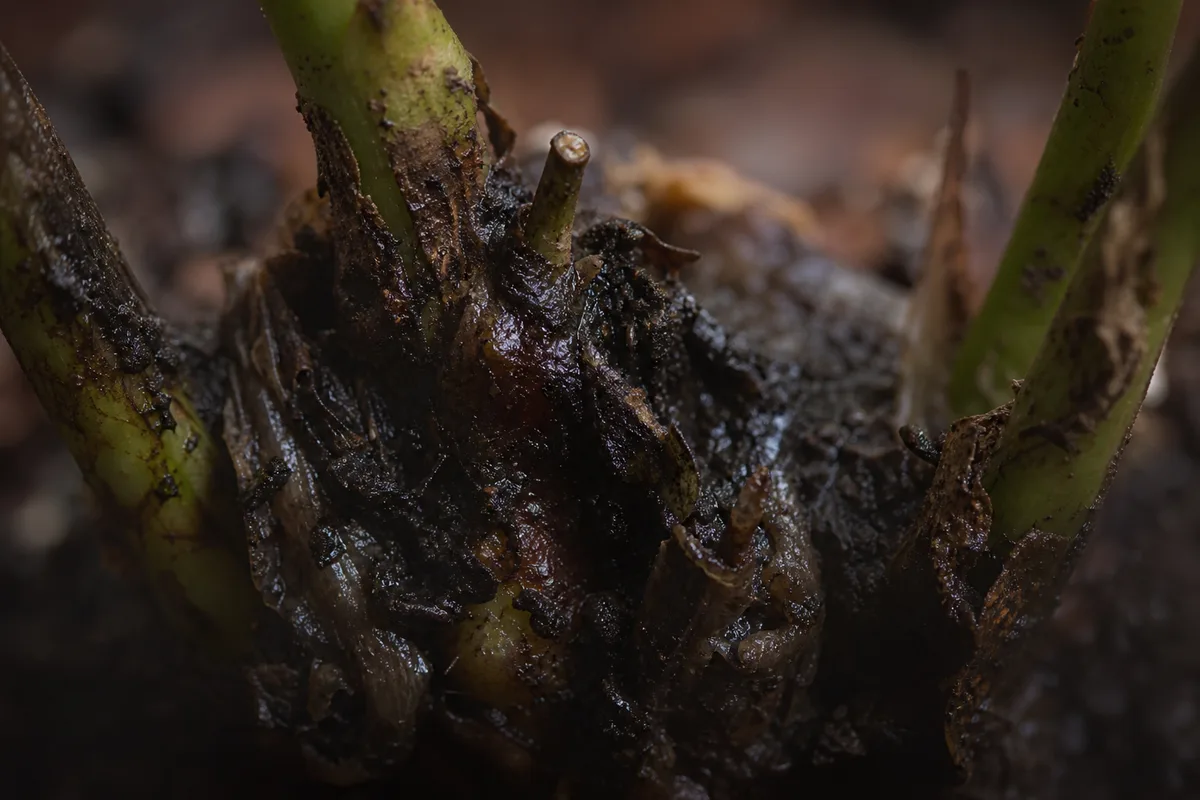
Stem Rot symptoms on Jasmine - compare with healthy tissue on the same plant.
Typical crown and stem-base signs:
- Brown or black soft, mushy stem at the base where stems enter the mix
- Stem tissue that collapses when pressed; may feel hollow or waterlogged
- Sour or rotted smell at the crown, stronger than normal damp soil odor
- Sudden wilt or collapse of the vine above the rot line while mix below still feels wet
- Lower leaves yellow as vascular flow through the damaged base fails
- Brown or discolored pith when you split a stem lengthwise just above mushy tissue
Crown rot vs root-only decay: Jasmine sometimes keeps firm white roots while the crown fails-stems soften and the vine collapses even though lower roots look acceptable on a quick glance. That pattern is crown or stem-base rot, not a simple underwatering wilt.
Outdoor clues: Stems blackened from the soil line upward after a cold wet spell, or soft tissue at a wound where a stem was tied, rubbed against a support, or broken by frost.
Normal lookalikes: Seasonal yellowing of a few old leaves on a firm base during winter rest is not stem rot. Bud drop from dry air or inconsistent watering hits tips and buds, not mushy bark at soil level.
How to confirm the cause
Work through these checks in order:
- Stem-base firmness - Press the main stem(s) at the soil line. Firm green bark = look elsewhere; mush that dents = suspect rot.
- Soil moisture at depth - Stick a finger 3 cm into the mix. Wet deep soil with a soft base confirms trouble. Dry mix throughout with a slightly wrinkled but firm stem points to drought stress, not rot.
- Planting depth - Soil or mulch should not climb above the original soil mark on the stem. A buried trunk is a rot risk until corrected.
- Season and watering history - Did you keep summer watering frequency through cool winter rest? That pattern fits crown rot on resting jasmine.
- Smell - Severely rotted tissue often smells rotten because of secondary bacterial breakdown-not just “earthy” damp potting mix.
- Pith check - Cut a short segment of stem above the soft zone. Healthy tissue shows firm white or green pith; rot shows brown, water-soaked, or hollow centers.
- Root comparison - Gently unpot if the base is soft. Note whether roots are firm and pale while the crown is mushy-that crown-focused pattern matters for how you prune and repot.
If the pot feels light, mix is dry throughout, and the stem base is firm but leaves are wilted, underwatering may explain symptoms better than rot-do not soak a plant you have not inspected.
First fix for jasmine
Sterilize your pruners and cut out every soft, mushy stem segment back to firm green cambium.
Use clean, disinfected cutting tools-wipe blades with rubbing alcohol or dip in a fresh disinfectant solution between cuts on infected tissue. Remove all discolored, collapsed bark at the soil line until you reach wood that feels solid and shows green under a thin scrape. Do not leave a “bridge” of mush connecting healthy upper stems to the mix.
Hold upper stems as you cut so you can see exactly where firm tissue begins. Bag and discard infected stem pieces in household trash, not indoor compost.
Do not mist the crown, fertilize, or resume normal watering until you have assessed whether repotting is needed and the cut surfaces have callused. Do not bury fresh cuts deeper in mix.
Step-by-step recovery
After the initial sterile prune:
- Inspect roots - If the base was soft, unpot and rinse roots gently. Trim any brown, mushy root tips with sterilized blades. Firm pale roots can support recovery if the stem base is now solid.
- Let cuts dry - Allow pruned stem ends and trimmed roots to air-dry for several hours to a day in shade before repotting. Wet mix pressed against fresh cuts invites reinfection.
- Repot shallow if mix or depth was wrong - Use fresh, well-drained potting mix with perlite or coarse sand. Set the plant so the original stem mark sits at or slightly above the soil surface-never deeper. Choose a pot only slightly larger than the root ball with open drainage holes.
- Water lightly once - After repot, give a modest drink and empty the saucer. Then wait until the top inch or 3 cm of mix dries before watering again.
- Take cuttings if the main stem is lost - If rot consumed most of the base but firm green stems remain higher on the vine, root 10–15 cm semi-ripe cuttings in fresh mix. Jasmine often recovers faster from clean cuttings than from a hollow main trunk.
- Improve airflow - Space pots so lower stems are not pressed against walls, trays, or neighboring plants. Pull decorative moss away from the crown indoors.
- Adjust winter watering - Through cool rest, shift to light watering only when the top of the mix is dry-matching reduced uptake, not summer frequency.
Isolate badly affected vines from other houseplants until soft tissue stops spreading and new growth looks clean for at least a week.
Recovery timeline
Sterile pruning and drying out show results within a few days when rot was caught early-softening stops spreading and the stem base feels firmer. Expect two to four weeks before you see confident new shoots from pruned stems if remaining tissue was healthy. Cuttings taken above rot may root in three to six weeks in warm bright conditions.
Judge recovery by firm base tissue, new green growth, and stable leaves-not by old yellow foliage, which may drop and not recover. If the base re-softens after you repot, or blackening climbs past your cuts within a week, rot is still active and the plant likely needs more aggressive removal or discard.
Lookalike symptoms to rule out
Root rot only - Mushy roots with a firm stem base is primarily root decay. Stem rot at the crown can coexist, but a hard trunk with only root tips brown points you toward unpotting and root pruning rather than major stem amputation.
Underwatering - Dry mix throughout, light pot, firm stem, and wilted leaves that perk after a thorough drink fit drought-not rot. Rot pairs wet mix with soft base.
Cold damage - Frost can blacken stems and leaves without initial mush. If tissue later turns soft in wet conditions, rot may follow injury-trim back to firm wood and fix drainage.
Bacterial wilt or advanced fungal leaf diseases - Widespread wilting with spotted leaves and no mushy crown suggests other pathogens. Stem rot stays focused at the soil line or wounds unless severely neglected.
Transplant shock - Mild wilt after repot with firm stems and appropriate moisture usually settles in days without sour smell or spreading mush.
Mistakes to avoid
Do not mist the crown or wrap the base in damp moss while healing-that keeps bark wet and favors soft rots at the crown.
Do not fertilize until firm new growth appears. Nutrients cannot help tissue that is still decaying.
Do not reuse sour, compacted mix or repot deeper to “stabilize” a wobbly vine-that buries bark and worsens crown rot.
Do not assume white roots mean the plant is fine if the stem base is soft-crown failure can kill the vine while lower roots still look acceptable.
Do not compost infected jasmine stems indoors; pathogens can persist in debris.
Wear gloves when handling rotted tissue. True jasmine is generally non-toxic to cats and dogs, but decaying plant material is still unpleasant to handle.
How to prevent stem rot next time
Match watering to the pot and season. Container jasmines need regular watering during growth but only light drinks in winter. Water when the top inch or 3 cm of mix dries-not on a fixed calendar that ignores cool rest.
Use well-drained mix and pots with drainage holes. Blend standard potting soil with perlite or coarse sand. Terracotta helps surface mix dry faster than plastic on sheltered indoor shelves.
Maintain original planting depth at every repot. The stem trunk should sit at the same level it was in the previous pot. Mulch and topdressing belong around the root zone, not against climbing bark.
Avoid oversized pots that stay wet for weeks after one watering.
Sterilize tools when pruning diseased or suspect stems, and disinfect pots or use fresh containers when repotting after rot.
Protect outdoor stems from frost where possible, and avoid tying loops of stem so tight against wet supports that bark cracks.
Improve airflow around the base-especially when jasmine shares a crowded plant shelf or winter conservatory bench.
When to worry
Treat as urgent when soft tissue spreads upward daily, the vine collapses above the base in warm weather, or more than half the main stem is compromised. Warm wet periods encourage bacterial soft rots that move quickly on stressed crown tissue.
Replace or propagate from cuttings rather than fighting endless reinfection when the trunk is hollow, blackened through most of its girth, or re-softens after two careful prune-and-repot cycles. Jasmine is widely available and roots readily from clean cuttings-starting fresh with sterile mix is often safer than saving a pathogen-loaded pot.
A firm stem base with dry soil and seasonal leaf loss during winter rest is not urgent. Confirm mush at the crown before you prune aggressively.
Conclusion
Stem rot on jasmine is a crown and base-of-stem problem tied to wet mix, buried stems, and wounds-not a mystery disease on random leaves. Press the base, cut to firm green wood with clean tools, repot shallow into draining mix if needed, and tighten winter watering. That path saves vines with healthy tissue above the rot line and stops the common mistake of watering a collapsing jasmine because the soil still feels damp.
When to use this page vs other Jasmine guides
- Jasmine watering guide - Use for routine moisture checks before assuming stem rot is the main issue.
- Jasmine problems hub - Browse all 53 common issues on this species.