Scale Insects on Watermelon Peperomia: Causes, Checks &
Quick answer
Scale insects on Watermelon Peperomia attach as immobile brown or tan bumps along red petioles and stems, causing yellow stippling and sticky honeydew on striped leaves. First step: isolate the plant and scrape visible scales with a cotton swab dipped in alcohol before applying any spray.
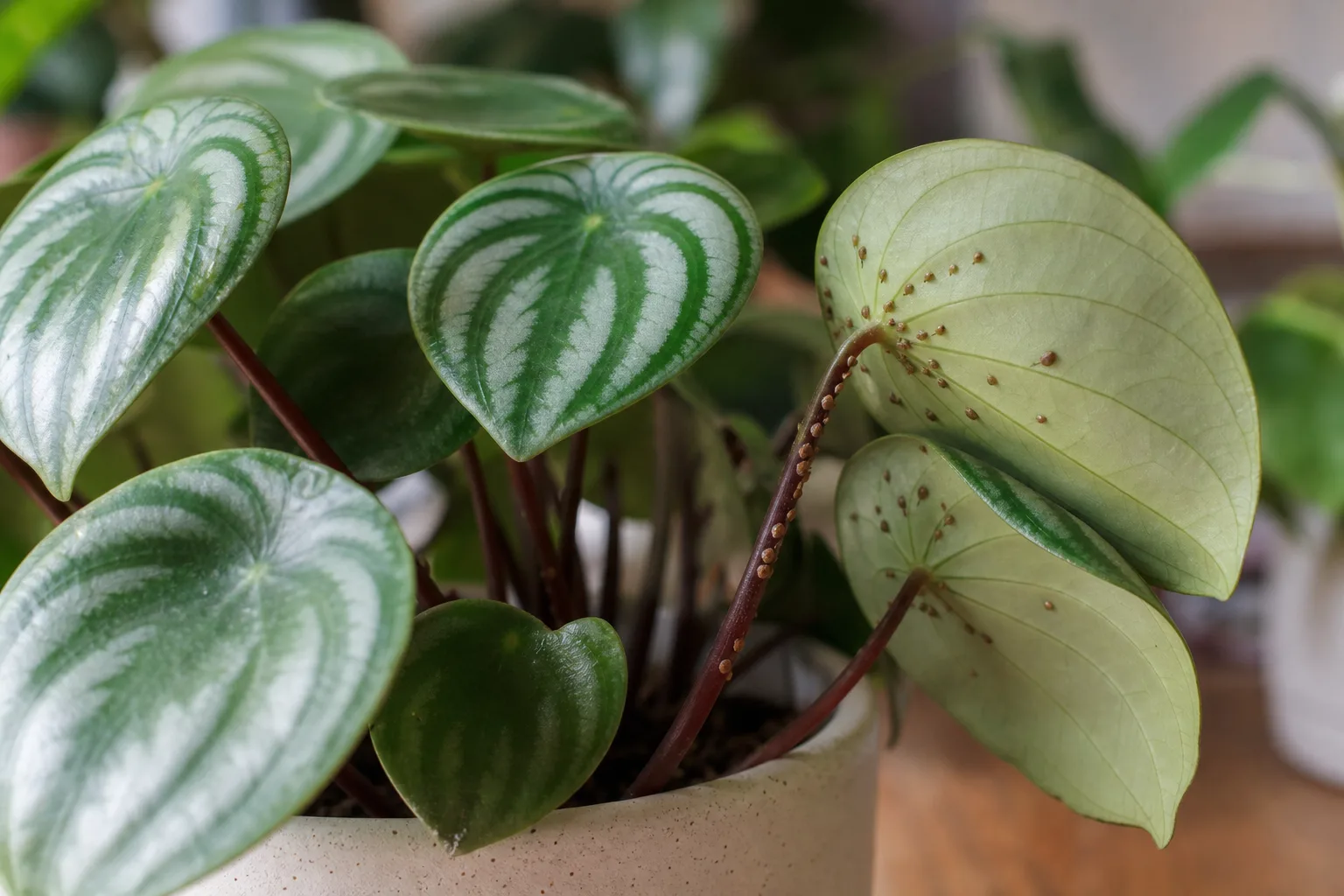
Scale Insects on Watermelon Peperomia: Causes, Checks & Fixes
This guide covers scale insects on Watermelon Peperomia. See also the general Scale Insects guide, watering, and light pages for this plant.
Scale Insects on Watermelon Peperomia: Causes, Checks & Fixes
Quick answer
Scale insects are typical houseplant pests on Peperomia argyreia alongside mealybugs and aphids. On Watermelon Peperomia they settle on the red petioles and dark red stems that hold the round, watermelon-striped leaves-especially at leaf bases and along veins where the nearly stemless rosette gives them tight, sheltered attachment points. Their sap feeding leaves yellow stippling on striping and a shiny, sticky honeydew coating that can turn into black sooty mold.
First step: isolate the plant and scrape visible scales off petioles and stems with a cotton swab dipped in 70% isopropyl alcohol. You need to confirm immobile bumps, remove adults you can reach, and stop spread before reaching for horticultural oil or insecticidal soap. This species is slow-growing and intolerant of wet crowns, so work carefully-do not flood the rosette center while rinsing or treating.
What scale looks like on Watermelon Peperomia
Scale insects are not one species but a group of sap feeders that attach with a waxy or shell-like covering and stay mostly immobile once settled. On indoor plants, soft scales are most common-roughly one-eighth to one-quarter inch long, brown or tan, and often producing honeydew. Armored scales are smaller, do not produce honeydew, and look like flat round disks.
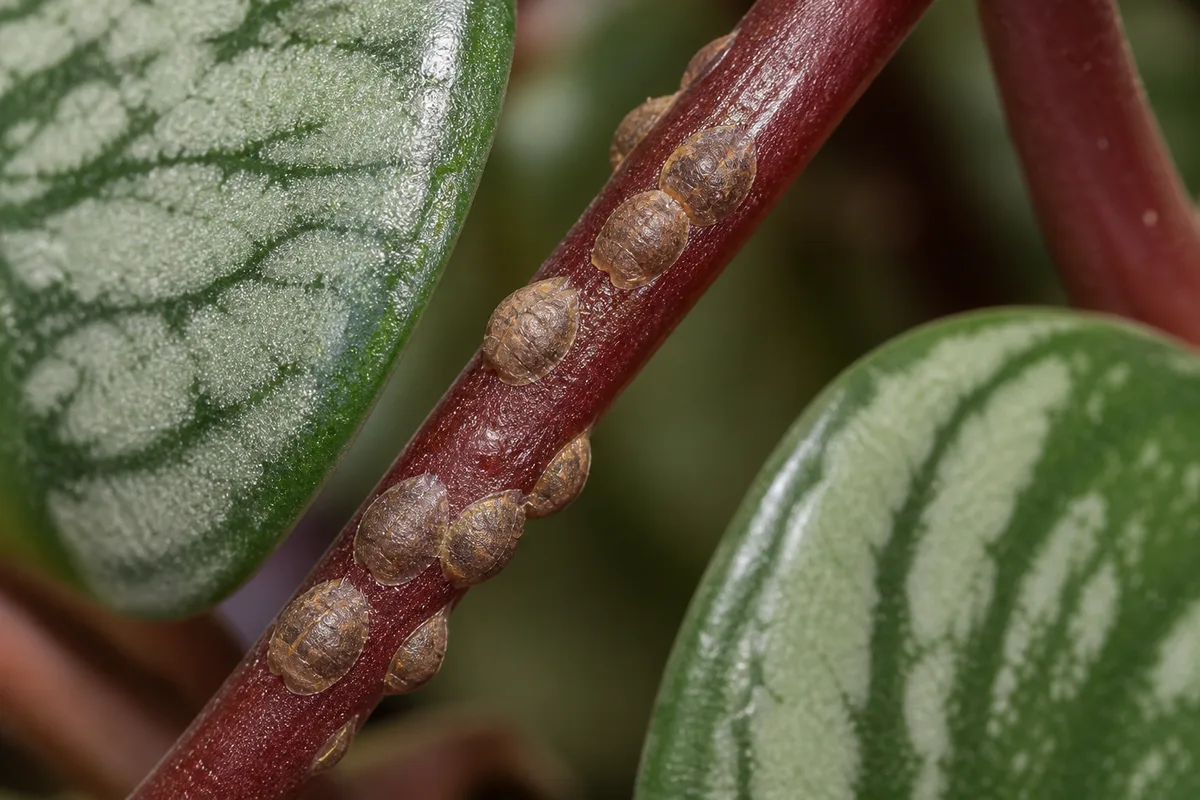
Scale Insects symptoms on Watermelon Peperomia - compare with healthy tissue on the same plant.
On Watermelon Peperomia, check these spots first:
- Red petiole bases - bumps tuck where each fleshy petiole meets the compact crown
- Petiole midsections and leaf veins - especially on the undersides of striped leaves
- Red stem sections - any visible stem between leaves on older or leggy plants
- Leaf undersides along mid-veins - scale often lines up with the silver striping pattern
Damage shows up before every bump is obvious. Feeding causes yellow stippling or dull striping where sap is drained from fleshy leaves. Honeydew-a clear, sticky secretion-collects on upper leaf surfaces below feeding sites. Black sooty mold grows on that residue and can block light on the glossy foliage. Heavy feeding yellows leaves, slows growth, and can cause leaf drop on a plant that already grows slowly.
Unlike mealybugs, scale bumps are hard and do not look cottony. Unlike edema blisters, they do not burst or feel water-filled-they scrape off as discrete disks. Unlike mineral dust, they are firmly attached and leave a pale mark when removed.
Why Watermelon Peperomia gets scale
Scale is not proof of bad peperomia care-it hitchhikes on new nursery plants, cuttings, or specimens moved outdoors for summer. What makes Watermelon Peperomia vulnerable is where pests can hide and how slowly the plant replaces damaged tissue.
The rosette sits close to the soil with red, fleshy petioles up to several inches long rising from a nearly stemless crown. Scale prefers sheltered stems and leaf joints where sprays and casual inspection miss them. The striped leaf undersides and crown crevices give colonies cover while they feed on sap from tender tissue.
Indoor conditions that let scale build quietly include:
- Skipping quarantine on new purchases before mixing them into a windowsill collection
- Grouped pots with poor airflow that keep petiole joints humid and dusty
- Over-fertilizing that pushes soft new growth scale crawlers colonize quickly
- Stressed plants from wet soil, low light, or drafty heat vents-pests often establish on weakened specimens first
- Ants harvesting honeydew and protecting colonies from lady beetles and parasitic wasps
Watermelon Peperomia is not toxic to cats or dogs, which means standard houseplant treatments are an option-but still keep freshly sprayed plants away from pets until products dry.
How to confirm the cause
Work through these checks in order:
- Bump test - Nudge a suspect spot with a fingernail or toothpick. Scale flakes off as a hard disk; edema blisters do not. Mealybugs smear cottony wax when touched with alcohol.
- Mobility check - Adult scale does not walk when disturbed. If tiny insects scatter, you may be seeing aphid or thrips activity instead.
- Honeydew pattern - Sticky shine concentrated below petiole clusters points to soft scale. Uniform dryness with no tackiness argues against scale.
- Underside inspection - Lift leaves on red petioles and scan veins with a hand lens. Scale often lines mid-veins while spider mites cause fine stippling and webbing in dry air.
- Sooty mold - Black film that wipes off with a damp cloth on sticky leaves supports honeydew-producing scale or other sap feeders.
- Neighbor plants - Scale crawlers are briefly mobile after hatching. Check plants on the same shelf or in the same room.
If you find soft pear-shaped clusters on new tips, switch to aphid management. Cottony white wax in crown axils means mealybugs, not scale.
First fix for Watermelon Peperomia
Move the plant away from others and physically remove every scale you can reach with a cotton swab dipped in 70% isopropyl alcohol, scraping along red petioles, stem joints, and leaf-vein lines.
Isolation stops crawlers from spreading while you work. Physically removing scale immediately cuts the population and lets you monitor rebound on the next inspection. Dab each bump until it lifts; use a soft toothbrush on larger petioles if needed. Bag and discard swabs rather than setting them on a clean surface.
Critical for Watermelon Peperomia overview: avoid flooding the crown. Watermelon Peperomia is intolerant of wet soil and crowns; pooling rinse water in the rosette center invites crown rot that kills faster than scale will. Work with minimal moisture, then let foliage dry in Watermelon Peperomia light guide the same day.
Do not jump to systemic insecticides on day one if you have not confirmed scale and removed visible adults. Do not fertilize a pest-hit plant hoping to push new growth-that produces more tissue for crawlers to colonize.
Step-by-step recovery
After the initial alcohol scrape:
- Apply horticultural oil or insecticidal soap if bumps remain or reappear within a week. Horticultural oils smother scale by coating their bodies; insecticidal soap kills on contact with no residual effect. Cover petioles, stem joints, and leaf undersides thoroughly.
- Repeat sprays every five to seven days for at least three to four cycles. Oils and soaps only kill stages you coat directly; crawlers under old covers and newly hatched nymphs require follow-up.
- Wipe honeydew from striped upper leaves with a damp cloth once feeding stops. Sooty mold stops spreading when the sticky residue is gone.
- Manage ants if they march up petioles to harvest honeydew. Moving the plant briefly or using sticky barriers on pot rims can help natural enemies reach scale outdoors in shade.
- Prune only heavily infested leaves or petioles you cannot clean. Mature stippled leaves can stay if new growth emerges clean.
- Hold fertilizer until new striping looks normal for two weeks. Resume at half strength monthly in summer only after pests are gone.
Keep the plant isolated until you see no live scale for at least two weeks, then continue scouting for six weeks because crawler hatch is easy to miss.
Recovery timeline
Manual removal shows results within a few days when colonies are light. A full oil or soap course typically takes three to four weeks with weekly repeats. Because Watermelon Peperomia grows slowly, expect three to six weeks before you can judge recovery by fresh leaves rather than old stippled ones.
Yellow stippling and dull striping on mature leaves will not revert-track progress on new red petioles and clean watermelon striping, not older blemished foliage. If new leaves keep emerging with fresh bumps, the treatment cycle is not finished.
Lookalike symptoms to rule out
Mealybugs leave cottony white wax in crown crevices and petiole axils, not hard immobile disks. Alcohol smears mealybugs; scale lifts as a shell.
Aphids form soft pear-shaped clusters on new growth and flower spikes. They move when disturbed and colonize tips more than mature petioles.
Spider mites cause fine stippling and webbing on dry leaf undersides. Mites rarely produce heavy sticky honeydew.
Thrips leave silvery scratch-like scars on striped leaves and run quickly when disturbed.
Edema or water stress can cause brown corky spots on peperomia leaves without insects, honeydew, or hard bumps. Confirm soil moisture and crown firmness if pests are absent.
Mineral or dust deposits wipe off without leaving a feeding scar. Scale leaves a pale mark where it was attached.
Mistakes to avoid
Do not drench the rosette center while rinsing or treating-crown rot from wet crowns kills Watermelon Peperomia faster than scale damage.
Do not use homemade dish soap sprays; commercial insecticidal soap is formulated to reduce leaf burn risk.
Do not treat once and stop. Scale reproduces through crawler stages protected under old covers; weekly repeats for a month or more are often necessary.
Do not return an isolated plant too soon. Two scale-free weeks is a safer threshold than a single clean glance.
Do not ignore ants. Controlling scale alone is harder while ants farm honeydew and block predators.
Do not assume sprays penetrate adult shells. Physical removal plus smothering oils or soaps works better than expecting one contact spray to solve a mature infestation.
Watermelon Peperomia care cross-check
While treating pests, keep baseline care stable:
- Light - Bright indirect light supports steady-not weak-new growth
- Watering - Let the top inch of soil dry before watering; empty saucers so the crown zone stays airy
- Humidity - Moderate humidity (40–60%) suits the fleshy leaves without trapping moisture in the crown
- Pot size - Slightly pot-bound is fine; oversized wet pots stress roots and slow recovery
Changing light, pot, and watering all at once makes it hard to tell whether improvement comes from pest control or care shifts.
How to prevent scale next time
Quarantine new plants for about two weeks and inspect red petioles and crown crevices weekly before mixing them into a collection. Scout Watermelon Peperomia most closely during warm months when new leaves push from the crown.
Wipe or rinse dust from striped leaves occasionally so you notice early bumps. Avoid excess nitrogen fertilizer that pushes soft shoots. If plants summer outdoors in shade, inspect petioles before bringing them back indoors.
When scale is caught early on one petiole, alcohol dabs and one or two oil sprays often finish the job. Letting colonies spread across the crown turns a ten-minute scrape into a month-long campaign on a slow-growing rosette.
When to worry
Escalate if colonies rebound after three full treatment cycles, if new growth stops entirely for a month, or if sooty mold coats most striped leaves and blocks light. Heavy sap loss on a slow-growing rosette can leave the plant floppy even when the crown still feels firm.
Scale alone rarely kills a healthy Watermelon Peperomia quickly, but it can ruin a season of new striping and invite secondary stress if you respond with extra water or fertilizer instead of pest removal. Heavily infested plants are sometimes best discarded to protect the rest of a collection-consider this if scale covers most petioles and new growth keeps emerging infested.
If the crown goes soft while soil stays wet, pivot to crown-rot checks-that is a separate emergency.
Conclusion
Scale on Watermelon Peperomia hides on red petioles and stem joints where the compact rosette shields colonies from casual inspection. Confirm hard immobile bumps, honeydew, or sooty mold; isolate and scrape with alcohol first; follow with horticultural oil or insecticidal soap on a repeat schedule. Judge recovery by clean new striping on firm petioles, protect the dry crown while treating, and scout monthly so slow-growing rosettes never sit long under sap-sucking scale.
When to use this page vs other Watermelon Peperomia guides
- Watermelon Peperomia watering guide - Use for routine moisture checks before assuming scale insects is the main issue.
- Watermelon Peperomia problems hub - Browse all 28 common issues on this species.
- Yellow Leaves on Watermelon Peperomia - Different entry point when symptoms overlap with scale insects.
- Mealybugs on Watermelon Peperomia - Different entry point when symptoms overlap with scale insects.
- Aphids on Watermelon Peperomia - Different entry point when symptoms overlap with scale insects.