Wrong Soil Mix on Watermelon Peperomia: Causes, Checks &
Quick answer
Wrong soil mix on Watermelon Peperomia-heavy peat or moisture-retentive blend without perlite-keeps the small root zone wet too long. First step: check how many days the top inch stays damp after watering and whether perlite is visible in the mix.
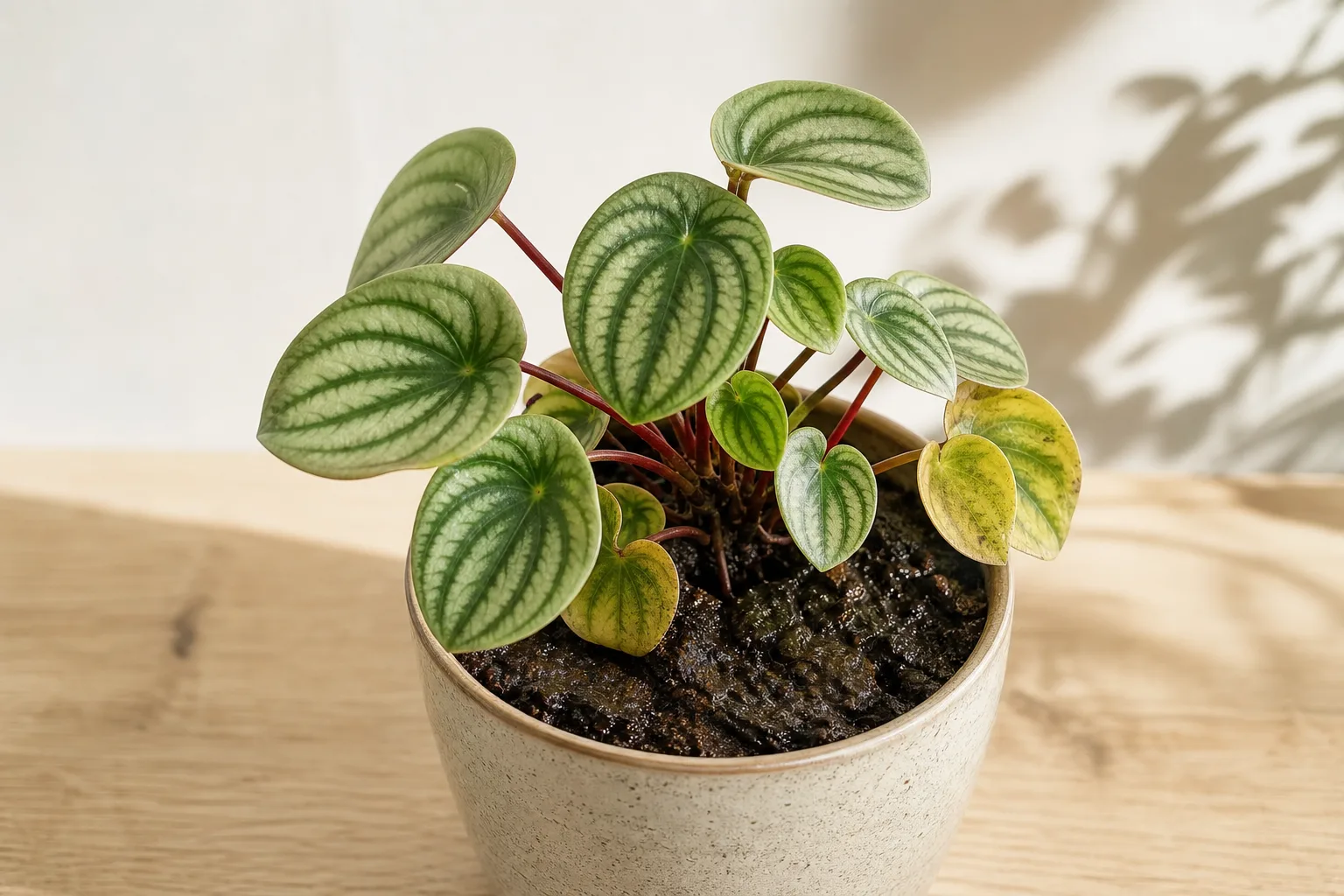
Wrong Soil Mix on Watermelon Peperomia: Causes, Checks & Fixes
This guide covers wrong soil mix on Watermelon Peperomia. See also the general Wrong Soil Mix guide, watering, and light pages for this plant.
Wrong Soil Mix on Watermelon Peperomia: Causes, Checks & Fixes
Quick answer
Watermelon Peperomia (Peperomia argyreia) depends on a light, fast-draining potting mix because its roots are small and shallow. Heavy peat, moisture-retention crystals, or unamended bagged mix hold water around those roots for days-exactly what Watermelon Peperomia overview cannot tolerate.
First step: check how long the top inch of soil stays damp after a normal watering, and whether you can see perlite or coarse particles in the blend. If the mix is still wet 2–3 cm down after a week, or compacts into a dense brick when dry, the soil structure-not your watering calendar-is the problem.
What wrong soil mix looks like on Watermelon Peperomia
Soil failure shows up as chronic wetness, not a single bad drink. On this plant you will often notice:
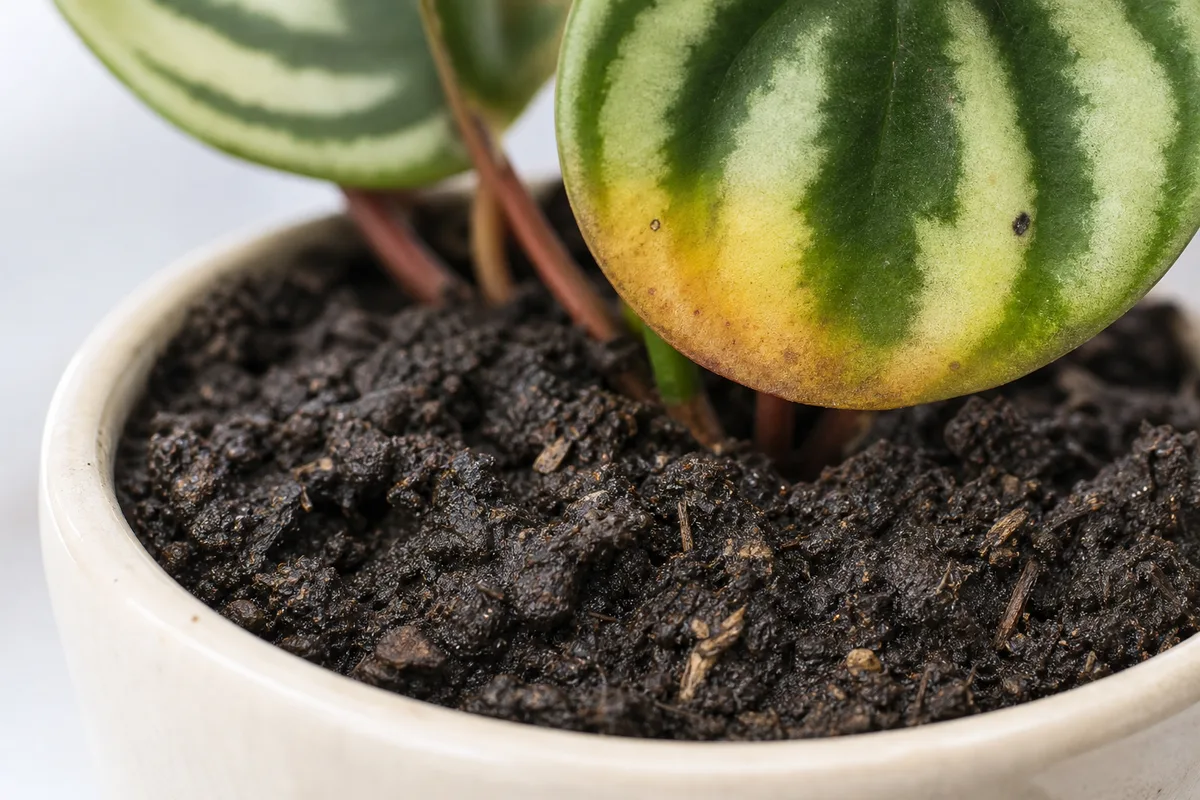
Wrong Soil Mix symptoms on Watermelon Peperomia - compare with healthy tissue on the same plant.
- Top inch stays damp for 7–10+ days after one watering
- Yellow lower leaves and floppy red petioles while soil below still feels cool and moist
- Fungus gnats hovering near the pot and white mold on the soil surface
- Slow or absent new striped leaves even in Watermelon Peperomia light guide
- Pot feels heavy for weeks; saucer water sits unabsorbed
- When you finally unpot, roots are dark, mushy, or sparse instead of firm and pale
The striped round leaves may look dull before they yellow. Crown softening at the rosette center means advanced trouble-wet mix plus overhead watering often combine to rot the base where red petioles meet soil.
Healthy Watermelon Peperomia in the right mix dries noticeably within a few days in an average home, leaves feel firm, and new silver-striped foliage keeps appearing through warm months.
Why Watermelon Peperomia fails in the wrong mix
Peperomias evolved in humid tropical forests where many species root on tree branches or the shady forest floor with sharp drainage and quick drying between rains. Watermelon Peperomia stores some moisture in its fleshy, waxy leaves, but the root system stays compact and cannot sit in a large wet zone.
NC State Extension lists good soil drainage as essential and notes the plant is intolerant of wet soil-root rot follows quickly when oxygen is cut off. That intolerance makes dense indoor mixes a poor fit even when the same blend works for thirstier houseplants.
Common mix mistakes on this species:
- Unamended all-purpose peat that compacts and holds water for weeks
- Moisture-control or water-retention crystals that keep the root zone soggy
- Garden soil or topsoil in containers-too fine, too heavy, and prone to compaction indoors
- Pure cactus mix without extra peat-it may dry so fast that you overcompensate with heavy watering, but the usual error is the opposite: too-retentive peat with no perlite
- Oversized pot plus dense mix-extra soil volume stays wet long after a small root ball has drunk what it can use
Peperomia argyreia also thrives slightly pot-bound, so a huge new pot filled with wet peat is a double penalty: more stagnant moisture around fewer active roots.
How to confirm the cause
Work through these checks before you repot:
- Dry-down test - Water as you normally would, then poke your finger 2–3 cm deep daily. If the mix is still wet at depth after 7–10 days in a warm room, it drains too slowly for this plant.
- Texture check - Crumble a dry sample from the pot edge. Airy mix breaks apart; failed peat compacts into a solid brick with few visible perlite or bark pieces.
- Pot weight - Lift the container a week after watering. A still-heavy pot with limp leaves suggests waterlogged mix, not drought.
- Ingredient label - Read the bag. Peat-only blends without perlite, or mixes labeled “moisture control,” are red flags for Watermelon Peperomia.
- Pot size vs. roots - Slide the plant out gently. A small root ball swimming in a large wet mass confirms oversized pot plus wrong mix.
- Root and smell inspection - Healthy roots are firm and pale. Brown mush, sour smell, or roots that fall apart between fingers mean the mix has already caused decay-same rescue steps as root rot apply.
If the top inch dries in 3–5 days, perlite is visible, roots are firm, and leaves only droop when you skip watering, underwatering on Watermelon Peperomia may explain symptoms better than bad soil. Do not repot until you have ruled that out.
First fix for Watermelon Peperomia
Stop watering and run the dry-down test for one week.
Note how many days the top inch stays damp and whether the pot still feels heavy. That single observation tells you whether the mix retains too much water for this species-without disturbing roots on day one.
If soil is already sour, the crown feels soft, or roots are mushy on a quick lift from the pot, skip the wait and move straight to unpotting and Watermelon Peperomia repotting guide into airy mix. Those signs mean the blend has already failed.
Step-by-step recovery
When the mix is confirmed too heavy-or rot is present-work in this order:
- Unpot carefully - Watermelon Peperomia has delicate red petioles. Tip the pot and support the rosette; do not pull from the stems.
- Inspect and trim - Rinse away old mix. Cut any brown, mushy roots back to firm tissue with clean scissors. Let the root ball air on newspaper for several hours if you removed significant rot.
- Choose the right blend - Gardener’s Supply recommends regular potting soil with peat plus perlite or coarse sand for drainage. A practical target is roughly 70% houseplant peat blend and 30% perlite (or perlite plus a little orchid bark). RHS peperomia guidance also favors loose, free-draining compost with added perlite.
- Right-size the pot - Move up only 2–3 cm wider than the root ball. RHS notes that an oversized pot keeps compost wet longer and can cause roots to rot-especially risky on slow-growing peperomias.
- Repot dry, then water once - Fill the new container with mix, set the plant so the crown sits at the same depth, and water lightly until a little runs from drainage holes. Empty the saucer.
- Reset the Watermelon Peperomia watering guide - Let the top inch dry before the next soak. In winter, reduce frequency as growth slows.
- Hold fertilizer - Skip feed until new growth looks healthy for two weeks. Salts on stressed roots add another layer of damage.
Do not add gravel at the pot bottom instead of fixing the mix-research shows that creates a perched water table. Use airy potting media and open drainage holes.
Recovery timeline
After repotting into better mix, expect 1–2 weeks before drooping stabilizes if roots were mostly healthy. The plant should stop getting worse; petioles firm up slightly as the root zone dries predictably.
New striped leaves are the best success signal-often 3–6 weeks during spring and summer, sometimes longer if you trimmed significant roots or repotted in low light. Old yellow leaves will not revert to green; remove them once the plant is stable.
Full root recovery and bushy new growth may take several months because Peperomia argyreia is naturally slow-growing. A firm crown and fresh silver-green foliage mark a saved plant even if older leaves stay blemished.
Worsening signs: crown continues to soften after repot, stems blacken from the base, or no new growth appears by mid-spring despite correct light-those suggest rot advanced too far or the new mix is still too wet.
Lookalike symptoms
- overwatering on Watermelon Peperomia on good mix - Same yellow leaves and droop, but perlite-heavy soil dries within a few days and roots stay firm when inspected. Fix the schedule, not the blend.
- Underwatering - Light pot, very dry mix throughout, slightly soft leaves that perk after one thorough soak. Soil crumbles dusty, not sour.
- Pot too large - Dense wet zone even with decent mix; root ball is tiny compared with container volume. Downsize pot and refresh mix together.
- Low light - Leggy stems, faded striping, and slow drying because the plant uses little water. Move to bright indirect light before blaming soil alone.
- Root rot from prior care - Mushy roots in an otherwise airy mix; repot and trim, but also review watering and pot size.
What not to do
Do not keep watering on schedule while soil stays wet at depth-that deepens suffocation. Avoid repotting into pure peat or moisture-control mix “because peperomias like humidity.” Humidity is air moisture; roots still need oxygen in the mix.
Skip garden soil, compost straight from the yard, or dense outdoor potting soil indoors. Do not jump to a pot much larger than the root ball to “give it room.” Do not add fertilizer to force growth from roots sitting in failed mix.
When handling rotted roots, wear gloves if you have sensitive skin. Watermelon Peperomia is non-toxic to cats and dogs, but decay smell and wet soil can harbor mold-wash hands after repotting.
How to prevent wrong soil mix next time
Match mix to this plant’s small, shallow roots:
- Use peat-based houseplant mix amended with ~30% perlite or coarse sand
- Confirm drainage holes are open and empty saucers after every drink
- Repot every 2–3 years or when mix breaks down into compacted peat-not on a fixed calendar if the plant is stable
- Choose pots only slightly larger than the root ball; peperomias tolerate being somewhat pot-bound
- Allow soil to dry to the touch on top before rewatering and reduce watering in winter
When buying a new Watermelon Peperomia, peek at the nursery mix. If it looks like dense peat with no perlite and the pot is oversized, plan a repot into airy blend once the plant acclimates- not necessarily day one, but before chronic wetness sets in.
When to worry
Escalate immediately if the crown dents under light pressure, stems collapse at soil line, or inspection shows mostly mushy roots. Root rot can occur quickly from overwatering on this species, and bad mix accelerates the same outcome.
Slow yellowing on one old leaf while soil dries normally in 4–5 days can wait for a watering tweak. Chronic wetness with gnats, mold, and limp new growth cannot.
If more than half the root system is mushy after trimming, take healthy leaf cuttings with petioles attached as backup-Watermelon Peperomia propagates from leaves even when the mother plant is failing.
Conclusion
Wrong soil mix on Watermelon Peperomia is a drainage problem tailored to a small root system that cannot sit wet. Confirm it with dry-down timing and mix texture, stop watering long enough to see the pattern, then repot into perlite-amended blend in a right-sized pot. Prevent it by choosing airy mix from the start, respecting dry-top watering, and avoiding oversized containers-this plant forgives slight drought far more willingly than it forgives heavy, soggy peat.
When to use this page vs other Watermelon Peperomia guides
- Watermelon Peperomia watering guide - Use for routine moisture checks before assuming wrong soil mix is the main issue.
- Watermelon Peperomia problems hub - Browse all 28 common issues on this species.