Fungus Gnats on Watermelon Peperomia: Causes, Checks & Fixes
Quick answer
Fungus gnats on Watermelon Peperomia mean the soil surface stays damp too long-usually from overwatering, an oversized pot, or low light. First step: let the top inch of mix dry completely before the next watering, then add yellow sticky traps if adults keep appearing.
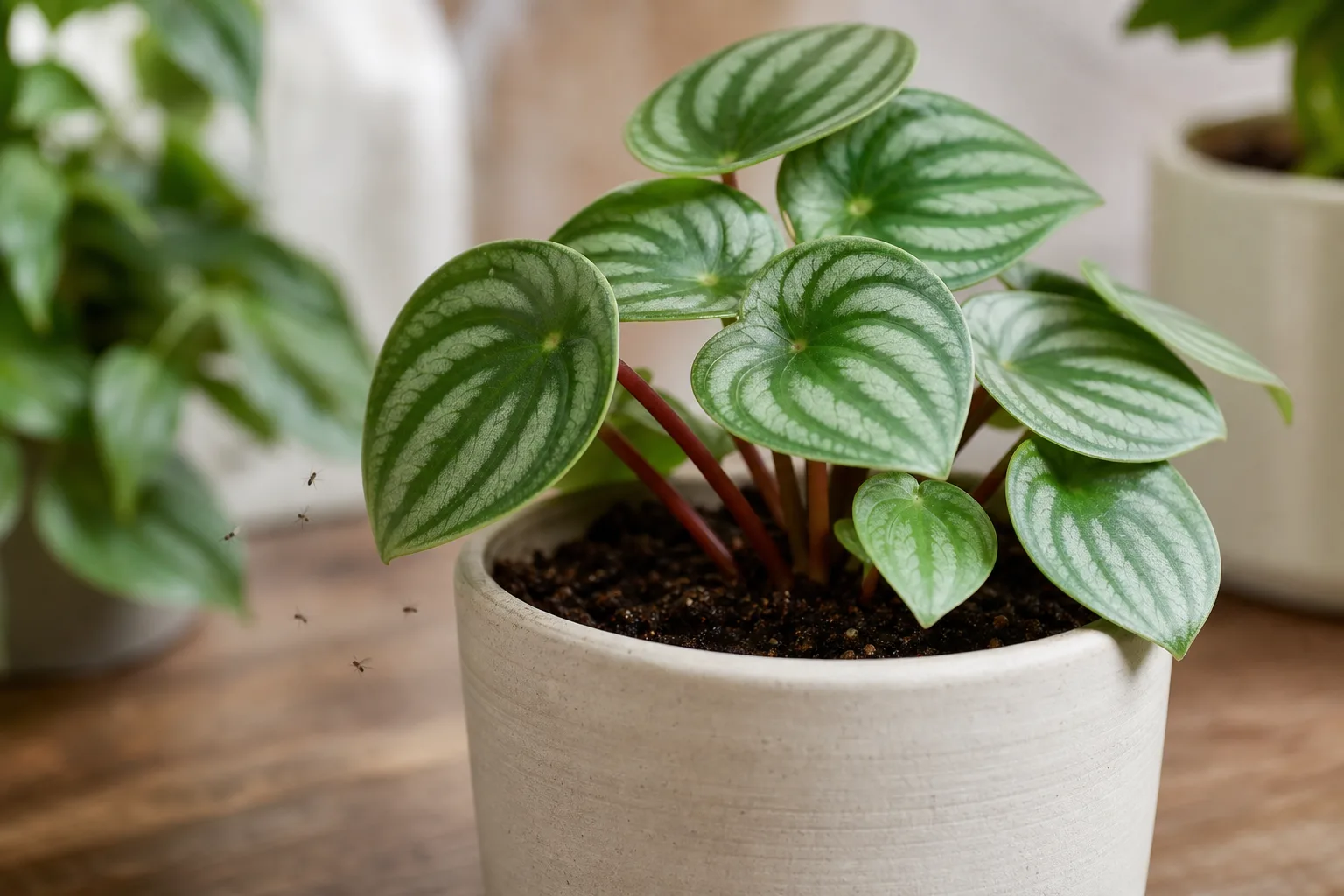
Fungus Gnats on Watermelon Peperomia: Causes, Checks & Fixes
This guide covers fungus gnats on Watermelon Peperomia. See also the general Fungus Gnats guide, watering, and light pages for this plant.
Fungus Gnats on Watermelon Peperomia: Causes, Checks & Fixes
Quick answer
Fungus gnats on Watermelon Peperomia are almost always a moisture problem wearing a pest disguise. The small dark flies are annoying, but they tell you the top of the potting mix has stayed wet long enough for eggs and larvae to thrive. On Peperomia argyreia-with a compact root system that suffocates quickly in soggy soil-chronic surface dampness is the same condition that leads to root rot and crown collapse.
First step: stop watering until the top inch of mix is completely dry. That single dry-down breaks the larval habitat gnats need. Add yellow sticky traps only after you commit to a drier rhythm, not as a substitute for fixing water habits.
What fungus gnats look like on Watermelon Peperomia
Adult fungus gnats are tiny, mosquito-like flies-about one-eighth inch long-with dark bodies and long legs. They hover near the soil surface, fly up when you water or bump the pot, and often gather on nearby windows. On a low rosette like Watermelon Peperomia, you may notice them darting between the red petioles at the base before you ever see them on the striped leaves themselves.
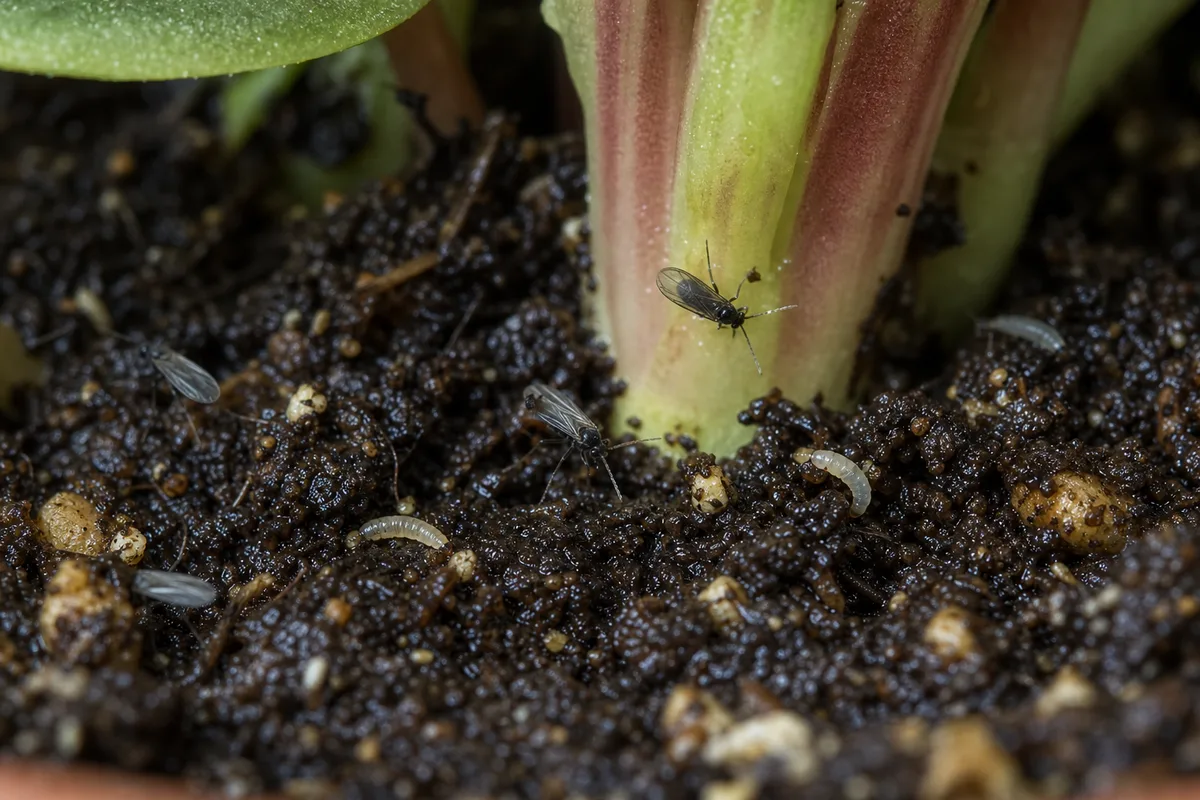
Fungus Gnats symptoms on Watermelon Peperomia - compare with healthy tissue on the same plant.
The larvae live in the upper inch or two of potting mix. They are slender, translucent white worms with black heads, roughly one-quarter inch long when mature. You may spot them wriggling near the crown if you scrape back a little surface soil with a chopstick-especially after the mix has been kept damp for weeks.
Plant damage on Watermelon Peperomia is subtle at first. Striped leaves stay firm and upright while only the flies are visible. As larvae multiply in wet organic mix, fine feeder roots can suffer, and you may see dull striping, slightly floppy petioles, or slow new leaf production even before obvious yellowing. Heavy infestations often overlap with overwatering on Watermelon Peperomia symptoms because both share the same wet-soil cause.
Why Watermelon Peperomia gets fungus gnats
Fungus gnats breed in moist, organic-rich potting media-not because Watermelon Peperomia overview is uniquely attractive, but because peperomia care mistakes create ideal habitat.
Overwatering before the mix dries. Watermelon Peperomia needs the top of the soil to dry between waterings. Watering on a calendar while the surface is still damp keeps the upper layer hospitable to egg-laying adults and developing larvae.
Oversized pots. Decorative containers much wider than the root ball hold a large volume of mix that stays wet around a tiny root zone. Peperomia argyreia thrives slightly pot-bound; excess soil volume extends drying time and gives gnats more moist territory.
Low light slowing dry-down. In deep shade, transpiration drops and the pot stays heavy for days. Dim conditions also fade the silver striping growers watch for health-so a plant sitting in a dark corner may show both weak growth and persistent gnats.
Heavy peat-rich mix without aeration. Dense, moisture-retentive substrate holds water at the surface where larvae feed on fungi and organic debris. Peperomias need perlite or coarse sand for fast drainage; without it, surface mold, gnats, and root stress stack together.
Introduction from new plants. Nursery pots with damp peaty mix often arrive with eggs already present. One infested newcomer can spread adults to every nearby pot that shares the same wet conditions.
How to confirm the cause
Work through these checks before reaching for sprays:
- Fly behavior - Gnats rise from the soil when disturbed and fly weakly. If insects stay on leaf undersides and leave sticky residue, you are dealing with aphids or another foliar pest, not fungus gnats.
- Surface moisture - Push your finger into the top inch. If it feels cool and damp days after watering, you have confirmed the habitat gnats require.
- Pot weight and size - Lift the pot. A heavy feel long after watering, especially in a large decorative container, points to excess retained moisture.
- Larva check - Scrape aside a teaspoon of surface mix. Translucent worms confirm active breeding in the soil, not just stray adults from another plant.
- Plant health cross-check - Firm red petioles and crisp striped leaves with only flying adults suggest early-stage moisture stress. Soft crown tissue, sour smell, or yellow lower leaves mean wet roots may already be declining-investigate roots before assuming gnats are the whole story.
- Sticky trap test - Place a yellow card at soil level for 48 hours. Caught gnats confirm an active population; an empty trap after a week of dry soil suggests the cycle is breaking.
First fix for Watermelon Peperomia
Let the top inch of potting mix dry completely before you water again.
Skip the next scheduled watering even if leaves look slightly soft-Peperomia argyreia tolerates brief dry-down better than chronic wet feet. Empty any water sitting in the saucer. Move the pot to Watermelon Peperomia light guide if it has been in deep shade, so the surface dries faster without baking the foliage.
Do not repot on day one. Do not drench with hydrogen peroxide, cinnamon, or insecticide before drying the soil-the habitat fix comes first. Do not mist the rosette crown while fighting gnats; extra surface moisture works against you.
Once the top inch is dry, water thoroughly until a little runs from drainage holes, then discard saucer water. Repeat the finger test before every future watering.
Step-by-step recovery
After the initial dry-down:
- Set yellow sticky traps at soil level near the pot rim to catch egg-laying adults. Traps monitor progress; they do not replace drying the mix.
- Apply BTI (Bacillus thuringiensis israelensis) if adults persist after two dry cycles. Mosquito bits or labeled BTI products mixed into the top layer target larvae without harsh chemicals-useful on pet-safe plants where you want biological control.
- Adjust pot and mix if the surface never dries within five to seven days after a proper watering. Repot into a container only slightly wider than the root ball with well-draining mix amended with perlite or coarse sand.
- Improve light and airflow - Relocate to bright indirect light and ensure leaves are not crowded against a wall where evaporation stalls.
- Inspect roots if leaves yellow or petioles soften - Gently unpot and look for firm white roots versus brown mushy tissue. Trim rot and repot dry if needed; gnats alone rarely require root surgery.
- Quarantine nearby pots that share the same wet conditions. Treat the collection’s watering habit, not just the peperomia showing the most flies.
Recovery timeline
Expect adult counts on sticky traps to drop within one to two weeks once the top layer stays dry between waterings. Larvae continue emerging in overlapping generations, so full suppression usually takes two to six weeks of consistent dry cycles plus optional BTI repeats.
Judge progress by fewer flies when you water, a surface that dries within a few days, and firm new petioles-not by whether every adult disappears overnight. Striped leaves that dulled from wet roots may take several weeks to look vibrant again as new growth replaces stressed tissue.
Lookalike symptoms to rule out
Fruit flies are rounder and often hover near kitchen fruit or compost, not just damp houseplant soil. They rarely concentrate on a single peperomia unless organic debris sits on the pot surface.
Shore flies resemble fungus gnats but have stout bodies and short antennae. They also breed in wet media but are less common indoors; sticky traps catch both.
Mold on soil surface often appears alongside gnats in the same wet conditions. White or gray fluff on the mix is usually harmless cosmetically but signals the same overwatering problem-scrape and dry rather than treating mold alone.
Root rot without visible gnats produces yellow leaves, soft crowns, and sour soil in soggy mix with no flying insects. If those signs appear, prioritize root inspection over gnat traps.
Mistakes to avoid
Do not spray foliage pesticides to kill flying adults while leaving soil soggy-larvae keep hatching in the wet top layer.
Do not water on a fixed weekly schedule regardless of dryness. Peperomia needs vary with season, light, and pot size.
Do not repot into an even larger container hoping fresh soil helps. More mix volume often prolongs surface dampness.
Do not stop treatment after traps look clean for three days. Eggs already in the mix will restart the cycle if moisture returns.
Do not confuse a slightly limp leaf from underwatering on Watermelon Peperomia with rot. If the top inch is bone dry and the pot is light, the plant needs water-not more dry-down.
Watermelon Peperomia care cross-check
Healthy Watermelon Peperomia has firm round leaves with sharp silver-green striping, red petioles that hold leaves upright, and a pot that feels noticeably lighter before each watering. Bright indirect light keeps the plant using water at a steady pace. A well-draining mix with perlite lets oxygen reach small roots.
If gnats appeared, one of those checkpoints failed-usually watering before dry-down, an oversized pot, or weak light. Fixing the checkpoint prevents gnats from returning faster than any spray.
How to prevent fungus gnats next time
Water only when the top inch of mix is dry. Use pots with drainage holes sized to the root ball, not the foliage spread. Empty saucers within thirty minutes of watering. Keep the plant in bright indirect light so transpiration matches your Watermelon Peperomia watering guide. Remove fallen leaves from the soil surface so organic debris does not feed larvae. Quarantine new purchases for two weeks with sticky traps before mixing them into a display. In winter, stretch intervals between waterings when growth slows and light drops.
When to worry
Act beyond basic drying when yellow lower leaves spread, red petioles stay limp after a proper dry cycle, the crown feels soft where leaves meet soil, or the mix smells sour. Those signs suggest root decline from chronic wetness-unpot, trim mushy roots, and repot into airy mix in a smaller pot.
Gnats alone on a firm, striped plant with no yellowing are low urgency. The flies are a warning to change moisture habits before root damage starts.
Conclusion
Fungus gnats on Watermelon Peperomia are a moisture alarm, not a separate crisis. Dry the top inch of soil, catch adults with sticky traps if needed, and use BTI for persistent larvae-but the lasting fix is matching water to how fast this small-rooted plant actually dries in your home. Get that rhythm right and the gnats leave; ignore it and the same wet soil that bred them can take the plant toward rot.
When to use this page vs other Watermelon Peperomia guides
- Watermelon Peperomia watering guide - Use for routine moisture checks before assuming fungus gnats is the main issue.
- Watermelon Peperomia problems hub - Browse all 28 common issues on this species.
- Overwatering on Watermelon Peperomia - Different entry point when symptoms overlap with fungus gnats.
- Mold on Soil on Watermelon Peperomia - Different entry point when symptoms overlap with fungus gnats.
- Root Rot on Watermelon Peperomia - Different entry point when symptoms overlap with fungus gnats.
Related Watermelon Peperomia guides
- Watermelon Peperomia overview
- Watermelon Peperomia watering
- Watermelon Peperomia light
- Watermelon Peperomia soil
- Overwatering on Watermelon Peperomia
- Mold on Soil on Watermelon Peperomia
- Root Rot on Watermelon Peperomia
- Poor Drainage on Watermelon Peperomia
- Slow Growth on Watermelon Peperomia
- Watermelon Peperomia problems