Edema on Snake Plant: Causes, Checks & Fixes
Quick answer
Edema on Snake Plant is a physiological disorder-not a disease-where roots absorb water faster than leaves release it in low light, causing corky bumps or blisters on leaf undersides. First step: reduce watering frequency and move to brighter indirect light; existing bumps will not heal but new growth stays clear.
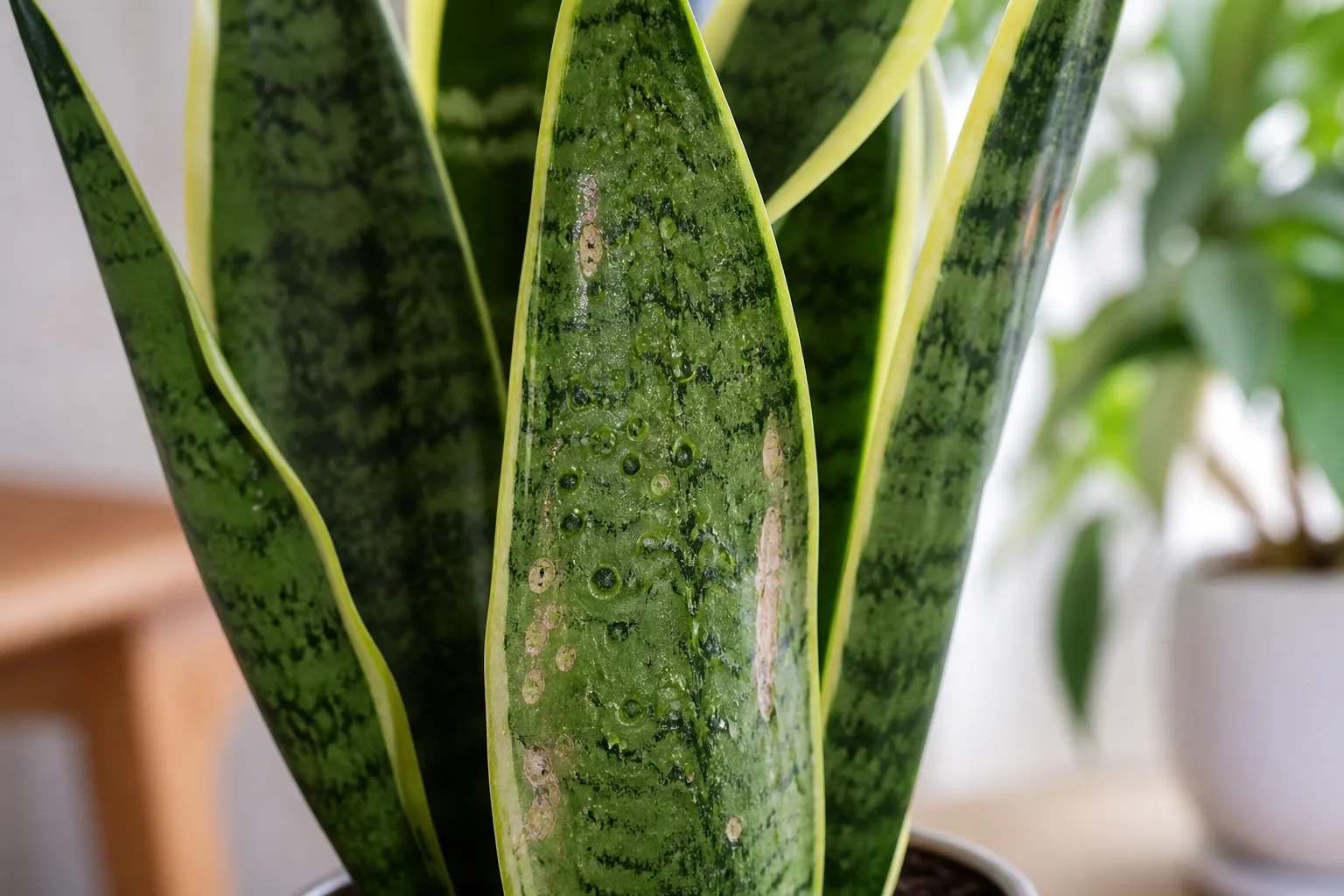
Edema on Snake Plant: Causes, Checks & Fixes
This guide covers edema on Snake Plant. See also the general Edema guide, watering, and light pages for this plant.
Edema on Snake Plant: Causes, Checks & Fixes
Quick answer
Edema on Snake Plant is a physiological disorder-not a disease-where roots absorb water faster than leaves release it in low light, causing corky bumps or blisters on leaf undersides. First step: reduce watering frequency and move to brighter indirect light; existing bumps will not heal but new growth stays clear.
Snake Plant owners often panic at corky bumps, fearing infection or pests. Edema is a water-balance problem on thick succulent leaves. Fixing the rhythm between uptake and transpiration stops new symptoms; old bumps remain as harmless scars.
Why Snake Plant gets edema
Edema occurs when a plant’s roots take up more water than leaves can transpire. University of Maryland Extension explains that water absorbed exceeds water lost through leaves, causing cells to burst into raised bumps or blisters-often on lower leaf surfaces. Snake plant is listed among plants prone to edema indoors.
On Snake Plant, the classic setup is overwatering on Snake Plant during gloomy winter months. Growth and transpiration slow in low light while roots still pull water from wet soil. NC State Extension recommends allowing soil to dry between waterings and watering only every one to two months in winter-a schedule many owners exceed in dim rooms.
A feast-or-famine cycle also triggers edema: long drought followed by a heavy soak primes roots to absorb rapidly while leaves cannot shed the surge fast enough. Penn State Extension notes snake plants tolerate neglecting water for a month-sudden large drinks after that dry spell raise edema risk.
Cool temperatures, poor airflow, and high humidity around the leaf surface slow transpiration further. RHS states sansevierias enjoy good air flow but not chilly draughts-stagnant humid pockets near wet soil worsen the imbalance.
Edema is not caused by pathogens. Fungicides and pest sprays will not remove bumps. The fix is environmental: less water, better light, consistent dry-down.
What edema looks like on Snake Plant
Distinguish edema from pests and disease:
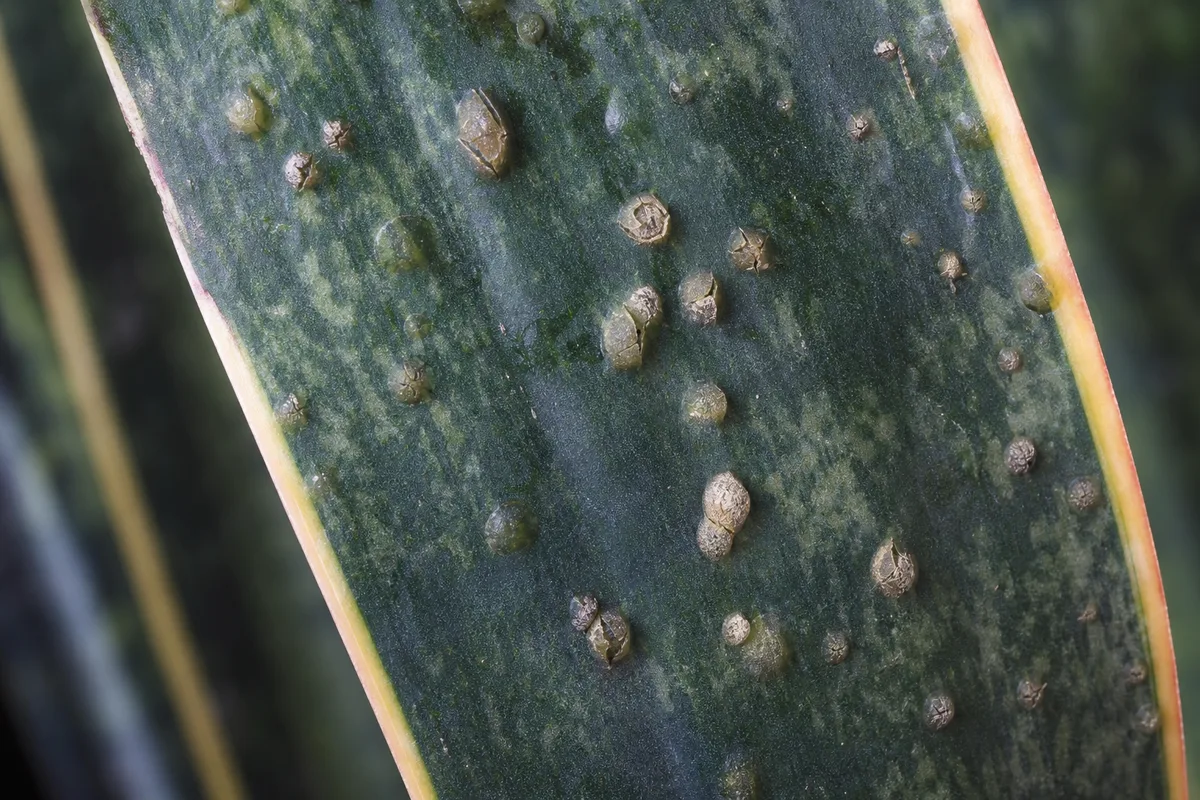
Edema symptoms on Snake Plant - compare with healthy tissue on the same plant.
- Raised corky, tan, brown, or pale green bumps on leaf undersides or along the midrib
- Blisters that feel firm and dry-not waxy, removable scale insects
- Clusters or irregular patches that stop spreading once conditions stabilize
- No yellow halos, sticky honeydew, fine webbing, or sour soil odor
- Rhizome and leaf bases remain firm; roots healthy white or tan when inspected
- Symptoms worsen after heavy watering in a low-light spot, often in winter
On thick Sansevieria leaves, bumps may look like scabs rather than water-filled blisters by the time you notice them. Older leaves show scarring; newest leaves may look clean until the next overwater episode.
How to confirm the cause
Before treating for scale or leaf spot:
- Bump texture test - Edema bumps are fixed in the leaf and cannot be scraped off. Scale insects lift with a fingernail.
- Watering and light history - Recent heavy watering in a dark corner strongly supports edema.
- Spread pattern - Edema does not spread leaf to leaf like fungal spots. New bumps appear after wet cycles; old ones stay static.
- Root and base check - Firm rhizome and neutral soil smell rule out rot masquerading as bumps.
- Pest inspection - Look for mealybugs, spider mites, or scale elsewhere; edema has no insects.
University of Maryland Extension notes bumps may be misdiagnosed as disease or insect damage-texture and context prevent unnecessary pesticides.
Lookalike symptoms to rule out
Scale insects form removable tan or brown waxy disks, often with sticky honeydew. Fungal leaf spot shows circular lesions with yellow halos that expand. root rot on Snake Plant causes mushy bases and sour smell-not isolated corky bumps. Normal leaf texture ridges on some cultivars are symmetrical and present from unfurling, not sudden post-watering bumps.
First fix for Snake Plant
Reduce watering immediately and move the plant to brighter indirect light-near a window with filtered sun, not a dark hallway. NC State notes Dracaena trifasciata tolerates direct sunlight only part of the day, 2 to 6 hours, so a brighter windowsill with filtered sun is safe. Let soil go fully bone dry throughout the pot before the next drink. Do not apply fungicide or scrape bumps; that damages healthy tissue.
If you recently drenched after a long dry spell, skip the next one or two scheduled waterings even if the calendar says otherwise. Align with how fast the pot dries in its new light, not a generic weekly routine.
Step-by-step recovery
After correcting water and light:
- Resume watering only when a finger or probe shows dry mix to the bottom of the pot.
- Water thoroughly once, empty the saucer, and wait for complete dry-down again-often three to six weeks indoors in winter.
- Improve airflow gently without cold drafts-RHS recommends good air flow but not chilly draughts.
- Leave existing bumpy leaves in place unless fully dead; they still photosynthesize.
- Watch new leaves over eight to twelve weeks for smooth, bump-free growth.
Optional: scrape off white salt crust on soil surface if present from prior over-fertilizing, but flushing wet soil on an edema-prone plant should wait until dry-down rhythm is stable.
Recovery timeline
Existing edema scars are permanent-expect no cosmetic healing on affected leaves. New symptom formation usually stops within one to two watering cycles after correction. Clean new leaves may take one to three months to emerge depending on season and light. Spring growth with brighter days accelerates recovery visibly.
What not to do
- Do not scrape or pick corky bumps-they are dead leaf tissue, not a surface infection.
- Do not increase watering because bumps “look dry.”
- Do not mist leaves; RHS advises to never mist sansevierias, and surface moisture does not fix transpiration imbalance.
- Do not apply copper fungicide or insecticides without confirming pests or fungi.
- Do not keep the plant in low light while maintaining summer watering frequency.
- Do not repot into a larger pot while correcting edema-extra wet soil volume worsens uptake imbalance.
How to prevent edema next time
Water Snake Plant only when soil is bone dry throughout. Use Snake Plant light guide so the plant transpires steadily-Missouri Botanical Garden recommends part sun to shade indoors with well-drained mix.
Avoid drought-then-flood cycles. Reduce winter watering sharply per NC State guidance. Ensure pots have drainage holes and empty saucers after every drink. University of Maryland Extension suggests allowing adequate drying time between waterings especially when media is cool and air is warm-a common winter windowsill scenario.
When to worry
Edema alone is low severity on Snake Plant-it looks alarming but rarely kills the plant. Escalate if:
- Leaf bases turn soft or yellow at soil level after heavy watering
- Soil smells sour or fermented
- Bumps are accompanied by spreading wet brown lesions with halos
- The plant collapses despite firm-looking bumps on upper leaves
Those signs point to rot or fungal leaf spot, not edema alone-unpot and inspect rhizomes.
Practical checks
Urgency check
Treat edema as low urgency when bumps are dry, firm, and static and the rhizome stays solid. Escalate immediately if leaf bases soften, soil smells sour, or wet brown lesions spread-those patterns overlap with root rot, not edema alone.
Best inspection order
For Snake Plant, check bump texture and location first (undersides, corky, non-removable), then recent watering and light history, then pot weight and soil moisture at the drainage hole, then pest presence on leaf bases. Roots come last unless bases already feel mushy.
Edema diagnosis rule
Do not treat edema on Snake Plant until bumps are firm and fixed in the leaf plus a wet-soil or heavy-watering history in low light. If bumps scrape off with a fingernail or sticky honeydew is present, look at scale insects instead.
Prevention note
Snake Plant belongs where bright indirect light is realistic for most of the day. Water only when soil is bone dry throughout. If edema bumps appeared after winter watering in a dim corner, brighter light and a longer dry-down interval are the fix-not fungicide or leaf scraping.
Conclusion
Edema on Snake Plant is a water-uptake versus transpiration mismatch, common in low light with too-frequent watering. Confirm with firm corky bumps on undersides, no pests, and a recent wet cycle in dim conditions. First fix: dry soil, brighter indirect light, and consistent dry-down watering. Old bumps stay; new growth should emerge clean. Prevent by bone-dry checks, winter watering restraint, and avoiding feast-or-famine drinks.
Related tool
Use the Plant Problem Diagnosis Tool to narrow causes for edema on this plant before changing multiple variables at once.