Overwatering on Snake Plant: Causes, Checks & Fixes
Quick answer
Overwatering on Snake Plant is the most common cause of death - this succulent stores water in its thick leaves and needs bone-dry soil between waterings. First step: Stop watering immediately; check that the pot feels light and soil is dry throughout before the next drink.
Overwatering on Snake Plant: Causes, Checks & Fixes
This guide covers overwatering on Snake Plant. See also the general Overwatering guide, watering, and light pages for this plant.
Overwatering on Snake Plant: Causes, Checks & Fixes
Quick answer
Overwatering on Snake Plant is the most common cause of death for Snake Plant overview. Snake Plant stores water in its thick, sword-shaped leaves and thick rhizome, so it tolerates drought far better than wet soil. First step: stop watering immediately and do not water again until the soil is bone dry throughout the pot.
Overwatering on Snake Plant should be diagnosed through the plant’s actual care pattern, not treated as a generic houseplant symptom. For how chronic wet soil damages roots on houseplants in general, see our overwatering hub. Snake Plant has an upright, succulent growth habit and matures around 2–4 ft indoors with slow to moderate growth, so pot size, light level, and season matter more than a fixed weekly schedule. For this page, the useful clues are root-zone condition, recent watering, light changes, and whether the newest growth is firm or declining.
Why Snake Plant gets overwatering
Overwatering may be the biggest disease threat for Snake Plant because this species evolved in dry West African conditions and stores moisture in fleshy leaves and underground rhizomes. When soil stays wet, the roots will rot - the same pattern that leads to crown and root rot on Snake Plant. This is especially dangerous during autumn and winter when the plant uses water slowly in lower light.
Common triggers on Snake Plant include watering on a calendar instead of checking dryness, using dense peat-heavy mix that holds moisture too long, placing the plant in low light where the pot dries slowly, choosing an oversized pot that stays wet for weeks, and watering again because leaves look dull - when the real problem is already soggy roots. Well-meaning frequent small drinks are often worse than an occasional deep watering after a full dry-down.
What overwatering looks like on Snake Plant
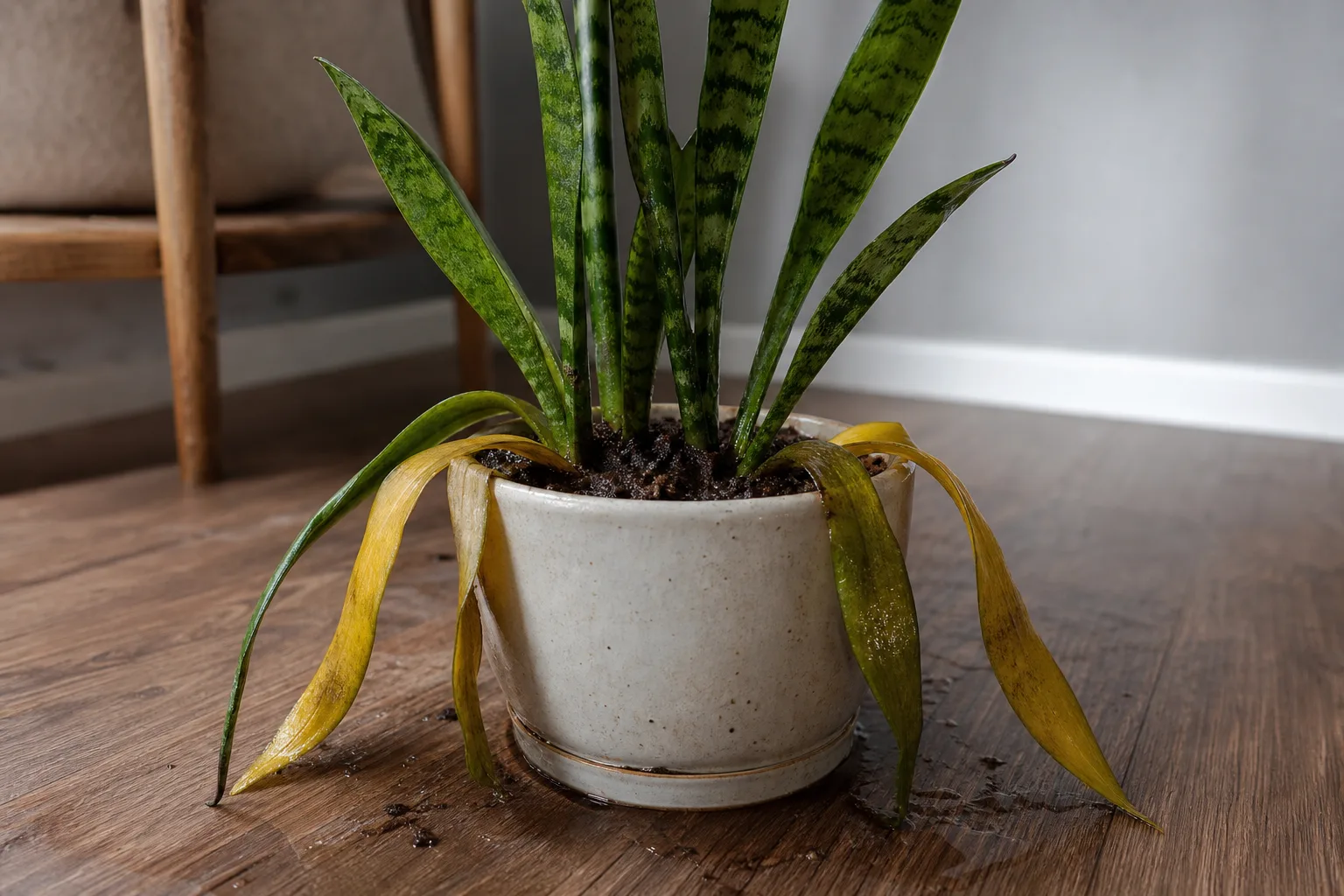
On Snake Plant, overwatering usually shows up before full rot sets in. Watch for soft, mushy leaf bases where the leaf meets the soil; lower leaves turning yellow and losing their stiff upright posture; a pot that stays heavy many days after watering; soil that smells sour or musty; and fungus gnats hovering near the surface. In advanced cases, outer leaves collapse outward while the center still looks firm, or the whole rosette feels loose in the pot because roots have failed.
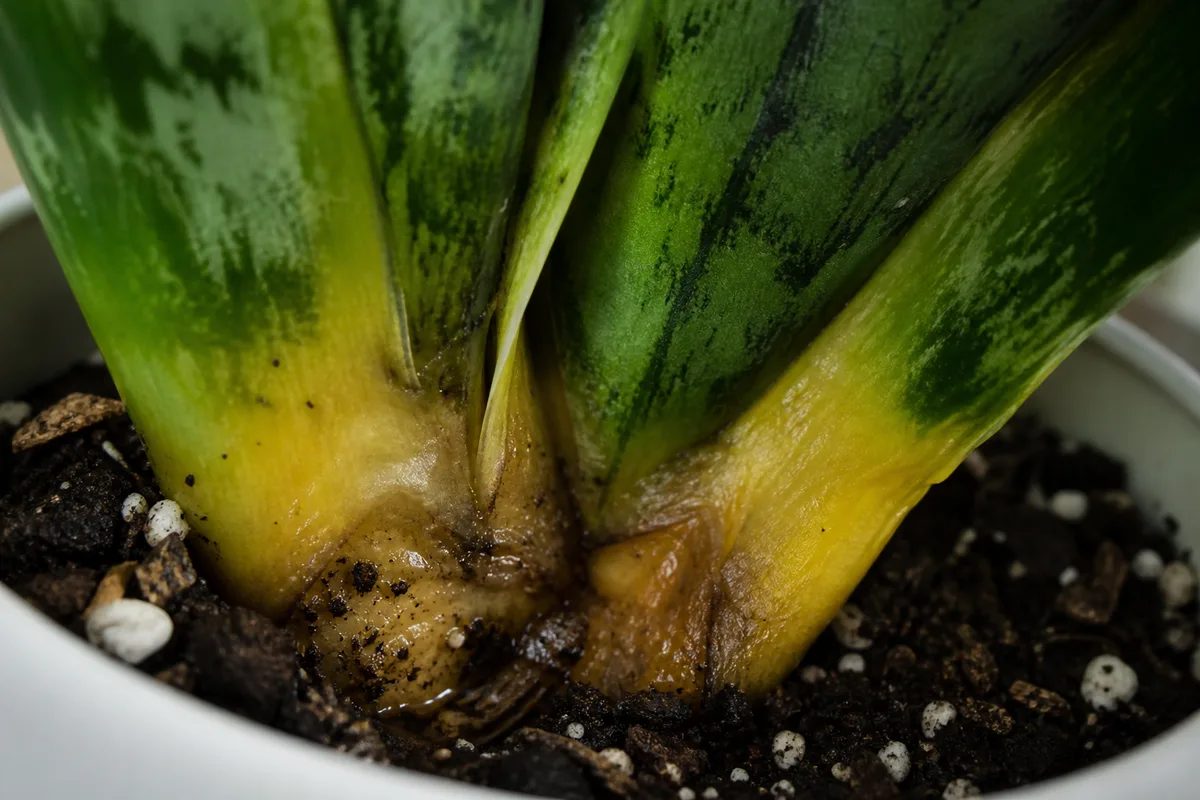
Overwatering symptoms on Snake Plant - compare with healthy tissue on the same plant.
Snake Plant leaves should feel rigid and leathery. A healthy plant stands upright without support. When overwatering is the issue, the change is often gradual - one lower leaf yellows, then another - rather than sudden unless a recent heavy watering saturated an already wet mix.
How to confirm the cause
Start with the root-zone condition. Lift the pot: a dry Snake Plant feels noticeably light; an overwatered one stays heavy. Push your finger to the bottom of the pot through the drainage hole if needed - allow the soil to dry between waterings, bone dry throughout, not just dry on top. Check whether drainage holes are blocked by roots, pebbles, or a sitting saucer of water.
Then inspect leaf bases by gently wiggling outer leaves - firm attachment is good; mushy, smelly bases suggest rot. Smell the soil near the drainage hole. Compare the pattern with your light and season: a plant in dim winter light that was watered on a summer schedule is a classic overwatering setup. If soil is wet and leaves are yellowing or soft, treat overwatering as the primary suspect before assuming pests or nutrient deficiency.
First fix for Snake Plant
Stop watering immediately. Do not water again until the soil is completely dry from top to bottom - this may take two to four weeks depending on pot size, mix, and season. Make this single correction first so you can read the plant’s response. Stacking Snake Plant repotting guide, pruning, fertilizer, and pesticide treatment on the same day makes it harder to know what helped and can stress an already weakened root system.
If the pot is still heavy after two weeks with no improvement, or leaf bases are mushy, move to a root inspection (see recovery steps below). If the mix is merely wet but leaves are still mostly firm, patience and dry-down alone often stabilize mild cases.
Step-by-step recovery
For mild overwatering with firm leaf bases and no foul smell: leave the plant in place, ensure the saucer is empty, and increase light slightly if the plant is in a very dim spot - brighter indirect light helps the mix dry faster without scorching leaves. Wait until the pot feels light before any future watering.
For moderate cases with yellowing lower leaves but firm centers: after a full dry-down, remove the worst yellowed leaves at the base with clean scissors. Do not pull mushy leaves - cut them off. Resume watering only when bone dry, with a lighter pour than before.
For advanced cases with mushy bases, sour soil, or collapsing leaves: unpot the plant, shake off wet soil, and inspect roots and rhizome. Trim any brown, translucent, or mushy roots with sterilized scissors. Let cut surfaces callus in air for one to two days. Repot into dry, fast-draining gritty mix - cactus and succulent mix with added perlite and coarse sand works well. Do not water for at least one to two weeks after repotting; then water lightly only if the mix is dry and leaves still feel firm.
Recovery timeline
Existing damaged leaves on Snake Plant rarely return to perfect form, so judge progress by firm new growth and a stable root zone. Mild overwatering often stabilizes within one to two dry-down cycles - roughly two to six weeks. Moderate cases with some leaf loss may need a full season to push new pups. Severe crown rot at the leaf bases can be fatal even after rescue attempts; salvage is most realistic when at least part of the rhizome and some firm roots remain.
What not to do
Do not fertilize a stressed Snake Plant before the root zone is dry and stable - salts in fertilizer can burn compromised roots. Do not keep watering because leaves look tired if the pot is already wet; wilted leaves on wet soil often mean rotting roots, not thirst. Do not repot repeatedly unless soil failure or confirmed rot is part of the diagnosis - each repot interrupts recovery. Do not mist Snake Plant leaves to “help” it; surface moisture does not fix root-zone saturation and can encourage fungal issues.
Separate true overwatering from lookalikes by checking: persistent wet soil and sour odor; yellowing, drooping, or softening leaves despite moist mix; roots brown and mushy rather than firm and pale; leaf bases soft in advanced cases. The right fix depends on the confirmed cause, not the symptom label alone.
Causes to rule out
Before locking in an overwatering diagnosis, rule out these lookalikes on Snake Plant:
- underwatering on Snake Plant - leaves wrinkle or pucker and tips go crispy brown; pot is very light and soil pulls away from the sides. Rehydrate only after confirming dryness, not when the pot is heavy.
- Cold damage - exposure below about 10°C (50°F) can cause soft, water-soaked-looking tissue without chronic wet soil.
- Root rot (advanced overwatering) - if mushy roots and foul smell are already present, see the root rot guide for salvage steps; overwatering is usually the upstream cause.
- Normal aging - a single old lower leaf yellowing on an otherwise firm plant in a light, dry pot is not overwatering.
- Low light alone - can slow growth and mimic decline, but if soil is dry and leaves are firm, light - not watering - is the fix.
Lookalike symptom check
Wilting is the trickiest overlap. On many houseplants, wilt means dry soil. On Snake Plant, wilt with wet, heavy soil usually means roots are failing and cannot take up water - watering again accelerates the problem. Always pair wilt with a pot-weight and soil-moisture check before adding water.
Yellow leaves overlap with overwatering, underwatering, and natural senescence. On Snake Plant, yellow lower leaves plus wet soil point to overwatering; yellow tips with dry, light soil point elsewhere. Compare several clues, not one leaf.
Snake Plant care cross-check
Snake Plant is not pet safe - it contains saponins toxic to cats and dogs. That does not change the overwatering fix, but keep rescued plants out of reach while they recover on a windowsill or table.
Cross-check these species needs against your routine:
- Light: Indirect light is ideal; very low light slows drying and makes overwatering easier. If the pot stays wet longer than expected, improve light before watering again.
- Watering: Water only when soil is completely dry - roughly every 2–4 weeks in summer and every 4–6 weeks in winter. Push your finger to the bottom of the pot; bone dry throughout is the checkpoint.
- Soil: Fast-draining, gritty mix that prevents waterlogging - cactus and succulent mix with perlite and coarse sand. Excellent drainage is essential.
- Container: Terracotta pots are ideal because porous walls help the mix dry faster and reduce the margin for error if you tend to water early. Any pot must have drainage holes.
- Temperature: 18–27°C (65–80°F) is comfortable; reduce watering in cool seasons.
If one of these conditions changed recently - especially a shift to a larger pot, denser mix, or darker location - correct that first and wait for firm new growth before making a second change.
How to prevent it next time
Prevent repeat overwatering by aligning watering, light, and soil with Snake Plant’s slow water use:
- Check root-zone moisture before every watering - pot weight and a finger to the bottom of the mix beat a calendar.
- Use fast-draining mix and pots with open drainage; empty saucers within 30 minutes of watering.
- Prefer terracotta if you tend to water early - it wicks moisture through the walls and dries faster than glazed ceramic or plastic.
- Downsize if the pot is far larger than the root mass; oversized pots stay wet for weeks.
- Cut watering frequency sharply in autumn and winter when growth slows.
- Inspect the plant weekly so soft leaf bases and sour soil are caught while still mild.
When to worry
Treat overwatering as urgent on Snake Plant when leaf bases feel mushy, soil smells foul, several leaves collapse at once, or the center rosette wobbles in the pot. These signs suggest active crown or root rot and need immediate dry-down, unpotting, and root triage.
Slow cosmetic yellowing on one or two lower leaves in an otherwise firm plant gives you more time - stop watering, confirm dryness, and reassess in two weeks. Cosmetic old-leaf damage is less worrying than weak roots or spreading softness.
Practical checks
Urgency check
Treat this as urgent if Snake Plant has soft leaf bases, sour soil, spreading yellowing, visible fungus gnats in large numbers, or several leaves failing at once. A single yellow lower leaf on a firm plant in a drying pot is lower urgency.
Best inspection order
For Snake Plant, inspect newest growth and leaf-base firmness first, then pot weight and soil moisture at the drainage hole, then drainage and saucer water, then light level and recent watering history. Roots come last unless bases are already mushy.
Severity note
This issue is marked medium for Snake Plant. That rating is a triage clue, not a guarantee - overwatering becomes high severity quickly once rot reaches the rhizome. The real risk depends on how fast softness and yellowing spread.
Overwatering diagnosis rule
Do not treat overwatering on Snake Plant until the pattern matches wet soil plus declining firmness - heavy pot, sour smell, soft leaf bases, or yellowing lower leaves while the mix stays moist. If the pot is light and soil is dry, look at underwatering, light, or aging instead.
Overwatering escalation point
Escalate to unpotting and root inspection when dry-down for two weeks does not stabilize the plant, leaf bases turn mushy, or more than one-third of inspected roots are brown and soft.
Snake Plant prevention note
Snake Plant belongs where indirect light is realistic for most of the day. Water only when soil is bone dry throughout. If the pot stays wet longer than expected, move the plant into brighter indirect light or switch to terracotta and grittier mix before watering again. Humidity target: 30–50%. Temperature comfort zone: 18–27°C (65–80°F); avoid prolonged exposure below 10°C (50°F).
Snake Plant identity clue
Also sold as Mother-in-Law’s Tongue, Sansevieria, and Viper’s Bowstring Hemp, this plant should be judged by stable new growth rather than label names alone. Dracaena trifasciata stores water in its leaves and rhizome - that succulent architecture is why bone-dry soil between waterings is non-negotiable. If root rot appears downstream, treat the wet root zone first rather than stacking fertilizer, repotting, and pruning on the same day.