Snake Plant Repotting Guide: When, How, and Mistakes
Snake Plant Repotting Guide: When, How, and Mistakes to Avoid
Snake Plant Repotting Guide: When, How, and Mistakes to Avoid
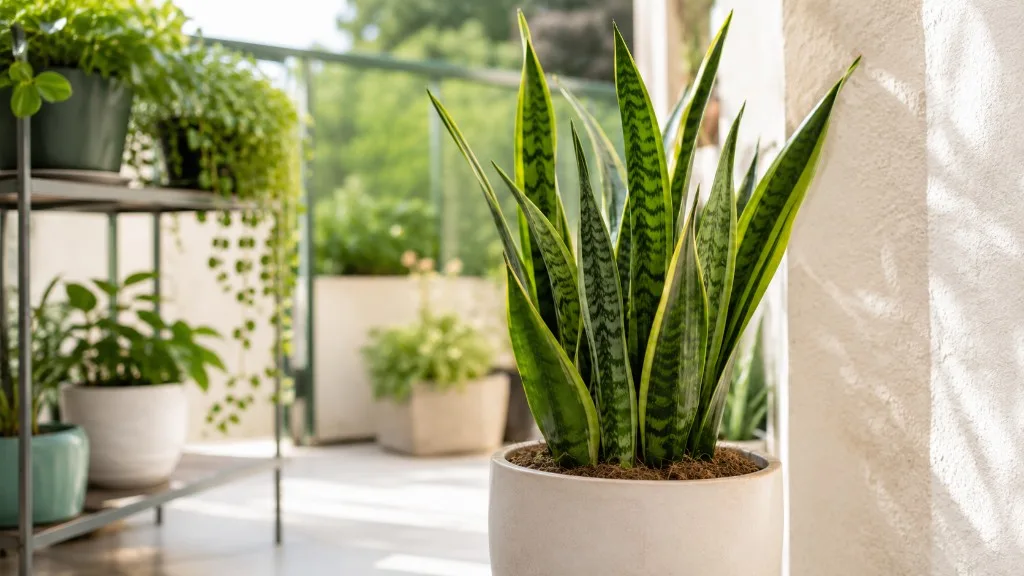
Snake plant, also called Mother-in-Law’s Tongue and Good Luck Plant, is one of the most forgiving houseplants you can own - which makes repotting deceptively easy to get wrong. Botanists now classify most common varieties as Dracaena trifasciata, though nurseries still label many as Sansevieria trifasciata. The name change does not alter care: this slow-growing succulent stores water in thick leaves and spreads underground through tough rhizomes that push pups up beside the main clump. Because growth is deliberate, snake plants do not demand yearly pot upgrades the way fast herbs or pothos do. They can look perfectly healthy in the same container for years while the soil quietly compacts, salts accumulate, and roots slowly consume every inch of usable mix. Repot at the right moment with the right pot and soil, and the plant settles in with minimal fuss. Jump two pot sizes, bury the rhizome too deep, or repot into heavy peat, and you can turn a bulletproof plant into a rotting mess within weeks. This guide covers when snake plant repotting is actually necessary, how to choose a pot and mix that match its drought-tolerant roots, how to divide rhizomes if you want more plants, and what to do when root rot on Snake Plant forces an emergency unpotting mid-winter.
Why Snake Plant Repotting Is Different From Other Houseplants
How Snake Plant Roots and Rhizomes Grow in Containers
Most houseplants build a fibrous root mat that expands outward in every direction at roughly the same pace as top growth. Snake plants work differently. Above soil, you see upright sword-shaped leaves - often 2 to 4 feet tall indoors, depending on variety - but below soil, the action happens through thick, horizontal rhizomes that creep sideways and send up new shoots called pups. Roots attach along those rhizomes rather than forming a dense ball like a ficus or peace lily. That architecture explains two behaviors that confuse new growers. First, a snake plant can appear stable in a small pot long after other plants would be screaming for space, because the rhizome simply folds back on itself. Second, when the pot finally fills, the plant often becomes top-heavy before roots visibly escape the drainage holes - the mass of leaves and rhizome outweighs the container, and the whole thing tips over.
Fresh soil matters because even a slow grower exhausts potting mix over time. Organic components break down, particles compress, and the mix holds water longer than it did when new. Salt buildup from tap water and fertilizer leaves a white crust on the surface and can burn fine root tips. Repotting resets drainage, refreshes nutrients locked in old medium, and gives you a chance to inspect rhizomes for hidden rot - a problem that rarely shows clearly until several leaves yellow at once. The Missouri Botanical Garden and multiple extension sources describe snake plants as tolerant of neglect but sensitive to prolonged soggy conditions, which is exactly what degraded, compacted soil creates even if your watering habits have not changed.
When to Repot a Snake Plant
Best Season and Timing Windows
Spring and early summer are the safest windows for routine snake plant repotting. As daylight lengthens and temperatures climb into the 65°F to 80°F range most homes maintain, rhizomes resume active growth and new roots establish faster. Early fall can work in warm climates or heated indoor environments, but avoid late fall and winter repotting unless the plant is in clear distress - root rot, a cracked pot, or a plant that cannot physically stay upright. During winter dormancy, metabolic activity slows, wound healing takes longer, and wet soil sits near cold roots for extended periods. If you must repot in winter because of rot, keep the plant in Snake Plant light guide, hold off on watering longer than you would in spring, and accept that recovery may take an extra few weeks.
A practical baseline is every 2 to 3 years for a typical indoor snake plant in a 6- to 10-inch pot, matching Clemson HGIC guidance for slow-growing houseplants. Fast-growing specimens in bright light with regular feeding may need attention closer to every 2 years. A plant in low light that puts out one or two leaves per year can often go 3 to 5 years between full repots, especially if you top-dress - scrape off the top inch of old mix each spring and replace it with fresh gritty soil. Top-dressing is not a substitute for a full repot when roots are circling the bottom or water runs straight through, but it extends the life of a healthy container by another season without disturbing the rhizome.
Clear Signs Your Snake Plant Needs a Bigger Pot
Calendar dates are a poor trigger for snake plants. Watch the plant and the pot instead. Roots emerging from drainage holes or pushing up through the soil surface are the most obvious sign the rhizome has run out of horizontal room. Water that drains through in seconds without absorbing usually means the root-and-rhizome mass has displaced most of the soil - there is little medium left to hold moisture, so the plant wilts quickly between waterings even though you are watering regularly. Slowed or stalled growth despite adequate light and occasional fertilizer suggests the root zone is exhausted or bound. A pot bulging, cracking, or deforming under rhizome pressure is an urgent signal - delay risks broken ceramic and damaged roots. The plant tipping over because the leaf mass outweighs the base is common with tall Laurentii or cylindrical varieties; a wider, heavier pot solves stability even if roots are not yet escaping.
Gardening coach Lee Miller and horticulturist recommendations cited in current care literature suggest repotting when roots fill roughly 75 percent of the rootball - meaning when you slide the plant out, you see more root and rhizome than loose potting mix. If less than a quarter of the volume is still soil, the plant will benefit from fresh medium and slightly more space. You do not need every sign at once. Two or more together are a reliable green light. A single yellow leaf or one pup crowding the rim is not, by itself, a repot mandate.
Do Snake Plants Like Being Root-Bound?
Snake plants tolerate being slightly root-bound better than most houseplants, and that tolerance is where a lot of bad advice starts. A snug pot limits excess soil volume, which keeps the root zone drier - and drier is what these plants prefer. Many growers report healthy snake plants that have lived years in the same container with pups emerging tightly packed at the surface. That is not the same as saying root-bound conditions are ideal forever. Severe binding eventually starves the plant of fresh soil, restricts rhizome spread, and creates a hydrophobic rootball that repels water. The leaves may look fine while the underground situation deteriorates.
Think of it as a sliding scale. Mildly snug - a few circling roots, pups touching the pot wall - is fine; wait until spring if growth is steady. Moderately bound - water races through, growth slows, multiple pups crowding - repot now during active season. Severely bound - pot cracking, roots matted into a solid disk, sour smell when you unpot - repot immediately regardless of season, because the alternative is rot or structural failure. If you like the current pot size aesthetically, you can root-prune during repotting: trim the outer rhizome and root layer with sterilized shears, refresh all the soil, and return the plant to the same container. Keep at least two-thirds of the healthy rhizome mass intact.
Choosing the Right Pot for Snake Plant
Pot Size Rules That Prevent Rot
The single most important pot decision is how much bigger to go. For snake plant repotting, move up only 1 to 2 inches in diameter - roughly 2 to 5 centimeters - compared with the current pot. A plant in a 6-inch pot steps up to 7 or 8 inches, not 10 or 12. The reason is physics, not aesthetics. Snake plant roots colonize new soil slowly. A pot that is too large surrounds a small rhizome with a deep column of mix that stays wet for weeks after each watering. Extension guidance on succulent repotting consistently warns that overpotting is a primary cause of root rot in drought-adapted plants. One size up gives room for rhizome spread without creating a swamp.
Depth matters too. Snake plant rhizomes travel horizontally. A shallow, wide pot often suits the growth habit better than a tall, narrow one, especially for bird’s-nest rosette types like Dracaena trifasciata ‘Hahnii’. Tall cylindrical varieties such as Sansevieria cylindrica can live in deeper pots because the leaf mass is vertical, but drainage still trumps depth every time. Drainage holes are non-negotiable. A decorative pot without holes is a cachepot only - keep the plant in a plastic nursery liner that drains freely, water at the sink, and return it to the outer shell after water stops dripping. Never let a snake plant sit in standing water in a saucer for more than an hour.
Terracotta, Plastic, Ceramic, and Cachepots
Unglazed terracotta pulls moisture through its walls, which speeds drying and adds root-zone air - excellent for snake plants in humid homes or for growers who tend to water generously. The trade-off is faster drying in air-conditioned rooms, which means slightly more frequent checks during summer. Plastic nursery pots retain moisture longer and weigh less, making them practical for large specimens you need to move. They work well if you already underwater or live in a dry climate. Glazed ceramic is neutral if it has drainage holes; without holes, treat it as a cachepot only. For a plant that keeps tipping, choose a pot with a wider base or add a layer of coarse gravel in the bottom - not for “drainage layers,” which do not work as folklore suggests, but for weight and stability so the tall leaf mass does not pull the container over.
When reusing a pot, scrub it with hot soapy water and a 10 percent bleach rinse if the previous occupant had rot. Snake plant rhizomes can harbor fungal spores in old container crevices. A square of mesh or a coffee filter over the drainage hole keeps mix from washing out without blocking water flow.
The Best Soil Mix for Repotting Snake Plant
Store-Bought vs. DIY Mix Recipes
Snake plants evolved in rocky, fast-draining soils and need a mix that dries within a few days after watering in a typical indoor pot. Heavy peat-based all-purpose potting soil alone holds too much moisture around thick rhizomes. The standard recommendation - echoed across extension succulent guides and nursery care sheets - is a cactus or succulent mix amended for extra porosity.
A reliable DIY recipe is two parts commercial cactus/succulent mix, one part perlite or pumice, and optionally one part coarse orchid bark or pine bark fines for structure. In very humid homes, push perlite to one and a half parts. In desert-dry air, you can reduce perlite slightly, but never eliminate it entirely. The finished mix should feel loose in your hand, crumble when squeezed, and never clump into a sticky ball. If you only have all-purpose potting soil, blend it 50/50 with perlite and coarse sand - not play sand, which compacts - rather than using it straight.
Store-bought cactus mix is a fine starting point if you amend it. Most bagged mixes are still peat-heavy for snake plant standards. Add a handful of horticultural charcoal per gallon if you are repotting after rot; charcoal does not prevent rot on its own, but it improves aeration and may reduce odor in damaged root zones. Avoid garden soil, moisture-control mixes with water-retaining crystals, and dense compost-heavy blends. pH between 6.0 and 7.0 is comfortable; snake plants are not picky if drainage is correct. UF/IFAS Extension recommends a soil-based potting mix with significantly reduced winter watering.
How to Repot Snake Plant Step by Step
Removal, Root Inspection, and Division
Gather your materials before touching the plant: the new pot, fresh mix, clean pruning shears, a trowel, gloves, newspaper or a tarp, mesh for the drainage hole, and optionally cinnamon powder or diluted hydrogen peroxide for rot treatment. Sterilize cutting tools in isopropyl alcohol for five minutes. Water lightly the day before if the soil is bone dry - a slightly moist rootball slides out more cleanly. If the soil is already moderately moist and the plant is healthy, you can repot without pre-watering.
To remove the plant, tip the pot on its side, support the leaf base with one hand, and tap or squeeze the pot walls. Slide the rootball out; do not yank leaves, which can tear at the rhizome junction. If the plant is stuck, run a knife around the inner pot edge to break the seal. Once out, brush away loose old soil and inspect rhizomes and roots. Healthy tissue is firm, white to tan or orange depending on variety, and dry to the touch. Rot is black or brown, mushy, and often smells sour.
Division is optional but easy during repotting. Identify natural clumps - a pup with its own rhizome segment and roots - and separate them with a clean knife or shears. Each division needs at least a few leaves and a intact rhizome section to survive. Let cut rhizome surfaces callus for 24 to 48 hours in dry shade before potting if you made large cuts; small separations where roots stayed attached can go straight into mix. Dust cut ends with cinnamon as a mild antifungal if you wish. Trim any soft rot back to firm tissue, discarding contaminated soil entirely.
Planting at the Correct Depth
Add 2 to 3 centimeters of dry mix to the pot bottom so the root crown sits about an inch below the rim - enough room to water without overflow. Set the plant in the center and hold it so the rhizome crown stays at the same depth it was before. Burying leaves or rhizome too deep invites rot at the base; planting too shallow exposes rhizome to air and dries it out. Backfill around the sides with fresh mix, using a chopstick to settle soil without compacting it. Leave the top inch of pot empty for watering space.
First watering depends on root condition. If you trimmed heavily or divided with large cuts, wait 5 to 7 days before the first drink so wounds callus. If roots were intact and you simply refreshed soil, a light watering until a little drains from the bottom is fine - then let the mix dry thoroughly before the next session. Place the plant in bright indirect light for the first week, away from hot south windows that stress recovering roots. Resume normal light gradually once new growth or firm leaf texture returns.
Post-Repotting Care for Snake Plant
Watering, Light, and Recovery Timeline
Transplant shock on snake plants usually shows as slight leaf softening, drooping, or a pause in growth for one to two weeks. That is normal if the leaves re-firm and color stays consistent. Persistent yellowing, spreading mush at the base, or foul soil smell after three weeks points to overwatering on Snake Plant, overpotting, or buried rot - not ordinary shock. Do not fertilize for 4 to 6 weeks after repotting. Fresh mix contains enough nutrients for the slow growth rate, and new root tips are vulnerable to fertilizer burn. When you resume, use a balanced liquid fertilizer at half strength no more than once a month during spring and summer.
Snake Plant watering guide after repot should be conservative. Snake plants prefer the top 2 to 3 inches of mix to dry completely between drinks - often 10 to 14 days in summer and three to four weeks in winter for an established plant. A freshly repotted plant in a slightly larger pot may take longer to dry because there is more mix; resist the urge to water on a calendar. Pups may appear within a few weeks if the rhizome was healthy and the season is warm; absence of pups is not failure if existing leaves stay rigid. Full root re-establishment typically takes 4 to 6 weeks. New leaves emerging at normal size and color are the clearest success signal.
Pet owners should note that snake plants contain saponins and are listed as toxic to cats and dogs by the ASPCA. Ingestion can cause nausea, vomiting, and diarrhea. Sap can irritate skin on sensitive people. Wear gloves if you want to avoid contact, keep cuttings away from pets during division, and wash hands after handling rhizomes.
Handling Root Rot and Emergency Repots
Root rot is the main reason to repot outside the ideal spring window. Symptoms include yellowing leaves starting from the base, soft leaf tissue, a musty smell from soil, and black mushy rhizome when you unpot. Act quickly: remove the plant, wash away old mix, and cut all soft tissue until only firm rhizome and roots remain. Rinse healthy portions, optionally soak 10 minutes in one part 3% hydrogen peroxide to four parts water, and repot in completely dry fresh gritty mix. Use a clean or sterilized pot. Do not water for at least a week, then water sparingly only when the mix is dry several inches down.
If more than half the rhizome is lost, prioritize leaf cuttings from healthy leaves as backup propagation while the main plant recovers. Snake plant leaves root slowly in water or moist sand but can save genetics when the rhizome is mostly gone. Emergency winter repots for rot still beat leaving the plant in soggy soil - just provide warmth and bright light and extend the dry period before first watering. Top-heavy plants that tip without rot may only need a wider, heavier pot at the same soil level rather than a full size jump.
Common Snake Plant Repotting Mistakes to Avoid
Overpotting tops the list. A dramatic upgrade feels generous; to a snake plant, it is a invitation for rot. Using heavy peat mix without amendment is second - the plant looks fine for a month, then yellows from the base up. Watering on schedule instead of by dryness causes more post-repot deaths than underwatering on Snake Plant. Fertilizing immediately burns tender roots. Bare-rooting and aggressively washing every fine root hair traumatizes a plant that prefers minimal disturbance; tease circling rhizomes gently and keep some old soil attached if it is not diseased. Burying the rhizome deeper “for stability” creates stem rot. Repotting into a pot without drainage because the ceramic is pretty is a long-term death sentence unless you use an inner liner.
Smaller errors add up: reusing sour soil after rot, skipping tool sterilization, repotting during a heat wave into blazing window light, and dividing into pieces too small to photosynthesize. Do not repot simply because you bought a new decorative pot - wait until the plant shows a genuine need, or top-dress in the meantime. If leaves have mechanical damage or sunburn, fix those issues before repotting so you are not stacking stresses.
Conclusion
Snake plant repotting rewards patience and punishes excess. Most indoor specimens need a fresh container and gritty soil every 2 to 3 years, ideally in spring or early summer, when roots fill most of the pot or water runs through without absorbing - not on an arbitrary calendar and not into a pot two sizes too large. Move up 1 to 2 inches in diameter, insist on drainage holes, and use a fast-draining cactus-based mix heavy on perlite or pumice. Unpot gently, inspect rhizomes, divide pups if you want more plants, and replant at the same depth as before. Water lightly only if roots stayed intact; otherwise wait a week. Hold fertilizer for a month, keep the plant in bright indirect light while it settles, and expect 1 to 2 weeks of mild shock before new growth confirms success. Skip overpotting, heavy soil, and winter routine repots, and your snake plant will stay upright, dry, and quietly thriving for years - the way this slow, resilient species is built to behave.
When to use this page vs other Snake Plant guides
- Snake Plant overview - Start here for whole-plant context before deep-diving this topic.
- Snake Plant problems hub - Jump to symptom-specific fix guides when this care topic does not resolve the issue.
- Repotting Stress on Snake Plant - Escalate here when repotting adjustments are not enough.
- Root Rot on Snake Plant - Escalate here when repotting adjustments are not enough.
Related Snake Plant guides
- Snake Plant overview
- Snake Plant watering
- Snake Plant light
- Snake Plant soil
- Snake Plant propagation
- Snake Plant fertilizer
- Repotting Stress on Snake Plant
- Root Rot on Snake Plant
- Snake Plant problems
Related tool
Try the Pot Size Calculator with snake-plant pre-selected to estimate needs for your setup.