Repotting Stress on Snake Plant: Causes, Checks & Fixes
Quick answer
Repotting stress on snake plant follows rhizome disturbance plus watering too soon in fresh mix - often in an oversized pot. First step: stop watering for 5–10 days after repot, keep bright indirect light, and withhold fertilizer for 4–6 weeks until new growth resumes.
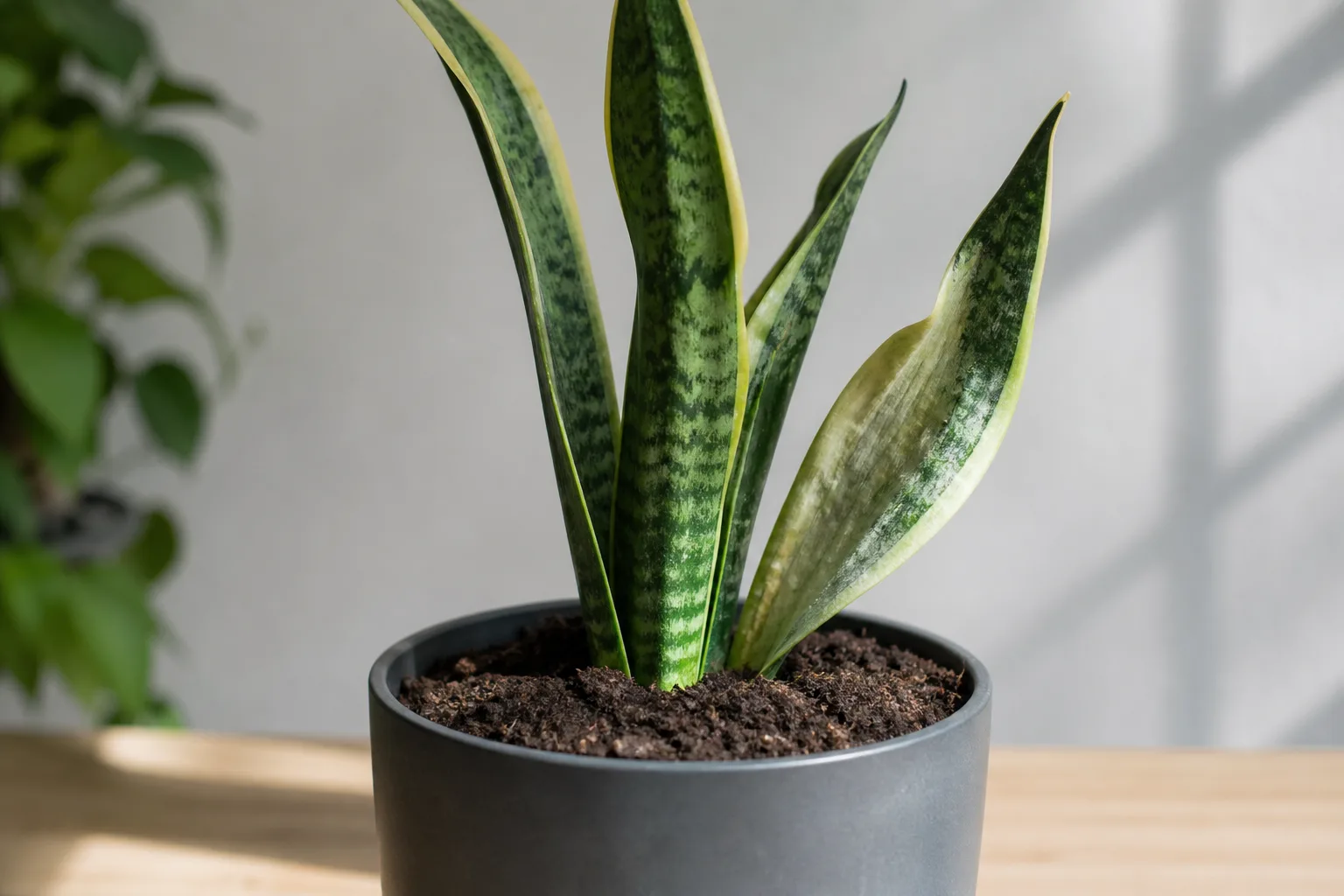
Repotting Stress on Snake Plant: Causes, Checks & Fixes
This guide covers repotting stress on Snake Plant. See also the general Repotting Stress guide, watering, and light pages for this plant.
Repotting Stress on Snake Plant: Causes, Checks & Fixes
Quick answer
Repotting stress on snake plant (Dracaena trifasciata) shows up as stalled pups, slight leaf droop, or one or two yellow lower leaves within one to three weeks of moving to fresh mix - especially if rhizomes were divided, the pot jumped several inches wider, or you watered heavily to “help it settle.”
First step: stop watering and let the fresh mix go fully dry throughout the pot. Keep the plant in bright, indirect light, empty any saucer water, and withhold fertilizer for four to six weeks until a new pup or upright leaf confirms roots are working again. Snake plant spreads through fleshy rhizomes that dislike unnecessary disturbance; a careful spring repot is usually harmless, but wet mix around cut rhizome tissue is the fastest path to rot.
For when and how to repot without creating this problem, start with the snake plant repotting guide - this page owns post-transplant triage, not step-by-step potting technique.
What repotting stress looks like on Snake Plant
Unlike fast vining houseplants, snake plant decline after repot often starts below soil before leaves show obvious damage. Mild transplant pause can look like a quiet month; severe stress overlaps with root rot.
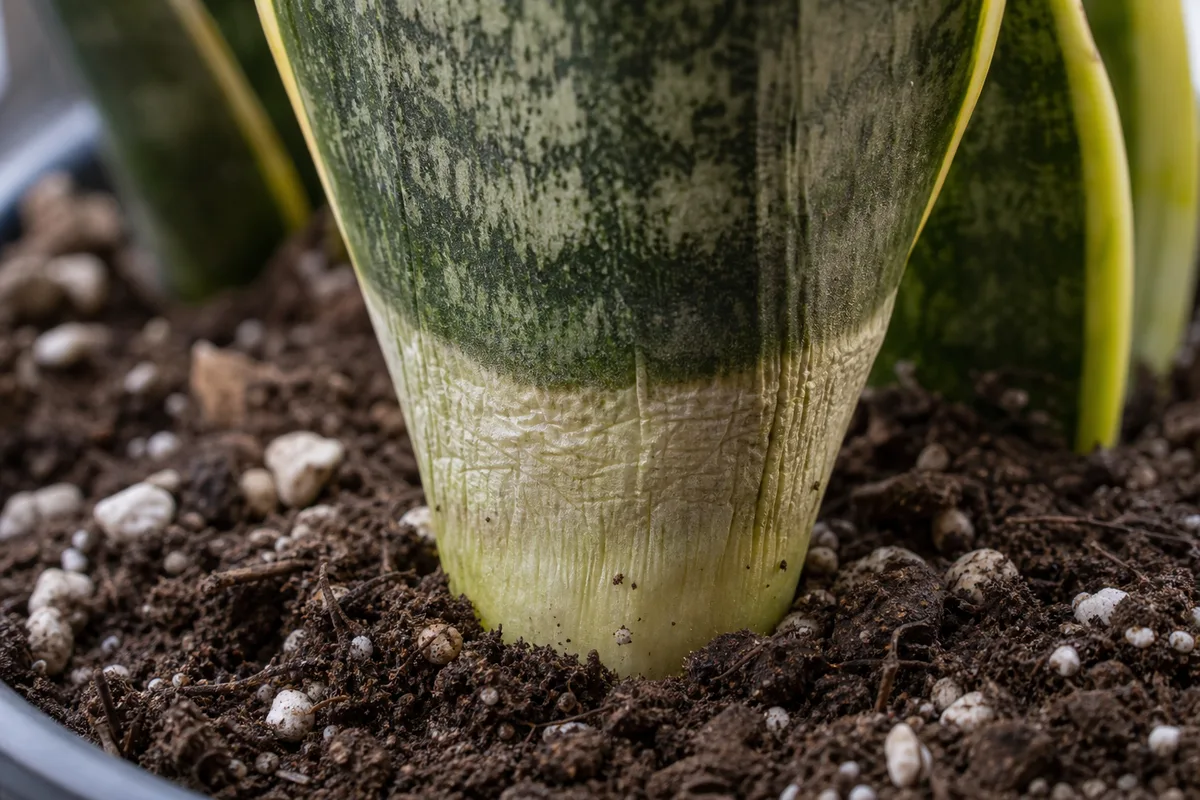
Repotting Stress symptoms on Snake Plant - compare with healthy tissue on the same plant.
Typical repotting-stress pattern:
- New growth pauses - no pups or upright leaves emerging for several weeks
- Outer leaves droop slightly or lose their stiff, upright posture
- One or two lower leaves yellow without immediate mush at the base (mild stress)
- Leaf bases soften and smell sour (stress progressed to rot - not harmless pause)
- Heavy pot if you soaked the plant right after transplant into fresh mix
- Plant wobbles because rhizomes have not re-anchored in the new volume
- Variegated cultivars (Laurentii, Moonshine) may show no immediate leaf change - rhizome stress is underground first
- Bird’s-nest types (Hahnii) can look flattened or loose in the rosette when roots fail to grip new mix
Healthy snake plant leaves feel firm and rigid. Post-repot pause differs from failure: bases stay firm, soil smells neutral, and the plant holds its posture once watering is corrected - usually over four to eight weeks during active growth.
Why Snake Plant gets repotting stress
Rhizome disturbance during repot
Repotting inevitably breaks or exposes rhizome tissue. Dividing pups, loosening circling rhizomes, or trimming rot leaves cut surfaces that need time to dry before moisture returns. Watering immediately after repot - especially into a larger volume of fresh mix - keeps cut tissue wet and invites decay, the same pathway as chronic overwatering.
Oversized pot after repot
Jumping from an 8-inch nursery pot to a 12-inch decorative container is one of the most common failure patterns on this slow colonizer. Spare compost in a big pot stays damp for weeks after the first post-repot drink, stressing rhizomes that have not yet explored the new volume. Clemson HGIC warns that overpotting is a primary cause of root rot in drought-adapted houseplants and recommends moving up only 1 or 2 inches in diameter. Full physics of wet-volume traps live on pot too large.
Watering too soon after transplant
Many growers water on day one because tropical houseplant guides say to “settle” fresh mix - but snake plant behaves more like a succulent. Clemson cactus guidance recommends waiting several days before watering after repotting so damaged roots can heal. The repotting guide aligns with 5 to 7 days after heavy root trimming or division, and a light first drink only when roots stayed mostly intact. Watering into the leaf rosette center after repot traps moisture at the crown - water at soil level only.
Wrong season or stacked changes
Sansevierias rest in winter with minimal water use. Repotting in cold, dim months leaves disturbed rhizomes in mix that dries slowly. NC State Extension notes growth slows in cooler conditions and recommends reduced watering in winter - disturbed plants in winter repots face a longer vulnerable window.
Stacked interventions worsen outcomes: repotting, fertilizing, moving to a new room, and pruning multiple leaves the same week makes it impossible to read the plant’s response and increases rot risk on compromised rhizomes.
Day-one repot after purchase
New snake plants often need quarantine and observation, not immediate transplant. Unnecessary repotting on arrival stacks shock from shipping, new light, and rhizome handling. Penn State Extension describes snake plants as forgiving and low-maintenance precisely because they tolerate staying in nursery pots for years when mix and drainage are adequate.
Aggressive root handling
Teasing every circling rhizome or bare-rooting a healthy plant traumatizes a species that prefers minimal disturbance. Damaged roots from rough handling during repot mimic transplant shock but need longer dry-back before any moisture returns.
Repotting stress vs. root rot vs. normal slow recovery
| Sign | Normal post-repot pause | Repotting stress (fixable) | Active root rot (escalate) |
|---|---|---|---|
| Onset | 3–14 days after gentle spring repot | 1–21 days after repot + early water or oversize | Any time; worsens after wet repot |
| Leaf bases | Firm at soil line | Firm or slightly soft; no spread | Mushy, black, spreading upward |
| Soil smell | Neutral | Neutral; pot may feel heavy if overwatered once | Sour, musty, or rotten |
| Pot weight | Lightens as mix dries on corrected schedule | Stays heavy weeks after one soak | Heavy + sour smell |
| Yellow leaves | 0–2 lower leaves; stable | 1–3 lower; no base mush | Multiple leaves; base collapse |
| New growth | None for weeks - normal on snake plant | Resumes after dry-down (4–12 weeks) | None; existing leaves soften further |
| First move | Wait; confirm dry-down per watering guide | Stop water; Snake Plant light guide | Root rot salvage |
| Read next | This guide | This guide | Root rot |
Chronic overwatering before repot can persist if rot was not fully trimmed - symptoms continue after transplant even with corrected post-repot watering. Root-bound dryness before repot shows light pots and rapid dry-down, opposite of post-repot heaviness from early watering.
How to confirm the cause
Work through these checks before repotting again or trimming heavily:
- Repot timeline - Did symptoms begin within two weeks of transplant? Unexplained decline right after repot points to stress, not a random pest.
- Watering after repot - First drink within 48 hours into fresh mix is a major trigger on rhizome succulents.
- Pot size jump - More than 1–2 inches wider diameter increases wet soil volume disproportionately for slow rhizome colonization.
- Root damage - Aggressive teasing, heavy division cuts, or rot trimming without dry-back raises rot risk.
- Leaf bases and smell - Press tissue at the soil line. Firm and neutral suggests pause; mushy and sour suggests rot salvage.
- Light and temperature - Note cold drafts, hot glass, or a dim corner. Repotted plants in stable bright indirect light recover faster.
Lookalike symptoms to rule out
Low winter light alone stalls growth without repot history - cross-check with not enough light if leaves are firm and repot was months ago. Pests like mealybugs at leaf bases mimic decline but show cottony clusters and sticky residue. underwatering on Snake Plant shows very light pots and wrinkled leaves with dusty dry mix - not a heavy wet pot right after transplant.
First fix for Snake Plant
If you repotted recently and watered to settle the plant: stop watering immediately.
That pause lets oxygen return to disturbed rhizomes and breaks the loop of wet mix → failed uptake → “it looks thirsty” → more water. Move the pot to bright, indirect light if it has been in deep shade - faster photosynthesis helps the mix dry evenly without scorching leaves.
Empty saucer water. If the nursery pot sits inside a decorative cache, pull it out so air reaches bottom holes.
If leaf bases are still firm:
- Do not repot again - repeated disturbance delays recovery.
- Withhold fertilizer for four to six weeks; fresh mix already holds nutrients for this slow grower.
- Resume watering only when soil is bone dry throughout the pot per the watering guide - often two to three weeks depending on light and pot size.
- Confirm drainage holes are open; never let the plant sit in saucer water.
If bases are mushy or soil smells sour, escalate to root rot salvage: unpot, trim soft tissue back to firm rhizome, air-dry cut surfaces 24–48 hours, and repot dry into a right-sized gritty container. Division of firm offsets or leaf propagation may be needed if the main rhizome fails.
Step-by-step recovery
Mild pause (slight droop, firm bases, neutral smell):
- Hold water until mix is bone dry throughout - may take two to three weeks in cool rooms.
- Keep bright indirect light; avoid direct sun on stressed foliage.
- Remove fully collapsed leaves once the plant looks stable; yellowed tissue will not re-green.
- Watch for the first pup or upright leaf - that signals rhizomes are working again.
Moderate stress (multiple yellow leaves, heavy wet pot, growth stalled four weeks):
- Let mix dry fully before any drink - resist calendar watering.
- Withhold fertilizer four to six weeks.
- Do not repot again within six weeks unless confirmed rot requires salvage.
- Resume watering only when the finger test passes at 2–3 inches depth.
Severe decline (soft bases, sour smell, mushy rhizome on gentle unpotting):
- Unpot and brush away mix; rinse only if soil is contaminated from rot.
- Trim all soft tissue with clean shears until only firm white-to-tan rhizome remains.
- Air-dry cut surfaces 24–48 hours in shade.
- Repot into fresh gritty mix in a pot only 1–2 inches larger, with drainage holes.
- Wait 7–14 days before the first light watering after large cuts.
- Propagate backup leaf cuttings from healthy blades if most rhizome was lost - see the propagation guide.
Spring repots in March through May align with active growth resumption per RHS timing guidance. Slow-growing snake plants may need repotting only every two to three years when roots fill the container - not on a fixed calendar.
Recovery vignette: oversize pot + day-one water
A common pattern: an upright Laurentii in an 8-inch plastic nursery pot gets moved into a 12-inch glazed cache pot with fresh peat-heavy mix and watered thoroughly “to help it settle.” Within ten days the outer leaves lose stiffness; the pot still feels heavy three weeks later; no pups appear. Bases remain firm and soil smells neutral - classic repotting stress, not active rot. Fix: remove from the cache pot, stop all water, let mix dry fully for fourteen days in bright indirect light, then resume sparse watering only when the top 2–3 inches are bone dry. First upright pup often appears around week six once rhizomes re-colonize without sitting in damp spare compost. If bases had softened instead, the same timeline would point to rot salvage, not patience.
Recovery timeline
Stabilization often takes two to four weeks after watering is corrected and mix dries - droop should ease before new growth appears.
New pups or upright leaves are the best success signal. Expect them in four to twelve weeks during spring or summer; winter recovery may take longer in cool, dim rooms.
Old yellow leaves will not turn green again. They may stay until you trim them at the base.
Full clump fullness rebuilds over several months as rhizomes push pups and existing leaves re-stiffen.
Worsening signs: bases soften further after dry-down, yellowing spreads to multiple leaves from the bottom up, or new leaves emerge small then collapse - those point toward active rot, not harmless pause.
What not to do
- Do not water on schedule “to help it settle” - disturbed rhizomes need dry mix first.
- Do not repot again within six weeks unless confirmed rot requires salvage.
- Do not fertilize stressed plants - salts burn compromised root tips.
- Do not move the pot daily between rooms while rhizomes re-establish.
- Do not upsize to a large decorative pot immediately after a stressful repot.
- Do not water into the leaf rosette center - crown moisture traps on recovering plants.
- Do not stack repot with heavy pruning and relocation the same week.
When handling cut rhizomes or sap during salvage, wear gloves if skin is sensitive. Snake plant is toxic to cats and dogs - keep trimmed debris away from pets during unpotting.
How to prevent repotting stress next time
Repot only when necessary - roots filling the pot, mix failing, or instability - not on purchase day or a fixed calendar. Best timing is spring when growth resumes. Most indoor specimens need fresh mix every two to three years per Clemson guidance for slow-growing houseplants.
Use free-draining cactus compost amended with perlite or pumice. Increase pot size by only 1–2 inches in diameter. Prefer a shallow, wide pot for horizontal rhizome spread - especially bird’s-nest rosettes. Let compost dry between waterings before and after transplant.
After repot:
- Wait 5–10 days before the first water (longer - up to 14 days - if rhizomes were divided with large cuts).
- Withhold fertilizer four to six weeks.
- Keep bright indirect light; avoid cold drafts and radiators - comfortable room temperatures around 15–24°C (60–75°F) per RHS culture guidance.
- Make one change at a time - repot OR prune heavily OR relocate, not all three.
Full technique, mix ratios, and division steps are on the repotting guide. Ongoing dry-down rhythm lives on the watering guide.
When to worry
Escalate immediately if leaf bases dent or turn mushy, soil smells rotten, or more than a third of the rhizome is soft on inspection. Those signs mean root rot is active - not harmless pause.
Lower urgency applies when leaves are firm, smell is neutral, and growth is simply slow - wait through a full dry-down before intervening again.
If every leaf yellows while mix stays wet for ten or more days after repot, treat as urgent even before a second repot - propagation from healthy leaves may be the salvage path when the crown softens.
What to do next
- Need repot technique, mix, or division steps? Follow the snake plant repotting guide.
- Mushy bases or sour soil after repot? Start root rot salvage - do not wait for leaves to collapse.
- Jumped several pot sizes or using a cache pot? Read pot too large and confirm drainage.
- Unsure if roots were damaged during repot? Compare with damaged roots.
- Set ongoing watering rhythm? Use the watering guide dry-down checks after recovery.
- Main rhizome failing but leaves still firm? Backup genetics via the propagation guide.
About this guide
This guide was written by sai-ananth and reviewed by the LeafyPixels Review Board against Missouri Botanical Garden Plant Finder, Clemson HGIC transplanting and overpotting guidance, Clemson indoor cacti post-repot dry-back, NC State Plant Toolbox, Penn State Extension snake plant profile, RHS sansevieria culture, ASPCA toxicity listing, and LeafyPixels snake plant care pages. The shock-vs-rot comparison table and recovery vignette are editorial diagnostics synthesized from extension transplant protocols and rhizome-succulent biology - not a single published case study. Reviewed 2026-06-17.
When to use this page vs other Snake Plant guides
- Snake Plant watering guide - Use for routine moisture checks before assuming repotting stress is the main issue.
- Snake Plant problems hub - Browse all 36 common issues on this species.
- Root Rot on Snake Plant - Different entry point when symptoms overlap with repotting stress.
- Wilting on Snake Plant - Different entry point when symptoms overlap with repotting stress.