Not Enough Light on Snake Plant: Causes, Checks & Fixes
Quick answer
Not enough light on Snake Plant usually shows as stalled growth, pale or fading variegation, and soil that stays wet too long. First step: move the pot to bright indirect light - roughly two to four feet from an east window or back from filtered south glass - and adjust watering to match slower metabolism in dim corners.
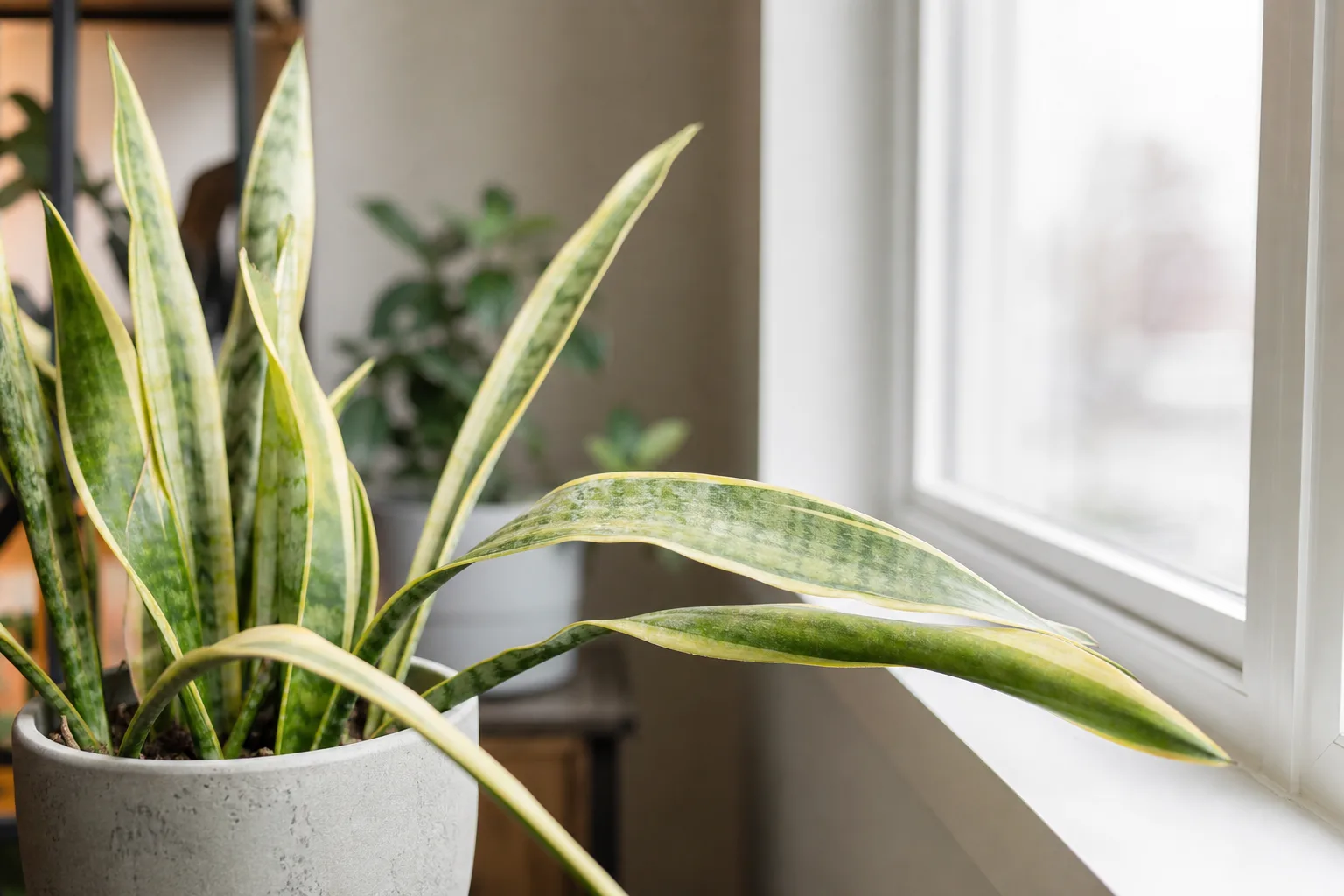
Not Enough Light on Snake Plant: Causes, Checks & Fixes
This guide covers not enough light on Snake Plant. See also the general Not Enough Light guide, watering, and light pages for this plant.
Not Enough Light on Snake Plant: Causes, Checks & Fixes
Quick answer
Not enough light on Dracaena trifasciata (snake plant) rarely kills the plant quickly - that is why it earns a reputation as indestructible in dim corners. It does quietly throttle growth, fade variegation, and set up watering mistakes that look like root problems later. First step: move the pot to Snake Plant light guide, then wait two to three weeks and judge the newest leaf, not old foliage from a previous location.
Why Snake Plant gets not enough light
Snake plants are marketed as low-light survivors, and the label is partly true. NC State Extension lists cultural conditions as partial shade - direct sun only part of the day - while noting the species tolerates very low light. Tolerance is not preference. In native West African rocky scrub and open woodland edges, light is bright and dappled, not perpetual interior shade.
Indoors, the failure mode is usually placement for décor instead of photosynthesis. A pot on a bookshelf across from a window, a hallway with no glass path, or a north room in winter often delivers 50 to 100 foot-candles at the leaf - enough for survival, not for pups, variegation, or steady new leaves. Clemson Extension notes that ideal lighting is bright indirect light, with low light tolerated but slower growth.
Snake plant physiology makes the problem easy to miss. Thick leaves and rhizomes store water and carbohydrates, so the plant can look firm for months while photosynthesis drops. It uses CAM photosynthesis - opening stomata at night to save water in dry habitats - which helps drought tolerance but does not remove the need for daily light input. CAM adapts the plant to heat and aridity, not to living in a closet.
What not enough light looks like on Snake Plant
On snake plants, insufficient light has a recognizable pattern distinct from sudden sunburn or classic overwatering on Snake Plant collapse:
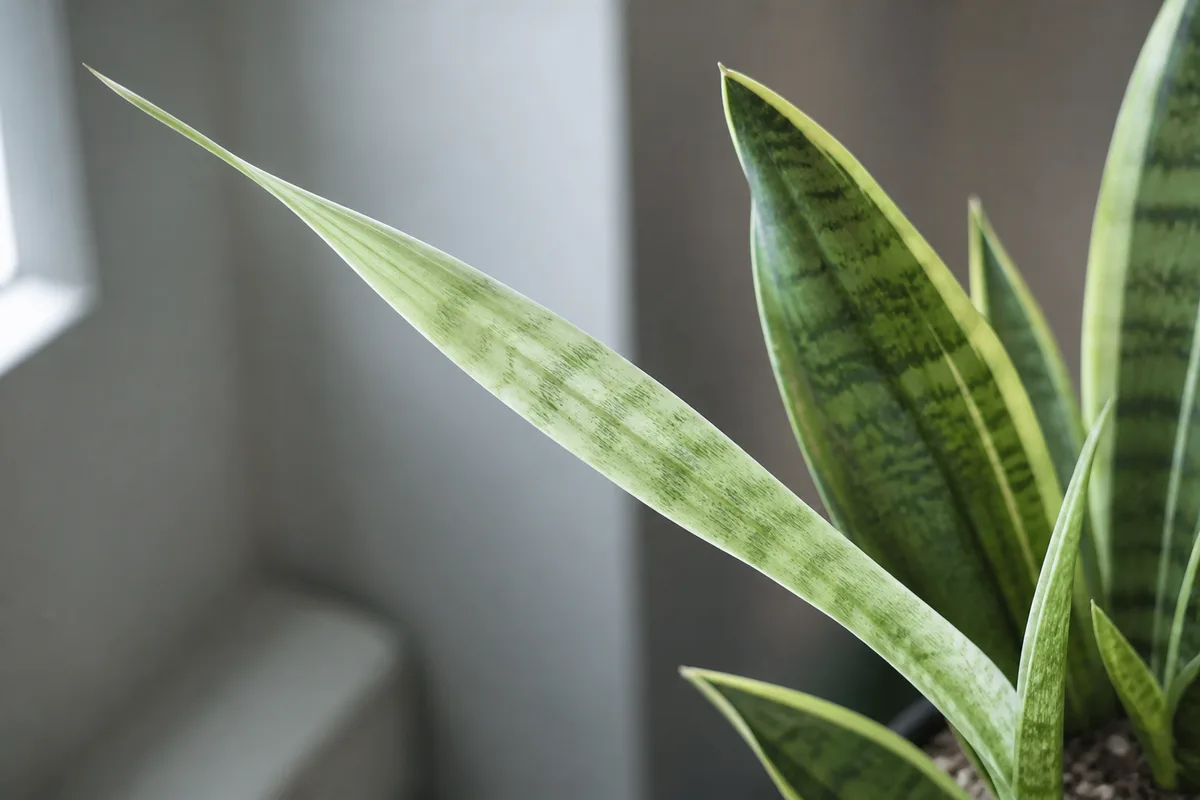
Not Enough Light symptoms on Snake Plant - compare with healthy tissue on the same plant.
- No new leaves or pups for six to twelve months despite otherwise stable care.
- Variegated margins shrink or disappear on cultivars like Dracaena trifasciata ‘Laurentii’ as chlorophyll increases to capture scarce light.
- Overall darker green on older leaves - counterintuitively, darker often means less light, not more health.
- Smaller, softer new leaves compared with growth from a brighter prior location.
- Open, leaning rosette as leaves angle toward the brightest source.
- Soil that stays moist two to three weeks or longer in normal indoor temperatures because transpiration has slowed.
Snake plants grow slowly even in good light, so compare against your plant’s own recent history, not a fast-growing pothos. If the newest leaf is smaller and paler than leaves from last year, light is the leading suspect when placement has not changed for the better.
How to confirm the cause
Work through checks in this order before Snake Plant repotting guide, fertilizing, or treating pests:
- Window distance and direction. Measure how far the pot sits from glass and which exposure it uses. Two to four feet from an unobstructed east pane or filtered south light usually supports growth; deep interior placement often does not.
- Shadow test. On a clear day, hold your hand between the plant and the window. A soft, readable shadow suggests bright indirect light. Faint or no shadow means low light even if the room feels lit to human eyes.
- New growth audit. Inspect the youngest leaf and any basal pups. Absent or rare new tissue with firm old leaves points to light limitation, not immediate root death.
- Dry-down speed. Push your finger deep into the mix. If the top feels dry but the center stays damp for weeks, metabolism is likely too slow for your current Snake Plant watering guide - often tied to dim placement.
- Season check. Growth naturally slows in winter. Compare summer and winter separately before diagnosing year-round insufficient light.
If light is clearly poor and the pattern matches the list above, you do not need a light meter to act. Meters help; new leaf response after a move is the final confirmation.
First fix for Snake Plant
Move the pot to the brightest indirect location you can offer without jumping straight to hot afternoon glass. Practical targets: two to three feet from an east window, four to six feet back from a south window with sheer curtain, or under a full-spectrum grow light for eight to twelve hours daily in a windowless office.
UGA Extension notes snake plants tolerate a range from very low to bright indirect exposure - use that flexibility to upgrade one step at a time rather than placing a dim-grown plant on a scorching west sill in July. After the move, change nothing else for two weeks: no repot, no fertilizer, no pruning spree. Read the next emerging leaf.
Adjust watering immediately after the move in principle, but still wait until the mix is bone dry throughout before soaking - snake plants remain drought-adapted even when brighter. Expect faster dry-down near better light; check weight weekly for the first month.
Recovery timeline
Snake plants respond slowly. After improving light, you may wait four to eight weeks before a visible new leaf begins emerging, longer if the plant spent years in survival mode or if the move happened in winter.
Existing pale, darkened, or slightly elongated leaves do not revert to their former color. Recovery means upright new growth with healthier variegation and occasional pups at the base. If no new tissue appears after three months in clearly brighter indirect light during spring or summer, reassess whether the new spot is still too dim or whether another stressor - chronic wet roots, cold drafts - is limiting response.
What not to do
Do not fertilize a snake plant that has shown no new growth in months. Fertilizer cannot replace photons; it often salts the mix while the plant remains inactive.
Do not keep the same watering calendar after a light upgrade or downgrade. Dim corners need longer dry intervals; brighter spots need more frequent checks, not necessarily more water volume per event.
Do not assume yellowing or soft leaf bases are light problems alone. Low light plus slow dry-down frequently precedes root stress. If bases are mushy or soil smells sour, inspect roots - but fix placement so the mix can dry predictably afterward.
Do not discard a snake plant because it has not grown in a year. These are slow growers by nature; many recover after one placement correction.
Causes to rule out
| Pattern | Likely cause | First step |
|---|---|---|
| No new leaves, firm old foliage, faint shadow at pot | Insufficient light | Move to bright indirect light |
| No growth, wet center of pot, soft leaf bases | Root stress from slow dry-down in dim light | Improve light; allow full dry-down; inspect roots if soft |
| No growth, bone-dry pot, wrinkled leaves | underwatering on Snake Plant | Water thoroughly after full dry; then reassess stretch |
| Pale bleached patches on sun-facing side | Too much direct sun | Filter or move back; not a low-light case |
| Slow growth only in winter | Seasonal dormancy | Wait for spring; do not overwater in dim winter rooms |
Lookalike symptoms
Slow growth alone overlaps with the separate slow-growth problem page. Not-enough-light is confirmed when placement is genuinely dim and new tissue is absent or weak - not when the plant pushes occasional small leaves on a normal slow schedule in acceptable light.
Leggy growth often shares the same root cause - etiolation toward a light source - but emphasizes stretched internodes and lean. Fixing light addresses both; trim old leaners only after new upright leaves prove the spot works.
Overwatering can yellow leaves while soil stays wet. In dim rooms, the primary driver is often too little light slowing water use, not an enthusiastic watering hand. Moving the pot and extending dry time beats repeated drought-flood cycles.
Snake Plant care cross-check
Align this problem with how snake plant is normally grown:
- Light: Bright indirect preferred; tolerates low light but enters survival mode - matches LeafyPixels guidance for indirect light as the care checkpoint.
- Water: Only when soil is completely dry - roughly every two to six weeks depending on season. Slow dry-down in dim corners is a warning sign, not a license to wait indefinitely if the center stays cold and wet.
- Soil: Fast-draining, gritty mix. Heavy mix plus low light is a common hidden combo that keeps roots oxygen-starved.
- Temperature: Comfortable around 18–27°C (65–80°F). Cold dim rooms slow the plant further; growth may not resume until both warmth and light improve.
If you recently moved the plant away from a window for furniture or pet access, symptoms often appear two to three months later - after stored reserves stop masking the deficit.
How to prevent it next time
Place snake plants where new growth can prove the spot works - within a few feet of appropriate glass or under a dedicated lamp - not only where the pot looks good in a floor plan.
Rotate the container a quarter turn every two to three weeks if leaves lean toward the window. Leaning is directional growth, not an emergency, but rotation keeps the rosette even.
Re-check placement in late winter when sun angle drops. A spot that worked in June may be too dim by January.
For offices without windows, commit to a timer-driven grow light rather than relying on ceiling fluorescents alone. Snake plants handle office life better than most houseplants, but “better” still means adding light when no window path exists.
After any light change, track pot weight weekly for a month and link watering to dry-down, not habit.
Practical checks
Urgency check
Not enough light is medium severity for snake plant - rarely instant death, but a common setup for root problems when soil stays wet. Treat as more urgent if leaf bases soften, soil smells sour, or multiple outer leaves collapse while the center remains damp.
Best inspection order
Inspect window distance and shadow quality, newest leaf and pup presence, pot weight and deep soil moisture, then roots only if softness or odor suggests rot. Light comes before fertilizer and repotting on Snake Plant overview.
Escalation point
Escalate if, after three months in clearly brighter indirect light during active season, no new tissue appears and soil still will not dry - unpot to inspect for rotted rhizome sections. Escalate immediately if mushy leaf bases spread despite dry surface soil; that is root-zone failure, not cosmetic low light.
Conclusion
Snake plant not-enough-light problems come down to one distinction: survival is not thriving. Dracaena trifasciata will endure dim corners longer than most houseplants, but it grows, variegates, and tolerates watering best in bright indirect light. Move the pot, wait for the newest leaf, adjust dry-down checks, and avoid stacking fertilizer or repotting on the same day. Old faded leaves will not heal backward; clean new upright growth forward is the sign your fix worked.
When to use this page vs other Snake Plant guides
- Snake Plant watering guide - Use for routine moisture checks before assuming not enough light is the main issue.
- Snake Plant problems hub - Browse all 36 common issues on this species.
- Leggy Growth on Snake Plant - Different entry point when symptoms overlap with not enough light.
- Slow Growth on Snake Plant - Different entry point when symptoms overlap with not enough light.
- Yellow Leaves on Snake Plant - Different entry point when symptoms overlap with not enough light.