Underwatering on Snake Plant: Causes, Checks & Fixes
Quick answer
Underwatering on Snake Plant shows as wrinkled or puckering leaves and crispy brown tips when soil has stayed bone dry too long. First step: water thoroughly until runoff drains freely, or bottom-water 20–30 minutes if the mix repels water; then wait until the pot dries completely before watering again.
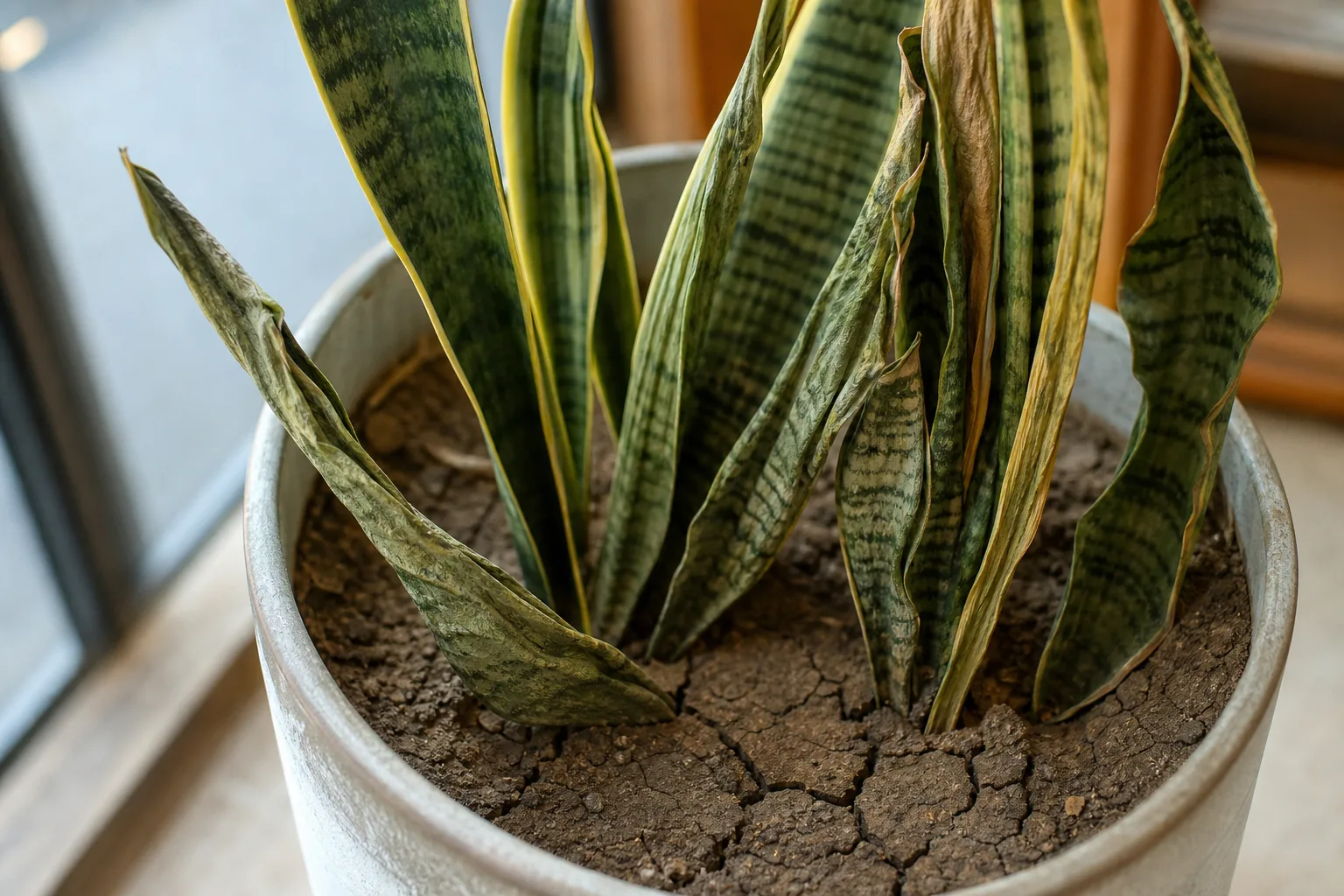
Underwatering on Snake Plant: Causes, Checks & Fixes
This guide covers underwatering on Snake Plant. See also the general Underwatering guide, watering, and light pages for this plant.
Underwatering on Snake Plant: Causes, Checks & Fixes
Quick answer
Underwatering on Snake Plant (Dracaena trifasciata) usually follows weeks of skipped watering while the plant sits in bright light, a small pot, or very dry indoor air. The classic signs are wrinkled or puckering leaves and crispy brown tips on otherwise green foliage, with soil that is bone dry throughout-not just on the surface. First step: give one thorough watering until water runs from the drainage holes, or bottom-water for 20–30 minutes if dry mix repels water; drain fully before returning the pot to its saucer.
Why Snake Plant gets underwatering
Snake Plant is a drought-tolerant succulent with thick, water-storing leaves and rhizomes. That storage makes it slow to show thirst-and easy to forget-but it does not make the plant immune to long dry spells. When internal reserves run low, leaf cells lose turgor and the normally stiff blades wrinkle, pucker, or fold inward.
Underwatering is less common than overwatering on Snake Plant on Snake Plant overview, yet it still happens when:
- Care follows a calendar instead of the pot. Winter schedules of once a month or less are appropriate only when the mix is actually dry; a warm, bright room can still dry a small pot in two weeks.
- Light increases without more frequent checks. A plant moved closer to a window or outdoors for summer uses water faster even though Snake Plant tolerates part shade to bright indirect light.
- The pot is root-bound. A crowded root mass in a small container can exhaust moisture within days, especially in terracotta.
- Soil becomes hydrophobic. Peat-heavy mixes that stay dry for months can shrink and repel water, so surface watering runs down the sides without rewetting the root zone.
- Vacation or winter neglect. Growth slows in cooler months, but plants in heated rooms above a radiator or in direct sun still lose moisture from leaves.
Because Snake Plant stores water in its tissues, underwatering builds gradually. Penn State Extension notes you can neglect to water for a month without serious harm in many cases-but persistent wrinkling means internal reserves are depleted. The symptom pattern-dry, wrinkled leaves with dusty soil-matters more than how many weeks since the last drink.
What underwatering looks like on Snake Plant
On Snake Plant, underwatering has a fairly distinct look compared with root rot on Snake Plant or fluoride tip burn:
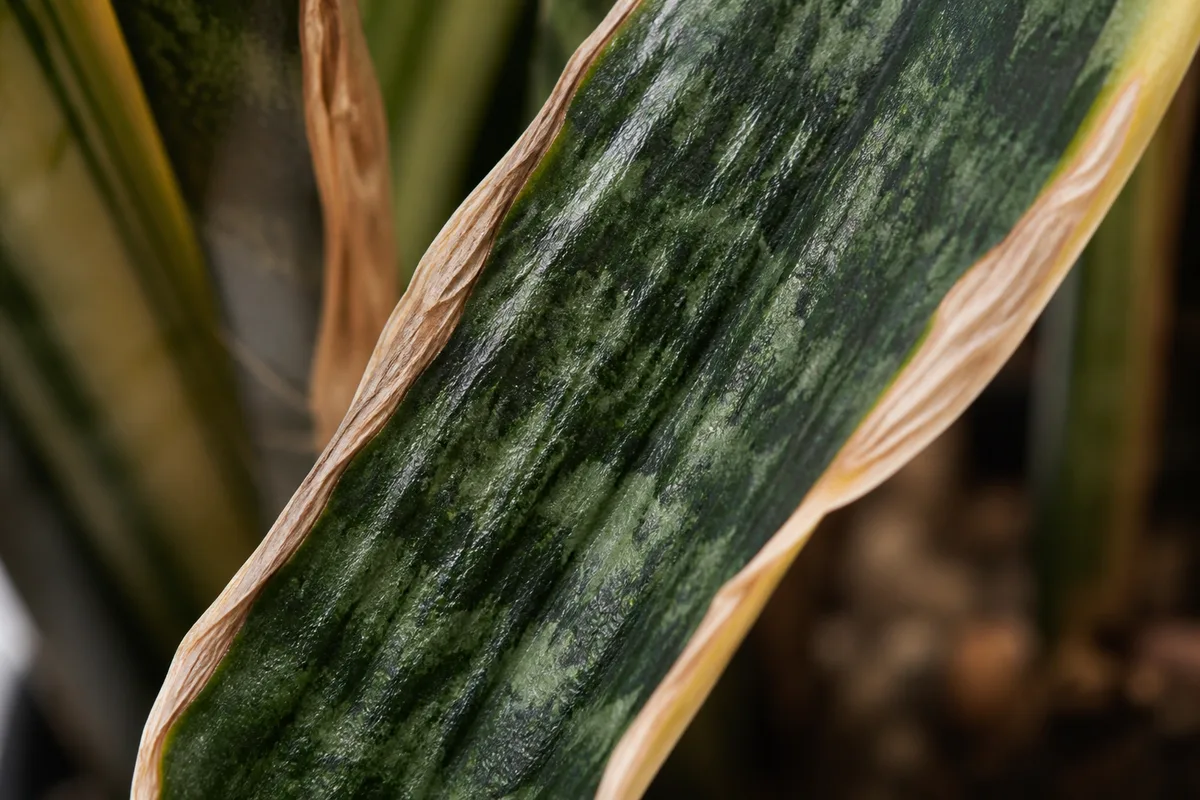
Underwatering symptoms on Snake Plant - compare with healthy tissue on the same plant.
- Wrinkled, puckered, or folded leaves along the blade, especially a soft crease down the center on upright cultivars.
- Brown, crispy leaf tips or margins on leaves that otherwise stay green-unlike yellow, soft leaves from chronic overwatering.
- Thin, papery feel when you squeeze a leaf; healthy Snake Plant leaves are firm and plump.
- Very light pot weight and soil that is bone dry several centimetres down, sometimes pulling away from the pot wall.
- No sour smell from the mix and no mushy leaf bases-those point to rot, not drought.
When buying at a nursery, the RHS recommends selecting specimens whose leaves are not wrinkled or puckered; the same visual cue applies to a plant you already own that has gone too long without water.
How to confirm the cause
Work through these checks before you pour a full watering can:
- Soil moisture deep in the pot. Push your finger to the bottom third or use a skewer; if it comes out clean and dusty, drought is likely. Damp soil plus wrinkled leaves suggests root damage, not thirst.
- Leaf texture at the base versus the tip. Underwatered leaves are dry and wrinkled; overwatered leaves are often soft and mushy at the base with wet soil.
- Pot weight and drainage. Lift the pot. A very light container with crispy tips fits underwatering. A heavy, soggy pot does not.
- Recent care changes. Did light increase, pot size shrink, or watering stop during a trip? Did you switch to a faster-draining cactus mix that dries quicker than expected?
- Newest growth. If the center pup is still firm while outer leaves are wrinkled, you may be catching drought early. Collapsing new shoots after prolonged dryness need prompt rehydration.
The RHS lists wilted leaves and brown, crispy leaf edges among signs a houseplant is not getting enough water-check moisture a few centimetres down rather than watering on autopilot.
First fix for Snake Plant
Make one correction first: rehydrate the root zone properly.
If the mix still accepts water: Water slowly until excess runs freely from the drainage holes. Empty the saucer afterward so the plant is not sitting in runoff. Iowa State Extension advises to allow soil to dry between waterings-the fix here is a single deep drink, not a return to frequent shallow sprinkles.
If water runs straight through dry, shrunken soil: Bottom-water. Set the pot in a basin of room-temperature water for 20–30 minutes so the mix wicks moisture upward. Remove, drain fully, and confirm the center of the root ball feels moist-not just the rim.
Do not fertilize, repot, and prune heavily on the same day. Let the plant respond for several days so you can read whether thirst was the real issue.
Step-by-step recovery
For mild to moderate underwatering with firm roots:
- Water thoroughly or bottom-water as above.
- Place the plant back in its usual indirect light-avoid blasting dehydrated leaves with hot afternoon sun.
- Wait until the soil is bone dry throughout before the next watering; for most homes that means roughly every 2–4 weeks in active growth and every 4–6 weeks in winter, adjusted to your pot and room.
- Trim fully brown, papery tips or margins only after leaves firm up; cosmetic damage on old tissue will not revert to green.
- If the plant was root-bound and dried out within days of the last watering, plan a repot in spring into a slightly larger pot with fast-draining mix-but only after it rehydrates and stabilizes.
Recovery timeline
Wrinkled Snake Plant leaves often begin to firm within 48 hours to one week after proper watering if roots are healthy. Crispy tips remain brown permanently; recovery means plump leaves and stable new growth, not perfect old blades.
Severe neglect-many months of dust-dry soil with heavily shriveled leaves-may take several weeks before new growth looks normal. If leaves stay limp after a good drink while soil stays wet, inspect roots for rot before watering again.
What not to do
- Do not water on a fixed weekly schedule. Snake Plant prefers minimal watering once the compost has dried out; the goal after drought recovery is check-first, not calendar-first.
- Do not keep pouring if the mix is already wet and leaves are mushy. That worsens root rot, the main killer of this plant.
- Do not fertilize a stressed plant until leaves firm and new growth appears in spring or summer.
- Do not remove all wrinkled leaves immediately. Living green tissue still photosynthesizes while the rhizome recharges; trim only dead margins.
- Do not leave the pot sitting in a full saucer after recovery watering.
Causes to rule out
| What you see | Likely cause | Quick check |
|---|---|---|
| Wrinkled leaves, bone-dry soil, firm leaf bases | Underwatering | Deep water; recheck in a week |
| Brown tips only, soil moist, no wrinkling | Fluoride, salts, or low humidity | Flush soil; use filtered water |
| Yellow soft leaves, wet soil, sour smell | Overwatering / root rot | Unpot; inspect roots |
| Mushy leaf base, damp mix | Root rot | Dry down; trim mushy tissue |
| Bleached patches after cold window | Cold damage | Move off cold glass |
| Slow growth, pale leaves, moist soil | Low light | Brighter indirect spot |
Brown tips alone appear on both underwatered and overwatered Snake Plants, which is why soil moisture and leaf base texture matter more than the tip color in isolation.
Lookalike symptoms
Fluoride or salt tip burn causes brown edges on otherwise plump leaves while soil has been watered regularly. Flush the mix and switch to rainwater or filtered water if tap water is hard.
Low humidity can crisp margins on many houseplants, but Snake Plant tolerates low household humidity and usually shows wrinkling only when the root zone is dry-not from dry air alone.
Root rot mimics wilt but with the opposite soil profile: wet, heavy mix and soft, sometimes foul-smelling bases. Adding more water destroys the plant.
Snake Plant care cross-check
Align recovery with normal Snake Plant needs:
- Watering: Only when soil is completely dry throughout-roughly every 2–6 weeks depending on season, pot, and light. Summer often lands at every 2–4 weeks; winter at every 4–6 weeks in cooler, slower growth.
- Check method: Push your finger deep or judge pot weight; surface dust is not enough.
- Soil: Fast-draining cactus or succulent mix with perlite and coarse sand; excellent drainage is essential.
- Light: Indirect light for most of the day; protect from hot afternoon sun on stressed leaves.
- Temperature: Comfortable range 18–27°C (65–80°F); avoid cold drafts below 10°C (50°F).
If one of these shifted recently-especially a move to brighter light without more frequent dryness checks-correct that before assuming the plant is permanently damaged.
How to prevent underwatering next time
- Check the pot, not the calendar. Bright rooms, small pots, and terracotta all shorten the interval between drinks.
- Learn your dry-down speed for the first month after purchase or repot by lifting the pot weekly.
- Bottom-water vacation prep if you will be away longer than the pot’s normal dry cycle-but do not leave plants in standing water.
- Refresh hydrophobic mix if water repeatedly channels around dry soil; top-dressing or Snake Plant repotting guide may be needed every 2–3 years.
- Watch outer leaves first. They show wrinkling before the center collapses; that is the cheapest early-warning system Snake Plant gives you.
Practical checks
Urgency check
Underwatering is usually medium severity on Snake Plant-not an emergency unless many leaves are severely shriveled after months of neglect or new growth is collapsing. Soft stems with wet soil are urgent for rot, not drought.
Best inspection order
For Snake Plant, inspect soil moisture deep in the pot, leaf firmness and wrinkling, pot weight, then leaf bases for mushiness, then recent light or pot changes-in that order.
Severity note
This issue is marked medium for Snake Plant. Slow wrinkling on a few outer leaves gives you time to rehydrate; mushy bases with odor do not.
Underwatering escalation point
Repot or inspect roots if the plant stays limp after two proper waterings separated by a full dry-down cycle, or if soil never re-wets despite bottom-watering-compacted or rotted roots may block uptake.
Snake Plant prevention note
Snake Plant belongs where indirect light is realistic all day, not only where the pot looks good. Pair that light with fast-draining mix and a rhythm based on bone-dry checks. More snake plants die from overwatering kindness than from drought, but chronic neglect still wins if you ignore persistent wrinkling.
When to use this page vs other Snake Plant guides
- Snake Plant watering guide - Use for routine moisture checks before assuming underwatering is the main issue.
- Snake Plant problems hub - Browse all 36 common issues on this species.
- Wilting on Snake Plant - Different entry point when symptoms overlap with underwatering.
- Brown Tips on Snake Plant - Different entry point when symptoms overlap with underwatering.
- Yellow Leaves on Snake Plant - Different entry point when symptoms overlap with underwatering.