Drooping Leaves on Snake Plant: Causes, Checks & Fixes
Quick answer
Drooping on snake plant usually means overwatering or root rot - squeeze the leaf base: soft and mushy means stop watering and inspect roots; wrinkled and papery means soak dry soil. First step: check soil moisture and leaf texture before changing anything else.
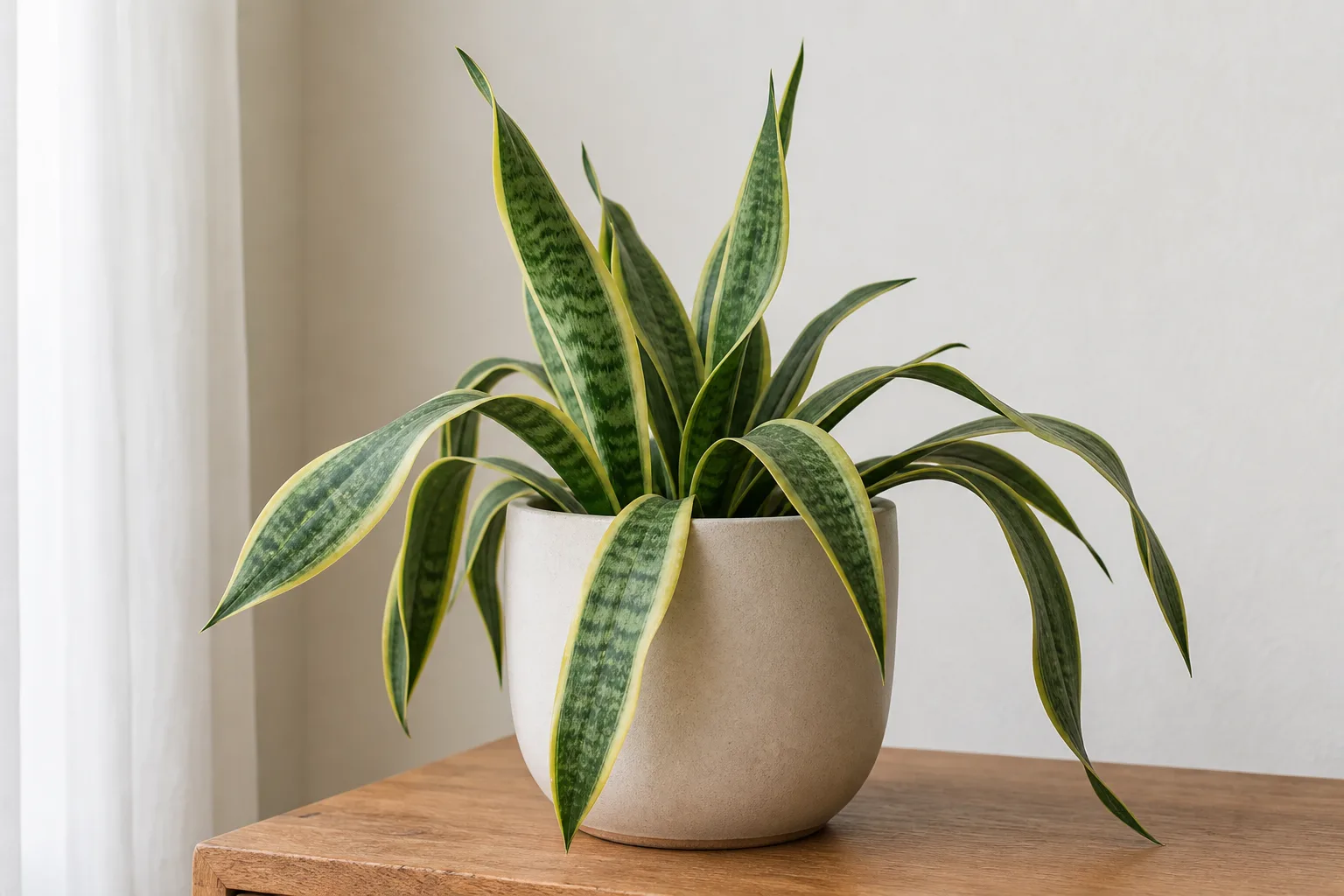
Drooping Leaves on Snake Plant: Causes, Checks & Fixes
This guide covers drooping leaves on Snake Plant. See also the general Drooping Leaves guide, watering, and light pages for this plant.
Drooping Leaves on Snake Plant: Causes, Checks & Fixes
Quick answer
Drooping leaves on snake plant (Dracaena trifasciata) most often trace to overwatering and rhizome rot, not thirst. The leaves store water and normally stand stiff and upright; when roots fail in soggy soil, turgor pressure drops and blades flop outward or bend at the base. First step: stop watering, squeeze the base of a drooping leaf, and push your finger to the bottom of the pot. Soft mushy tissue plus damp mix means inspect roots immediately. Wrinkled papery leaves plus bone-dry soil mean soak thoroughly instead.
Drooping is not the same as wilting. On snake plant, drooping usually means a change in posture - swords lean, bend at the base, or splay outward. Wilting means lost internal rigidity - tissue feels limp, thin, or folded even before obvious bending. Both can share wet-soil or dry-soil causes, but the cluster pages split by what you see first. Use this guide when blades are bending or leaning; see wilting on snake plant when leaves feel fully limp. When mush and sour soil confirm decay, follow the full root rot rescue guide - this page covers diagnosis and the first correction only.
Drooping vs wilting vs root rot on snake plant
Snake plant symptom pages overlap because one bad watering habit can produce several search terms. Use this map before you repot or prune:
| What you notice first | Best page | First action |
|---|---|---|
| Blades lean or bend; may still feel firm at the base | This guide | Squeeze test + soil depth check |
| Leaves lose stiffness, feel limp or folded lengthwise | Wilting | Squeeze test; match wet vs dry soil |
| Wet soil, sour smell, mushy rhizome - rescue needed | Root rot | Stop water; unpot and trim same day |
| Bone-dry soil, wrinkled papery leaves, light pot | Underwatering | One thorough soak; resume dry-down |
| Calendar watering, damp mix, yellow bases - no rescue yet | Overwatering | Stop water; confirm before unpotting |
| Slow pale lean toward window over months | Not enough light | Brighter indirect light; do not overwater |
| Mush at center after water poured into rosette | Crown rot | Stop crown watering; dry and inspect |
Why Snake Plant gets drooping leaves
Snake plant evolved in rocky, dry West African habitats where long dry spells alternate with brief rains. Thick leaves and underground rhizomes store water. Like other drought-adapted succulents, the species uses a water-conserving gas-exchange pattern - stomata open at night and stay closed by day - which limits daytime moisture loss. That biology makes visible drooping a late warning - by the time upright blades bend, root stress has often been building for weeks.
The most common trigger is overwatering. NC State Extension notes that overwatering frequently causes root rot on Snake Plant overview; saturated mix displaces oxygen, roots suffocate, and decay follows. Without functioning roots, water cannot reach leaf cells and the stiff swords lose internal pressure.
Underwatering droop is less common because stored leaf water buffers drought, but extended neglect in a small pot eventually produces wrinkled, puckering leaves that lean or fold - the pattern covered in depth on the underwatering guide. Other contributors include cold damage near windows, an oversized pot that stays wet too long, root-bound plants where water runs down the sides without reaching the core, and months of weak light that produce thin, leaning growth.
Tall cultivars add a mechanical wrinkle: Dracaena trifasciata ‘Laurentii’ and other full-size swords in lightweight plastic pots often topple when soil is dry because the narrow base cannot balance height. Missouri Botanical Garden recommends wide, stable clay pots for tall specimens - topple is posture failure, not always root death. Dwarf Hahnii rosettes droop less from height but are more sensitive to staying wet in deep pots.
What drooping leaves look like on Snake Plant
Healthy snake plant leaves are erect, leathery, and banded - typically 1–3 inches wide and up to several feet tall indoors. Drooping changes that silhouette in distinct ways depending on cause:
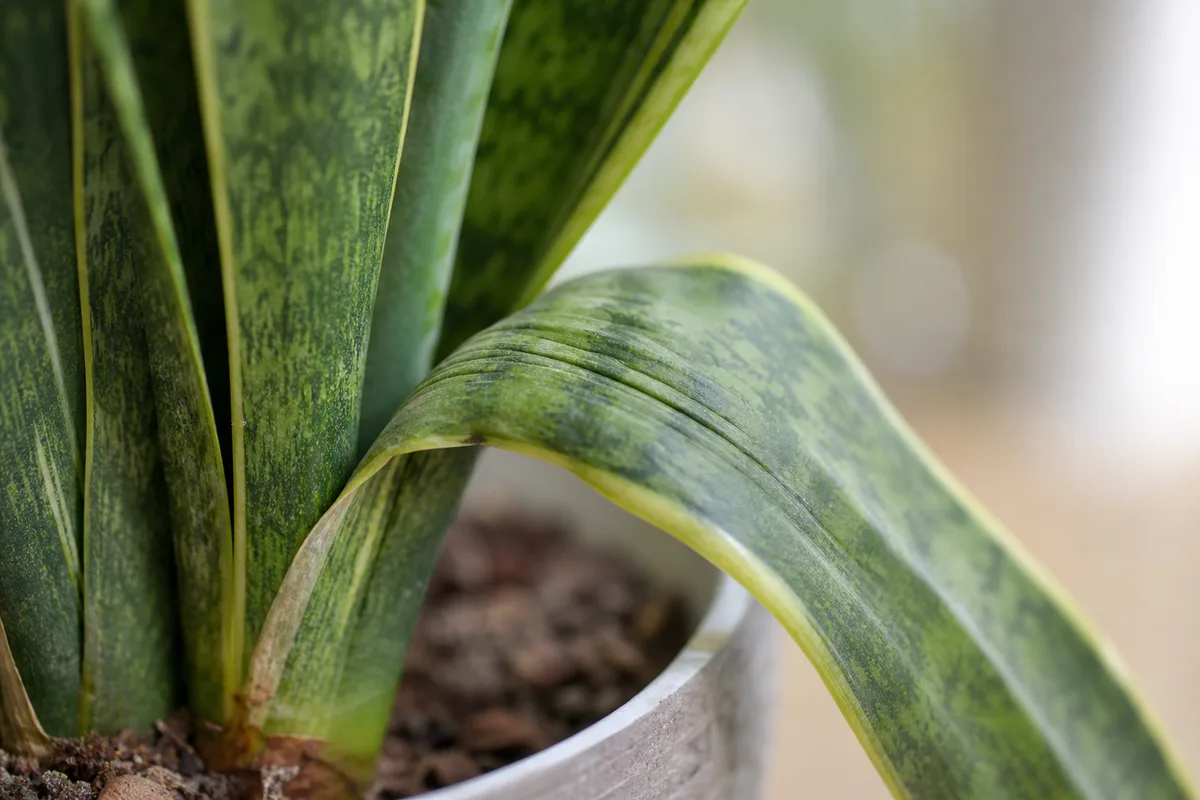
Drooping Leaves symptoms on Snake Plant - compare with healthy tissue on the same plant.
- Overwatering / rot: Leaves splay outward or bend at the base; tissue at the rhizome feels soft, squishy, or translucent. Lower leaves may yellow first. Soil stays damp for days and may smell sour.
- Underwatering: Leaves wrinkle, crease, or feel thin and papery but are not mushy at the base. Tips may turn brown and crispy. Soil pulls away from pot edges and feels dust-dry throughout.
- Low light: Slow lean toward the brightest window over months; leaves stay firm but grow thinner and paler. No sudden flop after a recent watering.
- Cold damage: Dark water-soaked patches on leaves that touched cold glass, sometimes followed by soft collapse in that section only.
- Mechanical topple: Entire pot tips over; leaves may bend from impact while bases stay firm and soil is dry. Common on tall Laurentii in narrow plastic pots.
One outer leaf aging and drooping while the rest stay firm is usually normal senescence - cut it at the base when fully dry. Several leaves failing together is a care-pattern problem, not old age.
How to confirm the cause
Use this inspection order before Snake Plant repotting guide, fertilizing, or moving the plant:
- The squeeze test. Pinch the base of a drooping leaf between thumb and finger. Mushy = wet-root problem. Wrinkled and dry-feeling = drought. Firm but leaning = likely light, cold, or mechanical topple.
- Soil moisture at depth. Push a finger or dry chopstick to the pot bottom. Damp or cold wet mix after days without watering confirms overwatering risk. Bone-dry throughout confirms underwatering.
- Pot weight and drainage. Lift the pot - heavy and wet means stop all water. Check that drainage holes are open and the saucer is empty.
- Smell and rhizome check. Sour odor from the mix or soft rhizome at the soil line strongly suggests rot. If both smell and squeeze test point to rot, unpot the same day - full trim protocol is on the root rot guide.
- Recent care history. Calendar watering through winter, a new oversized decorative pot, or a move to a dim bathroom often explains droop without any pest involvement.
The RHS growing guide emphasizes that overwatering and standing in water are the main health issues for sansevierias - so when droop appears after frequent watering, suspect wet roots first, not underwatering.
First fix for Snake Plant
Make one correction based on what you confirmed:
- Wet soil + soft leaf bases: Stop watering immediately. Unpot, inspect rhizomes and roots, and trim mushy tissue - see the root rot rescue guide for sterilized trim, cinnamon on cuts, dry repot, and when to propagate backups. Editorial rescue practice: hold water roughly seven to ten days after repot into dry mix; extension sources vary, so judge by firm remaining tissue and fully dry soil, not the calendar alone.
- Bone-dry soil + wrinkled firm leaves: Water thoroughly until a small amount runs from drainage holes, drain the saucer, and do not water again until the mix is completely dry throughout. Seasonal rhythm lives on the snake plant watering guide.
- Firm leaning leaves in dim light: Move to Snake Plant light guide - east window or filtered south or west - and acclimate over two weeks. Do not increase watering to “perk up” a plant in wet mix. Details: not enough light.
- Top-heavy topple, firm bases, dry soil: Right the plant, move to a wider heavier pot or add a stake, and address balance before assuming rot.
Penn State Extension stresses that you can kill snake plant by overwatering but can neglect watering for weeks with little harm - so when in doubt between wet and dry, check the base texture before adding more water.
Step-by-step recovery
If root rot is confirmed
Rot rescue is documented step-by-step on root rot on snake plant. Summary for drooping that led you here:
- Unpot and remove wet soil so every root and rhizome section is visible.
- Trim brown, mushy, or foul-smelling tissue until only firm, pale material remains.
- Air-dry cut surfaces several hours to overnight; repot into fast-draining dry mix in a pot only slightly larger than the remaining root mass.
- Hold water until the mix is fully dry (rescue practice: often seven to ten days after repot - not a single published interval).
- Remove leaves that stay soft and bent - they will not recover stiffness.
For cinnamon on cuts, propagation backups, and severe crown involvement, use the dedicated root-rot and crown rot pages rather than repeating full rescue prose here.
If underwatering is confirmed
- Bottom-water or top-water slowly until the mix is evenly moist, not flooded in the leaf rosette.
- Empty the saucer after drainage completes.
- Wait until the soil dries completely before the next drink - follow the watering guide dry-down test, not a fixed schedule.
- Trim only fully crispy tips if they bother you; the leaf should plump within a day or two.
If mechanical topple is confirmed
- Stand the plant upright and check that bases are firm - if mushy, switch to the rot path above.
- Repot into a wider clay or ceramic pot, or stake the rosette until new roots anchor.
- Do not water heavily “after the fall” unless soil was genuinely dry; extra moisture in a freshly disturbed pot invites rot.
Recovery timeline
Mild underwatering droop often corrects within 24–48 hours after one thorough watering if roots are intact. Overwatering recovery takes one to three weeks minimum after rot trim and dry repot - longer if large rhizome sections were removed. Leaves that went soft from rot do not straighten; watch for new firm growth from the center or pups instead.
Snake plant is slow to show improvement, so give each correction at least ten days before changing light, pot size, or watering again.
What not to do
Do not water a drooping snake plant by reflex - adding water to already wet mix accelerates rot. Do not pour water into the center of the leaf rosette; NC State Extension warns this can cause crown problems - see crown rot if mush started there. Do not fertilize a stressed plant before roots and moisture are stable. Do not repot into a much larger container “to help it recover” - extra wet soil volume makes dry-down slower. Do not stack repotting, pruning, and moving on the same day; one change at a time makes the response readable.
Causes to rule out
| What you see | Likely cause | Drooping vs wilting | First action |
|---|---|---|---|
| Soft mushy base, wet soil, sour smell | Overwatering / root rot | Both; often wilting + bend | Root rot |
| Wrinkled papery leaves, bone-dry soil | Underwatering | Often wilting first | Soak once; watering guide |
| Slow lean, pale thin leaves, dim room | Low light | Drooping posture | Not enough light |
| Mushy patches after cold night near glass | Cold damage | Localized wilt/droop | Warm location; trim dead tissue later |
| Pot heavy when dry, water runs straight through | Root-bound / channeling | Drooping from weak uptake | Repot one size up in gritty mix |
| Pot tips over, firm bases, dry soil | Mechanical topple | Drooping only | Wider pot or stake |
| Fine webbing, stippled leaves | Spider mites (rare) | Wilting with stipple | Rinse and treat; fix dry air if needed |
Root rot, underwatering, and light stress can all produce “sad-looking” plants - the squeeze test and soil depth check separate them in minutes.
Lookalike symptoms
Wilting vs drooping: On snake plant, wilting emphasizes lost turgor - limp, folded, or deflated tissue. Drooping emphasizes posture - bent or leaning blades that may still feel firm. True rot often includes both soft bases and wet mix; brief wilting from heat or shipping usually resolves once the plant sits in stable light with correct moisture.
Yellow leaves: Soft yellow from the base upward with mush points to rot - see root rot. A single lower leaf yellowing while others stay firm is often normal aging.
Overwatering without rescue yet: Damp soil and heavy pot but firm bases may still be early overwatering - stop water before rot spreads.
Toppling: Tall specimens in lightweight plastic pots may simply fall over when soil is dry and top-heavy - stake, use a wider base pot, or follow MOBOT’s wide-clay guidance rather than assuming root failure.
Snake Plant care cross-check
Align these basics before treating droop as a mystery disease - full seasonal rhythm is on the snake plant watering guide:
- Water: Only when soil is completely dry throughout. In most homes that means roughly every two to four weeks in spring and summer and every four to eight weeks in fall and winter - always confirm with a finger or skewer at depth, not a calendar. In winter, NC State recommends watering only every one to two months when growth slows.
- Soil: Fast-draining cactus or succulent mix with perlite; excellent drainage is essential.
- Light: Bright indirect for active growth; tolerates low light but wet soil stays dangerous longer in dim rooms.
- Temperature: Comfortable at 65–80 °F (18–27 °C); damage below about 50 °F (10 °C).
If one of these changed recently - especially winter watering on a summer schedule - fix that before assuming the plant is dying.
How to prevent drooping leaves next time
Water from the pot’s dryness, not the calendar - use the watering guide dry-down test every time. Use containers with drainage holes and empty saucers after every watering. Choose terracotta or right-sized pots so mix dries within a reasonable interval. Place the plant where it gets enough light that soil does not stay damp for weeks. During autumn and winter, stretch intervals dramatically - overwatering is the most common cause of death in cultivation.
Inspect rhizomes at repotting every two to three years. Firm pale tissue and a light dry pot are healthy signs; sour smell or soft bases mean adjust the routine before all leaves flop.
When to worry
Escalate immediately if:
- Multiple leaves collapse within a few days while soil stays wet.
- Rhizome or leaf bases feel soft and smell sour - start root rot rescue the same day.
- New center growth yellows or mushifies - not just one old outer leaf; check crown rot if water pooled in the rosette.
- Drooping follows repotting into a much larger pot and soil has not dried in two weeks.
Slow droop of one aging leaf, or firm leaves leaning toward a window, gives you time to adjust care without emergency surgery.
Practical checks
Urgency check
Urgent: soft spreading bases, sour wet soil, several leaves failing at once. Not urgent: one outer leaf, firm wrinkled leaves in dry soil, gradual lean in low light.
Best inspection order
Newest growth first, then leaf bases and rhizome at soil line, then deep soil moisture, drainage, pot size relative to root mass, and recent light or temperature changes.
Severity note
Drooping leaves are marked medium severity for snake plant - a triage hint, not a verdict. Rot with mushy bases is high urgency; drought wrinkle in otherwise firm tissue is low urgency and fast to fix.
Drooping-leaves escalation point
Unpot the same day if squeeze test finds mush, soil smells sour, or wet mix persists more than a week after your last watering while leaves keep bending - then follow the root rot guide.
Conclusion
Drooping on snake plant is diagnostic, not random bad luck. Soft base + wet soil means stop watering and inspect for rot - root rot rescue. Wrinkled leaves + dry soil means soak and return to the watering guide dry-down rhythm. Firm lean in dim light means brighter placement, not more water. Firm topple in a tall pot means balance, not drowning. Get that first branch of the decision tree right, make one correction, and judge recovery by firm new growth - not by old blades standing tall again.
About this guide
This guide was written by sai-ananth and reviewed by the LeafyPixels Review Board against Kew Plants snake plant profile, NC State Extension Dracaena trifasciata, RHS sansevieria growing guide, Penn State Extension snake plant care, Missouri Botanical Garden Plant Finder, and LeafyPixels snake plant care pages. The drooping-vs-wilting cluster map, squeeze-test workflow, and seven-to-ten-day post-repot dry hold are editorial diagnostics synthesized from extension overwatering guidance - not a single published prescription. Reviewed 2026-06-17.
When to use this page vs other Snake Plant guides
- Snake Plant watering guide - Use for routine moisture checks before assuming drooping leaves is the main issue.
- Snake Plant problems hub - Browse all 36 common issues on this species.
- Underwatering on Snake Plant - Different entry point when symptoms overlap with drooping leaves.
- Overwatering on Snake Plant - Different entry point when symptoms overlap with drooping leaves.
- Root Rot on Snake Plant - Different entry point when symptoms overlap with drooping leaves.