Heat Stress on Snake Plant: Causes, Checks & Fixes
Quick answer
Heat stress on snake plant comes from hot dry air near radiators, heaters, or sun-heated glass, which desiccates thick leaves and dries soil faster than you expect. Move the pot away from heat sources and still wait for bone-dry soil before watering.
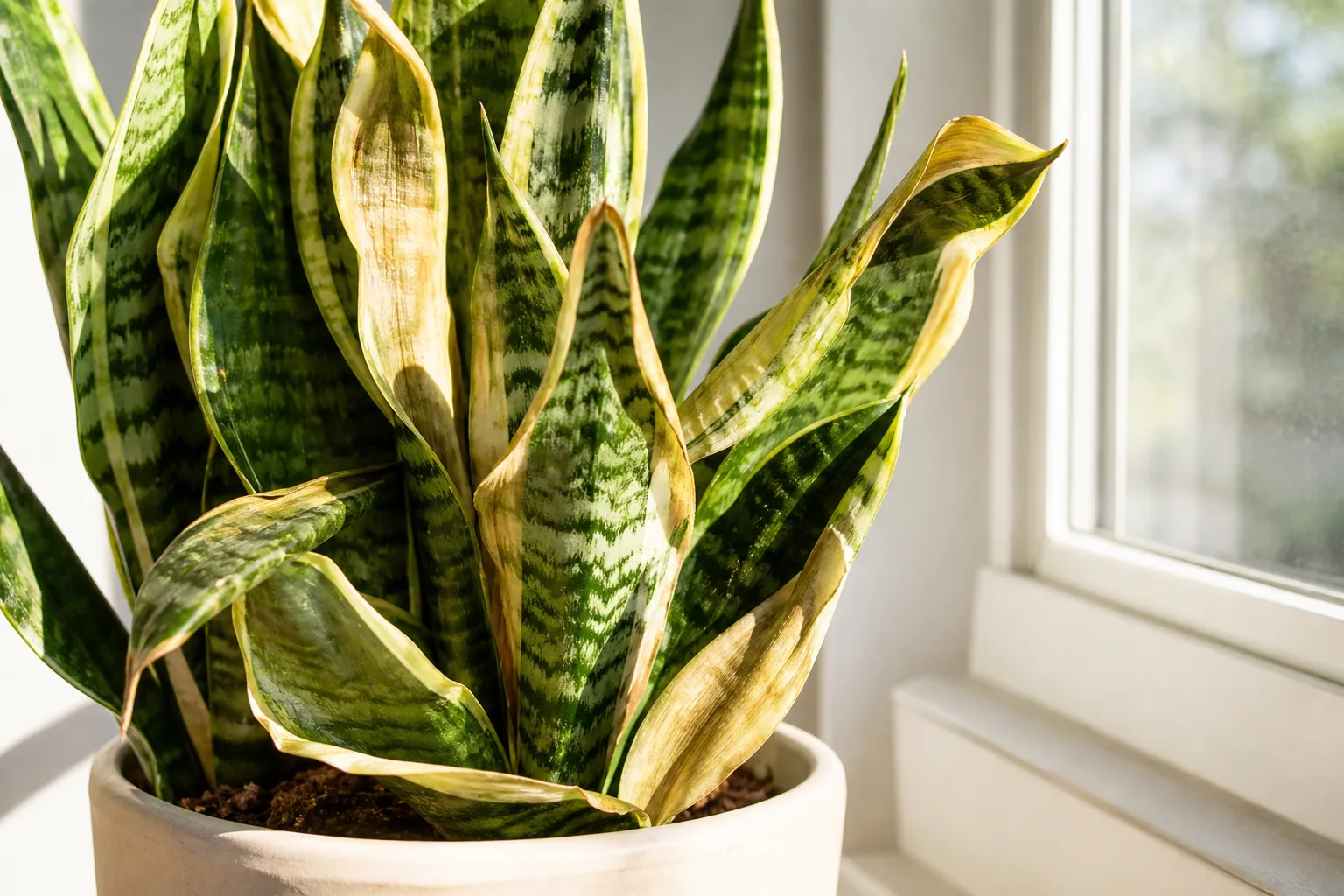
Heat Stress on Snake Plant: Causes, Checks & Fixes
This guide covers heat stress on Snake Plant. See also the general Heat Stress guide, watering, and light pages for this plant.
Heat Stress on Snake Plant: Causes, Checks & Fixes
Quick answer
Heat stress on snake plant (Dracaena trifasciata) happens when hot, dry air near radiators, forced-air vents, fireplaces, or sun-heated window glass pulls moisture from thick succulent leaves faster than roots can replace it. The mix also dries quicker, which tempts owners to water on an old schedule-or skip water too long. First step: move the pot at least 60–90 cm away from heat sources into stable Snake Plant light guide, then resume watering only when soil is bone dry throughout.
Snake plant handles warm rooms well; Missouri Botanical Garden notes it prefers 65–75°F and suffers below about 50°F. The problem is not moderate warmth but concentrated dry heat on foliage. Confirm placement before Snake Plant repotting guide, fertilizing, or misting stiff leaves that rarely benefit from extra moisture.
Why Snake Plant gets heat stress
Snake plant leaves are thick, upright water-storage organs evolved for seasonal drought in West Africa. They tolerate neglect but not constant desiccating blasts. A pot on a radiator ledge, above a floor vent, or against hot afternoon glass loses leaf moisture through transpiration while the root zone dries unevenly-often faster at the surface than at the bottom.
RHS guidance for sansevierias lists ideal winter temperature around 16°C with a minimum near 10°C. In summer, rooms above the comfort band are fine if airflow is gentle and leaves are not pressed against heat sources. Heat stress appears when air is both hot and dry, which accelerates margin browning the same way low humidity does, but localized to one side of the plant.
Hot microclimates also invite spider mites, which thrive in warm dry indoor air and stipple snake plant leaves with yellow mottling plus fine webbing. Owners sometimes misread mite damage or underwatering on Snake Plant as simple heat scorch. Accelerated soil drying can cause underwatering if you assume the winter two-month rhythm still applies in a baking window bay.
Direct sun through glass compounds heat injury. Penn State Extension warns to keep snake plant out of direct sun because leaves can burn-especially when glass amplifies afternoon heat on a sill.
What heat stress looks like on Snake Plant
Watch for localized dry damage rather than whole-plant collapse:
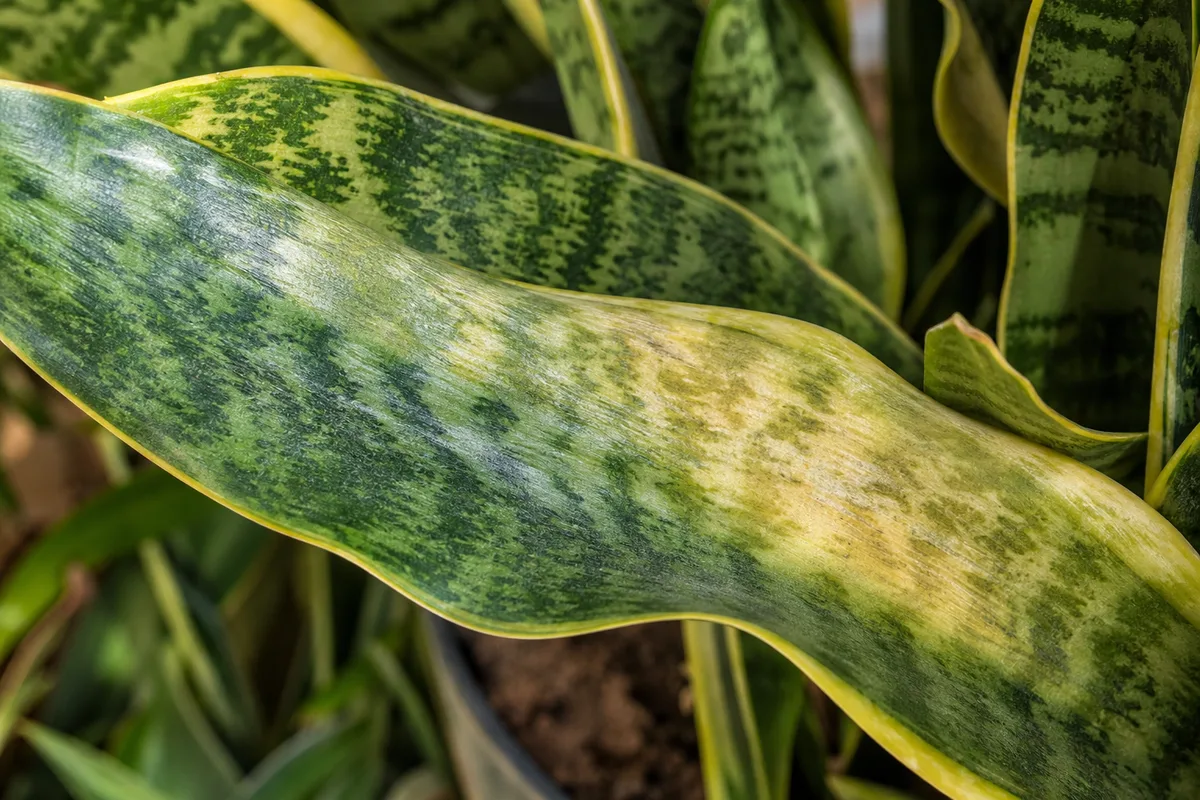
Heat Stress symptoms on Snake Plant - compare with healthy tissue on the same plant.
- Brown, tan, or papery crispy edges and tips, often worse on the leaf surface facing the heat source
- Soil surface pulling away from the pot rim or feeling light days earlier than usual
- Leaves remaining firm-not mushy at the base unless a separate rot issue exists
- Damage clustering in winter when heating runs, or summer on west-facing sills
- Optional fine stippling or webbing if spider mites moved in after air dried out
Whole-leaf yellowing with wet heavy soil points to overwatering on Snake Plant or root rot on Snake Plant, not heat alone. Soft translucent patches after a cold draft are cold damage, not heat stress.
How to confirm the cause
Inspect in this order:
- Placement - Is the pot on or above a radiator, near a heat vent, fireplace, or oven, or on sun-heated glass?
- Direction of damage - Is browning worse on one side of the rosette facing the heat?
- Pot weight and dry-down - Does soil go bone dry faster than in other rooms?
- Season - Did symptoms appear when central heating started or during a heatwave?
- Pests - Wipe a white cloth on leaf undersides; stippling and webbing suggest mites, not heat alone.
- Leaf bases - Firm rhizomes and bases support heat stress; mushy bases with sour smell suggest rot.
If the plant recently moved from a cool dim spot to a hot bright sill, both light shock and heat can brown margins-move to bright indirect light without direct glass contact and reassess over two weeks.
Lookalike symptoms to rule out
Underwatering from skipped checks in hot rooms produces wrinkled, puckered leaves and light pots-similar dry tips but usually without one-sided scorch pattern. Low humidity in centrally heated flats browns tips more evenly around the plant. Fluoride and fertilizer salt burn add white soil crust and link to water or feed history. Sun scorch bleaches or browns patches on the window-facing leaf face, not only margins near a radiator.
First fix for Snake Plant
Move the pot away from heat sources the same day you identify the pattern. Aim for bright indirect light at stable room temperature-roughly 18–27°C (65–80°F)-with no leaf contact against hot glass or metal radiator surfaces. Check soil moisture with finger or pot weight; water thoroughly only if the mix is bone dry throughout, then empty the saucer.
Do not mist stiff snake plant leaves as a first response; it rarely fixes margin desiccation and can encourage fungal spotting if water sits in leaf crevices. Do not immediately repot or fertilize a stressed plant.
Step-by-step recovery
After relocating:
- Trim - Remove only fully dead crispy margins with clean scissors; leave green tissue intact.
- Adjust watering checks - Hot rooms dry soil faster; check weekly but still wait for full dry-down before soaking.
- Improve airflow gently - A small fan elsewhere in the room reduces stagnant hot pockets without blasting cold air on the plant.
- Treat mites if present - Wipe leaves and apply insecticidal soap weekly if stippling or webbing appears.
- Rotate the pot - Turn weekly so any remaining growth does not lean back toward the old hot spot.
Make one environmental change at a time so you can read the plant’s response.
Recovery timeline
Crisp margin tissue will not revert to green. Mild one-sided scorch often stabilizes within two to four weeks after moving the plant. New leaves emerging without fresh burn are the real success marker over four to eight weeks in spring and summer.
If tips keep browning after relocation, review tap water fluoride, fertilizer salts, and whether the new spot still receives direct afternoon sun through glass.
What not to do
Do not leave the pot on a radiator because snake plant “likes warmth.” Do not water on a fixed calendar because the room feels hot-confirm bone-dry soil first. Do not compensate with heavy feeding; salts worsen tip burn on dracaena-type plants.
Avoid placing behind closed curtains on a sunny sill where air overheats. Do not assume toughness means the plant needs no placement adjustment-rhizomes survive longer than leaf margins look good.
How to prevent heat stress next time
Position snake plant in bright indirect light away from heat vents and radiator tops. In winter, pull pots back from leaky windows if cold drafts alternate with radiator heat-both extremes stress Snake Plant overview. Use the bone-dry check before every major watering; hot rooms change timing, not the rule.
Keep humidity near 30–50% if possible in very dry heated flats-enough to reduce margin desiccation without misting leaves directly. Dust leaves occasionally so you spot new damage early. For pet households, remember snake plant is toxic to cats and dogs; keep trimmed leaf pieces out of reach.
When to worry
Heat stress alone is low severity. Escalate if:
- Leaf bases soften with wet soil and sour smell
- Widespread yellowing and collapse occur within days
- Fine webbing and stippling spread despite moving the plant
- Soil stays wet for weeks while margins brown-possible rot plus heat
Those patterns need root inspection or pest treatment, not only relocation.
Conclusion
Heat stress on snake plant is a placement problem: hot dry air desiccates margins and speeds soil drying. Confirm one-sided crispy edges near heat sources; fix by moving to stable bright indirect light and keeping the bone-dry watering rule; prevent by staying off radiators and rechecking moisture in warm rooms. Judge recovery by firm bases and clean new leaves-not by old tips re-greening.
When to use this page vs other Snake Plant guides
- Snake Plant watering guide - Use for routine moisture checks before assuming heat stress is the main issue.
- Snake Plant problems hub - Browse all 36 common issues on this species.
- Wilting on Snake Plant - Different entry point when symptoms overlap with heat stress.
- Drooping Leaves on Snake Plant - Different entry point when symptoms overlap with heat stress.