Brown Tips on Snake Plant: Causes, Checks & Fixes
Quick answer
Brown tips on snake plant usually come from fluoride in tap water, fertilizer salt buildup, or dry air-not disease. Trim damaged tips diagonally, switch to filtered or rainwater, and flush the soil to leach salts.
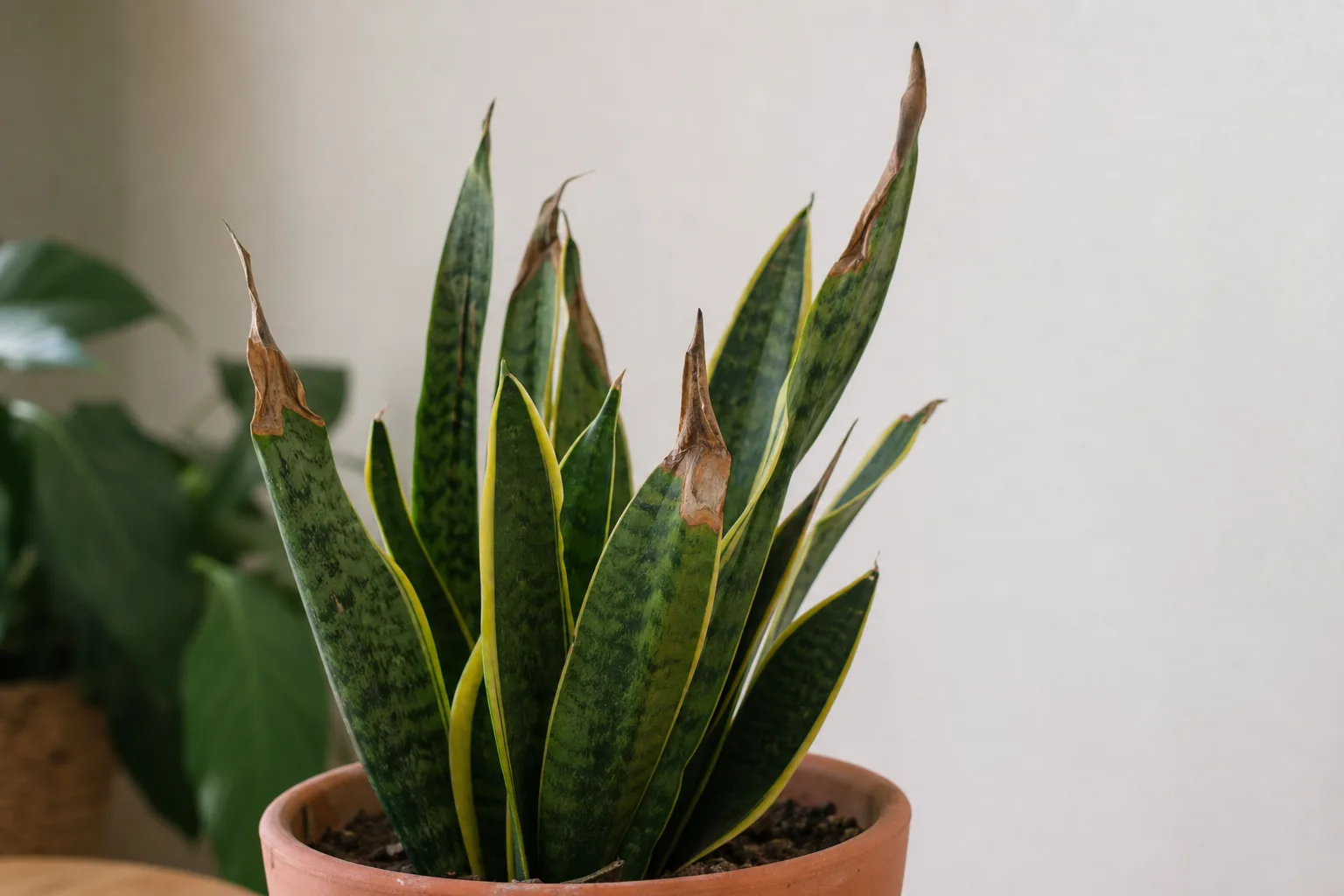
Brown Tips on Snake Plant: Causes, Checks & Fixes
This guide covers brown tips on Snake Plant. See also the general Brown Tips guide, watering, and light pages for this plant.
Brown Tips on Snake Plant: Causes, Checks & Fixes
Quick answer
Brown tips on snake plant (Dracaena trifasciata) are usually a water-quality or salt problem, not a fungal disease. Low humidity, fluoride in tap water, and over-fertilizing all concentrate damage at the leaf tip where transpiration is highest. First step: trim the dead tips diagonally with clean scissors, switch to filtered or rainwater, and flush the soil until water runs clear from the drainage holes.
Snake plant should be diagnosed from your actual care pattern. This species stores water in thick, upright leaves and prefers to dry completely between drinks. That makes tip burn easy to misread as underwatering on Snake Plant when the real issue is minerals accumulating at the margins. Compare recent watering, fertilizer, and water source before changing three variables at once.
Why Snake Plant gets brown tips
Snake plant was reclassified into the genus Dracaena, a group well known for fluoride sensitivity. Municipal tap water often contains fluoride added for dental health, and sensitive plants transport it to leaf tips and margins where tissue dies back. Penn State Extension lists fluoride toxicity on dracaenas as tan-to-brown dead areas on leaf tips-exactly the pattern snake plant owners describe after years of tap watering.
Over-fertilizing causes a parallel problem: fertilizer salts build up in the root zone and burn the finest root tips, which shows up as crispy brown edges even when watering seems fine. Snake plants need only light feeding in active growth; the species profile notes that excess fertilizer causes salt burn on leaf tips. Less is more with this slow grower.
Low humidity plays a smaller role than on ferns or calatheas, but snake plant still prefers roughly 30–50% humidity. In very dry winter air-especially near heating vents-leaf margins can desiccate. Underwatering can also crisp tips, though snake plant more often shows wrinkled or puckered leaves before widespread browning. Physical damage from bumping stiff leaves against furniture or Snake Plant repotting guide stress can brown a single tip without implicating your whole routine.
What brown tips look like on Snake Plant
On snake plant, tip burn is cosmetic and localized:
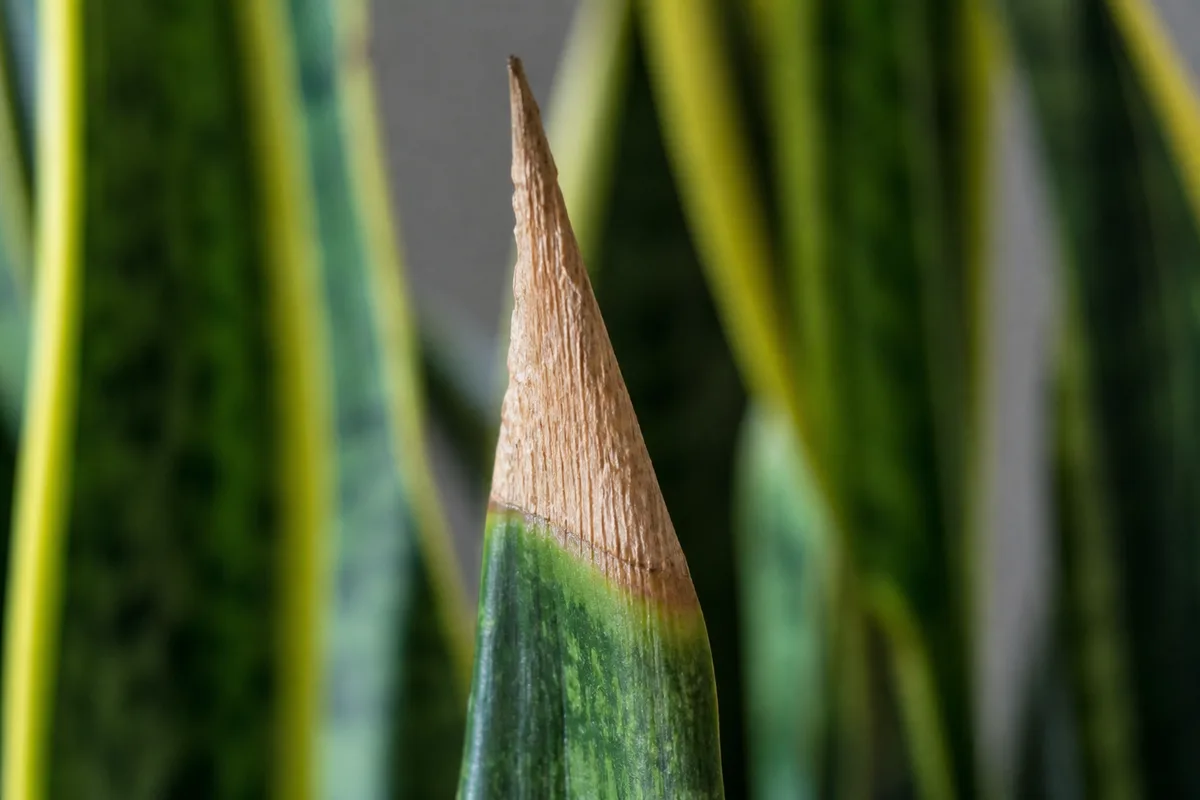
Brown Tips symptoms on Snake Plant - compare with healthy tissue on the same plant.
- The very tip or a thin margin turns brown, tan, or papery while the rest of the leaf stays green and firm.
- Damage often appears on older, outer leaves first and progresses slowly over weeks or months.
- A pale yellow band sometimes separates dead tissue from healthy green-common with fluoride injury on dracaena-type plants.
- White or crusty residue on the soil surface or pot rim suggests salt accumulation from fertilizer or hard water.
- New center growth remains upright and healthy in mild cases.
This differs from root rot on Snake Plant, where leaf bases go soft and mushy and the whole leaf yellows despite wet soil. It also differs from sun scorch, which bleaches or browns patches on the side facing a hot window rather than only the pointed tip.
How to confirm the cause
Work through causes in an order that matches snake plant biology:
- Water source - Have you used only municipal tap water for months? Fluoride does not evaporate when water sits overnight; only chlorine largely off-gasses.
- Fertilizer history - Did you feed through winter, use full-strength liquid fertilizer, or see crust on the pot edge?
- Pot weight and soil - Is the mix bone dry (underwatering) or heavy and slow to dry (unrelated stress that can worsen salt injury)?
- Humidity and placement - Is the plant above a radiator or in a drafty corridor with dry air?
- New growth - Are the youngest leaves at the center still clean? Spreading tip burn on new leaves after a water change points to ongoing exposure; clean new growth after switching water confirms the diagnosis.
If only one leaf tip is brown after a knock or repot, watch the next two water cycles before flushing or repotting. Pattern across several leaves plus tap water history strongly favors fluoride or salt toxicity.
First fix for Snake Plant
Make one targeted correction first: trim dead tips diagonally with clean scissors, switch to filtered or rainwater for the next several waterings, and flush the soil to remove salt buildup. Hold off on repotting, extra fertilizer, and moving the plant to a new room on the same day-you need to read which change stopped the spread.
To flush, water slowly with plain room-temperature water until a volume roughly three times the pot size drains through. Empty the saucer so salty water is not reabsorbed. Let the soil dry completely before the next normal watering-the snake plant rhythm is every two to six weeks depending on season and light.
Step-by-step recovery
After the first fix, use this sequence over the next month:
- Trim - Cut only necrotic tissue, angling the cut to mimic the natural leaf point. Sterilize blades between leaves if any leaf shows soft rot (unlikely with pure tip burn).
- Change water - Use filtered, distilled, or collected rainwater for at least four to six weeks. Avoid softened tap water; sodium can injure roots.
- Flush salts - Repeat a thorough leach if white crust was visible or you fertilized heavily. Illinois Extension recommends leaching pots every four to six months for houseplants to limit salt buildup.
- Pause fertilizer - Skip feeding until new growth looks clean for one full cycle, then resume half-strength fertilizer once in spring and once in midsummer only.
- Adjust humidity only if needed - If air is extremely dry, grouping plants or moving the pot away from heat vents is enough; misting stiff snake plant leaves rarely fixes tip burn.
Do not repot into fresh mix unless flushing fails and crust persists-perlite-heavy mixes can contribute fluoride from amendments, so choose a gritty cactus-style mix without excess phosphate fertilizer when you do repot.
Recovery timeline
Existing brown tips will not revert to green. Expect to judge success by whether new leaves emerge with clean points within four to six weeks after improving water quality and leaching salts. Mild tip burn on a few lower leaves often stabilizes after one flush and a water-source change.
If tips keep appearing on new center growth despite filtered water and no feeding, inspect roots for rot or mealybugs at the leaf base-rare on snake plant but more serious than cosmetic burn. Severe salt damage may require repotting into fresh mix after two flushes fail to stop crust formation.
What not to do
Do not increase watering because tips look dry-soggy soil causes root rot on snake plant, which kills the plant faster than cosmetic tips. Do not fertilize a stressed plant to “green it up”; salts worsen tip burn. Do not assume low humidity is the cause without checking tap water first on a dracaena-class plant.
Avoid stacking repotting, systemic pesticide, and heavy pruning in one session. Do not trim green tissue hoping the leaf will branch; snake plant leaves do not regrow from the cut point. Do not use leaf shine products on damaged foliage.
Causes to rule out
Before locking in a tip-burn diagnosis, rule out:
- Underwatering - Pot is very light, soil pulls away from the sides, leaves wrinkle or pucker. Tips are crispy but often accompanied by overall leaf flexing, not just margins on otherwise plump leaves.
- Root rot from overwatering on Snake Plant - Soil stays wet, base of leaf is mushy, smell from pot. Entire leaf yellows; tips alone staying brown with firm bases argues against rot.
- Direct sun scorch - Bleached or brown patches on the window-facing side of the leaf, not isolated tip necrosis.
- Physical injury - Single leaf, recent move or pet contact; no pattern across the rosette.
- Pests - Mealybugs or spider mites at leaf bases; stippling or webbing, not uniform dry tips.
The main causes for snake plant brown tips remain low humidity, fluoride in tap water, and over-fertilizing-but confirming which one applies saves you from the wrong fix.
Lookalike symptoms
Crispy brown tips and crispy brown mushy bases are different emergencies. Tip burn keeps the rhizome and leaf base firm; rot makes them soft. Yellowing of whole leaves with wet soil suggests overwatering, not fluoride. Slow tip browning over months on lower leaves while the plant otherwise looks fine fits water quality or salt buildup; sudden widespread browning after a cold draft fits environmental shock.
Because snake plant tolerates neglect, owners often underwater then overcorrect with a heavy soak-neither pattern explains chronic tip necrosis as cleanly as repeated tap water plus optional fertilizer.
Snake Plant care cross-check
Align fixes with how snake plant is normally grown: Snake Plant light guide, fast-draining gritty mix, and water only when the soil is completely dry throughout the pot. Push your finger to the bottom of the pot or lift the pot; bone dry means water, heavy means wait. Temperature comfort sits around 18–27°C (65–80°F) with good airflow.
If you recently moved the plant to a darker corner, growth slowed and water use dropped-salts may concentrate because you are watering on an old calendar instead of dry soil. Match watering to pot weight, not habit. For pet households, remember snake plant is toxic to cats and dogs; keep trimmed leaf pieces out of reach.
How to prevent brown tips next time
Use low-fluoride water for routine watering if your municipality fluoridates. Leach the pot on a four-to-six-month schedule and after any period of regular fertilizing. Feed at half strength at most twice during the growing season; skip winter feeding entirely. Keep the plant in stable indirect light and a pot with drainage holes-terracotta helps dry the mix predictably.
When repotting every two to three years, avoid superphosphate-heavy fertilizers and be aware that some perlite sources contribute fluoride; a sand-and-grit cactus mix suits Snake Plant overview well. Wipe dust from leaves occasionally so you spot new tip damage early.
Practical checks
Urgency check
Treat cosmetic brown tips as low urgency. Escalate if leaf bases soften, soil smells sour, pests are visible, or multiple leaves collapse within a week.
Best inspection order
For snake plant, inspect newest center growth, then leaf tips and margins, water source and fertilizer history, pot weight and drainage, and finally humidity and placement.
Severity note
This issue is marked low severity for snake plant. A few dry tips on mature leaves rarely threaten the plant if the rhizome stays firm.
Brown tips escalation point
Repot or inspect roots if flushing and filtered water fail to protect new growth after six weeks, or if brown tips coincide with yellowing, soft bases, or wet soil that never dries.
When to use this page vs other Snake Plant guides
- Snake Plant watering guide - Use for routine moisture checks before assuming brown tips is the main issue.
- Snake Plant problems hub - Browse all 36 common issues on this species.
- Low Humidity on Snake Plant - Different entry point when symptoms overlap with brown tips.
- Underwatering on Snake Plant - Different entry point when symptoms overlap with brown tips.
- Overwatering on Snake Plant - Different entry point when symptoms overlap with brown tips.