Low Humidity on Snake Plant: Causes, Checks & Fixes
Quick answer
Snake Plant tolerates normal indoor humidity (30–50%) and rarely needs a humidifier. Crispy brown tips more often trace to fluoride in tap water, salt buildup, or underwatering. First step: measure humidity with a hygrometer; if readings sit in the 30–50% range, rule out water quality and watering rhythm before raising humidity.
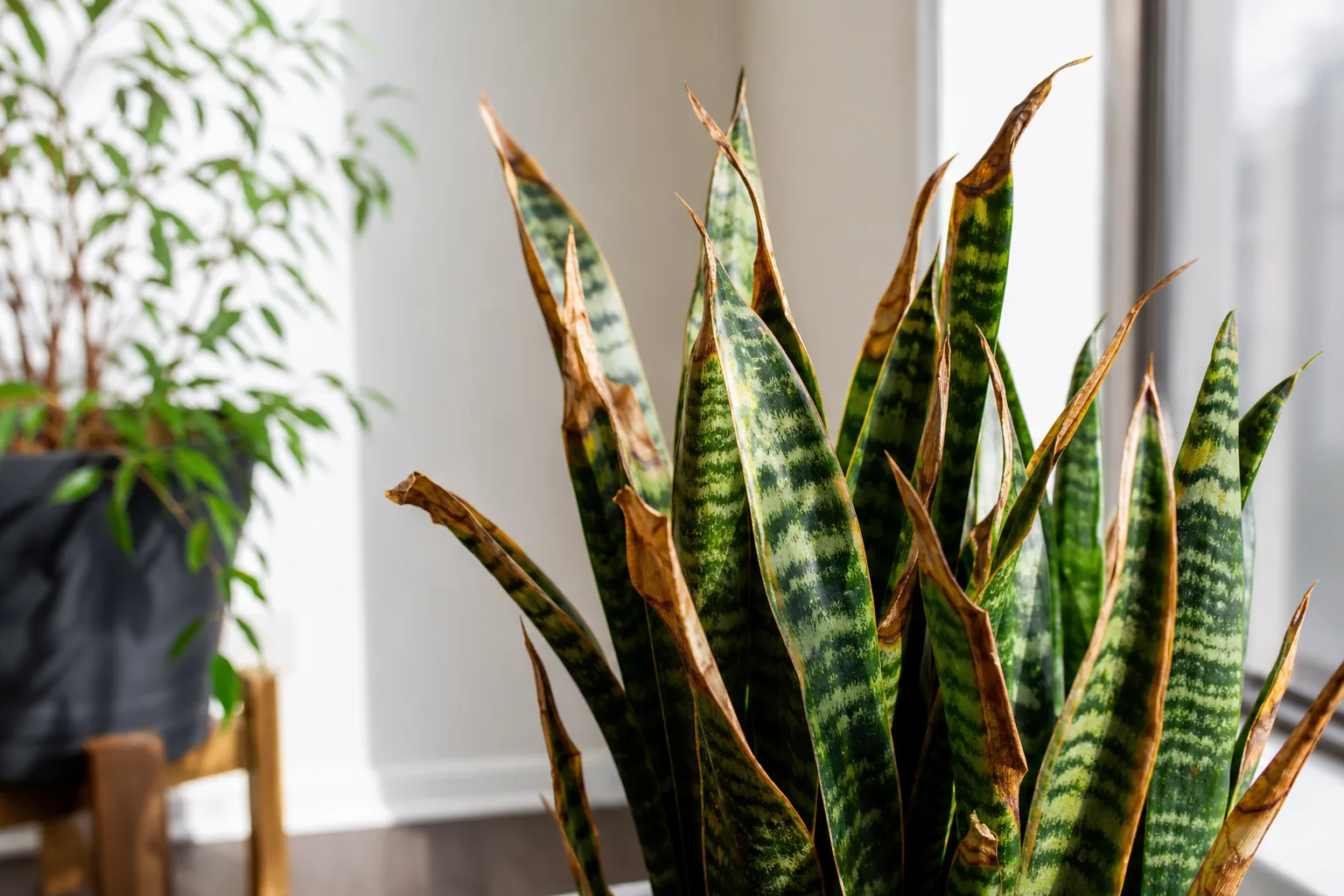
Low Humidity on Snake Plant: Causes, Checks & Fixes
This guide covers low humidity on Snake Plant. See also the general Low Humidity guide, watering, and light pages for this plant.
Low Humidity on Snake Plant: Causes, Checks & Fixes
Quick answer
Low humidity on Snake Plant is usually a minor concern, not a crisis. Dracaena trifasciata evolved in hot, dry habitats across West and Central Africa and tolerates low humidity better than most houseplants. LeafyPixels targets 30–50% relative humidity for Snake Plant overview-the same range many homes already provide.
When tips turn brown and crispy, dry air is only one possibility. On dracaenas, fluoride in tap water, salt from over-fertilizing, and long dry spells between waterings cause similar tip dieback. First step: read humidity with a hygrometer near the pot. If you are already in the 30–50% band, fix water quality and Snake Plant watering guide before buying a humidifier.
Why Snake Plant rarely struggles with low humidity
Snake Plant is a succulent-stemmed houseplant with thick leaves that store water between waterings. The Royal Horticultural Society notes sansevierias enjoy typical room temperatures and low humidity-never mist them and skip steamy bathrooms. North Carolina Extension lists drought, dry soil, and low humidity among challenges this species resists rather than suffers from.
Winter heating does pull indoor air below 30% in many climates. Penn State Extension reports that ASHRAE recommends 30–60% indoor relative humidity for human comfort, but notes that some cacti and succulents are exceptions that tolerate drier air. Snake Plant falls in that tolerant group.
Low humidity becomes relevant only when readings stay unusually low-often below roughly 25% for extended periods-and combine with other stress: a plant sitting above a heat register, chronic underwatering on Snake Plant, or heavy salt buildup in the root zone. In those cases, leaf tips-the thinnest tissue-lose moisture faster than roots can replace it, and tips or margins die.
What low humidity looks like on Snake Plant
On Snake Plant, humidity-related damage is subtle compared with ferns or calatheas:
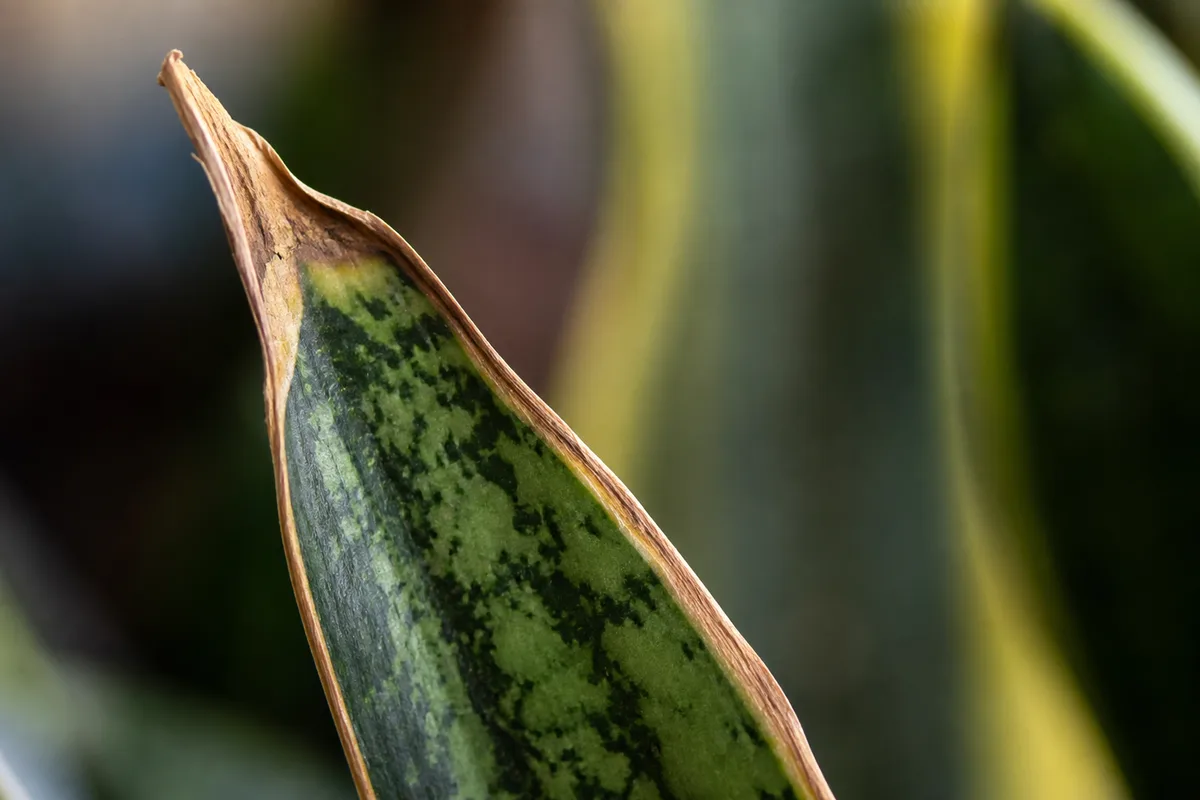
Low Humidity symptoms on Snake Plant - compare with healthy tissue on the same plant.
- Brown, papery tips on otherwise green, firm sword-shaped leaves
- Dry leaf edges that feel crispy, not soft or mushy
- No yellowing or softening at the leaf base (those suggest overwatering on Snake Plant)
- Slow spread up the leaf margin over weeks, not overnight collapse
- Multiple older leaves affected while the center rosette stays upright
The pattern differs from fluoride damage, which on dracaenas often shows as tan to dark brown areas with distinct margins and may affect variegated stripes differently. Underwatering adds wrinkled or puckered leaf surfaces and a very light pot. Salt burn from fertilizer can pair tip browning with a white crust on the soil surface.
Because Snake Plant leaves live for years, old cosmetic tip damage may linger even after conditions improve. Focus on whether new leaves arrive clean.
How to confirm the cause
Work through checks in this order before changing humidity:
- Measure humidity. Place a hygrometer at plant height for two to three days. Readings between 30% and 50% mean normal home air is adequate for Snake Plant.
- Note placement. Constant airflow from heating vents, fireplaces, or AC returns can create micro-climates drier than the rest of the room.
- Inspect tip color and texture. Uniform light-brown crispiness suggests dry air or drought. Tan streaks in white leaf sections or dark dead tips with yellow borders suggest fluoride or mineral toxicity on dracaenas.
- Check the pot. Push your finger to the bottom of the mix. Bone-dry soil plus crispy tips points to underwatering. Heavy, wet soil rules out humidity as the primary issue.
- Review water source. Municipal tap water with fluoride affects many Dracaena species; switching to filtered water is a faster test than humidifying.
If humidity is normal and watering has been steady, low humidity is unlikely to be the main driver. Treat the confirmed cause first.
First fix for Snake Plant
If humidity readings are below about 30% near the plant: move the pot away from heating vents and draft paths, then group it with other plants or run a small room humidifier until readings stabilize in the 30–50% target range. Do not mist Snake Plant-the RHS advises against misting sansevierias, and water sitting in the tight leaf rosette can invite fungal problems.
If humidity is already 30–50%: skip the humidifier. Trim brown tips diagonally with sterilized scissors for appearance, switch to filtered or rainwater if you use fluoridated tap water, and water only when soil is completely dry throughout-roughly every two to four weeks in summer and less in winter. Flush the pot if salt crust is visible.
Make one correction at a time. Do not repot, fertilize, and humidify on the same day.
Causes to rule out before blaming humidity
Snake Plant brown tips are often mislabeled as humidity problems:
| Likely cause | Clue on Snake Plant |
|---|---|
| Fluoride or salts in tap water | Tan or dark brown tips; dracaena-family sensitivity |
| Over-fertilizing | Brown tips plus yellow lower leaves or white soil crust |
| Underwatering | Wrinkled leaves, very light pot, bone-dry mix |
| Overwatering | Soft leaf bases, mushy roots, sour smell-not a humidity pattern |
| Direct sun scorch | Bleached or browned patches on sun-facing side, not just tips |
Penn State Extension lists low humidity among causes of dead leaf tips but groups it with over-fertilization and underwatering-context matters on a plant that already prefers dry air.
Lookalike symptoms
Brown tips from low humidity vs. fluoride: Humidity stress tends toward even, papery browning at the very tip. Fluoride on dracaenas can produce long tan to dark brown zones within variegated sections with sharper color borders.
Low humidity vs. normal aging: Single old leaves at the outer edge may show minor tip wear after years indoors. Worry when new leaves or multiple active blades brown at once.
Low humidity vs. spider mites: Mites leave stippling, fine webbing, and dusty leaf surfaces-common in hot, dry spots but a pest issue, not an humidity-tolerance limit. Inspect undersides before humidifying.
Recovery timeline
Trimmed brown tips stay brown permanently. Expect one to two watering cycles-often two to six weeks depending on season-before you can judge whether new damage has stopped. New leaves emerging from the rosette center without tip burn confirm the fix.
If tips keep browning after humidity sits in range and water quality improves, revisit fertilizer rate and light. Missouri Botanical Garden notes snake plant is drought-tolerant and easy to grow indoors; persistent tip dieback usually means a care mismatch, not that the species needs tropical humidity.
What not to do
- Do not mist Snake Plant to raise humidity. It prefers low humidity and dislikes wet leaf bases.
- Do not buy a humidifier if a hygrometer already reads 30–50%-address water and fertilizer first.
- Do not overwater because tips look dry. Mushy roots kill Snake Plants faster than dry winter air.
- Do not fertilize a stressed plant to “help it recover.” Salt burn worsens tip browning.
- Do not place Snake Plant in a steamy bathroom for humidity. Excess moisture plus poor airflow increases fungal risk on succulent leaves.
Snake Plant care cross-check
Align humidity work with this species’ baseline needs:
- Light: Snake Plant light guide; tolerates low light but grows slowly. Stronger light increases water use-pair with consistent dry-down checks, not extra misting.
- Water: Bone dry throughout before each drink; dramatic reduction in autumn and winter.
- Soil: Fast-draining cactus or succulent mix with perlite; terracotta helps the pot dry predictably.
- Temperature: Comfortable around 18–27°C (65–80°F); avoid cold drafts below about 10°C (50°F), which NC Extension notes the species still tolerates better than tropical foliage plants.
When air is dry and the pot stays wet too long, fix drainage and watering before humidifying.
How to prevent low humidity stress next time
Keep Snake Plant in ordinary room humidity-30–50%-without special equipment. Penn State Extension suggests that if humidity is comfortable for you, most houseplants tolerate winter levels, with succulents among the exceptions that need less intervention.
Practical prevention:
- Run a hygrometer once each heating season near prized plants.
- Pull pots back from radiator ledges and heat registers.
- Use filtered water if municipal fluoride browns dracaena tips.
- Wipe leaves occasionally to remove dust; do not leave them dripping wet.
- Maintain the dry-between-waterings rhythm this species depends on in heated homes.
Practical checks
Urgency check
Low humidity alone is a medium-severity, slow-moving issue on Snake Plant. Escalate immediately if leaf bases turn soft, soil smells sour, or stems collapse-that is root-zone failure, not dry air.
Best inspection order
For Snake Plant, check hygrometer readings, water source and soil dryness, fertilizer history, then leaf undersides for pests-in that order-before adding humidity.
Severity note
This issue is marked medium in the LeafyPixels database because brown tips worry owners, but Snake Plant is among the most humidity-forgiving houseplants. The real risk is chasing humidity while ignoring fluoride, salt, or watering errors.
When the first fix fails
If tips keep browning after four to six weeks with humidity in range and filtered water, leach the pot to remove salt buildup and reduce fertilizer to half strength once in spring only. Persistent problems with wet soil point to Snake Plant repotting guide into grittier mix-not higher humidity.
When to use this page vs other Snake Plant guides
- Snake Plant watering guide - Use for routine moisture checks before assuming low humidity is the main issue.
- Snake Plant problems hub - Browse all 36 common issues on this species.
- Brown Tips on Snake Plant - Different entry point when symptoms overlap with low humidity.