Leggy Growth on Snake Plant: Causes, Checks & Fixes
Quick answer
Leggy snake plant leaves usually mean too little light for active growth. Move the pot to bright indirect light, then prune the tallest stretched leaves at the soil line so new growth emerges compact and upright.
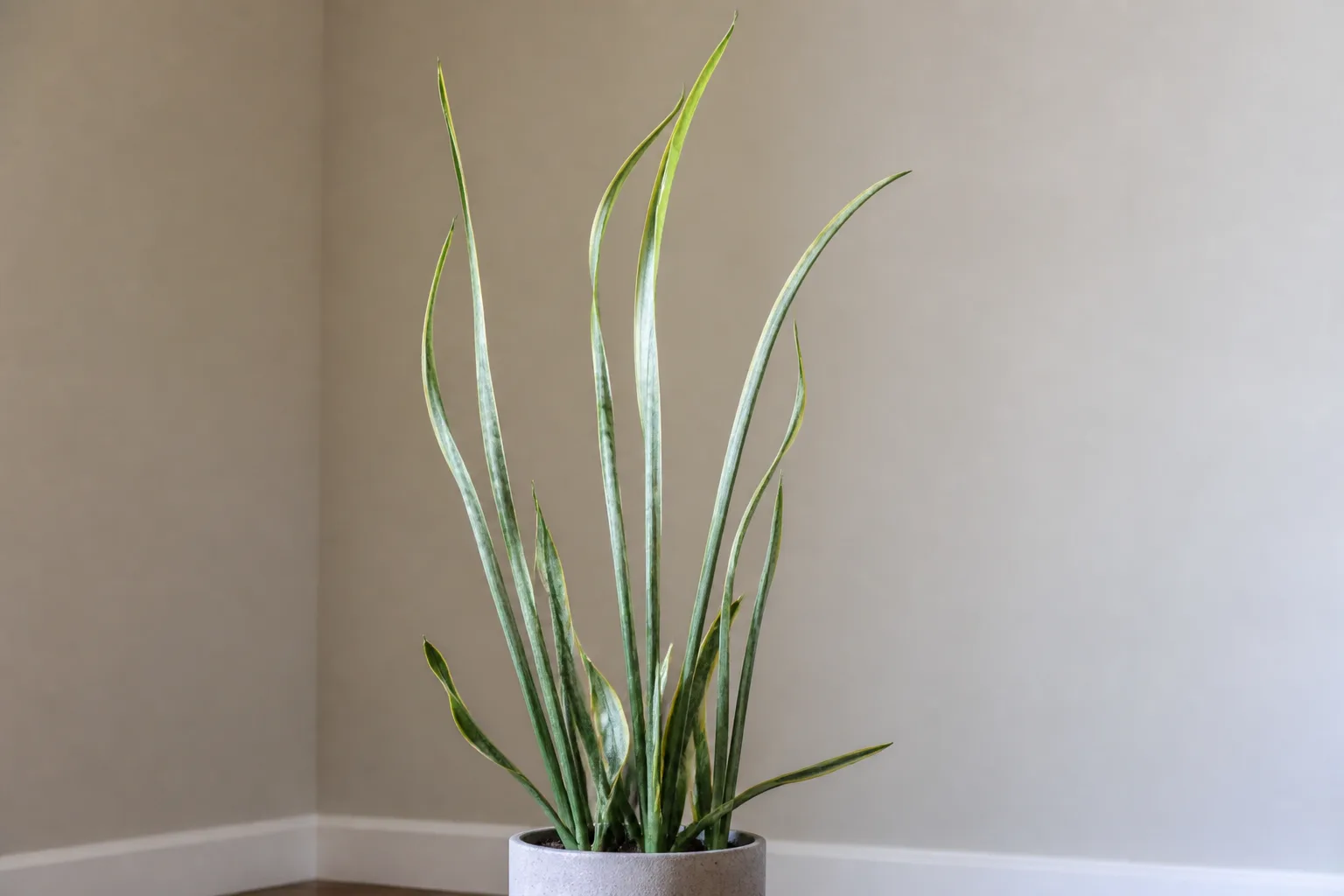
Leggy Growth on Snake Plant: Causes, Checks & Fixes
This guide covers leggy growth on Snake Plant. See also the general Leggy Growth guide, watering, and light pages for this plant.
Leggy Growth on Snake Plant: Causes, Checks & Fixes
Quick answer
Leggy growth on snake plant almost always traces to insufficient light for the growth pace you expect-not a disease and rarely a watering fault on its own. Dracaena trifasciata tolerates dim rooms remarkably well, but in low light it enters survival mode: new leaves stretch taller and thinner, spacing widens, and variegation fades. First step: move the pot to Snake Plant light guide, then prune the worst stretched leaves at the soil line so energy shifts to compact new growth.
Why Snake Plant gets leggy growth
Snake plants are marketed as low-light survivors, and that reputation is fair-they tolerate low-light areas very well. The mistake is assuming they prefer darkness. Penn State Extension places bright indirect light as the preference while noting tolerance for shade. When light falls below what the plant needs for normal architecture, stems and leaves elongate toward the brightest source-a process called etiolation.
On snake plants, etiolation shows in the leaves, not separate stems. The species grows as an erect, clumping rosette of stiff sword-shaped leaves from a thick rhizome. In poor light, each new leaf reaches higher before widening, internode-like gaps appear between leaves in a clump, and blades may look paler or less boldly banded. Growth also slows, which can mask the problem for months because old thick leaves keep the plant looking healthy.
Several factors stack on low light:
- Placement drift. A pot that worked near a window in summer may sit in effective shade by winter as sun angle drops. Penn State’s low-light houseplant trials measured snake plants as low as 25 foot-candles in mid-morning-survivable, but not ideal for compact form.
- One-sided light. Even adequate brightness from a single direction encourages phototropism-leaves lean and stretch toward the window, opening the clump visually.
- Variegated cultivars. Types like ‘Laurentii’ and ‘Moonshine’ need more photons to hold contrast; in shade they often darken or revert while still elongating.
- overwatering on Snake Plant in dim corners. Low light slows photosynthesis and water use, so soil stays wet longer. That rarely causes stretch directly, but weak yellowing at leaf bases can accompany a plant that has been sitting in a dark hallway too long.
Genetics matter less than light here. Standard Dracaena trifasciata and dwarf ‘Hahnii’ both etiolate when starved for brightness; the dwarf form simply has less distance to travel before it looks sparse.
What leggy growth looks like on Snake Plant
Leggy snake plants show a recognizable pattern once you compare new growth to older leaves:
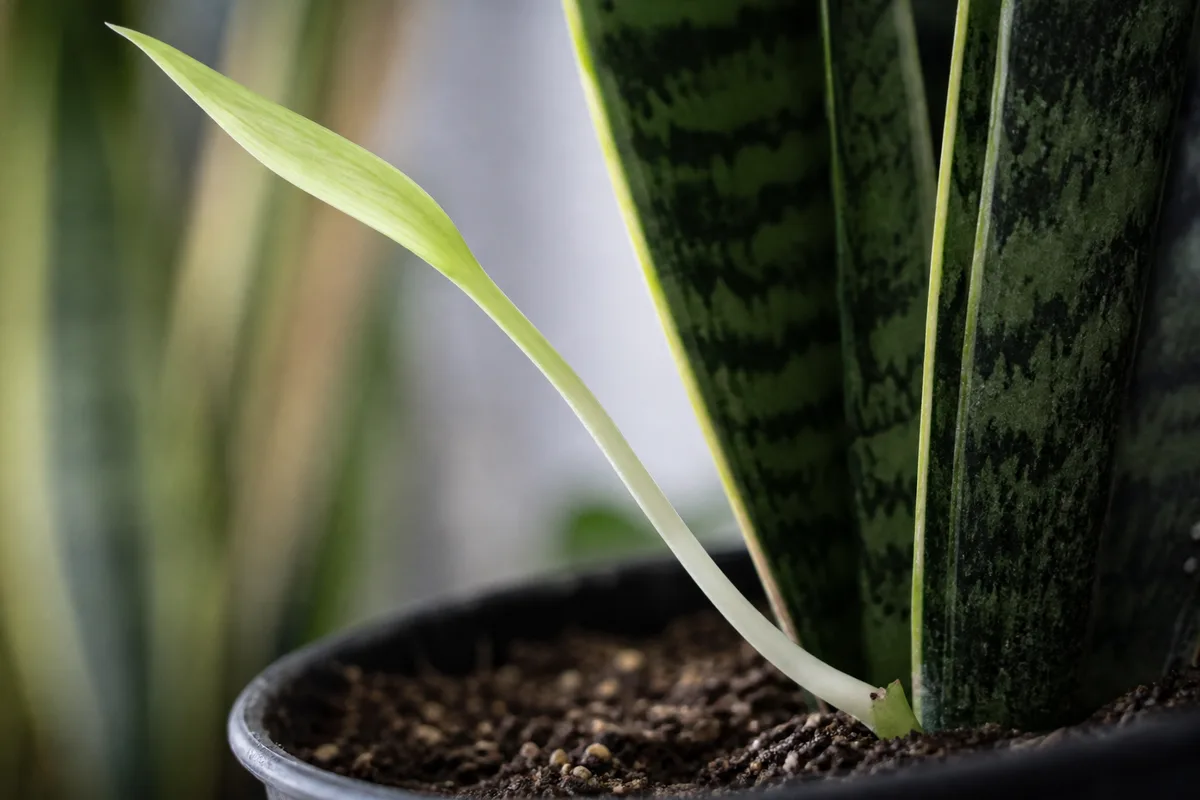
Leggy Growth symptoms on Snake Plant - compare with healthy tissue on the same plant.
- Taller, thinner new blades than the previous generation-still pointed, but narrower through the middle.
- Wider vertical spacing between leaves in the same rosette, as if the plant is reaching upward.
- Lean toward one light source-window, desk lamp, or hallway opening.
- Faded or muted banding on variegated types; solid green types may look darker but still stretched.
- Few or no pups for long periods despite a healthy-looking parent clump.
- Soil that stays heavy and cool for two to three weeks after watering because the plant is using little water.
This differs from a mature snake plant that is simply tall. Healthy upright leaves are thick, rigid, and roughly consistent in width from base to tip. Leggy leaves feel comparatively flimsy or ribbon-like, and the problem shows up first on the newest leaf while older blades still look normal.
How to confirm the cause
Work through checks in this order before Snake Plant repotting guide, fertilizing, or treating pests:
- Light at the leaf surface. On a clear day, hold your hand between the plant and its light source. A faint or absent shadow means low light. NC State Extension lists snake plant cultural light as partial shade-direct sun only part of the day-while noting tolerance for very low light. Survival is not the same as compact growth.
- Compare newest to previous leaf. Measure or eyeball the last two leaves. Stretch confirms etiolation if the newest is clearly longer and narrower.
- Pot weight and smell. Lift the pot after your normal dry-down interval. Chronic wet soil with firm green stretch often means a dim placement; soft mushy bases point to overwatering instead.
- Season and recent moves. Legginess that appears two to four weeks after shifting from a bright nursery shelf to a dim office is almost always light-related.
- Pest scan. Inspect leaf undersides and crevices for mealybugs or spider mites. Pests cause distorted new growth, but they do not usually produce the uniform upward reach of etiolation across an entire clump.
If light is poor and the pattern matches, you have your answer. Pruning without improving light only buys a few months before the next stretched leaf arrives.
First fix for Snake Plant
Move the pot to the brightest indirect spot you can offer-typically two to four feet from an east window, or several feet back from a south or west window with sheer fabric to filter harsh midday sun. Missouri Botanical Garden notes that snake plant prefers warm, bright locations but tolerates some shade; protect from hot afternoon sun that scorches leaves.
After placement, wait seven to ten days before heavy pruning so you can see whether new growth is already firmer. Then cut the most stretched leaves cleanly at the soil line with sterilized shears. Snake plants redirect energy from the rhizome; removing tall weak blades encourages more compact new shoots once light is adequate.
Do one correction first. Do not repot, fertilize, and prune on the same day unless the mix is clearly failing or waterlogged.
Step-by-step recovery
- Relocate to bright indirect light. If the only option is a very dim interior room, add a full-spectrum LED grow light eight to twelve inches above the foliage for eight to twelve hours daily.
- Acclimate gradually if moving from deep shade to a much brighter window. Increase exposure over one to two weeks to limit bleaching on leaves adapted to dim conditions.
- Rotate the pot a quarter turn each time you water so all sides receive similar light and the clump stays upright.
- Prune stretched leaves at the base once you confirm the new spot is stable. Keep at least a few healthy shorter leaves unless the plant is mostly etiolated.
- Resume watering only when soil is dry throughout the pot. In brighter light the mix dries faster; in dim light you water less often. Match rhythm to pot weight, not habit.
- Hold fertilizer until you see a firm new leaf or pup. Feed lightly in spring and midsummer only after growth resumes.
Severely stretched plants with only a few leaves can be cut back harder-removing all but the shortest blades-because the rhizome stores reserves. New pups often appear within several weeks in warm bright conditions.
Recovery timeline
Expect the first compact new leaf or pup within four to eight weeks after light improves, sometimes sooner in active summer growth. Snake plants are inherently slow; Penn State Extension observed medium-light plants roughly doubling height across a growing season, while the same plant in brighter light would grow much taller-so pace varies with brightness.
Old stretched leaves never shorten or thicken. Recovery means new upright growth from the rhizome, not restoration of etiolated tissue. After pruning, the clump may look sparse for two to four weeks; that is normal.
What not to do
Do not leave the plant in the same dim corner and expect fertilizer to fix stretch. Extra nitrogen without adequate light produces soft, weak tissue.
Do not plunge a long-shaded plant into harsh afternoon sun through south glass without acclimation. Sun scorch shows as bleached or crispy patches, not etiolation.
Do not overwater because leaves look “thirsty.” Stretched firm leaves in low light usually mean too little light, not drought. Wet soil in shade invites root problems.
Do not assume legginess is a pest or rot issue when leaves are firm, green, and uniformly reaching toward light.
Causes to rule out
| Pattern | Likely cause | First step |
|---|---|---|
| Tall thin new leaves, firm tissue, wide spacing | Low light / etiolation | Improve light; prune stretched blades |
| Soft yellowing at leaf bases, sour soil | Overwatering in dim placement | Dry soil; improve light; inspect roots |
| Wrinkled leaves, light pot, dry mix | underwatering on Snake Plant | Deep soak; then reassess stretch |
| Distorted new tips, webbing or cottony patches | Spider mites or mealybugs | Treat pests; improve airflow |
| No new growth all winter, otherwise compact | Normal slow season | Wait until spring; reassess light |
Lookalike symptoms
Normal mature height. Indoor snake plants commonly reach two to four feet. Legginess is about disproportionate stretch-thin new blades and open spacing-not absolute height alone.
Slow growth without stretch. In acceptable low light, a snake plant may simply produce few new leaves while remaining compact. Legginess adds visible reaching and thinning.
Drooping from overwatering. Mushy leaf bases and foul soil smell indicate rot stress, not etiolation. Firm leaves that stand upright but look too long point to light.
Not enough light vs leggy growth. These overlap on snake plants; leggy growth is the structural symptom, insufficient light is the cause. Fix both by raising brightness, not by watering more.
Snake Plant care cross-check
Leggy growth ties directly to how Dracaena trifasciata is normally grown:
- Light: Bright indirect preferred; very low light tolerated but produces stretch and little pup formation.
- Water: Only when soil is dry throughout-roughly every two to six weeks depending on season and brightness. Brighter light means faster dry-down.
- Soil: Fast-draining cactus or succulent mix with perlite; wet heavy mix in shade compounds problems.
- Pot: Stable, weighted container for tall types; excellent drainage holes required.
If you recently moved the plant from a bright shop to a north-facing office desk, stretch often appears within three to six weeks. Fix placement before repeating a prune cycle.
How to prevent it next time
Place snake plants where they receive useful brightness most of the day-not only where the pot looks good decoratively. An east window or filtered south exposure outperforms a distant interior shelf.
Rotate the pot weekly or at each watering so leaves do not lean permanently toward one source. University of Maine Extension notes that etiolation-with long weak stems and large spaces between leaves-is a common sign of insufficient light, especially in succulents grown indoors.
For offices without windows, use a dedicated grow light on a timer rather than assuming ceiling fluorescents suffice. Variegated cultivars need brighter placement than solid green types to hold color and form.
Match watering to light level: dimmer spots need longer dry intervals. Inspect monthly for the first stretched leaf; correcting light early prevents a full clump of ribbon-like blades.
When to worry
Leggy growth is a cosmetic and performance issue, not a life-threatening emergency. Act sooner if:
- The plant topples because tall thin leaves outweigh a narrow base in a lightweight pot.
- Several leaves soften and yellow at the base while soil stays wet-possible rot in a dim, overwatered corner.
- No new growth appears for six months or more even after light improvement-then inspect roots and pot size.
Otherwise, snake plants recover well from light correction and selective pruning. The rhizome is durable; stretched leaves are the expendable part.
When to use this page vs other Snake Plant guides
- Snake Plant watering guide - Use for routine moisture checks before assuming leggy growth is the main issue.
- Snake Plant problems hub - Browse all 36 common issues on this species.
- Not Enough Light on Snake Plant - Different entry point when symptoms overlap with leggy growth.
- Slow Growth on Snake Plant - Different entry point when symptoms overlap with leggy growth.
- Yellow Leaves on Snake Plant - Different entry point when symptoms overlap with leggy growth.