Damaged Roots on Snake Plant: Causes, Checks & Fixes
Quick answer
Damaged roots on Snake Plant follow rot, overwatering, repotting trauma, or vine weevil grubs chewing fleshy rhizomes-stalling growth and causing droop despite wet soil. First step: unpot, rinse roots, trim all brown mushy tissue with sterile tools, air-dry 12–24 hours, and repot in dry gritty mix without watering for one to two weeks.
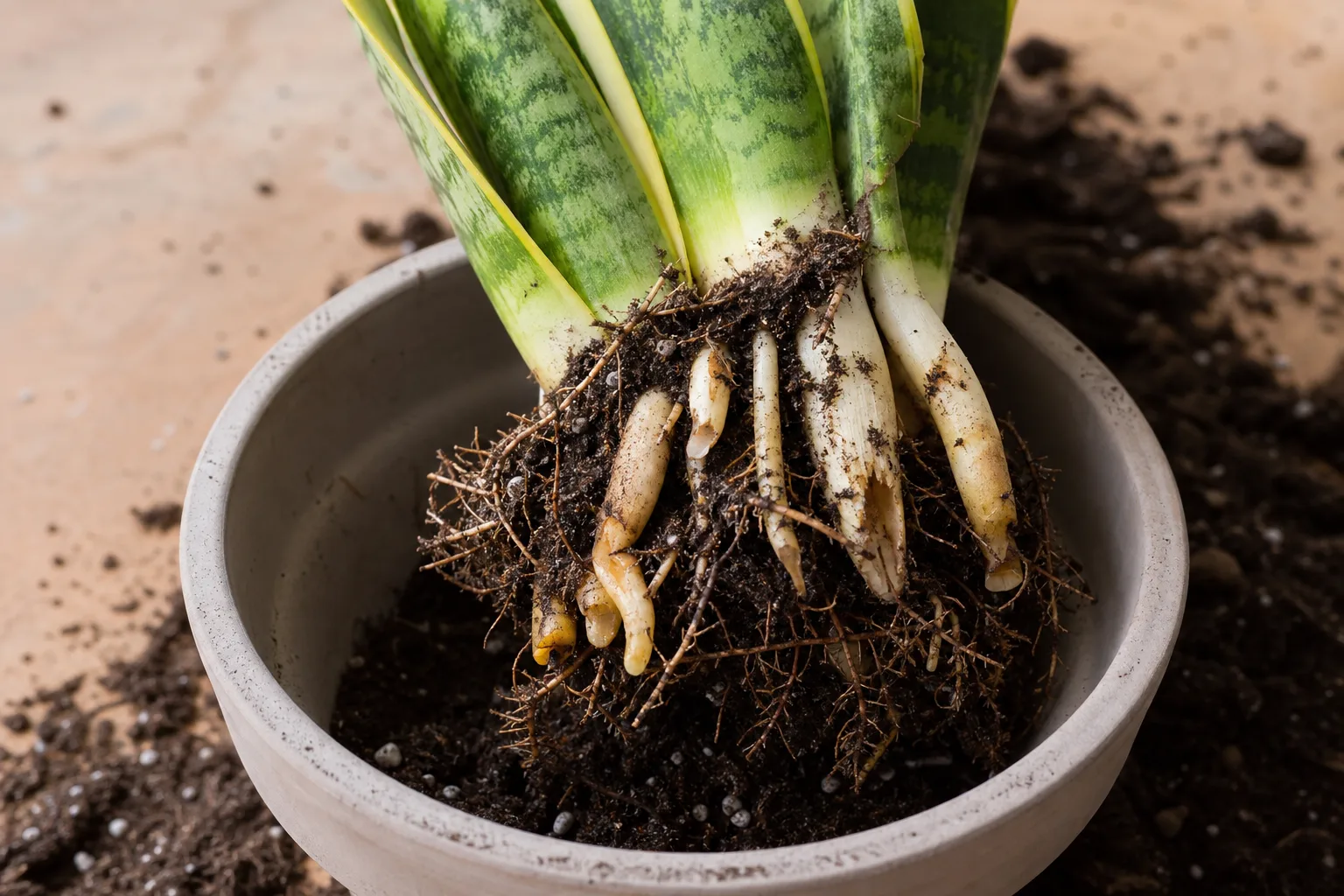
Damaged Roots on Snake Plant: Causes, Checks & Fixes
This guide covers damaged roots on Snake Plant. See also the general Damaged Roots guide, watering, and light pages for this plant.
Damaged Roots on Snake Plant: Causes, Checks & Fixes
Quick answer
Damaged roots on Snake Plant follow rot, overwatering on Snake Plant, Snake Plant repotting guide trauma, or vine weevil grubs chewing fleshy rhizomes-stalling growth and causing droop despite wet soil. First step: unpot, rinse roots, trim all brown mushy tissue with sterile tools, air-dry 12–24 hours, and repot in dry gritty mix without watering for one to two weeks.
Snake Plant depends on thick rhizomes and roots to anchor upright leaves and store water. When that underground system fails, the plant still looks green for days because leaves hold reserves-then collapse comes quickly. Inspecting rhizomes, not just fine roots, is essential on Snake Plant overview.
Why Snake Plant gets damaged roots
Chronic overwatering is the leading cause. NC State Extension states plainly that roots will rot if overwatered on this drought-adapted succulent. Penn State Extension notes root rot on Snake Plant is a common affliction from overwatering on snake plants. Saturated soil suffocates rhizomes adapted to long dry spells in West African habitats.
Repotting trauma damages roots when plants are watered too soon after disturbance. Fresh cuts on rhizomes exposed to wet mix invite decay-especially in an oversized new pot where outer soil stays damp for weeks. RHS recommends repotting only when roots fill the container and using free-draining peat-free cactus compost to reduce rot risk.
Vine weevil grubs are a less common but serious cause on mature plants. RHS lists vine weevils among sansevieria problems-the grubs feed on fleshy roots, causing sudden leaf collapse when the rhizome system is undermined. Look for creamy C-shaped larvae when unpotting.
Physical damage during division or careless unpotting can snap rhizomes. Broken tissue that stays wet rots outward. Aggressive loosening of a tight root ball on a plant that was fine root-bound can also tear healthy roots unnecessarily.
What damaged roots look like on Snake Plant
Above soil, root damage mimics other stresses-so unpotting is required:
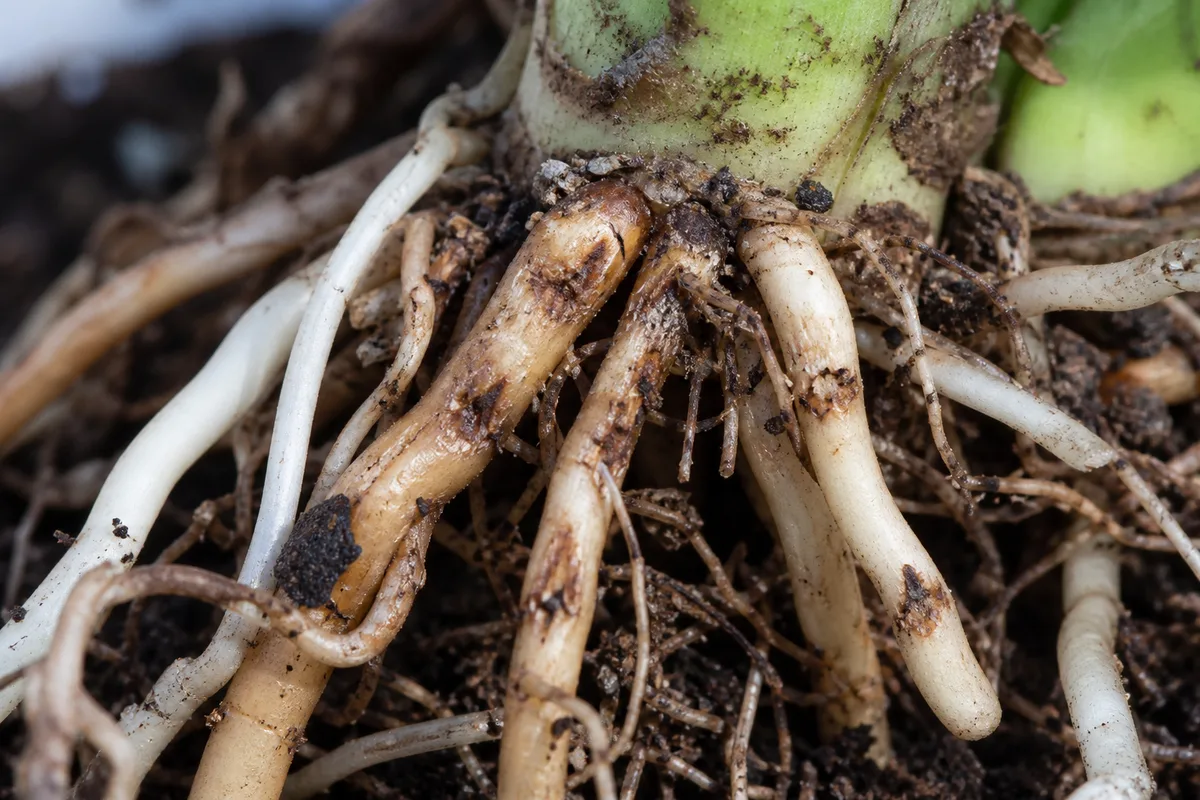
Damaged Roots symptoms on Snake Plant - compare with healthy tissue on the same plant.
- Stalled new growth for months despite warm weather and adequate light
- Drooping or wrinkling leaves while soil stays wet or heavy
- Yellowing starting at the lowest leaf bases near soil
- Plant wobbling in the pot or leaves pulling out with gentle pressure
- Sour or fermented smell from drainage holes
- White fungus gnat clouds hovering over chronically damp surface soil
Below soil, healthy Snake Plant rhizomes are firm, pale tan to ivory, and slightly waxy. Damage shows as brown-black soft spots, hollow sections, or roots that feel squishy and slip away when rinsed. Fine roots may be absent entirely on badly affected plants while the rhizome still partially holds.
How to confirm the cause
Use this inspection sequence:
- Pot weight and smell - Heavy pot days after watering or sour odor suggests root-zone failure.
- Leaf base firmness - Soft wet bases mean decay is climbing from roots toward the crown.
- Unpot and rinse - Shake off wet mix; rinse under lukewarm water to expose rhizome color and texture.
- Rhizome assessment - Focus on the horizontal rhizome, not only thread-like roots. Firm pale tissue is salvageable.
- Pest check - Search mix and rhizome surfaces for vine weevil grubs or mealybug clusters at the base.
- Recent history - Note repotting within the last two weeks, winter overwatering, or a move to a larger pot.
Estimate damage: less than one-third mushy rhizome with firm crown gives good prognosis; more than half mushy with soft crown means propagation focus.
Lookalike symptoms to rule out
underwatering on Snake Plant causes wrinkled leaves and light, dusty dry soil with firm roots intact. Low light stalls growth but roots stay healthy and smell neutral. Root-bound plants dry out within days of watering yet show white circling roots, not black mush. Cold damage scars leaves after chill but leaves rhizomes firm unless wet cold soil followed.
First fix for Snake Plant
Stop watering and unpot the same day you suspect root damage. Rinse rhizomes, then cut away every brown, black, mushy, or hollow section back to firm tissue using clean sharp scissors or a knife. Sterilize blades between cuts on badly affected plants.
Air-dry the trimmed plant in shade for 12–24 hours so cut surfaces callus. Repot into a clean pot with drainage holes using dry cactus mix with perlite or coarse sand. Do not water for one to two weeks. This dry spell lets the rhizome heal and prevents reinfection while leaves draw on stored moisture.
Step-by-step recovery
After dry repotting:
- Place in Snake Plant light guide with good airflow-not dark corners where soil will not dry predictably later.
- When you resume watering, soak until runoff, then empty the saucer completely.
- Return to bone-dry checks before every drink; winter intervals may stretch to every one to two months per NC State guidance.
- Watch for new white root tips or firm pups over four to eight weeks.
- Remove leaves that collapse fully, but keep mostly green foliage until new growth confirms recovery.
If vine weevil grubs are present, discard severely eaten rhizomes, rinse survivors, and consider biological control or appropriate labeled treatment for remaining plants. Reuse contaminated mix is risky-start with fresh gritty media.
For repotting trauma without rot, skip aggressive trimming; simply withhold water for seven to ten days in the same dry mix before the first careful drink.
Recovery timeline
Mild damage with most rhizome firm often shows new root tips within two to four weeks. Moderate trimming may need six to ten weeks before upright new leaves appear. Severe loss leaving a small rhizome nub can take three to six months and may never restore the original size without pup division. Old yellow leaves will not green up-track firm roots and new shoots instead.
What not to do
- Do not water because leaves droop while soil is already wet.
- Do not repot into a much larger pot “to give roots room”-extra wet soil kills recovering rhizomes.
- Do not fertilize until new growth is visible and Snake Plant watering guide is stable.
- Do not leave broken rhizome tissue in damp mix hoping it heals submerged.
- Do not yank a tight root ball apart aggressively during repotting.
- Do not ignore sour smell waiting for leaves to yellow more.
How to prevent damaged roots next time
Match watering to dry-down speed, not a calendar. Penn State recommends cactus mix with perlite and containers with drainage holes only. Missouri Botanical Garden stresses well-draining potting mix for this species.
Repot in spring into a pot only one to two inches wider; wait five to ten days before first water after repotting. Inspect rhizomes during repotting for grubs or soft spots. Reduce winter watering sharply when growth slows. Weekly pot-weight and smell checks catch trouble while rhizome tissue is still mostly firm.
When to worry
Damaged roots are high severity when:
- More than half the rhizome is mushy on inspection
- Leaf bases soften toward the crown within days
- Soil smells putrid despite dry surface
- The plant collapses rapidly after months of looking fine
- Vine weevil grubs have hollowed the rhizome core
If a firm rhizome segment remains after thorough trimming, recovery is realistic. If the crown turns soft and black, shift to crown-rot propagation steps rather than repeated watering.
Conclusion
Damaged roots on Snake Plant stem from wet soil, repotting mistakes, pests, or physical trauma to rhizomes. Confirm with sour smell, wet heavy pots, and mushy pale tissue turned brown. First fix: unpot, trim rot, air-dry, dry repot, and withhold water. Prevent with bone-dry watering checks, gritty mix, careful repot timing, and grub inspection. Success means firm rhizome, new root tips, and eventually new leaves-not instant cosmetic repair.
When to use this page vs other Snake Plant guides
- Snake Plant watering guide - Use for routine moisture checks before assuming damaged roots is the main issue.
- Snake Plant problems hub - Browse all 36 common issues on this species.