Root Bound on Snake Plant: Causes, Checks & Fixes
Quick answer
A root-bound Snake Plant has dense circling rhizomes filling the pot - after years without repot, growth stalls and soil dries within days of watering. First step: repot in spring into a pot 1–2 in. wider, gently loosen outer roots, and use fresh fast-draining mix; wait 5–7 days before the first water.
Root Bound on Snake Plant: Causes, Checks & Fixes
This guide covers root bound on Snake Plant. See also the general Root Bound guide, watering, and light pages for this plant.
Root Bound on Snake Plant: Causes, Checks & Fixes
Quick answer
A root-bound Snake Plant has dense circling rhizomes filling the pot - after years without repot, growth stalls and soil dries within days of watering. First step: repot in spring into a pot 1–2 in. wider, gently loosen outer roots, and use fresh fast-draining mix; wait 5–7 days before the first water.
Snake Plant tolerates cosy-fitting pots better than most houseplants. Severe binding becomes a problem when there is no soil left to hold moisture and roots cannot support new growth - not merely because roots touch the pot walls.
Why Snake Plant gets root bound
Slow rhizome spread fills pots over years, not months. Dracaena trifasciata grows slowly indoors and may stay in the same container for the first few years after purchase. Owners interpret drought tolerance as “never needs Snake Plant repotting guide,” then wonder why no new leaves appear for a year or more.
Rhizomes outpace available mix. Snake Plant spreads through thick underground stems that circle the pot interior, displacing soil. When the root mat dominates volume, water runs through channels without hydrating the mass - the pot feels dry within days even after a thorough soak.
Plastic pots hide pressure until late. Thin nursery containers crack or deform when rhizomes expand; terracotta may not show stress until roots exit drainage holes. By then, the plant has consumed most usable soil and relies on stored leaf moisture between fast dry cycles.
Pups multiply crowding. Offsets around the parent rosette compete for the same confined root zone. A clump that looked comfortable two years ago may be severely bound once three or four pups share one pot.
What root bound looks like on Snake Plant
Signs that crowding - not disease - is limiting the plant:
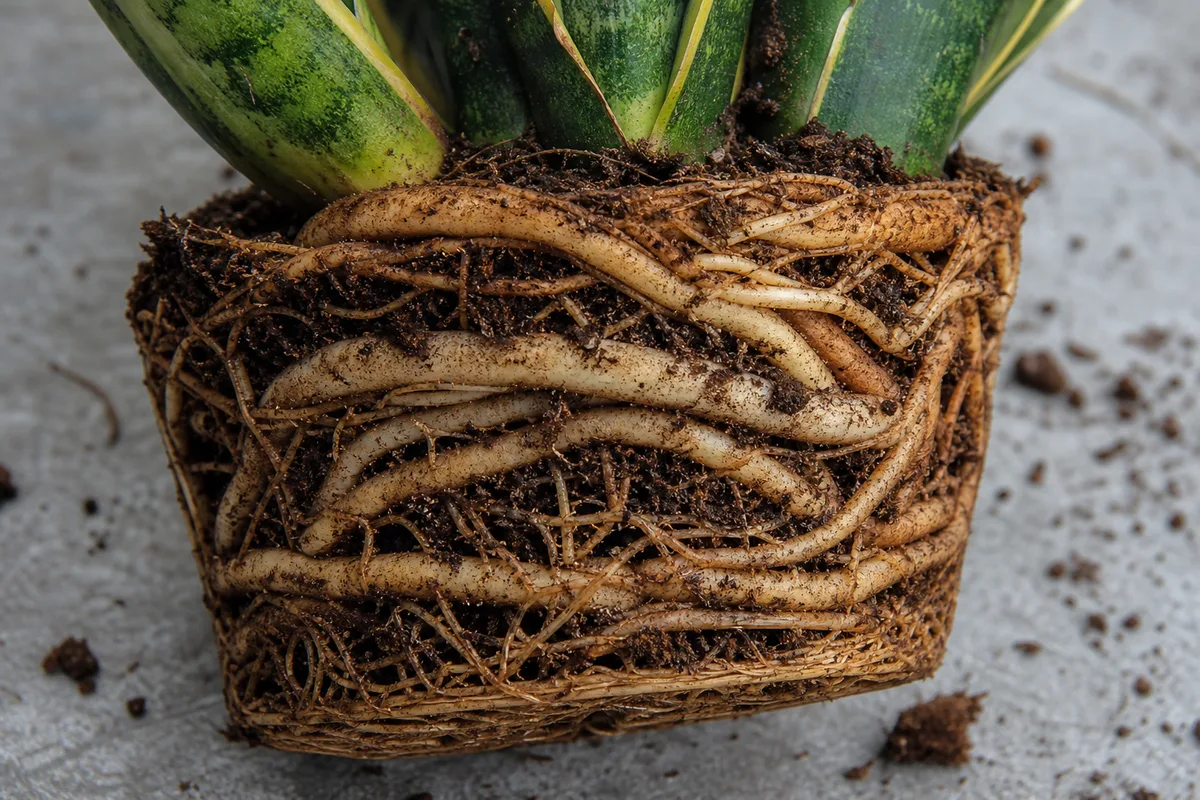
Root Bound symptoms on Snake Plant - compare with healthy tissue on the same plant.
- Roots or rhizomes visible at drainage holes or above the soil surface
- Pot cracking, bulging, or deforming under root pressure
- Soil dries out within two to four days of thorough watering
- No new leaves or pups for twelve or more months despite adequate light
- Plant topples because root mass is lopsided or too tall for the pot
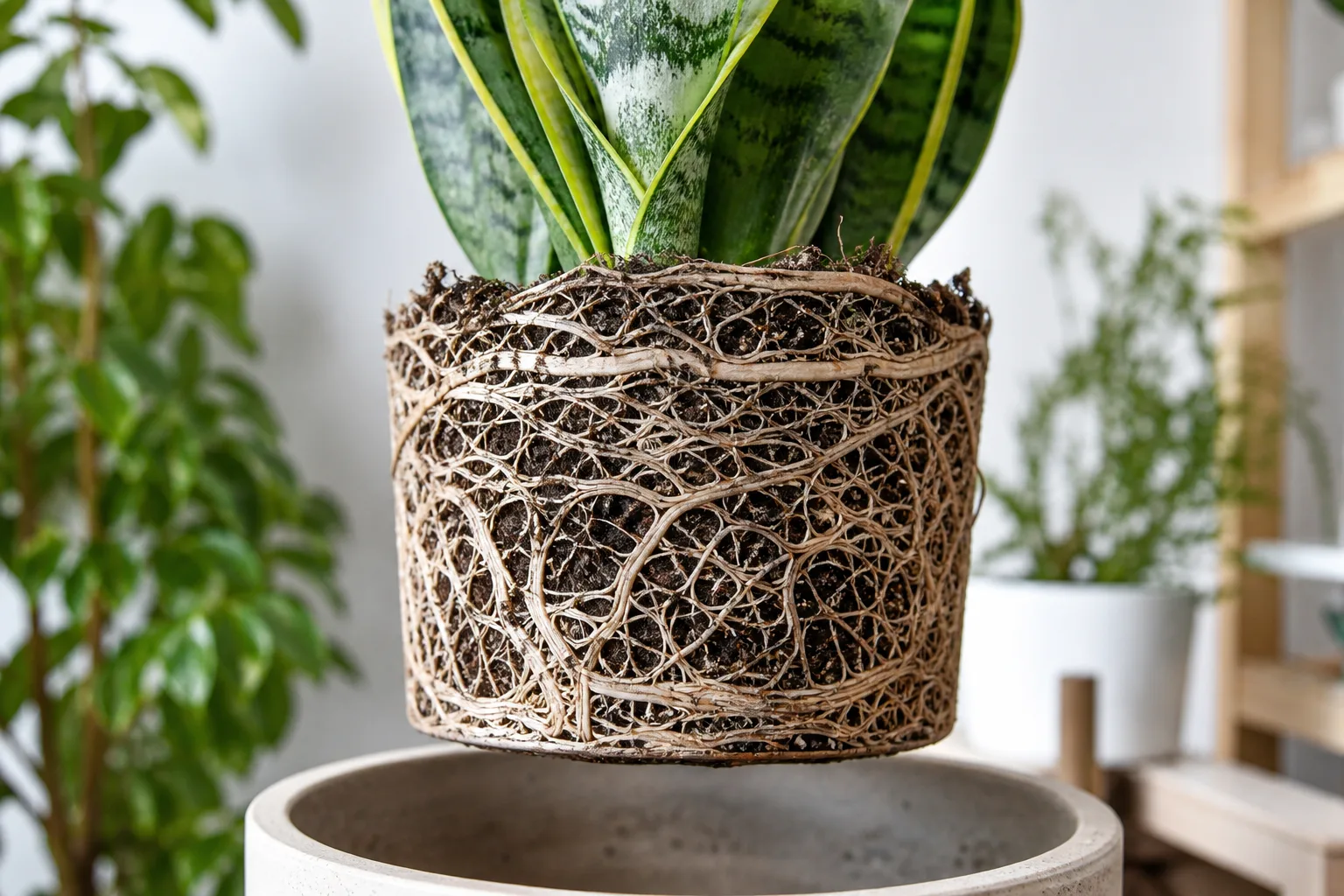
- When unpotting, root ball holds the pot shape with little loose mix
- Water runs straight through to the saucer seconds after pouring
Healthy slight crowding shows slow but steady new growth, firm upright leaves, and soil that still dries on a normal two-to-four-week indoor rhythm. Severe binding adds rapid dry-down and stalled pups.
How to confirm the cause
- Drainage hole check - Rhizome tips escaping holes strongly suggest binding.
- Dry-down speed - Water thoroughly, then track days until the pot feels light. Under one week consistently points to insufficient soil volume.
- Growth history - Zero new upright leaves through a full spring and summer with good light supports repot need.
- Gentle unpot - Slide the plant out. Dense circling mat with minimal mix confirms binding.
- Root health - Firm white or tan rhizomes mean crowding alone; mushy black tissue means rot - a different fix.
Lookalike symptoms to rule out
underwatering on Snake Plant from neglect shows light pots and wrinkled leaves without a dense root mat. Low light stalls growth with normal dry-down timing. Compact degraded mix mimics binding - water channels through without wetting roots. Confirm by inspecting root density and rhizome firmness before repotting.
First fix for Snake Plant
Repot in spring (March through May) when active growth resumes. Choose a pot only 1–2 inches wider with drainage holes. Use fresh free-draining cactus or succulent compost - RHS recommends peat-free cactus compost or loam with grit.
During repot:
- Gently tease outer circling roots - cut only if tightly matted; avoid aggressive stripping.
- Separate pups if you want individual plants; otherwise repot the clump together.
- Plant at the same depth; do not bury leaf bases deeper.
- Do not water for five to seven days after repot unless leaves shrivel severely.
- Place in Snake Plant light guide.
Avoid upsizing dramatically - Snake Plant prefers incremental steps, not a large jump that leaves wet unused soil.
Step-by-step recovery
- Unpot and inspect - trim only mushy rot, not healthy circling rhizomes.
- Repot with fresh gritty mix around the loosened root ball.
- Wait five to seven days before the first thorough watering; empty saucer.
- Resume bone-dry checks - NC State Extension advises allowing soil to dry between waterings.
- Expect new pups or upright leaves within four to twelve weeks in spring and summer.
If repot reveals extensive rot, switch to root rot on Snake Plant salvage before assuming binding was the only issue.
Recovery timeline
After spring repot, many Snake Plants push the first new pup within four to eight weeks. Full clump recovery may take one growing season. Winter repots recover slower - prefer spring timing. Wrinkled tips from past drought cycles remain cosmetic.
What not to do
- Do not repot into a much larger pot - spare wet compost raises rot risk after binding correction.
- Do not water immediately after repot - disturbed rhizomes need dry-back.
- Do not assume binding requires division - a single clump can stay together in a modestly larger pot.
- Do not fertilize until new growth is active.
- Do not repot in winter unless the pot is cracking or roots are rotting - spring timing reduces stress.
How to prevent root-bound problems next time
Repot every two to three years or when roots completely fill the container or buckle the pot. Refresh mix when drainage slows even if diameter stays the same. Penn State Extension notes snake plants may go five years between repots for standard varieties - adjust for faster pup production in small pots.
Use fast-draining mix, modest upsizing, and spring timing. Slight crowding is acceptable; severe binding with rapid dry-down and zero new growth is not.
When to worry
Root bound alone is low severity. Escalate if unpotting reveals mushy rhizomes, sour smell, or soft leaf bases - rot may have developed in the depleted, compacted center. Immediate dry repot and root pruning are then required.
Cracking pots and roots blocking drainage holes warrant timely repot even if leaves look fine - delay increases drought stress cycles on the root mass.
Conclusion
Root bound on Snake Plant means rhizomes have consumed the pot, drying soil fast and stalling new growth. Confirm with escaping roots, rapid dry-down, and a dense root mat; fix with a spring repot one to two inches wider, fresh gritty mix, and a five-to-seven-day watering pause. Prevent by repotting every few years before the pot cracks - slight cosiness is fine until growth and moisture retention suffer.
When to use this page vs other Snake Plant guides
- Snake Plant watering guide - Use for routine moisture checks before assuming root bound is the main issue.
- Snake Plant problems hub - Browse all 36 common issues on this species.