Edema on Raindrop Peperomia: Causes, Checks & Fixes
Quick answer
Edema on Raindrop Peperomia shows as raised blisters or corky tan-brown bumps on the undersides of glossy teardrop leaves, often after overwatering in cool, dim conditions. First step: stop watering and confirm the top 1–2 inches of mix are dry before the next drink.
Edema on Raindrop Peperomia: Causes, Checks & Fixes
This guide covers edema on Raindrop Peperomia. See also the general Edema guide, watering, and light pages for this plant.
Edema on Raindrop Peperomia: Causes, Checks & Fixes
Quick answer
Raindrop Peperomia (Peperomia polybotrya) stores water in its thick, glossy teardrop leaves and belongs to a genus particularly sensitive to edema when roots absorb moisture faster than leaves can release it. Edema is a physiological disorder, not a disease or pest-you will see raised blisters or corky tan-brown bumps on the undersides of leaves, sometimes with matching indentations on the glossy upper surface. It often follows overwatering, poor drainage, or dim winter light when the pot stays wet but the plant cannot transpire quickly enough.
First step: stop watering and confirm soil moisture at depth before you pour again. Existing corky spots will not heal, but correcting the moisture-light balance stops new lesions. If stems soften or soil smells sour, treat that as overlapping root rot and inspect roots-not just edema.
What edema looks like on Raindrop Peperomia
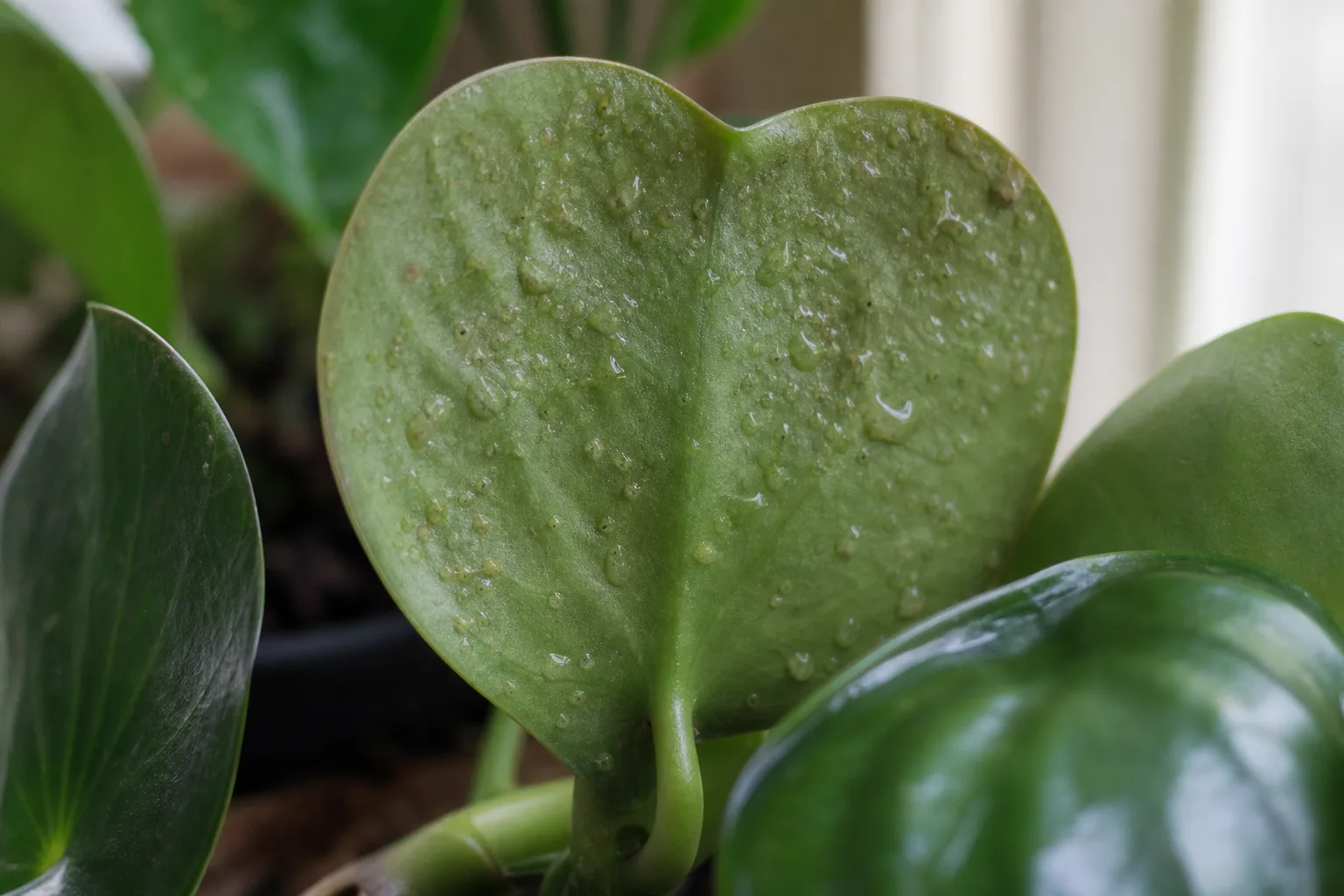
On this upright species, edema usually appears on the undersides of the peltate teardrop leaves-the petiole attaches near the center, so the lower surface is broad and easy to inspect. Early edema may look like tiny water-soaked pinpricks or translucent blisters. As pressure builds inside leaf cells, those spots swell into wart-like or crusty raised bumps that eventually harden into tan, brown, or corky patches.
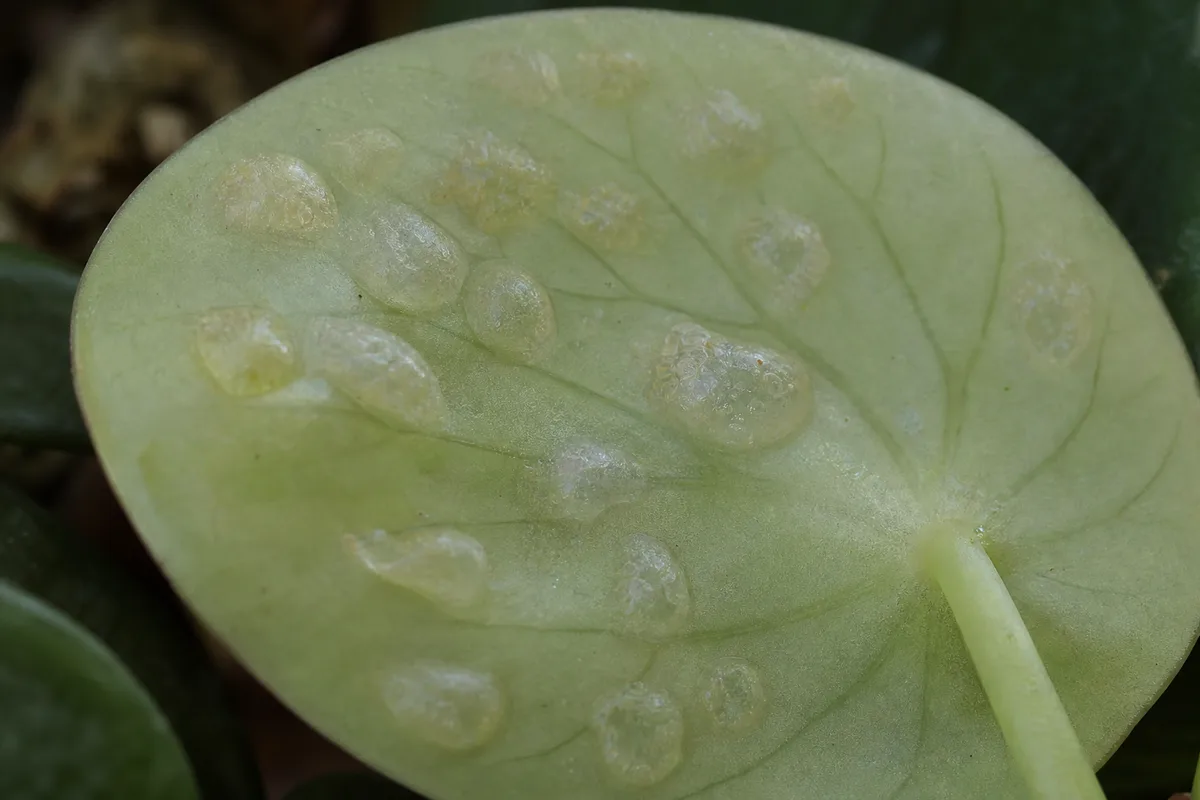
Edema symptoms on Raindrop Peperomia - compare with healthy tissue on the same plant.
The bumps feel rough and dry to the touch. They do not smear, wipe off, or have fuzzy margins like fungal leaf spot. Flip an affected leaf and you may notice a slight pucker or dent on the upper glossy surface directly above an engorged cell cluster below-Missouri Botanical Garden notes this indentation pattern above swollen undersides as a classic edema sign.
Edema on Raindrop Peperomia often starts on lower or older leaves first, because those leaves transpire less actively than new top growth. Lower leaves may yellow and drop if the moisture imbalance continues, but the corky bumps themselves are cosmetic scars-not spreading infection. New teardrop leaves opening at the crown should emerge smooth and glossy once conditions improve.
Why Raindrop Peperomia gets edema
Edema happens when roots take up water faster than leaves lose it through transpiration. Internal leaf cells swell under pressure, burst, and leave dead tissue visible as blisters. Raindrop Peperomia is vulnerable for several plant-specific reasons.
Semi-succulent leaves store water. The fleshy teardrop foliage already holds a moisture buffer. When you water into still-damp mix, the small compact root system keeps absorbing while the thick leaves slow transpiration relative to uptake. Clemson HGIC notes that excessive soil moisture and poor lighting with low temperatures predispose plants to oedema, especially on succulent-leaved houseplants.
Winter and dim light slow transpiration. Missouri Botanical Garden reports edema is most prevalent in late winter during extended cloudy weather-exactly when many Raindrop Peperomias sit near north windows with warm wet soil and cool, humid room air. The plant keeps drinking while barely losing water through its leaves.
Oversized pots and poor drainage extend wet cycles. Raindrop Peperomia matures to about one foot tall with a small root mass. A large decorative pot holds damp mix around tiny roots for days after each watering. Cachepots without drainage trap runoff and keep the root zone saturated-the same overwatering pattern that triggers edema before rot sets in.
Calendar watering ignores seasonal change. NC State Extension recommends moist, well-drained soil, not permanently saturated mix. Continuing summer-frequency watering into short winter days stacks root uptake against reduced leaf water loss.
How to confirm the cause
Work through these checks before reaching for fungicide or insecticide-neither treats edema:
- Inspect bump location and texture - Underside of teardrop leaves, hard and corky, clustered near veins. Upper-surface indentations above bumps confirm edema. Soft spreading spots with halos suggest fungal disease instead.
- White paper test for pests - Hold white paper under a leaf and tap the surface. Moving specks suggest mites or thrips, not edema. Corky bumps stay fixed on the leaf tissue.
- Soil moisture probe - Press your finger 5–7 cm into the mix. Cool, clinging, damp soil with corky leaves strongly points to edema from excess moisture, not drought.
- Pot weight and drainage - A heavy pot days after watering confirms slow dry-down. Check for drainage holes and standing water in saucers or cachepots.
- Light level - Dim corners, winter cloud cover, or plants far from windows reduce transpiration. Raindrop Peperomia prefers bright, indirect sunlight to use water predictably.
- Season and temperature - Warm wet soil plus cool moist air is the classic edema trigger indoors. Note whether symptoms appeared after a cold snap or a week of overcast weather.
- Stem firmness - Firm stem bases with corky leaves only means edema. Soft mushy stems mean root rot may be advancing from the same watering mistake.
If bumps are corky on undersides, soil is damp deep down, and stems are still firm, you have confirmed edema-not a contagious disease requiring isolation from other plants.
First fix for Raindrop Peperomia
Stop watering immediately and move the plant to bright, indirect light with gentle airflow.
This single step slows root uptake while helping leaves transpire remaining moisture. Do not pour because leaves look fine-the teardrop foliage stores water and can mask a wet root zone. Do not apply fungicide or insecticide; edema is a cultural problem, not an infection. Do not prune every bumped leaf on day one unless tissue is fully brown and dead.
Empty saucer water. Remove cachepots so air reaches the drainage hole. A small fan across the room-not blasting directly on the plant-can improve air exchange without drying leaves excessively. Wait until the top 1–2 inches of mix feel dry before one thorough watering with full drainage.
University of Maryland Extension recommends allowing adequate drying time between waterings, especially when growing media is cool and air is warm-the exact late-winter indoor mismatch Raindrop Peperomia often faces.
Step-by-step recovery
After the initial stop-water period:
- Let the mix dry at the top completely before the next soak. For Raindrop Peperomia, that often means waiting until the top 1–2 inches are dry-not just the surface turning lighter.
- Increase light gradually if the plant has been in dim conditions. Brighter indirect light raises transpiration without scorching glossy leaves. Avoid sudden direct sun, which causes different damage.
- Improve pot setup if needed - Only repot if the container is oversized, lacks drainage, or mix stays wet for more than ten days. Move to the smallest pot that fits the root ball with fresh perlite-amended mix.
- Resume bottom-up Raindrop Peperomia watering guide - One full drink when dry, then dry-down again. RHS peperomia guidance recommends letting compost partially dry between waterings rather than keeping mix constantly moist.
- Leave cosmetic scars alone - Corky bumps on existing leaves are permanent. New growth tells you whether conditions are fixed.
- Watch for overlapping root rot - If yellowing spreads or stems soften during dry-down, unpot and inspect roots. Trim mushy tissue and repot small if rot is present.
Monitor for ten to fourteen days. One change at a time makes it clear whether reduced watering and better light stopped new lesions.
Recovery timeline
Minor edema with firm stems often stops producing new bumps within one to two weeks once the mix dries and light improves. Existing corky patches remain visible but do not spread across the leaf like a fungus.
Moderate cases may need three to four weeks before fresh teardrop leaves emerge without blemishes. Judge recovery by new crown growth, not old scarred foliage.
Signs the plant is improving: no new blisters on opening leaves, pot weight drops predictably between waterings, petioles stay stiff, and yellowing halts.
Signs the problem is worsening: new bumps appear on the newest leaves despite dry soil, leaves yellow and drop rapidly, stems soften at the base, or sour smell develops from the mix-shift focus to root rot recovery.
Lookalike symptoms to rule out
Fungal leaf spot - Spots often have dark margins, yellow halos, or fuzzy growth. They may appear on upper surfaces and spread leaf to leaf. Edema bumps are corky, underside-focused, and do not spread infectiously.
Spider mites or thrips - Fine webbing, moving specks on white paper, or silver stippling on leaves. Edema bumps are fixed in the leaf tissue and feel hard, not scraped.
Overwatering without edema - Yellow lower leaves, limp petioles, and wet soil without corky bumps may be early root stress before cell rupture. Same first fix-stop watering-but bump texture distinguishes full edema.
Sunburn - Bleached or crispy patches on upper surfaces exposed to direct sun. Raindrop Peperomia needs bright, indirect light, not hot window glass.
Mealybugs - White cottony clusters in leaf axils and along petioles wipe off with alcohol. Corky edema tissue does not.
Mistakes to avoid
Do not spray fungicide or insecticide on edema bumps. Clemson HGIC confirms leaves showing oedema symptoms will not recover on the scarred tissue, but chemical sprays do not reverse or prevent the physiological cause.
Do not keep watering on a calendar because the teardrop leaves still look plump. Stored leaf moisture masks a wet root zone.
Do not mist leaves hoping to improve humidity. NC State Extension advises avoiding wetting leaves to prevent leaf spots; misting does not fix the uptake-transpiration imbalance and can extend surface wetness.
Do not upsize into a larger pot to “help” a plant with edema. Extra wet soil around small roots prolongs the condition.
Do not remove all bumped leaves unless fully necrotic. Healthy bumped leaves still photosynthesize while you correct care.
Do not assume every brown spot is edema. Confirm texture, location, and soil moisture before changing your whole routine.
Raindrop Peperomia care cross-check
Edema prevention sticks only when the wider setup matches how Raindrop Peperomia overview grows:
- Light - Bright, indirect sunlight so transpiration keeps pace with watering. Dim winter rooms extend wet cycles and invite repeat edema.
- Water rhythm - Full drink when the top 1–2 inches dry, then dry-down. Clemson HGIC recommends watering less often and improving light when oedema appears.
- Pot size - Sized to the root ball. RHS warns oversized pots keep compost wet longer.
- Soil - Well-draining mix with perlite. Dense peaty mix holds moisture peperomia roots cannot use quickly.
- Airflow - Gentle room air movement helps balance transpiration without drying the plant excessively.
How to prevent edema next time
Track pot weight weekly until you know your Raindrop Peperomia’s dry-down rhythm in its current window. Reduce watering frequency during cool, cloudy winter weeks when Missouri Botanical Garden notes edema is most prevalent indoors.
Use pots with drainage holes and empty saucers within thirty minutes of watering. Never let the plant stand in a saucer full of water-Clemson HGIC lists this as a direct oedema risk factor.
Place the plant where it receives several hours of Raindrop Peperomia light guide daily. A spot that was fine in summer may be too dim in winter for the same watering schedule.
Choose perlite-amended mix and avoid Raindrop Peperomia repotting guide into containers much larger than the rootball. Less than twelve inches of planting space is typical for this compact species.
Scout new leaves weekly during late winter. One or two corky bumps early are easier to correct with a single dry-down cycle than a crown full of scarred foliage.
When to worry
Edema alone is rarely fatal. Corky bumps are cosmetic on existing leaves, and mildly affected plants usually recover under improved conditions once watering and light align.
Treat as urgent when stem bases soften, soil smells sour, multiple leaves yellow and collapse within days, or new bumps keep appearing on the freshest top leaves despite a dry pot. Those patterns suggest advancing root rot or chronic overwatering beyond simple edema.
Non-urgent: a handful of corky bumps on lower leaves, firm stems, and heavy but not sour soil. Dry-down and brighter light often resolve this without repotting.
Conclusion
Edema on Raindrop Peperomia is a moisture-balance problem, not a disease to spray away. The fleshy teardrop leaves and peperomia sensitivity to wet soil in dim conditions create the perfect setup for corky underside bumps when roots outdrink what leaves can release. Stop watering first, confirm damp soil at depth, then improve light and airflow before the next drink. Old scars stay, but new glossy leaves tell you the fix worked. Match pot size to roots, let compost partially dry between waterings, and slow down in winter-that keeps the upright teardrop habit clean and firm.
When to use this page vs other Raindrop Peperomia guides
- Raindrop Peperomia watering guide - Use for routine moisture checks before assuming edema is the main issue.
- Raindrop Peperomia problems hub - Browse all 20 common issues on this species.
- Yellow Leaves on Raindrop Peperomia - Different entry point when symptoms overlap with edema.
- Curling Leaves on Raindrop Peperomia - Different entry point when symptoms overlap with edema.