Raindrop Peperomia Problems: Causes & Quick Fixes
Quick answer
Raindrop Peperomia is prone to 32 common issues - each link below is a plant-specific fix guide.
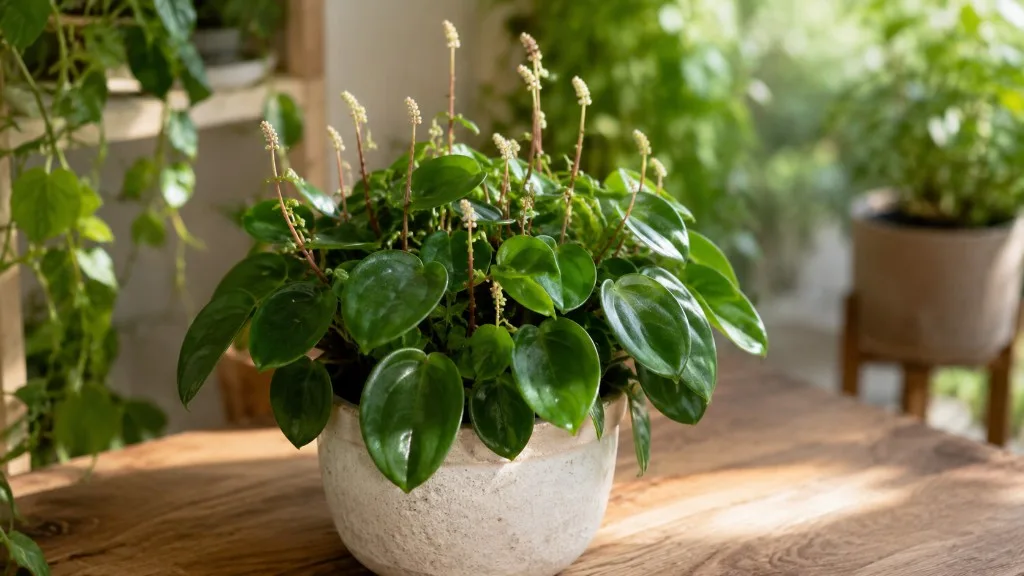
Raindrop Peperomia problems
Use the guides below to diagnose and fix common issues on Raindrop Peperomia. Each problem page explains why it happens on this species and what to do first.
Or use our problem diagnosis tool to narrow down symptoms.
Common problems on Raindrop Peperomia
Brown Leaves
MediumLikely cause: There are a few really simple techniques to keep the humidity higher than normal for your Raindrop Peperomia and prevent more brown leaves ; mist the leaves with a spray bottle, build a pebble tray or use a humidifier.
Quick fix: Confirm diagnosis on your Raindrop Peperomia, then address the most likely care or pest factor described in current extension guidance.
Full fix guide →Likely cause: Jun 30, 2020 · If you’re considering introducing a raindrop peperomia to your home, you should know a lot more about the plant than just the fact that it’s quite low maintenance. Not all of them look the same. How they turn out in appearanc
Quick fix: Confirm diagnosis on your Raindrop Peperomia, then address the most likely care or pest factor described in current extension guidance.
Full fix guide →Curling Leaves
MediumLikely cause: Jun 6, 2026 · It could be due to temperature fluctuations, overly moist soil, too much fertilizer, or even a lack of humidity. But, how do you know which one it is? In this article, we’ll explore the most common causes of Peperomia leaves c
Quick fix: Confirm diagnosis on your Raindrop Peperomia, then address the most likely care or pest factor described in current extension guidance.
Full fix guide →Distorted Leaves
MediumLikely cause: Overwatering can cause yellowing leaves , mushy stems, and leaf drop in Peperomia polybotrya . In severe cases, root rot may develop, leading to the plant's death.
Quick fix: Confirm diagnosis on your Raindrop Peperomia, then address the most likely care or pest factor described in current extension guidance.
Full fix guide →Edema
MediumLikely cause: May 8, 2026 · Mushy stems and leaf drop on peperomia? We'll show you why it happens—overwatering, poor drainage, and edema —plus exact fixes to save your plant.
Quick fix: Confirm diagnosis on your Raindrop Peperomia, then address the most likely care or pest factor described in current extension guidance.
Full fix guide →Likely cause: Jun 30, 2020 · Make sure you get rid of the flowers when they have completely faded . Otherwise they’ll just rot and can bring on some unwanted problems to your plant. The plant can grow both indoors and outdoors.
Quick fix: Confirm diagnosis on your Raindrop Peperomia, then address the most likely care or pest factor described in current extension guidance.
Full fix guide →Flowers Turning Brown
MediumLikely cause: Raindrop Peperomias don’t like super soggy soil as causes root rot and brown leaves to form as a result. To figure out if overwatering is the reason your Raindrop Peperomia is turning brown , check the moisture levels in the soil and replac
Quick fix: Confirm diagnosis on your Raindrop Peperomia, then address the most likely care or pest factor described in current extension guidance.
Full fix guide →High Humidity
MediumLikely cause: Jun 17, 2024 · Raindrop Peperomia craves that tropical vibe with humidity levels between 40-50%. Stray outside this range, and you'll see it in the leaves. Curling leaves? That's your Peperomia crying out for more moisture. Too much of a go
Quick fix: Confirm diagnosis on your Raindrop Peperomia, then address the most likely care or pest factor described in current extension guidance.
Full fix guide →Leaf Drop
MediumLikely cause: Peperomia polybotrya , often referred to as the “Raindrop” Peperomia, is a striking houseplant celebrated for its glossy, heart-shaped leaves that resemble raindrops.
Quick fix: Confirm diagnosis on your Raindrop Peperomia, then address the most likely care or pest factor described in current extension guidance.
Full fix guide →Heat Stress
MediumLikely cause: Jun 17, 2024 · 65-80°F is ideal for Raindrop Peperomia's health and growth. 🍂 Watch for stress signs like leaf discoloration and wilting. Avoid drafts and AC vents to prevent sudden temperature changes.
Quick fix: Confirm diagnosis on your Raindrop Peperomia, then address the most likely care or pest factor described in current extension guidance.
Full fix guide →Leaf Spot Disease
MediumLikely cause: May 8, 2026 · Mushy stems and leaf drop on peperomia? We'll show you why it happens—overwatering, poor drainage, and edema—plus exact fixes to save your plant.
Quick fix: Confirm diagnosis on your Raindrop Peperomia, then address the most likely care or pest factor described in current extension guidance.
Full fix guide →Low Humidity
LowLikely cause: Jun 17, 2024 · In the world of Raindrop Peperomia, humidity is a bit of a Goldilocks scenario—not too much, not too little, but just right. Let's dive into the signs that your plant is throwing a humidity hissy fit and how to get back into
Quick fix: Confirm diagnosis on your Raindrop Peperomia, then address the most likely care or pest factor described in current extension guidance.
Full fix guide →Magnesium Deficiency
MediumLikely cause: Jan 8, 2025 · Magnesium deficiency is characterized by interveinal chlorosis, where the areas between the leaf veins turn yellow while the veins themselves remain green. Leaf curling may also occur, signaling a need for intervention.
Quick fix: Confirm diagnosis on your Raindrop Peperomia, then address the most likely care or pest factor described in current extension guidance.
Full fix guide →Leggy Growth
LowLikely cause: Nov 13, 2025 · The primary reason a Peperomia develops a leggy appearance is a lack of sufficient light, a biological response known as etiolation. In low-light conditions, the plant rapidly elongates its stems to search for a stronger ligh
Quick fix: Confirm diagnosis on your Raindrop Peperomia, then address the most likely care or pest factor described in current extension guidance.
Full fix guide →No New Growth
MediumLikely cause: Jan 25, 2022 · When pruning, find around where you want to cut, and then find a node and cut ABOVE it. A node is where leaves and roots grow out of the stem—it’s where new growth comes from. Cutting above means the node will remain ON the m
Quick fix: Confirm diagnosis on your Raindrop Peperomia, then address the most likely care or pest factor described in current extension guidance.
Full fix guide →Nutrient Lockout
MediumLikely cause: Apr 5, 2024 · It is unnecessary to fertilize your raindrop Peperomia because the soil on a rainforest floor is notoriously poor in nutrients . However, if you want to encourage growth, you can feed it every second week.
Quick fix: Confirm diagnosis on your Raindrop Peperomia, then address the most likely care or pest factor described in current extension guidance.
Full fix guide →Poor Potting Setup
MediumLikely cause: Jun 30, 2020 · Generally, plants – let alone raindrop peperomia – don’t require repotting unless you started to care for the plant when it was very small and rooted in a fairly compact pot.
Quick fix: Confirm diagnosis on your Raindrop Peperomia, then address the most likely care or pest factor described in current extension guidance.
Full fix guide →Not Enough Light
MediumLikely cause: Raindrop Peperomia prefers bright, indirect light to flourish to its full potential, although it can tolerate moderate light levels. However, it’s crucial to keep the plant away from direct sunlight, as this can cause its delicate leaves to
Quick fix: Confirm diagnosis on your Raindrop Peperomia, then address the most likely care or pest factor described in current extension guidance.
Full fix guide →Poor Root Growth
MediumLikely cause: Raindrop Peperomias don’t like super soggy soil as causes root rot and brown leaves to form as a result. To figure out if overwatering is the reason your Raindrop Peperomia is turning brown, check the moisture levels in the soil and replace
Quick fix: Confirm diagnosis on your Raindrop Peperomia, then address the most likely care or pest factor described in current extension guidance.
Full fix guide →Yellow Leaves
MediumLikely cause: Overwatering.
Quick fix: Allow soil to dry fully before next watering.
Full fix guide →Aphids
MediumLikely cause: Aphids on Raindrop Peperomia cluster on new teardrop leaves and greenish-white flower spikes, leaving sticky honeydew. First step: isolate the plant and rinse aphids off stem tips and leaf undersides
Quick fix: See plant-specific guide for step-by-step fixes.
Full fix guide →Brown Tips
MediumLikely cause: Brown tips on Raindrop Peperomia are usually environmental-tap water fluoride, dry winter air, or alternating drought and heavy soaking. First step: water with room-temperature filtered or rainwater o
Quick fix: See plant-specific guide for step-by-step fixes.
Full fix guide →Drooping Leaves
MediumLikely cause: Drooping leaves on Raindrop Peperomia usually mean water stress at the roots-either too wet (mushy stem bases) or too dry (light pot). Lift the pot, probe moisture 5–7 cm deep, and pinch stem bases be
Quick fix: See plant-specific guide for step-by-step fixes.
Full fix guide →Fungus Gnats
MediumLikely cause: Fungus gnats on Raindrop Peperomia mean the soil surface stays wet too often. Let the top 1–2 inches of mix dry completely before watering again-that is the first fix. Sticky traps catch adults; BTI t
Quick fix: See plant-specific guide for step-by-step fixes.
Full fix guide →Mealybugs
MediumLikely cause: Mealybugs on Raindrop Peperomia cluster as white cottony masses where peltate petioles meet upright stems. First step: isolate the plant and dab every visible colony with 70% isopropyl alcohol on a co
Quick fix: See plant-specific guide for step-by-step fixes.
Full fix guide →Mold on Soil
MediumLikely cause: Fluffy white or gray mold on Raindrop Peperomia soil means the surface stays damp too long-usually from overwatering or an oversized pot. Scrape the mold, let the mix dry completely, and fix your wate
Quick fix: See plant-specific guide for step-by-step fixes.
Full fix guide →Overwatering
MediumLikely cause: Overwatering on Raindrop Peperomia shows as a heavy wet pot, limp glossy teardrop leaves, and yellow lower foliage while the mix stays damp. First step: stop watering immediately and confirm soil mois
Quick fix: See plant-specific guide for step-by-step fixes.
Full fix guide →Root Rot
MediumLikely cause: Root rot on Raindrop Peperomia usually starts when the mix stays wet too long around its compact roots. First fix: stop watering and check the stem base plus roots before doing anything else.
Quick fix: See plant-specific guide for step-by-step fixes.
Full fix guide →Slow Growth
MediumLikely cause: Raindrop Peperomia is naturally slow-one or two new teardrop leaves per warm month can be normal. If nothing new appears through spring and summer, check bright indirect light and whether the pot drie
Quick fix: See plant-specific guide for step-by-step fixes.
Full fix guide →Spider Mites
MediumLikely cause: Spider mites on Raindrop Peperomia show as pale stippling on glossy teardrop leaves and fine webbing near petioles, especially in hot dry indoor air. First step: isolate the plant and rinse every leaf
Quick fix: See plant-specific guide for step-by-step fixes.
Full fix guide →Underwatering
MediumLikely cause: Underwatering on Raindrop Peperomia shows a very light pot, dry mix deep in the root zone, and limp-but still firm-teardrop leaves. Water thoroughly once until excess drains out, then return to lettin
Quick fix: See plant-specific guide for step-by-step fixes.
Full fix guide →Wilting
MediumLikely cause: Wilting on Raindrop Peperomia usually means roots are not moving water-either the mix is bone dry or staying wet too long. Lift the pot and feel soil moisture deep in the mix before you add any water.
Quick fix: See plant-specific guide for step-by-step fixes.
Full fix guide →