Magnesium Deficiency on Raindrop Peperomia: Causes, Checks
Quick answer
Magnesium deficiency on Raindrop Peperomia shows as yellow patches between green veins on older teardrop leaves while new growth stays glossy. First step: confirm the pot dries fully and stems are firm-wet mix blocks uptake even if you add Epsom salt-then apply one diluted drench during active growth, not full-strength fertilizer on soggy soil.
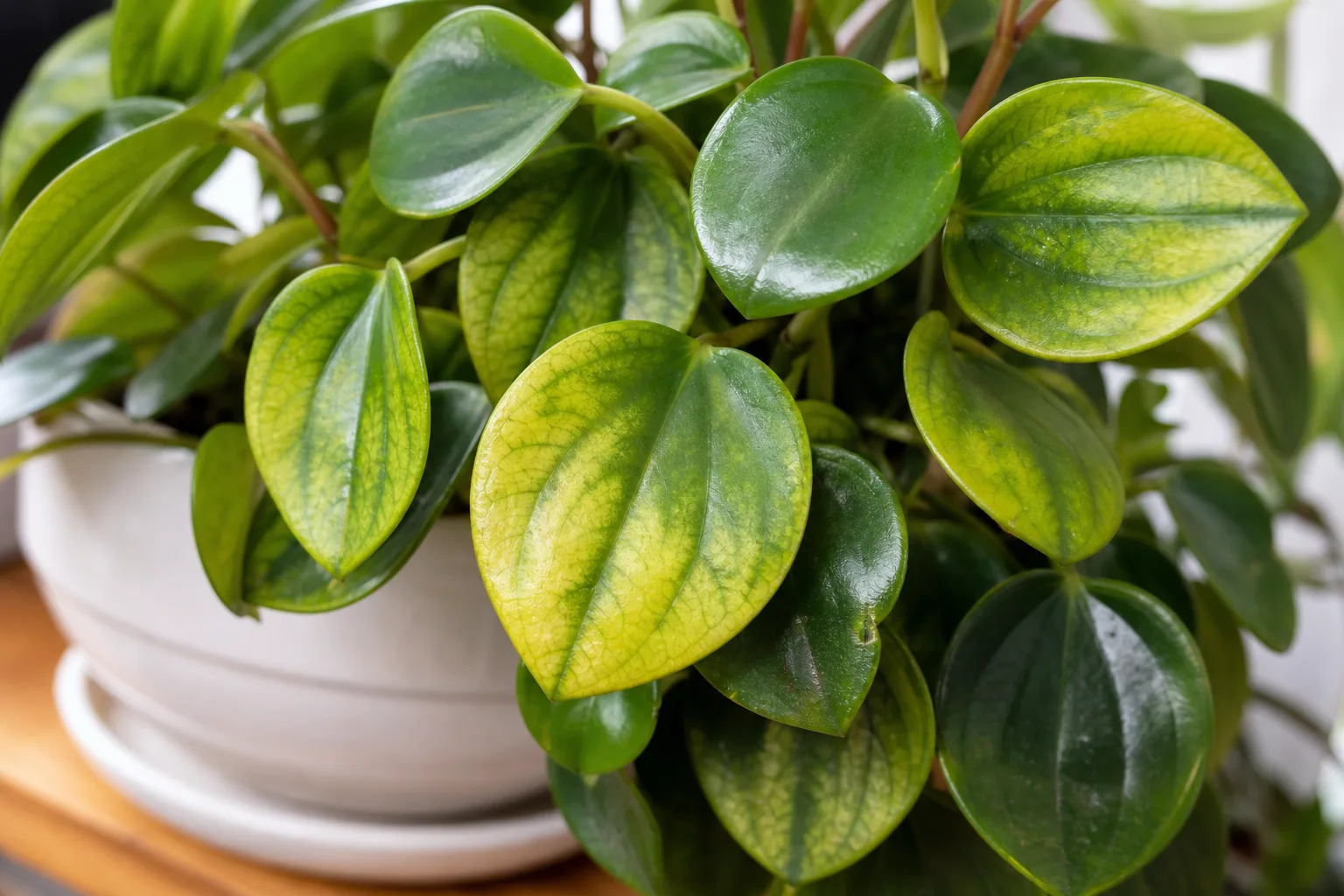
Magnesium Deficiency on Raindrop Peperomia: Causes, Checks & Fixes
This guide covers magnesium deficiency on Raindrop Peperomia. See also the general Magnesium Deficiency guide, watering, and light pages for this plant.
Magnesium Deficiency on Raindrop Peperomia: Causes, Checks & Fixes
Quick answer
On Raindrop Peperomia (Peperomia polybotrya), magnesium deficiency shows up as yellow patches between the green veins on older teardrop leaves, while newer glossy foliage often stays bright. Magnesium is mobile inside the plant, so the species pulls it from lower leaves to support new growth-the classic pattern on a compact upright raindrop plant with fleshy, teardrop-shaped leaves.
First step: confirm the mix dries completely and stem bases are firm before any supplement. Wet soil around a small root ball blocks uptake even when magnesium is present-route to overwatering or root rot if stems soften or mix stays heavy for days. When roots are healthy, apply one diluted Epsom salt drench to already-moist soil during active growth-not full-strength fertilizer stacked the same week.
This page owns interveinal old-leaf chlorosis on Raindrop Peperomia. Uniform yellow on wet soil belongs on yellow leaves. Pale new teardrops after heavy feeding with salt crust belong on nutrient lockout. Post-drench feeding rhythm lives on the fertilizer guide; dry-down checks align with the watering guide.
Why overwatering yellow looks different on teardrop leaves
Raindrop Peperomia is a light feeder adapted to understory forest conditions with a compact root mass that must dry fully between waterings. When owners see yellow, they often reach for Epsom salt-but overwatering is the more common cause on this species.
Overwatering yellow tends toward whole-leaf dulling or even yellowing on lower teardrops while the pot stays heavy, petioles go limp, and stem bases may soften. There is no crisp green-vein network on pale tissue-the leaf fades uniformly as roots fail.
Magnesium yellow keeps veins visibly darker green with chlorosis strictly between them on multiple older leaves, while new glossy tips stay firm early on and soil dries on a normal schedule between waterings.
If pot weight, moisture deep in the mix, and stem firmness disagree with a nutrient story, fix water and roots first. Magnesium drenches on rotting roots add salts without solving uptake failure.
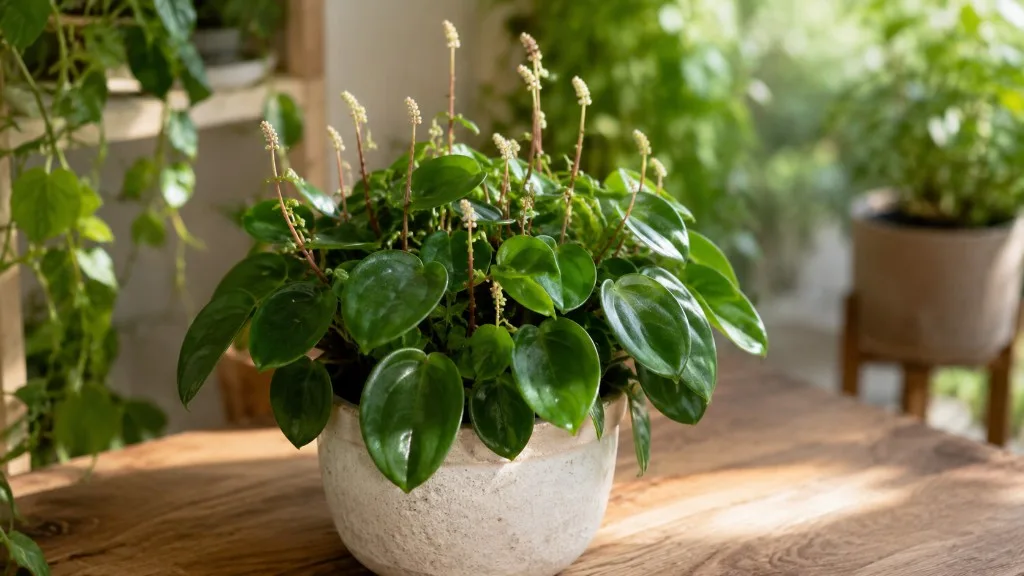
What magnesium deficiency looks like on Raindrop Peperomia
On this species, the glossy peltate leaf surface makes interveinal chlorosis easier to read once you compare old and new foliage side by side.
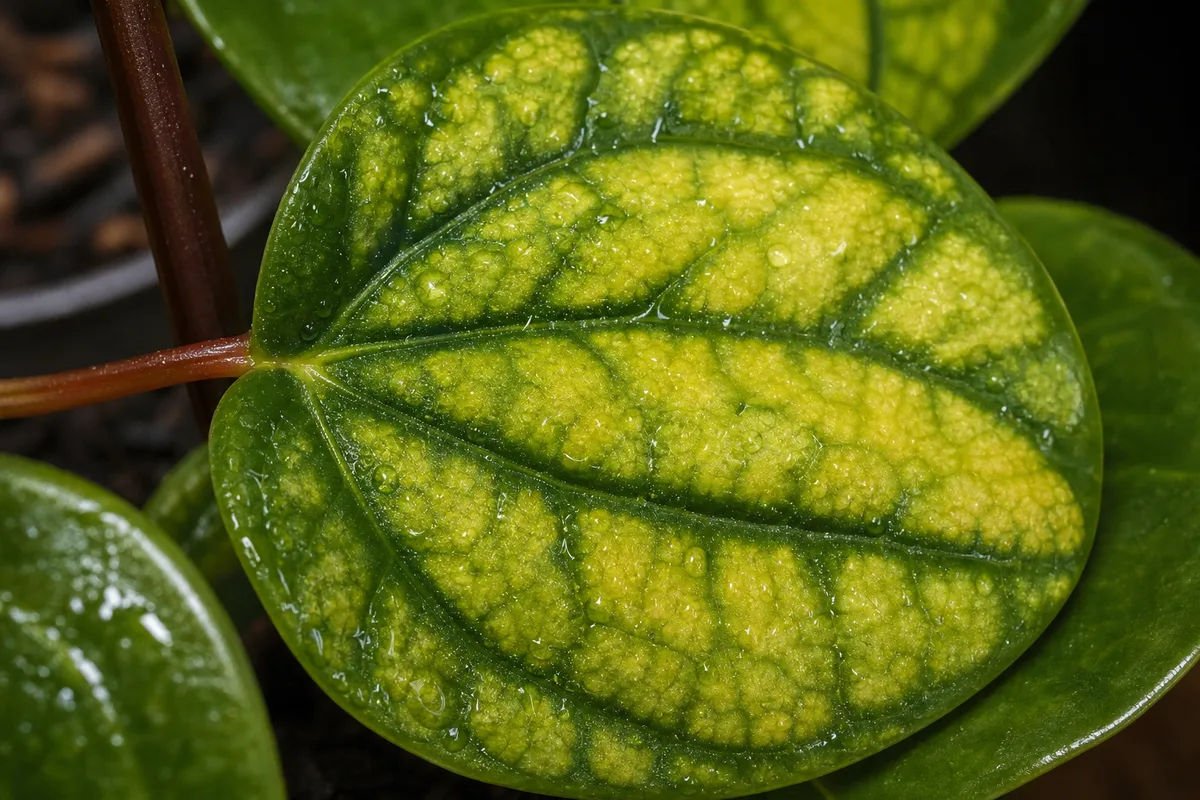
Magnesium Deficiency symptoms on Raindrop Peperomia - compare with healthy tissue on the same plant.
Typical interveinal pattern on older teardrop leaves
- Yellow or pale green between the veins, while veins stay darker green
- Symptoms start on lower, older teardrop leaves and spread upward only if the gap persists
- New leaves at the stem tip still open glossy and firm early on
- Leaves may curl slightly at the edges as chlorosis advances-thick fleshy tissue loses turgor before the whole blade collapses, so margins cup inward while the plant still stands upright
- Nightly posture stays upright at first because the thick leaves still hold some turgor
What it does not look like
- Uniform yellow entire leaves with heavy wet soil (overwatering-the top cause of yellow leaves on this plant)
- Yellowing only on the newest small leaves with green veins on older foliage (iron deficiency pattern)
- Pale dull new teardrops after recent heavy feed with white crust on the soil rim (nutrient lockout)
- Brown crispy margins alone without yellow tissue between veins (salt burn from over-fertilizing a light feeder)
- Soft mushy stems at the soil line (root rot, not a nutrient gap)
Because Raindrop Peperomia renews foliage slowly from a compact erect stem, one basal leaf fading after years can be normal senescence. Magnesium deficiency affects several older leaves at once during the growing season.
Recovery snapshot: what success looks like
A typical home case: a 12 cm Raindrop Peperomia in peat-perlite mix, no fertilizer for 14 months, interveinal yellow on three basal teardrops in June, firm stems, and a pot that dried fully between waterings. One Epsom salt drench at label dilution to moist soil; 18 days later the next opening teardrop showed clean green tissue between veins. Older chlorotic blades stayed yellow-that is normal. Judge magnesium fixes on new leaves, not old tissue re-greening.
Why Raindrop Peperomia develops magnesium deficiency
Raindrop Peperomia grows modestly in warm, bright rooms and uses nutrients mainly from spring through early fall. Several factors drain magnesium from container-grown plants faster than owners expect:
- Leaching with watering - Magnesium leaches from potting mix each time you water; even a plant on a dry-down schedule loses minerals over months.
- Long time in the same soil - After one to two years, peat-based mix loses available minerals even if watering is correct.
- Skipped feeding - Owners who avoid fertilizer to prevent burn on this sensitive species may never replace magnesium that left with drainage water.
- Small root mass in a large pot - Wet soil around tiny roots limits uptake; the plant looks hungry while roots sit anaerobic.
- Salt buildup from heavy feeding - Excess fertilizer salts can stress roots and mimic or worsen leaf discoloration-cross-check nutrient lockout when pale growth follows recent doses.
This species prefers bright, indirect light and moist, well-drained soil in a breathable pot-not constantly saturated mix. Fix water and light before assuming every yellow teardrop leaf needs magnesium.
How to confirm magnesium deficiency
Work through these checks in order before treating:
- Leaf age and pattern - Is yellowing strictly between veins on multiple older leaves, with veins still green? That pattern fits magnesium. Whole-leaf yellow on wet soil does not.
- New growth - Are the newest teardrop leaves still glossy and firm? Magnesium deficiency spares young tissue until the problem is advanced.
- Soil moisture and roots - Push a finger several centimeters into the mix. A light pot that dries fully between waterings with firm green stems supports a nutrient fix. Sour smell or mushy roots mean stop and address root rot first.
- Feeding history - Has the plant received no fertilizer for a full growing season, or lived in the same pot more than two years? Both increase likelihood. Heavy recent feeding with crust points to lockout instead.
- Season and light - Active growth in bright indirect light during spring or summer makes deficiency plausible. Deep winter dormancy with no new leaves makes nutrient stress less likely as the sole cause.
- Lookalike sweep - Confirm no white salt crust on the soil surface from prior overfeeding, no spider mite stippling, and no cold draft below 18 °C.
When to route to overwatering or lockout instead
| Signal | Route here |
|---|---|
| Heavy wet pot, limp petioles, uniform yellow | Overwatering or yellow leaves |
| Pale new teardrops, salt crust, recent full-strength feed | Nutrient lockout |
| Yellow new leaves, green old leaves | Iron limitation-see UMD iron chlorosis pattern; test pH if Mg drench failed |
| Soft stem base, sour smell | Root rot |
If every check points to magnesium and roots are healthy, proceed with a targeted supplement-not a full feeding overhaul yet.
The first fix to try
Apply one Epsom salt drench at one teaspoon per gallon of water to already-moist soil, then wait two to three weeks.
Use plain Epsom salt (magnesium sulfate). Water the Raindrop Peperomia lightly the day before if the surface is dry, then pour the room-temperature solution through the mix until a little drains from the bottom. Empty the saucer. This replaces magnesium without the salt load of a full synthetic feed on a plant with a small root system.
Do not foliar-spray in direct sun on glossy teardrop leaves. Do not repeat the drench within the same month unless extension guidance for your product says otherwise.
Step-by-step recovery
After the first Epsom drench, support recovery in this order:
- Resume light balanced feeding - Once new growth looks stable, use low-strength liquid fertilizer occasionally during the growing season at half label strength every four to six weeks through early fall, matching the fertilizer guide schedule. Hold feed entirely in late autumn and winter when growth slows.
- Maintain the dry-down rhythm - Let the mix dry completely before the next thorough soak per the watering guide. Dry or waterlogged roots cannot pick up magnesium you just added.
- Monitor the next two leaves - Watch the next teardrop leaves that open along the stem. Clean green tissue between veins confirms the fix.
- Trim only dead tissue - Remove fully brown or collapsed older leaves after the plant stabilizes. Yellow tissue rarely re-greens.
- Repot if soil is exhausted - If the pot has not been refreshed in two or more years, schedule repotting into fresh airy mix with perlite the following spring-not the same week as the first drench.
Avoid doubling Epsom salt doses hoping for faster results. Excess magnesium can interfere with calcium uptake and stress the small peperomia root ball.
Recovery timeline
| Severity | What you see | Realistic window |
|---|---|---|
| Mild | Interveinal chlorosis on a few lower teardrops, firm stems | Stabilizes in 2–3 weeks after one drench; next opening leaf is earliest proof |
| Moderate | Yellow spreading up several older leaves, new tips still glossy | 4–8 weeks to judge; old chlorotic blades may stay yellow permanently |
| Advanced | New leaves opening yellow between veins after drench | Re-run diagnostics-iron, pH, or root failure may now limit uptake |
Older chlorotic leaves may stay yellow permanently even when the plant is healthy again. Expect four to eight weeks before you can judge full recovery. If new leaves open yellow between veins after a correct drench and two leaf cycles, iron or high pH-not more magnesium-may be limiting.
Lookalike symptoms on Raindrop Peperomia
| What you see | Likely cause | Quick differentiator |
|---|---|---|
| Yellow between veins, old leaves first | Magnesium deficiency | Veins stay green; new leaves normal early |
| Pale dull new teardrops after heavy feed, salt crust | Nutrient lockout | Fed-but-failing; see lockout guide |
| Yellow new leaves, green old leaves | Iron deficiency | Pattern reversed from magnesium |
| Even yellow leaves, wet soil, limp stems | Overwatering / root rot | Soil stays heavy; stem bases soften |
| Brown tips only, no yellow between veins | Fertilizer burn or low humidity | Margins crisp; center green |
| Pale overall, stretched stems | Low light | No interveinal pattern; soil normal |
Mistakes to avoid
- Feeding a waterlogged plant - Fertilizer or Epsom salt on rotting roots worsens damage on this species.
- Full-strength fertilizer after spotting yellow - Raindrop Peperomia burns easily; half strength every four to six weeks is enough during growth.
- Treating in deep winter dormancy - Without active growth, roots take up little magnesium; wait until new teardrop leaves appear.
- Assuming all yellow leaves need Epsom salt - Overwatering is more common; always check moisture and pot size first.
- Repeated weekly Epsom doses - One drench plus balanced feed is safer than continuous magnesium loading.
- Repotting and drenching the same week - Schedule repot for the following spring after the drench proves itself on new growth.
How to prevent magnesium deficiency next time
Integrate magnesium maintenance into normal Raindrop Peperomia care rather than waiting for yellow leaves:
- Feed with diluted balanced fertilizer every four to six weeks from spring through early fall when the plant is actively producing leaves-details on the fertilizer guide.
- Give a twice-yearly Epsom salt drench at one teaspoon per gallon if the plant stays in the same container year-round.
- Flush the pot with plain water occasionally to prevent salt buildup from synthetic feeds.
- Repot into fresh airy mix every one to two years so baseline minerals return.
- Keep bright indirect light and temperatures between 18–26 °C so growth and nutrient uptake stay aligned.
Raindrop Peperomia is listed as non-toxic to cats and dogs-still handle gently when inspecting roots near curious pets.
When to worry
Root failure escalation
Magnesium deficiency alone rarely kills Raindrop Peperomia, but combined stress can. Seek a different diagnosis if stems collapse at the soil line, roots are black and mushy, or yellowing races to every leaf within days while soil stays wet. Those signs point to root rot-not a nutrient gap fixable with Epsom salt.
Iron and pH follow-up after two leaf cycles
If interveinal chlorosis persists through two new teardrop leaves despite a correct drench, corrected dry-down, and light feeding per the fertilizer guide, consider whether iron-not magnesium-is limiting new growth. Iron chlorosis shows yellow new leaves with green veins on older foliage-the reverse of magnesium. Long-term culture in the same acidic peat mix can drift pH; a simple soil pH strip on a handful of mix from the root zone helps-UMD Extension recommends acidifying the soil when iron chlorosis persists on indoor plants. Do not stack another magnesium drench until you confirm the pattern still fits old-leaf interveinal chlorosis.
Pure magnesium deficiency is gradual; act within two weeks once interveinal chlorosis appears on multiple older leaves during the growing season. Same-day escalation belongs to wet-root failure, not slow chlorosis alone.
Related Raindrop Peperomia guides
- Fertilizer guide - conservative post-drench feeding schedule
- Watering guide - dry-down rhythm prerequisite before any drench
- Nutrient lockout - pale new growth after heavy feed vs. old-leaf magnesium pattern
- Yellow leaves - general yellow triage when pattern is unclear
- Overwatering - wet mix mimic for uniform yellow
- Root rot - soft stems and sour soil escalation
FAQs
How can I confirm magnesium deficiency on Raindrop Peperomia?
Look for interveinal yellowing on lower, older teardrop leaves with veins still green, while newest leaves stay firm and glossy. Soil should dry completely between waterings, stem bases firm, and the plant in bright indirect light during spring or summer. Even yellow leaves with heavy wet soil point to overwatering instead.
What should I check first before treating magnesium deficiency?
Check pot weight, soil moisture deep in the mix, stem firmness, and when you last fed before adding any supplement. Raindrop Peperomia in soggy mix or an oversized pot cannot use magnesium even if you apply it. Rule out natural old-leaf drop and overwatering yellowing on the yellow leaves guide before treating nutrients.
How is magnesium deficiency different from nutrient lockout on Raindrop Peperomia?
Magnesium deficiency shows interveinal yellow on older teardrop leaves with green veins while you have skipped feeding or lived in the same pot two-plus years-often with no white salt crust. Lockout follows recent heavy feeding or salt crust on the rim, with pale dull new teardrops despite regular doses. No crust plus old-leaf interveinal pattern fits magnesium; fed-but-failing with crust routes to nutrient lockout.
Will yellow Raindrop Peperomia leaves turn green again after magnesium treatment?
Chlorotic tissue on affected teardrop leaves usually does not fully re-green. Recovery means yellowing stops spreading to new leaves and the next glossy leaves emerge firm with intact green tissue between veins. Trim fully brown sections only after several weeks of stable care.
Can I foliar-spray Epsom salt on Raindrop Peperomia leaves?
Soil drench is safer on this glossy peltate species. Foliar sprays can spot or burn teardrop surfaces in direct sun, and thick leaves absorb magnesium more reliably through moist roots during active growth. If you must spray, use a very dilute solution in early morning shade only-never on hot afternoon glass. One labeled soil drench plus corrected feeding per the fertilizer guide is the default fix.
Conclusion
When to Epsom: old-leaf interveinal chlorosis, firm stems, dry-down rhythm intact, and one teaspoon-per-gallon drench during active growth-then judge the next two glossy teardrops, not old yellow blades. When to skip nutrients: wet mix, soft stem base, or sour smell-escalate to root rot rescue. When to pivot: pale new growth after heavy feed goes to nutrient lockout; yellow new leaves with green old leaves suggests iron or pH, not more magnesium. For any pattern you cannot classify, start on yellow leaves before reaching for Epsom.