How to Propagate Raindrop Peperomia: Stem and Leaf Guide
How to Propagate Raindrop Peperomia: Stem and Leaf Guide
How to Propagate Raindrop Peperomia: Stem and Leaf Guide
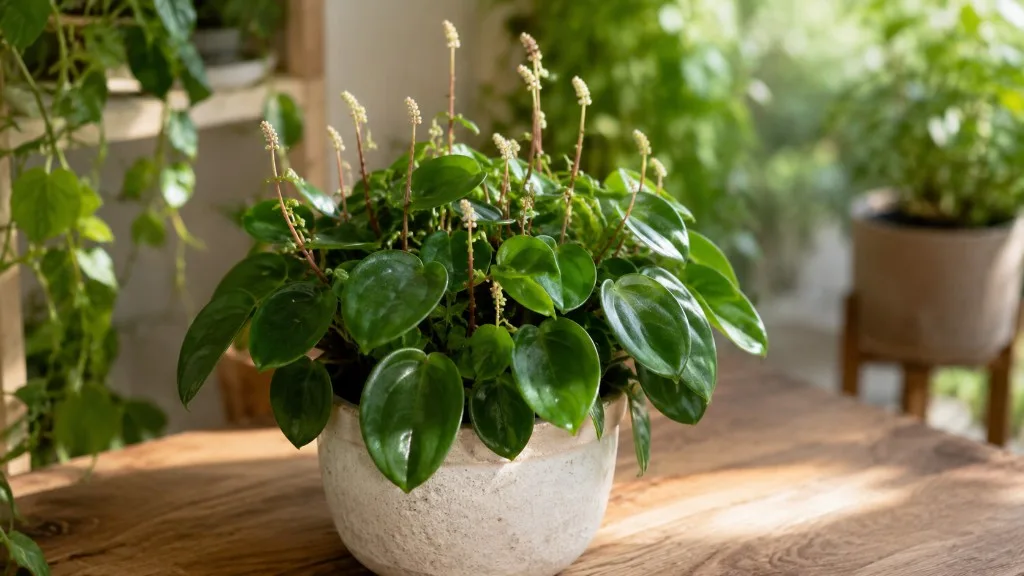
Raindrop Peperomia propagation turns one glossy, teardrop-shaped houseplant into two, three, or more genetically identical copies without buying another pot. Peperomia polybotrya - sold as Raindrop Peperomia, coin-leaf peperomia, or glossy peperomia - is an upright Piperaceae species native to the tropical Andean foothills of Colombia, Ecuador, and Peru. Its thick, semi-succulent leaves and compact root system shape every propagation decision you make. Stems with nodes root fastest. Leaves with intact petioles or cleanly halved blades can root more slowly but stretch limited material from a small plant. Every method fails quickly when water stagnates, soil stays saturated, or cuttings sit in cold, dim corners.
The dependable home routes are stem cuttings rooted in water or airy perlite mix, whole leaves with petioles, and leaves sliced in half horizontally and pressed cut-side-down into moist medium. Water propagation gives you visible roots and early rot detection. Soil and perlite get you closer to long-term potting conditions from day one. Leaf methods demand more patience - first roots may appear in three to four weeks, but a recognizable new leaf from a petiole cutting can take two to three months in many homes. Success depends less on rooting powder and more on healthy tissue, at least one node on stems, clean tools, Raindrop Peperomia light guide, and moisture without stagnation.
If symptoms persist, see the Brown Leaves on Raindrop Peperomia guide.
What Makes Raindrop Peperomia Easy to Clone
Raindrop Peperomia is grown for its thick, glossy foliage and tidy upright habit, not for showy flowers. Propagation preserves that exact look because a stem or leaf cutting is a vegetative clone - the new plant matches the parent cultivar’s leaf shape, gloss, and growth pattern. Seeds, if you could source them reliably, would not guarantee the same appearance. That matters when you are cloning a particularly shiny specimen or filling out a sparse pot with matching plants.
Propagation also solves practical problems indoor gardeners face regularly. Leggy plants can be refreshed by rooting the top section and discarding the bare lower stem. A single nursery purchase can become several plants without another trip to the store. Leaves removed while grooming or while stripping a stem cutting can become petiole cuttings rather than compost. Because the ASPCA lists Peperomia species as non-toxic to cats and dogs, sharing rooted cuttings with pet-owning friends is straightforward - though you should still confirm botanical identity on any unlabeled plant.
The plant’s semi-succulent leaves store water, which helps cuttings survive the gap between cutting and rooting better than paper-thin tropical foliage might. That same trait makes Raindrop Peperomia sensitive to rot when the medium stays saturated. Propagation is not harder than many common houseplants; it simply punishes sloppy wet conditions faster than a pothos might forgive them. Once you understand that trade-off, the methods become predictable rather than mysterious.
The Science Behind Peperomia Propagation
Propagation asks wounded plant tissue to prevent excessive water loss while building a new root system - and, for leaf methods, eventually new meristematic tissue capable of producing stems and leaves. A cutting without roots still loses moisture through its leaf surfaces. If it loses water faster than the stem base can absorb from water or moist medium, it shrivels, collapses, or rots. Your setup must narrow that gap: enough leaf area for modest photosynthesis, enough humidity or stem contact with moisture, and enough oxygen that bacteria do not consume the cutting first.
Adventitious roots on Raindrop Peperomia emerge from nodes on stems - the joints where leaves attach - or from the base of a petiole (leaf stalk), or from the cut edge of a halved leaf blade pressed into mix. Stem cuttings route energy through existing vascular tissue connected to a node, which is why they root and push new growth faster. Leaf cuttings rely on cells at the petiole base or along the severed leaf margin to reorganize into roots and, later, buds. That second pathway works but takes longer and succeeds at a lower percentage than a sound stem with two nodes.
Nodes, Petioles, and Adventitious Roots
A node on a stem cutting is non-negotiable for producing a normal plant. A Raindrop Peperomia stem segment with no node may stay green briefly but cannot reliably become a full specimen. When you take a stem cutting, the cut should sit just below a node, and at least one node should be submerged in water or buried in medium.
For petiole cuttings, you need the leaf blade plus its stalk where it joined the main stem. A leaf blade snapped off flush with the stem, with no petiole, rarely produces a plant. The petiole is the bridge that carries hormones and nutrients needed for root initials.
For half-leaf cuttings, the leaf is sliced horizontally through the blade. Both halves are inserted cut edge down into moist mix. Roots and tiny plantlets can emerge along the severed edge over weeks to months. This method is slow and experimental, but NC State Extension lists leaf cutting as a recommended propagation strategy alongside stem cuttings.
Stem Cuttings vs Leaf Cuttings: Pick the Right Route
Stem cuttings are the default recommendation for Raindrop Peperomia because they combine a node, existing stem vasculature, and usually two or three leaves for photosynthesis. NC State Extension lists stem cuttings and leaf cuttings as recommended propagation strategies for Raindrop Peperomia overview. Most indoor growers see root initials in two to four weeks in water at warm room temperatures, sometimes sooner in peak summer. New top growth often follows shortly after roots anchor.
Leaf cuttings - petiole or half-leaf - suit different situations. Use them when the plant is too small for an 8–10 cm (3–4 inch) stem, when you want to salvage removed leaves, or when you enjoy slower propagation experiments. Petiole cuttings in water may show first roots in three to four weeks, with the first tiny new leaf emerging two to three months later in many homes. Half-leaf cuttings in humid soil can produce multiple plantlets from one leaf but require a clear bag or dome and weeks of stable moisture without saturation.
Neither method needs division for typical houseplant-sized Raindrop Peperomia. Mature specimens occasionally produce enough stem mass to split at Raindrop Peperomia repotting guide, but stem and leaf cuttings cover nearly every home propagation scenario.
Speed, Success Rate, and When Each Wins
Choose stem cuttings in water if you want the fastest feedback, are new to propagation, or plan to pot up within a month. Choose stem cuttings in perlite-heavy mix if you dislike water changes or tend to leave cuttings in jars until roots are excessively long. Choose petiole cuttings if you have healthy leaves with intact stalks and can wait months for visible progress. Choose half-leaf cuttings if you have spare leaf material and a propagation tray with humidity control - not if you need a new plant quickly.
If the parent is stressed, declining, or recently shipped, stabilize it first and take material only from the firmest new growth. Propagation multiplies what you start with; it does not rescue a plant with active root rot.
Selecting the Strongest Parent Plant
Start with a healthy Raindrop Peperomia that is actively growing: firm glossy leaves, upright stems, no sticky residue, no widespread yellowing, and no sour-smelling soil. Semi-succulent leaves should feel thick and springy, not limp or wrinkled from dehydration. Weak parent tissue produces weak cuttings regardless of how carefully you prepare the jar or mix.
For stem cuttings, select non-flowering or lightly flowering stems if possible. Raindrop Peperomia is not grown for blooms, and a stem pouring energy into an inflorescence may root more slowly. If the only available material has a flower spike, remove the spike after cutting so the cutting redirects energy to roots.
For leaf cuttings, choose unblemished mature leaves with long intact petioles. Avoid leaves with brown tips, mechanical tears, or pest damage. Leaves you accidentally knock off while handling stem cuttings can be rerouted to petiole jars rather than discarded - a useful way to maximize material without extra wounding on the parent.
Reject any tissue that is mushy, black at the base, or coated in fine webbing indicative of spider mites. Disinfect tools between plants if pests have been an issue in your collection.
When to Take Raindrop Peperomia Cuttings
Raindrop Peperomia roots fastest during active growth, when days are longer and temperatures sit in its comfort range of roughly 18–26°C (65–78°F). Spring through early autumn is ideal in temperate homes. The plant pushes new leaves predictably in warm bright conditions; cuttings taken then inherit the same momentum.
Calendar timing matters less than plant readiness. The parent should show firm new tips and stable color. Avoid propagating immediately after repotting, a long shipment, a cold window shock, or while correcting root rot - unless you are deliberately salvaging clean upper growth before discarding a rotten base.
Cool winter rooms below about 16°C (60°F) slow rooting dramatically. If you propagate in winter, add warmth with a heat mat under jars or trays - measuring water or medium temperature, not just air - and accept a longer timeline. Dim winter light also stretches the process; a modest grow light a few hours daily helps without blasting cuttings with direct sun.
Supplies for Water, Soil, and Leaf Propagation
You need very little: sharp bypass pruners or scissors, 70% isopropyl alcohol for disinfecting blades, clean jars or small pots with drainage holes, fresh water or propagation mix, optional clear plastic bag or dome for leaf methods, labels if running multiple cuttings, and optional rooting hormone powder for soil methods.
For water propagation, any clear glass that supports the stem without submerging leaves works. Narrow openings help stems stay upright. For soil propagation, use a light, airy mix - straight perlite, half perlite and half peat or coco coir, or houseplant mix amended with extra perlite. Raindrop Peperomia’s compact roots and semi-succulent leaves suffer in dense, slow-draining garden soil.
Wear gloves if you have sensitive skin. Keep cuttings and trimmings away from pets even though Peperomia is generally non-toxic - chewed stems still create mess and stress for the cutting.
How to Prepare a Raindrop Peperomia Stem Cutting
Preparation determines success before the cutting touches water or mix. Work on a clean surface, prepare containers first, and cut only when you can insert material immediately.
Step 1: Select and measure. Choose a healthy stem with at least two nodes and two or three leaves at the tip. Aim for a total cutting length around 8–12 cm (3–5 inches) including the top leaves - Clemson HGIC recommends a three-to-five-inch stem cutting with lower leaves removed.
Step 2: Cut below a node. Disinfect your blade, then slice just below the lowest node you plan to include. A clean single cut beats a crushed stem.
Step 3: Strip lower leaves. Remove all leaves from the lower half of the cutting - anything that would sit underwater or underground. Rotting leaves in a jar foul water within days.
Step 4: Optional callus pause. Some growers let the cut end air-dry for two to four hours before soil insertion to reduce stem rot in very wet mixes. Water propagators usually skip this; immersion begins immediately.
Step 5: Optional rooting hormone. Dip the cut end in rooting powder before soil insertion if you wish. Hormone is optional for Raindrop Peperomia stem cuttings in water; it may help marginally in dense mixes or for reluctant material.
Step 6: Insert immediately. Place the stem in water or pre-moistened medium within minutes. Delay increases dehydration risk.
Water Propagation for Stem Cuttings
Water propagation is the most visible route for Raindrop Peperomia. You watch roots emerge, inspect the stem for early rot, and share the process easily. The trade-off is a water-to-soil transition later, because roots formed in water differ structurally from roots formed in mix.
Fill a jar with room-temperature water deep enough to submerge at least one node while keeping all leaves above the waterline. Clemson HGIC notes some peperomia species, including related types, are easily propagated in water when cuttings receive bright, indirect light. Two submerged nodes improve redundancy if one fails. Set the jar in bright, indirect light - an east window or several feet back from a south window behind sheer curtain - not direct midday sun that overheats the water.
Change water when it looks cloudy, smells stale, or develops slime on the glass; many growers refresh every three to five days, while others top up evaporation and replace only when quality declines. Both work if the stem stays firm and leaves remain turgid. Remove any leaf that falls into the water immediately.
Expect visible root initials in about two weeks under warm, bright conditions, with usable roots often arriving by three to four weeks. Cool rooms or dim corners stretch that schedule. Do not fertilize the water; the cutting is not ready to metabolize salts until it has roots and later soil.
Jar Setup, Water Changes, and Root Milestones
Choose a container you can keep clean. Algae and bacterial film accelerate rot on semi-succulent stems. If the cut end turns soft, pull the cutting, recut to healthy tissue if enough stem remains, scrub the jar, and restart with fresh water.
Group multiple jars together to stabilize humidity around leaves, but do not cram stems so tightly they wound each other. If a cutting wilts slightly but the stem is firm, patience often resolves it once roots form. Persistent limp leaves with a firm stem suggest low ambient humidity - move away from dry heat vents or run a small humidifier nearby without misting leaves directly.
Some growers report first root bumps in as little as four to seven days under ideal warmth and light, though two to four weeks is the more typical range. Treat early bumps as encouragement, not a signal to transplant immediately.
Soil and Perlite Propagation for Stem Cuttings
Soil - more accurately a soilless propagation medium - hides roots but produces them in conditions closer to the final pot. Roots typically form in four to six weeks in perlite-heavy mix, sometimes slower than water in the same home, but transplant shock is often lower because roots already know porous mix.
Fill a small pot or propagation tray with pre-moistened perlite or perlite-heavy mix. Use a pencil to make a planting hole so you do not scrape rooting hormone off the stem when inserting. Bury at least one node; two nodes below the surface improves success. Firm the medium lightly so the stem stands upright without packing so tightly that air is excluded.
Water once to settle the medium, then manage moisture so it stays evenly damp like a wrung-out sponge, never saturated mud. Pots without drainage are a common failure point; use holes and empty saucers after watering.
A clear plastic bag or humidity dome over the pot - without letting plastic touch leaves - reduces wilting during the first week. Vent daily for a few minutes to prevent mold. The tug test helps assess roots without destructive digging: after three to four weeks, give the stem a very gentle upward tug. Resistance suggests roots have anchored. No resistance does not always mean failure - keep waiting if the stem is still firm. Aggressive tugging breaks delicate root initials.
When roots are confirmed, move the cutting to a small individual pot with well-draining houseplant mix - airy, with perlite, and allowed to approach dryness between waterings, matching what mature Raindrop Peperomia prefers.
Propagating Whole Leaves With Petioles
Petiole propagation uses a whole leaf plus its stalk. It works when you lack stem length but have healthy foliage - including leaves removed while stripping a stem cutting.
Cut the petiole close to the main stem with a clean blade, keeping the stalk as long as practical. Insert the petiole end into water or lightly moist mix so the base is submerged or buried 1–2 cm (½–¾ inch) while the leaf blade sits above the surface. For water, use a narrow jar or support the leaf with wax paper over the opening so the blade stays dry.
Place the setup in bright, indirect light at warm room temperatures. Roots may appear in three to four weeks, but the first tiny new leaf from the petiole tip can take two to three additional months. That timeline is normal, not a sign of failure, as long as the petiole stays firm and the leaf blade has not collapsed.
For soil petiole cuttings, cover the pot with a clear bag to raise humidity, venting daily. Keep mix lightly moist, not wet. Rotting petioles mean too much saturation or poor airflow - discard and retry with drier mix and better ventilation.
Half-Leaf Propagation in Humid Mix
Half-leaf propagation is the slowest Raindrop Peperomia method but can yield multiple plantlets from one leaf. Slice a healthy leaf horizontally across the blade with a clean knife. You now have two halves, each with a cut face and part of the original leaf structure.
Fill a small tray with pre-moistened well-draining mix. Insert both halves cut side down, burying the cut edge 1–2 cm (½–¾ inch). The half that retains more petiole tissue often roots first; bury that section slightly deeper if needed. Do not bury the upper surface of the leaf - only the cut edge contacts mix.
Cover with a clear humidity dome or bag and place in bright, indirect light. Open daily briefly to exchange air. Keep mix consistently slightly moist for weeks. Roots and tiny bumps along the cut edge may appear in four to eight weeks; distinct plantlets can take two to four months.
When plantlets have their own small leaves and visible roots, sever them carefully from the parent leaf section and pot individually. Treat them as fragile seedlings: small pots, light moisture, no direct sun, no fertilizer until growth is obvious.
Creating Ideal Conditions for Rooting
Roots respond to warmth, light, oxygen, and stable moisture more than to brand-name additives. A Raindrop Peperomia cutting on a bright kitchen counter at 21°C (70°F) usually outperforms a darker shelf with rooting powder but cold nights.
Light, Temperature, and Humidity Targets
Place all cuttings in bright, indirect light. Direct sun through glass overheats water jars and scorches semi-succulent leaves before roots form. Too little light slows rooting and produces pale, fragile new growth.
Keep temperatures above about 18°C (65°F) and ideally near 21–24°C (70–75°F) for fastest results. Bottom heat mats help in cool rooms if they do not overheat water - measure liquid temperature.
Humidity matters most for leaf cuttings in open air and for any setup in dry, air-conditioned rooms. Water propagation supplies stem moisture directly, but leaves still appreciate ambient humidity above extremely dry levels. A dome, grouping containers together, or distance from heating vents reduces edge wilting and petiole desiccation.
Moving Cuttings From Water to Potting Mix
Moving a water-rooted Raindrop Peperomia to soil is where many projects fail - not because roots were absent, but because the pot stayed too wet after transplant. Use a small pot with drainage, roughly 8–10 cm (3–4 inches) for a single young plant, filled with moistened well-draining mix. Make a hole, place the cutting so roots hang naturally without cramming, and backfill gently.
Water once to settle the mix, then allow the top 2–3 cm (1 inch) to approach dryness before watering again. Water-rooted peperomias are easy to overlove. Old roots need oxygen in mix; drowning them recreates anaerobic conditions similar to stagnant jar water but without the visibility that warned you.
Transplant when roots are roughly 2–3 cm (¾–1 inch) long - long enough to anchor but not so long that they become fragile water-adapted threads. Waiting until water roots reach 10 cm (4 inches) or more often makes the shift to soil harder.
For soil-rooted cuttings and established petiole plantlets, move up one pot size when roots fill the starter container. Oversized pots stay wet around a small root ball and stall growth - a especially common Raindrop Peperomia mistake given its compact root system.
Expect temporary sulking for a few days after transplant, especially from water roots. Hold fertilizer until fresh leaves open; salts burn limited root systems. Once new growth is obvious - often two to four weeks post-transplant - feed at half-strength balanced fertilizer if you feed at all during the first season. During the first month, treat young plants like gentler versions of the parent: bright indirect light, soil approaching dryness between waterings, and protection from cold drafts. Firm new leaves are the best success signal; constant root disturbance is not. Young Raindrop Peperomia plants do not need the same Raindrop Peperomia watering guide as a mature specimen in a larger pot. Check the top inch of mix with your finger before watering. A light pot signals dryness; a heavy pot after recent watering means wait. This dry-down approach mirrors the mature care the plant will need for years and prevents the overwatering spiral that kills many freshly transplanted cuttings.
Troubleshooting Failed or Slow Cuttings
Most failures trace to contaminated water, buried leaves, cold, or oversaturated mix - not to Raindrop Peperomia being impossible. Diagnose from the stem, petiole, and leaf, not from impatience alone.
Black mushy stem base in water means rot. Discard the soft portion, recut to healthy tissue if enough stem remains, clean the jar, and restart. If rot repeats, switch to perlite method or improve warmth and light.
Shriveling leaf with firm petiole often indicates low humidity or a leaf too large for the root system yet. Use a humidity dome, move away from dry heat, or accept that some petiole cuttings desiccate slowly before roots form.
No roots after many weeks in a cold or dim location suggests environment, not plant incompatibility. Move to a warmer brighter spot before declaring failure. Leaf methods always take longer than stems; compare timelines to the method you chose.
Algae-filled sunny jar overheats and suffocates stems. Move to indirect light and refresh water.
Mold on half-leaf cuttings means the dome is too sealed or mix is too wet. Vent longer daily and reduce watering frequency.
When rot and shriveling coincide, the cutting is usually past saving. Start over with fresh material from a healthier section rather than nursing tissue for months. When roots form in water but the plant collapses after potting, overwatering in a large pot is the prime suspect - repot into a smaller container, let the top inch dry, and water lightly until new growth appears.
Conclusion
Propagating Raindrop Peperomia from stem and leaf cuttings is straightforward when you match method to material and respect the plant’s semi-succulent nature. Stem cuttings with at least one node root fastest in clean water or moist perlite-heavy mix at warm bright indirect light - often within two to four weeks in water. Petiole leaves and half-leaf sections extend the timeline but multiply plants from minimal stock if you keep humidity steady and avoid saturated mix.
Transplant water-rooted stems when roots reach about 2–3 cm (¾–1 inch), keep the first pot small and well drained, and delay fertilizer until new leaves confirm the root system is working. Whether you are filling out a sparse pot, cloning a favorite glossy specimen, or experimenting with leaf halves under a humidity dome, the logic stays the same - healthy tissue, clean cuts, submerged nodes on stems, patient moisture without stagnation. Master that chain and Raindrop Peperomia propagation becomes a reliable skill, not a guessing game.
When to use this page vs other Raindrop Peperomia guides
- Raindrop Peperomia overview - Start here for whole-plant context before deep-diving this topic.
- Raindrop Peperomia problems hub - Jump to symptom-specific fix guides when this care topic does not resolve the issue.