Best Soil for Raindrop Peperomia: Airy Mix Guide
Best Soil for Raindrop Peperomia: Airy Mix Guide
Best Soil for Raindrop Peperomia: Airy Mix Guide
Why Raindrop Peperomia Is Picky About Soil
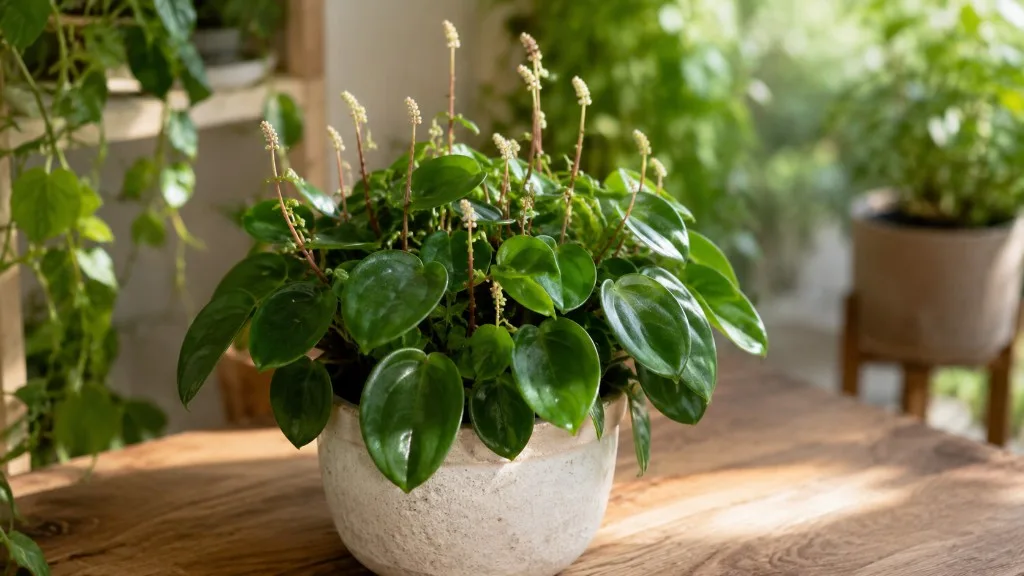
Raindrop Peperomia (Peperomia polybotrya) fools people. The thick, glossy, teardrop-shaped leaves look semi-succulent. The plant stays compact on a shelf. It tolerates average room humidity and indirect light without constant fussing. That toughness pushes many growers to treat soil as an afterthought - whatever came in the nursery pot, whatever “indoor plant” bag is on sale, whatever worked for a pothos last year. For Raindrop Peperomia overview, that shortcut is where healthy plants quietly fail.
The best soil for raindrop peperomia is an airy, well-draining mix that dries predictably between waterings while still holding enough moisture for fine fibrous roots. NC State Extension lists Peperomia polybotrya as preferring moist, well-drained loam with good drainage and less than 12 inches of available planting space - a profile that sounds simple until you realize most bagged indoor mixes skew too dense and too moisture-retentive for a plant whose leaves store water but whose roots suffocate in slow, wet substrate.
Soil controls three things watering alone cannot fix: how fast excess water exits the pot, how much oxygen remains in pore spaces after the surface looks dry, and how quickly organic matter compacts into an anaerobic block over 12 to 24 months of indoor culture. When Raindrop Peperomia develops soft leaves, yellowing lower foliage, or mushy stems at the soil line, the root zone is the first place to inspect - not the watering calendar, not the fertilizer bottle, and not a bigger pot “to give it room.”
If symptoms persist, see the Brown Leaves on Raindrop Peperomia guide.
Native Habitat and What It Means for Your Mix
Peperomia polybotrya is native to Colombia, Ecuador, and Peru, where it grows in warm, humid cloud forest conditions according to the NC State Extension Gardener Plant Toolbox. In nature it often roots in thin layers of moss, bark chips, and decaying leaf litter on tree surfaces or loose forest debris - not in deep, heavy garden soil. Light is filtered. Air moves through humid air constantly. Water arrives frequently from rain and mist, but it passes through open, organic-rich media rather than pooling around roots for days.
Your job indoors is to reproduce the function of that substrate inside a small pot: enough organic matter for moisture and nutrient exchange, enough coarse structure for air and rapid drainage, and a container sized to the actual root mass so you are not maintaining a large unused wet zone. Raindrop Peperomia is not a desert succulent and not a bog plant. It sits in the middle - a tropical perennial with fleshy leaves and shallow, delicate roots that need sharp drainage with moderate moisture retention, the same tension NC State captures when it lists both “moist” and “good drainage” as requirements.
Epiphytic Roots vs. Succulent Leaves
Raindrop Peperomia leaves are peltate - attached near the center of each teardrop blade - and store moisture efficiently. That storage is why the plant tolerates drying between drinks better than chronic wet feet. The roots do not share that tolerance. Fine fibrous roots need oxygen in open pore spaces. When mix compacts or stays saturated at depth, roots stop functioning even while upper leaves still look plump, which creates the confusing pattern of firm foliage one week and sudden stem collapse the next.
Experienced growers who have lost Raindrop Peperomia to rot at the soil line - sometimes in small terracotta pots - consistently emphasize that drainage matters more for this species than for many other peperomias, because NC State Extension notes root rot can result from overwatering. The semi-succulent leaf habit and epiphyte-adjacent root habit pull in opposite directions on a care tag: “keep soil moist” versus “do not overwater.” The resolution is substrate design. Moist means damp like a wrung-out sponge in a breathable container, not saturated like a wet towel sealed in plastic.
How Compact Roots Change Potting Logic
Raindrop Peperomia matures to roughly 10 to 12 inches tall and wide with an erect, compact habit and a small, slow-growing root system (NC State Extension). It tolerates - and often performs better in - slightly tight quarters than in an oversized decorative pot. Genus-level NC State guidance for peperomias recommends a moist, well-drained mixture of loam and sand and notes they are slow-growing and will not need to be repotted often.
That biology changes how you think about soil volume. A 6-inch pot three-quarters full of airy mix that roots actually colonize dries on a readable rhythm. A 10-inch pot one-third colonized by roots holds a large block of unused mix that stays wet for a week after a single thorough watering, especially in winter when evaporation slows. Oversizing is one of the most common ways good intentions and decent ingredients still produce root rot. Match the mix and the pot to the root mass, not the leaf display.
Symptoms That Point to Bad Soil
Soil failure on Raindrop Peperomia rarely announces itself as “bad soil.” It shows up as water pooling on the surface for 10 to 20 seconds before soaking in, often paired with dry gaps between the root ball and pot wall - a sign of hydrophobic, compacted peat. The pot stays heavy for days after one watering while the top inch looks merely damp, typical of dense commercial mixes or oversized containers. Leaves lose gloss and feel soft even though you waited before watering again, because roots are stressed while leaf tissue still holds stored moisture.
A sour or stagnant smell from the drainage hole indicates anaerobic breakdown - possible root decline before lower leaves yellow and drop. Mushy stems at the soil line with otherwise healthy upper growth is the classic wet-feet pattern on peperomias, often after a cool, dim winter when slow dry-down met a moisture-retentive mix. New leaves emerge smaller or thinner than older growth while the plant sits in the same pot it has occupied for three years - compaction and salt buildup slowing root function.
Use a simple triage rule: if you adjust watering and light and the same symptoms return within two weeks, inspect mix texture, drainage hole clearance, and pot size before stacking more interventions. Raindrop Peperomia responds quickly when the root zone is corrected - leaf firmness returns, new growth glosses up, and dry-down becomes predictable across watering cycles.
The Ideal Raindrop Peperomia Soil Mix
The best soil for raindrop peperomia feels light and crumbly when moist - not sticky mud, not pure grit. You want more drainage and aeration than a standard houseplant mix provides, but more organic body than straight cactus mix offers for long-term indoor culture. Garden references commonly cite a target pH of 6.0 to 6.6, mildly acidic. NC State lists acceptable soil pH as acidic to neutral (below 6.0 through 8.0), broader because field conditions differ from containers.
Commercial African violet mixes work as a starting point because they are already loose, peat- or coir-based, and perlite-amended for plants with similar moisture and aeration needs. Standard indoor potting soil is acceptable only as a base ingredient blended with equal or greater volume of perlite, pumice, or bark. Cactus or succulent mix supplies excellent drainage but often needs organic base added back so roots do not desiccate at the edges between waterings in a small winter pot.
Simple Starter Recipe
The most dependable entry-level raindrop peperomia soil mix:
| Ingredient | Proportion | Role |
|---|---|---|
| Quality peat- or coir-based potting soil | 2 parts (50%) | Organic base, moisture, starter nutrients |
| Perlite or pumice | 1 part (30–35%) | Permanent air pockets, fast drainage |
| Fine orchid bark (optional) | Up to 1 part (15–20%) | Chunky structure, slows compaction |
The widely recommended 2 parts potting soil to 1 part perlite or pumice ratio (Clemson HGIC) is the right default for most indoor growers. Moisten dry peat or coir slightly before blending so ingredients combine evenly - dry peat can repel the first watering and mimic good drainage on the surface while the root ball center stays dry.
If your plant dries too slowly in a plastic pot in a humid room, shift toward 40% base mix, 40% perlite or pumice, 20% bark. If it wilts every two days in terracotta near a bright east window despite conservative watering, try 55% base, 30% perlite, 15% bark to slow dry-down slightly without returning to dense peat.
Chunky Epiphyte-Style Blend
For growers who want a mix that more closely mimics cloud forest debris - especially in plastic pots or humid bathrooms - blend:
- 2 parts coco coir or indoor potting mix
- 1 part perlite or pumice
- 1 part fine fir or pine orchid bark
- 1 handful horticultural charcoal per quart of mix (optional)
- 1 part worm castings for slow fertility
This chunky, well-draining blend improves lateral airflow through the root zone and dries more evenly from top to bottom rather than crusting dry on the surface while staying wet below. Charcoal is optional but useful in closed indoor setups where organic matter breakdown can produce sour odors when a pot runs slightly too wet.
Core Ingredients and What Each One Does
Knowing what each component does lets you adjust the recipe when the same blend behaves differently in your home than in a care guide written for another climate.
Organic Base Options
Sphagnum peat moss is lightweight, holds moisture evenly, and supports slightly acidic conditions Raindrop Peperomia tolerates well. The trade-off is compaction and hydrophobicity within 12 to 24 months indoors - pore spaces collapse, drainage slows gradually, and you adapt watering without realizing the root zone has changed. Peat-heavy “premium indoor potting soil” often needs 30% or more perlite before it is safe for this species.
Coconut coir rewets more easily than aged peat and typically sits near pH 5.8 to 6.5. Choose low-salt, horticultural-grade coir; poorly rinsed product can carry salts that accumulate over a season of light feeding. Coir alone can stay wet too long in cool rooms - pair it with generous perlite and bark rather than using straight coir as the entire base.
Worm castings add slow-release nutrients and microbial activity without making the mix heavy. Roughly 10% castings in a chunky blend is enough. Higher proportions increase moisture retention without improving drainage - the wrong trade-off for roots that rot easily.
Perlite, Bark, Pumice, and Charcoal
Perlite creates permanent air pockets, resists decomposition, and is sterile out of the bag. It is the most accessible drainage amendment for home blenders. Pumice performs a similar role with slightly more weight, which can stabilize top-heavy peperomias and resist floating to the surface during watering. Orchid bark - fine to medium grade - adds chunky structure that mimics epiphytic debris, slows compaction, and helps the mix dry evenly. Horticultural charcoal improves drainage, absorbs impurities, and reduces odors when organic matter breaks down in a slightly too-wet pot.
Do not substitute fine sand for perlite unless you know the sand is coarse and clean - fine sand fills pore spaces and can reduce drainage in peat-based blends. Rocks or pottery shards at the bottom of the pot do not improve drainage; they shorten the effective root zone and can create a perched water table that keeps the lower mix wetter, not drier. Retire that habit for Raindrop Peperomia.
pH, Fertilizer, and Salt Buildup
Raindrop Peperomia grows best in slightly acidic to neutral soil, commonly cited as pH 6.0 to 6.6. In practice, a normal peat- or coir-based indoor mix with perlite amendment sits close enough that pH testing is optional for most hobbyists. Problems more often come from compact, waterlogged mix, alkaline tap water over time, or salt buildup from heavy feeding than from starting pH being half a point off.
Raindrop Peperomia is a light feeder. A balanced water-soluble fertilizer at quarter to half strength during active growth, applied to already-moist soil, is sufficient. Mixes with worm castings or starter charge in commercial potting soil can delay supplemental feeding for the first month after Raindrop Peperomia repotting guide. Fertilizer cannot fix anaerobic, compacted, or chronically wet soil - it only adds soluble salts to a root zone that already cannot breathe.
If you suspect salt stress - crispy leaf margins, pale new growth, white crust on the soil surface - flush the pot with lukewarm water until runoff runs clear, or refresh the mix at the next repot rather than increasing fertilizer. Symptoms overlap with too much direct sun and underwatering, which is why checking how the mix actually behaves matters before adding more inputs.
How to Test Drainage and Dry-Down
Drainage speed is the most practical metric for Raindrop Peperomia soil quality. After a thorough watering, excess water should exit the drainage hole within seconds, not minutes. The surface should accept the next pour without long pooling. Within 24 to 48 hours in a typical indoor room, the top 1 to 2 inches should approach dry while deeper mix retains slight moisture - matching the species’ preference for drying between drinks without desiccating the entire root ball.
Run a one-minute drainage check after your next watering. Pour slowly and evenly until water runs from the bottom. If water sits on top for more than 10 to 15 seconds, the mix is too dense or has become hydrophobic. Lift the pot ten minutes later - it should feel heavier but not waterlogged. After two days, insert a finger or wooden skewer to mid-depth. If the skewer comes out cool and clinging while the surface looks dusty, your mix may be too moisture-retentive for your light, pot material, and season.
Dry-down rhythm connects directly to watering. Raindrop Peperomia stores moisture in its leaves, so the pot should dry noticeably between drinks. A mix that stays damp at depth for a week in a dim winter room causes problems even if you only water every ten days. Adjust the mix before shortening the watering interval - add perlite, reduce pot size, or switch to terracotta if dry-down is consistently too slow.
Pot Type, Size, and Drainage Holes
The pot is part of the soil system, not separate from it. Drainage holes are non-negotiable for long-term Raindrop Peperomia culture. A decorative cachepot without holes can work only if you remove the nursery pot for watering, let all runoff drain completely, and never let the plant sit in standing water at the bottom.
Pot size matters as much as mix recipe. Choose a container only slightly larger than the root ball when repotting - typically one inch wider in diameter, not three or four. NC State notes available planting space under 12 inches, reflecting the species’ compact mature size. An oversized pot holds unused mix that stays wet around sparse roots - the hidden cause of stem rot on an otherwise glossy plant.
Terracotta wicks moisture through porous walls and accelerates dry-down, useful if you tend to overwater or run a slightly rich mix. Plastic retains moisture longer and suits bright, warm rooms where the pot dries quickly. Glazed ceramic behaves like plastic unless unglazed. Match material to observed dry-down: if mix stays wet too long in plastic, switch to terracotta or add perlite before upsizing. Depth should suit shallow fibrous roots - a standard 4-to-6-inch pot often houses a mature Raindrop Peperomia comfortably for years without needing a dramatic upgrade.
Commercial Mixes vs. DIY Blends
You do not need a custom soil laboratory to repot Raindrop Peperomia successfully. Several commercial options work when you understand their limits and amend accordingly.
African violet potting mix is the most commonly recommended off-the-shelf choice because it is already loose and perlite-amended. For Raindrop Peperomia, still add 20 to 30% extra perlite or pumice - Clemson HGIC recommends a well-drained houseplant or cactus mix for peperomias, which can run slightly too moisture-retentive in low light and plastic pots without amendment.
Standard indoor potting mix works only as a 50% or lower base, blended with equal or greater volume of perlite/pumice and optional bark. Unamended “premium indoor potting soil” has caused more peperomia losses than bargain mixes because the label inspires false confidence.
Cactus and succulent mix provides sharp drainage but often lacks organic body. Blend it 50/50 with peat- or coir-based potting soil, or use it as the coarse fraction in a custom recipe. Straight cactus mix in a small winter pot can dry so fast that roots desiccate at the edges while leaves still look plump from stored moisture.
DIY blends cost less at scale, let you tune drainage precisely, and avoid surprise water-retention polymers some commercial mixes include. For a single plant, buying African violet mix plus a bag of perlite is the fastest path to a safe root zone. Either route beats unamended dense peat in an oversized plastic pot.
Adjusting Your Recipe by Season and Room
The same soil recipe behaves differently in different rooms. Treat ratios as a starting point, then tune based on observation over two to three watering cycles.
If the pot stays wet more than five to seven days after a thorough watering in an average indoor room, increase perlite or pumice by 10%, confirm the drainage hole is clear, and verify the pot is not oversized. If the plant wilts between waterings every two days despite firm leaves and conservative watering, the mix may be too coarse for your bright, warm conditions - add 10% more base mix or worm castings and confirm you are not in direct afternoon sun.
Winter slows evaporation and root activity. A mix that worked in summer may need more drainage amendment, not just less frequent watering. Summer in a bright window can reverse the problem. Humid bathrooms slow surface evaporation; dry heating vents speed it. Read the pot, not the calendar. Growers who overwater benefit from terracotta plus a lean 40/40/20 blend (base/perlite/bark). Growers who forget to water benefit from a slightly richer 55/30/15 mix in plastic - but only if the pot stays appropriately small.
When to Replace Raindrop Peperomia Soil
Peat-based mixes decompose and compact over 12 to 24 months even when the plant looks healthy. Organic matter breaks down, pore spaces collapse, and drainage slows so gradually that you adapt without noticing. Refresh soil when water runs straight through without soaking in (hydrophobic, collapsed root ball), the pot stays wet longer than it used to, white salt crust forms on the surface, a sour smell develops despite careful watering, or growth stalls through a warm, bright season with no other changes.
Raindrop Peperomia does not need annual repotting. Multiple care references suggest every two to three years for a slow-growing specimen that is not root-bound (NC State Extension - Peperomia). Repot when the soil system fails or roots fill the pot - not on a rigid spring schedule. A healthy plant in a small pot with fresh, airy mix often outperforms a recently repotted plant moved into a much larger container with good intentions.
Avoid top-dressing only the upper inch while leaving compacted, sour mix at the bottom - partial refresh rarely fixes a failed root zone. When refresh is due, commit to a full repot with new mix and at most one size up.
Repotting Into Fresh Mix: A Practical Walkthrough
Repot at the start of active growth - typically late winter through early summer - when the plant can recover quickly. Skip repotting a severely wilted plant unless the soil is an obvious emergency (sour smell, visible rot). Stabilize the root zone first, then transplant once new growth confirms recovery.
Choose the pot. Select a container one size up at most, with a drainage hole. Clean used pots with hot water; a brief dilute bleach rinse is reasonable if you previously lost a plant to rot in that container.
Prepare the mix. Blend your recipe slightly moist so dry peat does not repel water. Keep extra perlite on hand for last-minute adjustment if the first watering cycle runs too slow.
Remove the plant gently. Raindrop Peperomia roots are delicate and relatively sparse. Tip the pot, support the stem base, and slide the plant out without yanking. Loosen only the outer quarter-inch of old mix if it is compacted. Trim black, mushy roots with clean scissors.
Position and fill. Set the plant so the stem base sits at the same depth as before - burying the crown invites stem rot. Add mix around the sides, tapping lightly to settle without compressing. Leave one-quarter to one-half inch below the rim for watering.
Water and observe. Water thoroughly once. Let the pot drain completely. Hold fertilizer for four to six weeks while roots establish. Keep the plant in Raindrop Peperomia light guide, not direct sun, during recovery. The first dry-down cycle after repotting tells you whether the new mix and pot size are balanced - adjust your next blend based on how many days until the top inch dries, not based on transplant guilt.
Conclusion
The best soil for raindrop peperomia is not a mystery branded bag or a single ratio copied once and forgotten. It is an airy, well-draining system built around how Peperomia polybotrya actually lives: semi-succulent leaves that store moisture, compact fibrous roots that need oxygen, and a native habit on open, fast-draining forest debris in humid Andean cloud forests. Give those roots sharp drainage, steady air exchange, and a pot sized to the root mass, and the plant forgives a surprising amount of ordinary indoor neglect. Give them dense, wet, oversized mix, and no Raindrop Peperomia watering guide will protect the stems at the soil line.
Start with 2 parts quality potting soil to 1 part perlite or pumice, add fine orchid bark if your home runs humid or you use plastic pots, and run the one-minute drainage check after every repot. Refresh the mix when dry-down slows, salt builds, or growth stalls - typically every two to three years, not every spring by reflex. Raindrop Peperomia rewards growers who read the pot instead of the calendar. Get the soil right, and watering, light, and every other care decision becomes easier to see and simpler to fix.
When to use this page vs other Raindrop Peperomia guides
- Raindrop Peperomia overview - Start here for whole-plant context before deep-diving this topic.
- Raindrop Peperomia problems hub - Jump to symptom-specific fix guides when this care topic does not resolve the issue.
Related Raindrop Peperomia guides
- Raindrop Peperomia overview
- Raindrop Peperomia watering
- Raindrop Peperomia light
- Raindrop Peperomia propagation
- Raindrop Peperomia fertilizer
- Raindrop Peperomia repotting
- Raindrop Peperomia problems
Related tool
Try the Soil Mix Calculator with raindrop-peperomia pre-selected to estimate needs for your setup.