Raindrop Peperomia Light Requirements: Window Guide
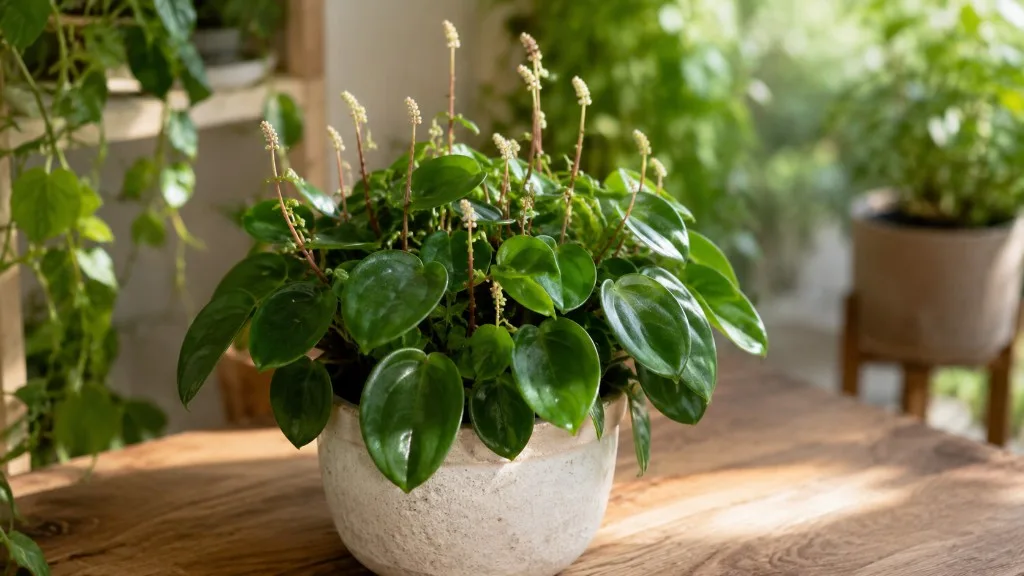
Raindrop Peperomia Light Requirements: Window Guide
Raindrop Peperomia Light Requirements: Window Guide
Raindrop Peperomia (Peperomia polybotrya) is one of those houseplants that looks indestructible until you place it wrong. The thick, glossy, teardrop-shaped leaves suggest a tough succulent temperament, but the plant evolved under a rainforest canopy - not on a baking windowsill. Light is the variable that decides whether your raindrop peperomia stays compact and upright with firm new leaves, or slowly turns into a stretched, pale version of the nursery photo you remember.
The practical target is bright indirect light: strong ambient brightness on the leaves without harsh, unfiltered midday sun beating directly on the canopy for hours. NC State Extension classifies Peperomia polybotrya as preferring bright, indirect sunlight and lists its outdoor cultural light need as partial shade - direct sun only part of the day, roughly two to six hours, not all-day exposure. (NC State Extension Gardener Plant Toolbox) That partial-shade framing is the bridge between “put it anywhere” advice and the reality that too dim produces leggy stems while too harsh scorches the very leaves that make Raindrop Peperomia overview worth keeping.
This guide focuses on the decisions that protect leaf quality: how much light raindrop peperomia actually needs, where to place it by window direction, whether direct sun is ever acceptable, when grow lights make sense, and how to read warning signs before damage becomes the plant’s new normal.
How Much Light Raindrop Peperomia Actually Needs
Raindrop peperomia is not a deep-shade plant, and it is not a full-sun plant either. It sits in the middle band most tropical foliage houseplants occupy: enough brightness to fuel steady photosynthesis and maintain leaf thickness, but not so much direct radiation that the semi-succulent tissue overheats and loses water faster than the small root system can replace it. Experienced growers often describe the sweet spot as roughly 10,000 to 20,000 lux of indirect light - bright enough that you could comfortably read near the plant without turning on a lamp, but not so intense that your hand casts a sharp shadow with heat you can feel on the leaf surface.
Indoors, that usually means placing the pot within one to three feet of a bright window, where light actually reaches the leaves rather than merely illuminating the room around the pot. A common mistake is judging placement by how bright the room feels to your eyes. Human vision adapts to dim spaces; the plant does not. If the raindrop peperomia sits on a shelf five feet from a south window, the wall may look fine to you while the canopy receives a fraction of what it needs for compact growth.
Raindrop peperomia also has a directional habit: stems lean toward the brightest source when light is uneven. Rotate the pot a quarter turn every week or two during active growth so the plant stays symmetrical rather than developing a permanent tilt. The goal is not to chase a lux number on a phone app - though a basic light meter can help calibrate your instincts - but to produce firm new leaves at short internode spacing over a two-week observation window.
The Practical Light Range for Compact, Glossy Growth
For most homes, think in three tiers. Ideal: bright indirect light for most of the day - an east window, a bright north window in the Northern Hemisphere, or a south/west window with sheer diffusion or several feet of setback so rays never sit on the leaves at solar noon. Acceptable short term: moderate indirect light in a well-lit room where the plant clearly receives window light but not the brightest spot; growth may slow and internodes may lengthen slightly, but the plant should not collapse. Poor long term: dim corners, interior rooms with a single small window across the space, or desks far from any natural source - survival is possible for months, but leggy stretching and smaller new leaves are nearly guaranteed.
The new-growth test is the most reliable check. Look at the youngest leaf or the node actively pushing a new shoot. In good light, that leaf should emerge at a normal size relative to mature leaves, with the characteristic glossy thickness and slight dimple from the peltate attachment point. In too little light, new leaves arrive smaller, thinner, and farther apart on the stem. In too much light, new leaves may show pale bleaching, crisp margins, or warping even before older leaves fully scorch. Old damaged foliage will not repair itself; always read the newest tissue when deciding whether a placement works.
Why Light Matters for Peperomia polybotrya Health
Light is the engine behind every other care decision for raindrop peperomia. Brighter exposure increases photosynthesis, which increases water uptake, transpiration, and the rate at which roots consume oxygen in the pot. Dim exposure slows all of that down. Because this species carries water in its thick leaves and maintains a compact root system relative to many houseplants, growers often misread thirst signals - but light is frequently the hidden variable. A plant moved from a dim shelf to a bright east window will dry out faster and need a shorter interval between water checks even if your calendar schedule stayed the same.
Light also controls architecture. Raindrop peperomia naturally grows as a compact, erect plant reaching about 12 inches tall and equally wide indoors under good conditions, according to NC State Extension. (NC State Extension Gardener Plant Toolbox) Without adequate photons, the plant abandons that tidy shape and etiolates - botanic shorthand for stretching toward a light source with longer stems and weaker tissue. That is not a cosmetic quirk; etiolated stems are structurally weaker, hold less stored water, and recover slowly even after you fix the light.
Finally, light quality affects the gloss and turgor that make raindrop peperomia desirable. Leaves should feel smooth and slightly firm, like a thick coin with a waxy skin. Chronic under-lighting produces softer, duller foliage that wrinkles faster between waterings because the plant never built reserves properly. Over-lighting without acclimation produces the opposite failure mode: dehydrated, scorched patches on tissue that could not ramp up protective mechanisms fast enough.
Rainforest Understory Origins and Indoor Implications
Peperomia polybotrya is native to Colombia, Ecuador, and Peru, where it grows in warm, humid tropical environments as an understory or edge plant receiving filtered light through canopy gaps rather than open-sky desert sun. (NC State Extension Gardener Plant Toolbox) That evolutionary context explains three practical indoor rules.
First, the plant expects consistency more than extremes. A steady bright indirect day beats alternating blazing noon sun and deep shade. Second, heat plus light matters. Understory plants experience bright moments, but leaf temperature stays moderated by humidity and air movement. Indoors, a south window pane can superheat leaves touching glass even when the room air feels mild. Third, raindrop peperomia tolerates lower light than many high-light tropicals - which is why it works on desks and in offices - but “tolerates” is not the same as “thrives.” Office survival stories often hide slow decline: the plant lives, yet each new leaf is a little smaller until the whole specimen looks tired.
Compared with thin-leaf peperomias like some ripple types, raindrop peperomia’s succulent-like foliage grants slightly more tolerance for bright conditions when acclimated, but less forgiveness for sustained deep shade because the plant still needs strong indirect light to maintain leaf bulk. Clemson HGIC notes peperomias prefer indirect light from east or south-facing windows and that direct sun can scorch leaves - the plant will tell you when the spot is too dim or too intense.
Best Window Placement for Raindrop Peperomia Indoors
Window direction is a shorthand, not a guarantee. Obstructions, overhangs, tinted glass, neighboring buildings, and seasonal sun angle all modify what “south window” means in your specific room. Still, direction gives you a ranked starting point before you fine-tune with the new-growth test.
East-facing windows are the safest default for raindrop peperomia in most homes. Morning sun is cooler and shorter in duration than afternoon sun, delivering a gentle direct-light boost that many plants use to kick-start photosynthesis without the heat load of late-day rays. Place the pot on the sill or within one foot of the glass if leaves do not touch the pane; morning contact is less risky than midday contact but still worth avoiding on frosty winter mornings in cold climates.
North-facing windows work well when unobstructed and especially in rooms with light-colored walls that bounce brightness back toward the plant. In the Northern Hemisphere, north light is consistent and soft - excellent for raindrop peperomia if the window is large and the plant sits close. A small north window in a deep room may still be too dim; watch internode length over two weeks rather than assuming “north equals fine.”
South- and west-facing windows can work but usually need management: sheer curtains, blinds angled to block direct beams at solar noon, or placing the plant three to six feet back so it lives in bright ambient light rather than on the blast zone of the sill. Unfiltered south or west exposure is where raindrop peperomia most often develops bleached patches and crisp leaf edges, particularly in summer when day length and intensity peak.
East, North, South, and West Windows Compared
East windows offer bright indirect light with optional gentle direct morning sun - the combination raindrop peperomia handles best without drama. North windows offer steady soft light ideal for maintaining gloss if intensity is adequate; move the plant closer to the glass than you would for a south exposure because total photons are lower. South windows deliver high total daily light but require diffusion or distance to avoid scorch; they are excellent in winter when sun angle is lower and intensity through glass is weaker. West windows combine strong afternoon intensity and heat; treat them like south windows with extra caution from mid-afternoon onward, or pull the plant back during summer months.
If you have multiple windows, choose the one where new growth looks best, not the one that looks best in your interior layout. Raindrop peperomia is compact enough for a windowsill when exposure is appropriate, which makes it a strong candidate for kitchen east sills, bright bathroom north windows with frosted glass, or living-room spots with filtered south light. Avoid placing it in a hallway that appears “bright” because of overhead fixtures but receives no meaningful window light on the leaves themselves.
Sheer Curtains, Distance, and Glare Control
Sheer white curtains are one of the most useful tools for raindrop peperomia in south- or west-facing rooms. They convert harsh direct beams into diffused bright light that raises ambient levels without pinpoint radiation on individual leaves. If you dislike curtains, a partially closed blind that blocks the sun disk while leaving the sky visible achieves a similar effect. Distance works too: moving from the sill to a table three feet inside the window often drops direct radiation dramatically while keeping brightness high.
Watch for reflected glare off mirrors, glossy furniture, or white tile floors. Rarely lethal alone, reflections can add localized hot spots. Also note HVAC drafts: a bright window is useless if cold winter air or hot AC blast hits the same leaves daily. NC State Extension lists comfortable indoor temperatures around 65 to 75°F for this species; cold glass at night can damage tissue pressed against it even when light levels are perfect. (NC State Extension Gardener Plant Toolbox)
Can Raindrop Peperomia Take Direct Sun?
Short answer: some direct sun, yes - all-day direct sun, no for most indoor setups. Raindrop peperomia can handle limited direct exposure when acclimated gradually and when that exposure arrives as cool morning sun or lightly filtered midday light, not as punishing west-window rays in July. The partial-shade classification from extension sources is your anchor: think hours, not all-day entitlement.
Direct sun becomes dangerous when leaves touch hot glass, when a plant moves suddenly from a dim shop to a south sill, or when outdoor summer sun hits a pot that was grown indoors without hardening off. The thick leaves store water, but they also heat up quickly in direct radiation. Scorch shows up as tan or white patches, sometimes only on the sun-facing dome of the teardrop leaf where curvature catches the most intensity.
Outdoor growing in USDA zones 10 to 12 is possible in bright shade, dappled shade, or morning-sun locations protected from harsh afternoon exposure. Indoors, treat “direct sun” as a seasonal spice, not the main diet.
Morning Sun vs Midday Rays on Thick Teardrop Leaves
Morning sun carries lower heat load and shorter duration. An east window with an hour or two of direct morning rays on acclimated leaves often produces excellent color and firmness without scorch. Midday and afternoon sun through clear glass concentrates infrared heat. Even if the leaf does not bleach immediately, repeated hot cycles can cause marginal crisping, upward curling, and accelerated soil dry-down that tempts you to overwater on a schedule built for a dimmer spot.
If you want to experiment with more direct light - say, pulling the plant slightly forward on an east sill - do it in spring or fall when angles are moderate, not in midsummer without watching daily. NC State Extension recommends avoiding wetting leaves to prevent leaf spots, and Clemson HGIC warns that direct sun can scorch peperomia foliage - the stable indoor pattern is brightness without harsh beams on the canopy.
Low-Light Limits: Survival vs Healthy Growth
Raindrop peperomia can survive in lower light longer than many reviewers admit. It is often sold as an office-friendly, beginner-tolerant plant precisely because it does not collapse the week you place it on a desk away from windows. Survival, however, is a low bar. In chronic low light, the plant stops looking like raindrop peperomia even while it technically remains alive.
Low light slows photosynthesis, so the plant extends internodes to reach toward the brightest vector it detects - usually a distant window or a ceiling fixture humans perceive as adequate but plants cannot use efficiently. Each new leaf may be smaller than the last, reducing the glossy teardrop impact that defines the species. Flowering, already sporadic indoors, becomes rare or absent because the plant will not spend energy on reproductive spikes when basic growth is constrained. Root activity slows, soil stays wet longer, and the classic peperomia failure mode - root stress from overwatering on a dim shelf - becomes more likely even for careful waterers.
If your only option is a low-light desk, plan on a grow light rather than hoping genetics will override physics. If you accept low light for design reasons, reduce watering frequency and skip aggressive feeding because the plant cannot use excess inputs without photons to drive metabolism.
Etiolation and Smaller New Leaves in Dim Rooms
Etiolation is the telltale low-light syndrome: longer stems, wider gaps between leaves, and a general lean toward the brightest direction. On raindrop peperomia, etiolated stems feel softer and less upright, and the plant loses the compact silhouette NC State describes as characteristic of the species. (NC State Extension Gardener Plant Toolbox) Smaller new leaves indicate chronic deficit rather than a single bad week - especially when older leaves at the base remain full-size from a brighter past.
Fix low light by moving one step brighter, not by jumping from a dark corner to a south sill in one day. A desk plant might move to within three feet of an east window first; if internodes still lengthen after two weeks, add a small LED rather than risking scorch with a dramatic window move. Pruning leggy tops after light improves can force bushier regrowth, but pruning without fixing light simply repeats the stretch on shorter stems.
Grow Lights When Natural Windows Fall Short
Windowless offices, north apartments with deep floor plans, and winter rooms with short photoperiods all push raindrop peperomia below its preferred brightness band. A full-spectrum LED grow light is the most reliable fix - not because the plant is picky about brand, but because standard room bulbs optimize lumens for human vision, not the photosynthetic wavelengths leaves use.
Raindrop peperomia responds well to white full-spectrum LEDs in the 5000–6500 K range, the same class used for foliage houseplants and seedling benches. You do not need bloom-heavy red spectra for this species; leaves, not flowers, are the goal. Position matters as much as bulb type: overhead light prevents the hard lean common with single-window setups.
Fixture Height, Hours, and Spectrum for Peperomias
A practical starting setup:
- Hang or clip the fixture 12 to 18 inches (30 to 45 cm) above the top of the canopy.
- Run the light 12 to 14 hours daily on a timer to approximate a long bright day.
- Choose a horticultural full-spectrum white LED rated for plants, not a decorative filament bulb.
- Combine with ambient window light when possible so growth does not depend entirely on a single directional source.
After two weeks, evaluate new growth. If stems still stretch and leaves shrink, lower the fixture two inches or add one hour to the timer - adjust one variable at a time. If leaf surfaces look bleached or curled only under the lamp, raise the fixture two to three inches or reduce hours slightly. Heat buildup on enclosed shelves can mimic scorch even with LEDs; feel the leaf surface with the back of your hand at midday lamp-on.
Clemson HGIC notes peperomia can tolerate somewhat low light near a large north-facing window but performs best with bright indirect exposure - numbers that translate cleanly to 12–14 hours of moderate-intensity LED when natural light is weak because artificial sources typically deliver lower total daily photons unless positioned close. Use new-leaf firmness as your calibration tool, not a rigid hour count copied from a different room.
Seasonal Light Changes and Winter Shortfalls
Light is not static indoors. Winter lowers sun angle, shortens day length, and reduces intensity through glass even when the window direction stays the same. A raindrop peperomia that thrived on a north windowsill in June may stretch subtly toward the glass by February, producing softer new leaves and wider internodes despite your Raindrop Peperomia watering guide staying identical. That is a light problem, not a mysterious nutrient deficiency.
Seasonal adjustment usually means moving the plant closer to the glass during dark months - while still avoiding leaf contact with cold panes - or adding supplemental LED hours from October through March in northern latitudes. Reverse the process in late spring: if you moved the pot onto a brighter sill for winter, watch for scorch when summer sun returns and pull it back or add sheer diffusion before leaves bleach.
Spring and fall are the best seasons to permanently upgrade exposure because intensity ramps gradually. If you plan to move raindrop peperomia outdoors for summer in a warm climate, treat it as a light experiment in bright shade first, not a jump to open patio sun. Outdoor dappled light under a tree canopy often matches the species’ native niche better than any indoor sill.
Warning Signs Your Raindrop Peperomia Has the Wrong Light
Raindrop peperomia reports light stress on new tissue first. Old scorched or stretched leaves will not revert to perfect form; they either remain as scars or are eventually shed. When diagnosing, change one variable - usually placement - then wait 10 to 14 days before also altering watering, fertilizer, or pot size. Overlapping edits make every symptom look like root rot.
Also separate light stress from thirst. Soft leaves can mean underwatering or overwatering; light-driven scorch often appears on firm leaves with localized bleached zones rather than uniform wilting. Yellowing lower leaves on chronically moist soil in a dim room frequently couples low light with slowed root function - fix brightness and dry-down together.
Too Much Light: Scorch, Bleach, and Sudden Leaf Drop
Bleached white or tan patches on the sun-facing portion of teardrop leaves indicate photobleaching - tissue where chlorophyll broke down faster than the plant could protect itself. Crisp, dry margins that appear suddenly after a window move suggest scorch or heat stress at the glass, not necessarily underwatering. Upward curling or cupping during peak hours can be a protective response to excess radiation and leaf temperature load. Sudden leaf drop after relocation to a harsh south or west sill without acclimation is a common failure mode - the plant sheds leaves it cannot support under the new load. Wilting on moist soil at midday in direct sun may indicate root-zone heat in dark pots on hot sills rather than thirst.
Fixes: pull back from the glass, add sheer diffusion, shift to east or filtered bright exposure, acclimate gradually over 7–14 days, and avoid dark containers sitting on metal or stone sills that store heat. Trim severely damaged leaves only after conditions stabilize so you are not removing photosynthetic area while the plant is still stressed.
Too Little Light: Leggy Stems and Faded Gloss
Visible lean toward the window or bulb shows directional starvation. Longer gaps between leaves on new growth confirm etiolation, not a temporary growth spurt. Smaller, thinner new leaves relative to older baseline leaves signal chronic low light. Dull, less glossy foliage across the canopy often precedes wrinkling between waterings because the plant never built reserves properly. Slow or absent new growth in warm months, when the plant should push steadily, points to insufficient photons or a combination of low light and overwatering suppressing roots.
Fixes: move closer to the window, remove light-blocking obstructions, rotate the pot weekly, add or lower a grow light, extend photoperiod on the timer, and pinch leggy tips after light improves to encourage bushier regrowth from nodes. Do not compensate with extra fertilizer in dim conditions - without light, nutrients cannot be used efficiently and may accumulate unused in the pot.
How to Move and Acclimate Raindrop Peperomia Safely
Sudden light jumps cause more raindrop peperomia casualties than gradual exposure ever does. Nursery plants often arrive from bright greenhouse shade that does not match your home. Conversely, a plant grown all winter on a dim shelf will burn if placed on a south sill the first sunny day of April. Treat every major move as acclimation, not relocation.
A reliable 7–14 day protocol:
- Start one step brighter, not five. Move from an interior desk to a spot three feet from an east window, not directly on a south sill.
- Hold for three to four days and inspect the youngest leaf for bleaching, crisping, or stretch.
- If new growth looks clean, move six inches closer to the window or add 30–60 minutes of direct morning sun.
- If bleaching appears, hold position or step back until new leaves emerge healthy.
- Adjust watering as brightness increases - brighter plants dry faster - but do not change pot size or fertilizer during the same week.
- Rotate the pot at each step so the canopy adapts evenly.
When moving outdoors for summer, place the pot in bright shade or dappled light for the first week before any sun flecks last more than an hour. When moving back indoors in fall, reverse the process: reduce direct exposure gradually so the shift to lower total light does not coincide with leaf drop from shock.
The new-growth test closes the loop. After acclimation, the youngest leaves should return to full teardrop size, glossy surface, and short internodes. If they do not, the current step is still too bright or still too dim - adjust once more and wait another full two weeks before calling the experiment finished.
Conclusion
Raindrop peperomia light requirements boil down to a bright indirect baseline with partial-shade tolerance when exposure is filtered and introduced gradually - not to the vague “medium light” label that gets slapped on every peperomia tag. East windows and bright north exposures are the safest defaults indoors; south and west windows work with sheer diffusion or distance; deep dim corners produce alive but aesthetically failed plants with leggy stems and faded gloss.
Direct sun is a limited tool - cool morning rays on acclimated leaves, not baking midday beams on glass-contact foliage. When windows cannot deliver enough brightness through winter or back-room placements, a 12–14 hour full-spectrum LED positioned 12 to 18 inches above the canopy restores compact growth more reliably than fertilizer ever will. Read new leaves, not nostalgia for old ones; change light one step at a time; and pair every brightness increase with a watering check adjustment because this semi-succulent species drinks faster when photosynthesis ramps up.
Get the light band right and raindrop peperomia becomes one of the easiest glossy foliage plants to keep upright and firm on a windowsill. Miss it and even perfect soil and patience produce a stretched, dull impostor of the teardrop leaves you bought the plant for in the first place.
When to use this page vs other Raindrop Peperomia guides
- Raindrop Peperomia overview - Start here for whole-plant context before deep-diving this topic.
- Raindrop Peperomia problems hub - Jump to symptom-specific fix guides when this care topic does not resolve the issue.
- Not Enough Light on Raindrop Peperomia - Escalate here when light adjustments are not enough.
- Leggy Growth on Raindrop Peperomia - Escalate here when light adjustments are not enough.
- Leaf Drop on Raindrop Peperomia - Escalate here when light adjustments are not enough.
Related Raindrop Peperomia guides
- Raindrop Peperomia overview
- Raindrop Peperomia watering
- Raindrop Peperomia soil
- Raindrop Peperomia propagation
- Raindrop Peperomia fertilizer
- Raindrop Peperomia repotting
- Not Enough Light on Raindrop Peperomia
- Leggy Growth on Raindrop Peperomia
- Leaf Drop on Raindrop Peperomia
- Raindrop Peperomia problems
Related tool
Try the Plant Problem Diagnosis Tool with raindrop-peperomia pre-selected to estimate needs for your setup.