Leaf Drop on Raindrop Peperomia: Causes, Checks & Fixes
Quick answer
Leaf drop on Raindrop Peperomia usually means the root zone has stayed wet too long or the plant was recently moved-not random bad luck. Push your finger deep into the mix and lift the pot for weight before changing light, repotting, or feeding.
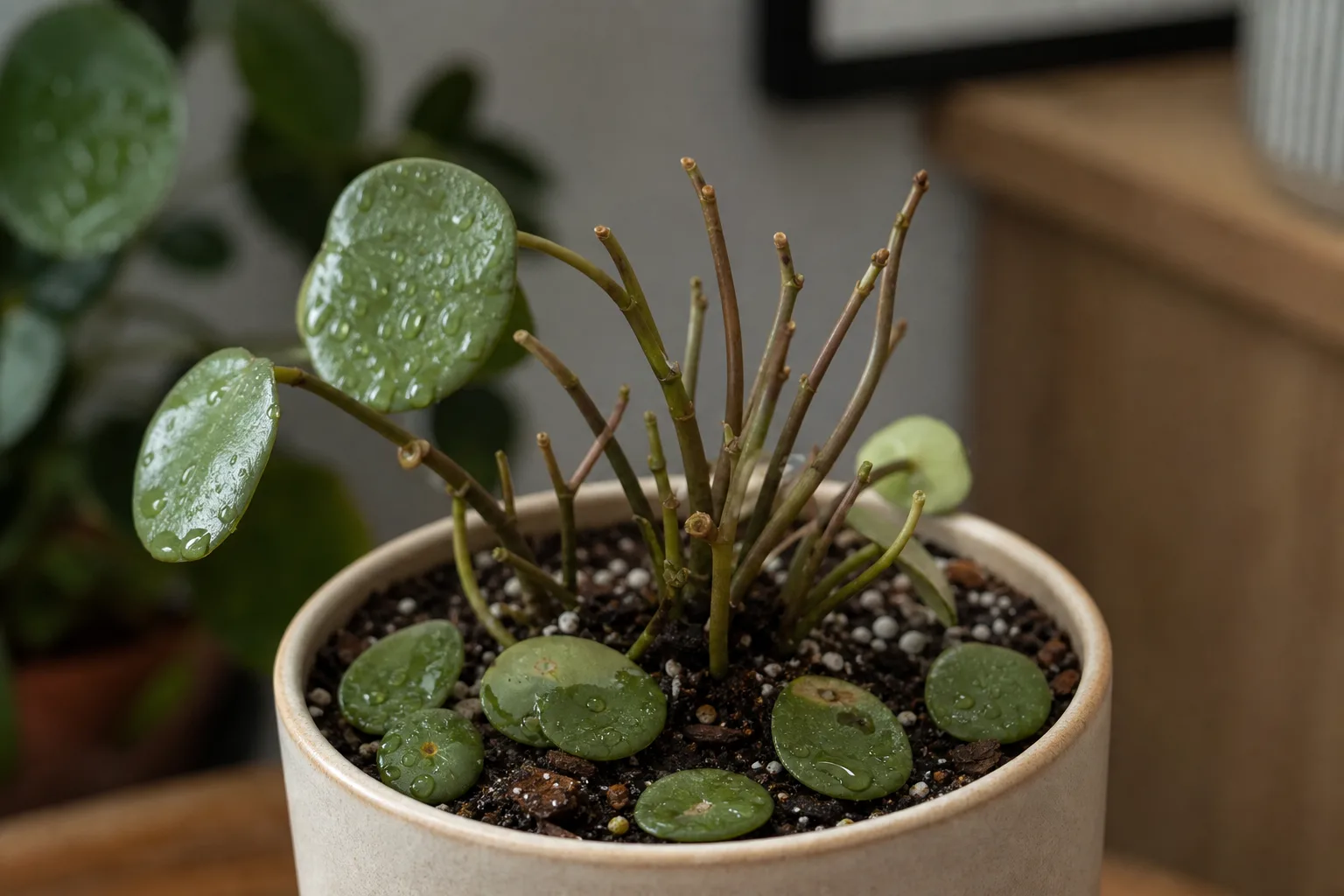
Leaf Drop on Raindrop Peperomia: Causes, Checks & Fixes
This guide covers leaf drop on Raindrop Peperomia. See also the general Leaf Drop guide, watering, and light pages for this plant.
Leaf Drop on Raindrop Peperomia: Causes, Checks & Fixes
Quick answer
A few lower teardrop leaves falling from an otherwise firm Raindrop Peperomia (Peperomia polybotrya) is often normal aging. Problematic leaf drop is continuous shedding-especially of still-green or half-yellow leaves across the upright crown. On this species, the most common triggers are overwatering that damages tiny roots in an oversized pot, underwatering during active growth, insufficient light after a move, and cold or dry drafts near HVAC vents.
This page is the umbrella symptom guide for shedding teardrop leaves. It helps you confirm why leaves are falling and apply one first fix. For cause-specific deep dives, use the overwatering guide when the pot stays heavy and wet, the underwatering guide when mix is bone dry, the root rot guide when stems soften on sour-smelling soil, and the Raindrop Peperomia watering guide for dry-down rhythm and seasonal intervals.
Before repotting, fertilizing, or shifting the pot again, check soil moisture 5–7 cm deep and lift the pot for weight using the same probe method described in the watering guide. That single step tells you whether to pause watering or give one thorough drink-and stops you from stacking fixes that make shedding worse.
What leaf drop looks like on Raindrop Peperomia
Raindrop Peperomia grows as a compact, erect plant with thick green stems and glossy, peltate teardrop leaves clustered above a small root ball-not a trailing vine. Because the crown is upright and compact, lower-leaf loss is more visible than on spreading peperomias; a thinning base can look dramatic even when the top still looks healthy.
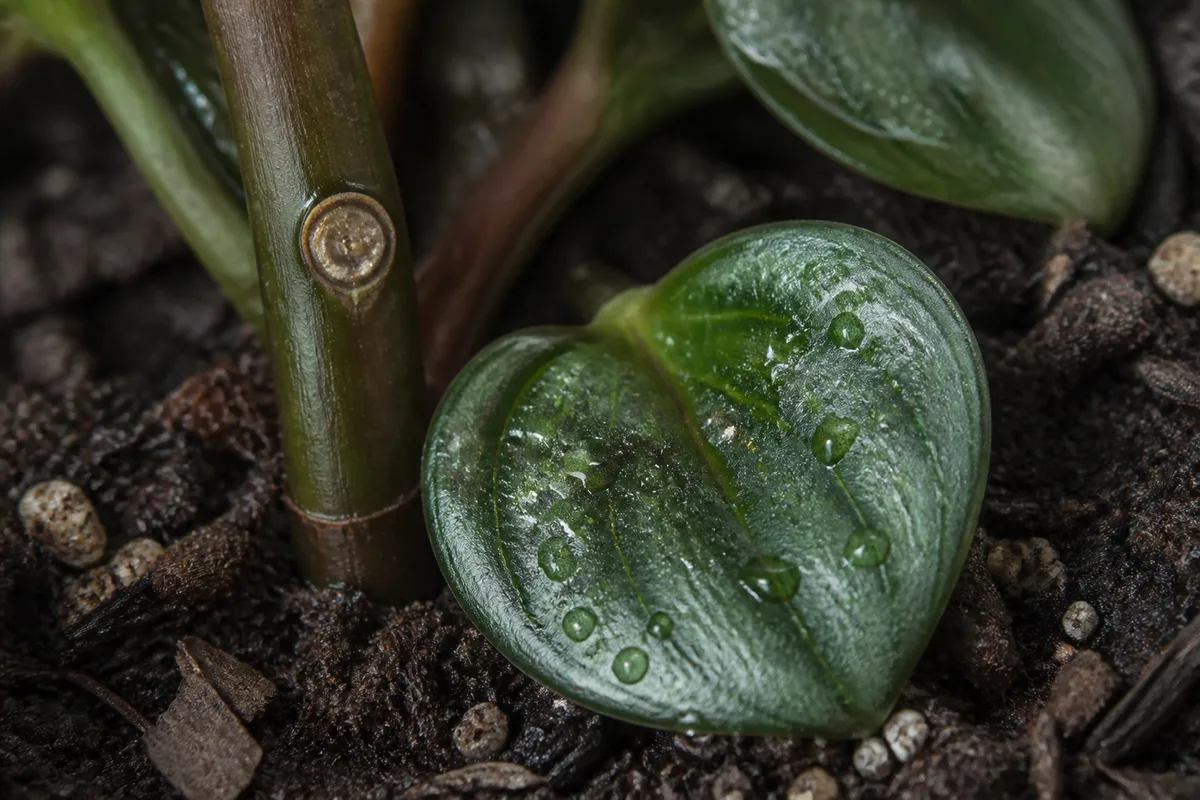
Leaf Drop symptoms on Raindrop Peperomia - compare with healthy tissue on the same plant.
Normal senescence vs. stress drop
Normal senescence: one or two bottom teardrop leaves turn yellow, then detach while new glossy foliage at the top looks firm and upright. Stress-related drop looks different:
- Yellow-then-drop pattern on multiple lower leaves while soil stays wet and the pot feels heavy
- Green teardrop leaves popping off with little resistance after a recent move, repot, or winter window shift
- Pale, small new leaves on thin stems before older foliage falls-often paired with leggy growth in dim corners
- Mushy petioles at the soil line where peltate blades attach, sometimes with leaves still partly green
- Sticky residue or speckling on new growth when sap-sucking pests weaken the plant enough to shed leaves
Unlike fast-growing pothos, Raindrop Peperomia recovers slowly. A dropped teardrop leaf will not grow back on the same petiole; new leaves emerge only from nodes along the stem. Glossy teardrop blades can mask early turgor loss-the leaf still looks full until the petiole fails and the whole blade detaches suddenly.
Why Raindrop Peperomia drops leaves
Raindrop Peperomia sheds foliage when roots or the environment cannot support the full leaf canopy. Several species-specific factors make this plant more sensitive than a basic trailing peperomia.
Overwatering and root stress. Raindrop Peperomia prefers moist, well-drained soil and bright, indirect sunlight. Its fleshy teardrop leaves store water, so the plant uses moisture slowly-especially in dim rooms where soil stays wet for days around a small root mass. Root rot can result from overwatering, and damaged roots fail to supply the canopy-triggering yellowing and drop even when upper leaves still look partly green. If it is overwatered, it will drop its leaves. An oversized pot holds water around tiny roots for days; the compact crown sits close to damp mix, so poor drainage hits this plant quickly. Early wet-soil drop is covered here; advancing rot rescue lives on the overwatering and root rot guides.
Underwatering during growth. Raindrop Peperomia tolerates brief dry spells but not prolonged drought while actively pushing new glossy leaves. Bone-dry mix forces the plant to shed foliage it cannot hydrate. Leaves may feel thin and slightly crisp before they detach. See underwatering on Raindrop Peperomia when pot weight and dry mix at depth confirm drought stress.
Insufficient light. Yellowing or curling of the leaves indicates overwatering on peperomias, but low light slows water use so the same watering rhythm becomes excessive. Plants in dim corners shed inner foliage they cannot sustain while soil stays damp longer than expected-a common winter trap when growth slows but calendar watering continues.
Drafts and temperature swings. Peperomias should be protected from cold drafts. Sudden cold from AC vents, winter windows, or porch trips can cause green teardrop leaves to drop without prior yellowing. Indoors, Raindrop Peperomia does best with temperatures between 65 and 75 degrees Fahrenheit.
Relocation and repotting shock. Plants subjected to a significant change in environment may drop leaves, though this should ease within about three weeks if conditions stabilize. Raindrop Peperomia often sheds after nursery-to-home moves, repotting, or shifting from a bright greenhouse to a dim living room. Moving indoor plants between environments can also trigger leaf drop when light levels change sharply.
Pests on new growth. Monitor for spider mites, mealybugs, fungus gnats, and scale on Raindrop Peperomia. Severe sap-sucking weakens new teardrop leaves first, and stressed plants may shed foliage before obvious pest damage spreads across the whole crown.
Pilea watering confusion. Raindrop Peperomia is commonly confused with Pilea peperomioides, which many growers keep on a different rhythm. If you treat Raindrop Peperomia like a moisture-loving pilea and keep the mix lightly damp at all times, chronic wet roots often show up first as lower-leaf yellowing and drop-not as an obvious wilt. Baseline species context: Raindrop Peperomia overview.
How to confirm the cause
Work through these checks in order before changing multiple variables:
- Soil moisture at 5–7 cm depth - Wet and cold-damp mix with yellowing lower leaves points to overwatering. Bone-dry mix with thin, slightly crisp teardrop leaves suggests underwatering.
- Pot weight - A heavy pot days after watering confirms slow dry-down, often from an oversized container or cachepot trapping runoff. A feather-light pot confirms drought stress.
- New growth quality - Firm glossy teardrop leaves on stiff green stems mean the core is healthy. Pale, small, or thin new leaves with long internodes mean light is too weak even if watering seems fine.
- Recent history - Note repotting, room moves, new windows, or winter heat running. Drop within two weeks of a change often fits acclimation, not rot.
- Draft path - Feel for cold or dry airflow from AC, heat vents, or leaky winter glass near the upright crown.
- Stem and petiole firmness - Press the base of falling leaves where petioles attach to the stem. Firm petioles with environmental clues fit water or light stress; soft mushy stems at soil line with wet mix suggest advancing root damage.
- Pest scan - Inspect leaf undersides, stem joints, and new unfurling teardrop leaves for mites, mealybugs, or scale bumps.
If only one or two oldest bottom leaves yellowed while soil moisture and light are stable, you are likely seeing natural senescence-not an emergency.
First fix to try
Check soil moisture 5–7 cm deep, then take one watering action-nothing else yet.
If the mix is wet or the pot is heavy and teardrop leaves are yellowing or dropping, stop watering until the mix is completely dry. Move Raindrop Peperomia to bright indirect light with airflow if it has been in a dim corner-but do not also repot, prune heavily, or fertilize the same week. Follow the overwatering guide if damp soil persists after two weeks of dry-down.
If the mix is bone dry, the pot is light, and leaves look thin or slightly crisp, water thoroughly once until excess drains from the hole and the saucer is emptied within 30 minutes. Then wait for the mix to dry completely before the next drink, using the rhythm in the watering guide.
If you recently moved or repotted the plant and stems are still firm, hold all other changes for two to three weeks. Keep light and watering steady so Raindrop Peperomia can acclimate.
Do not repot on day one unless soil smells sour, stems are softening at the base, or roots are clearly rotting when you inspect.
Step-by-step recovery
Once the first fix is in place, follow this sequence based on what you confirmed:
For overwatering-related drop: Skip watering until the mix dries completely. Ensure drainage holes are open and the pot is not sitting in a full saucer or sealed cachepot. If drop continues after two weeks of corrected watering, proceed to the root inspection walkthrough below-or follow the full ladder on overwatering on Raindrop Peperomia. Remove only fully yellow or detached leaves; keep any partially green teardrop foliage that still photosynthesizes.
For underwatering-related drop: Establish a moisture-based rhythm-water only after the mix dries completely, roughly every 7–10 days in active growth and less in winter when dry-down slows. Raindrop Peperomia is forgiving after a single missed drink but not after weeks of chronic drought during new leaf production. Winter intervals often stretch to 14–21 days in cool dim rooms as growth slows-see the watering guide winter section for seasonal checks.
For low-light drop: Move to bright indirect light-east window or filtered south/west exposure without harsh midday sun. Rotate the pot weekly so all sides keep even growth. Hold watering steady for two weeks; do not compensate with extra water.
For draft or cold shock: Relocate away from vents and cold glass. Keep room temperature in Raindrop Peperomia’s comfort zone and avoid touching the plant to a chilly windowpane at night.
For post-repot or relocation shock: Minimize further disturbance. Maintain stable light and watering; drop should slow within one to three weeks if stems stay firm.
For pest-related drop: Isolate the plant, rinse leaf undersides, confirm active pests, then treat before adjusting fertilizer or repotting.
Root inspection when drop continues past two weeks
If shedding continues despite corrected watering and light-and especially if green teardrop leaves detach while soil stays wet-inspect roots before the next drink. This is the bridge between early leaf-drop triage on this page and full rot rescue on the root rot guide.
- Unpot carefully - Slide Raindrop Peperomia out and shake away wet mix so roots are visible. Work over newspaper; small root balls come out easily from appropriately sized pots.
- Smell and look - Sour odor, black or brown mushy roots, and soft tissue at the stem base confirm advancing rot-not simple acclimation shock.
- Trim to firm tissue - With sterilized scissors, remove roots that are brown, black, hollow, or slimy. Keep anything firm and pale tan or white.
- Evaluate the crown - If the upright stem above the damage stays firm and green, recovery is realistic. If the entire base is mushy, stem-cuttings from firm upper nodes may be the backup path described on the overview and propagation pages.
- Repot to fit roots - Use fresh airy mix with perlite in a pot only slightly larger than the trimmed root ball-not the leaf spread. Oversized containers stay wet and invite relapse.
- Delay the next drink - After repotting, wait until the top layer is lightly moist to near-dry before one thorough watering with full saucer drainage. Do not fertilize during recovery.
Do not upsize the pot during active drop to “help drying”-more mix volume keeps the root zone wet longer around Raindrop Peperomia’s compact roots.
Recovery timeline and signs of improvement
Raindrop Peperomia is slow-growing, so leaf drop slows before the crown looks full again. Expect shedding to decrease within one to three weeks once watering and light stabilize. New glossy teardrop leaves may take several more weeks to emerge from stem nodes.
Signs you are winning:
- Fewer leaves falling each week
- Firm upright stems and petioles
- New teardrop leaves unfurling glossy and stiff
- Pot weight and dry-down becoming predictable between waterings
Signs the problem is worsening:
- Green teardrop leaves detaching without yellowing first while soil stays wet
- Stem base softening at soil line
- Sour smell from mix
- New growth stalling entirely for more than a month
Fully yellow or dropped leaves will not return on the same petioles. Bare lower sections may stay visible on Raindrop Peperomia’s upright stems-that is cosmetic, not fatal, if the crown keeps producing healthy new foliage.
Lookalike symptoms
Use this table to separate leaf drop from related problems before stacking fixes. Full yellow-leaf-only cases-foliage discolors but stays attached-are covered on the yellow leaves guide.
| Pattern | Leaf look | Pot / soil | Stems | Likely cause | Next step |
|---|---|---|---|---|---|
| Continuous lower drop | Yellow lower teardrops, may stay partly green | Heavy, wet at 5–7 cm | Firm or softening at base | Overwatering / early root stress | Stop water → overwatering |
| Green mass drop after move | Still-green teardrops detach easily | Variable moisture | Firm green stems | Acclimation / light shock | Hold steady 2–3 weeks |
| Thin crisp leaves then drop | Dry-feeling blades | Light pot, dry at depth | Firm | Underwatering | Deep soak once → underwatering |
| Yellow leaves, no drop yet | Discolored but attached | Often wet in dim room | Firm | Early overwatering or light stress | Yellow leaves guide |
| Wilting with wet soil | Limp teardrops, may yellow | Damp days after watering | Petioles limp, may soften | Root damage / rot | Root inspection → root rot |
| Leggy stretch, inner drop | Pale small new leaves | Can stay wet in dim corner | Long internodes | Low light (+/- wet soil) | Brighten placement |
| One old bottom leaf every few months | Single yellow teardrop | Stable moisture | Firm crown | Normal senescence | No action needed |
Brown tips without mass drop usually point to low humidity or fluoride in tap water rather than root failure.
Leggy growth without drop is primarily a light issue; the plant stretches before it sheds.
Mistakes to avoid
Do not increase watering because leaves are falling-wet roots are the most common Raindrop Peperomia killer. Do not fertilize a shedding plant to “push” new teardrop leaves while roots are wet; that adds salt stress when the root zone already lacks oxygen. Do not repot, prune, relocate, and feed in the same week during active drop. Do not assume every fallen teardrop leaf means the plant is dying; confirm soil, light, and stem firmness first. Raindrop Peperomia is listed as non-toxic to cats and dogs, but still handle gently when inspecting roots and keep fallen leaves cleared if pets chew plant debris.
How to prevent leaf drop next time
Match watering to how fast your pot dries in your actual light-let the compost partially dry between waterings and cut back in winter when growth slows, following the Raindrop Peperomia watering guide for seasonal intervals. Keep Raindrop Peperomia in bright indirect sunlight with stable placement; avoid bouncing it between rooms with very different brightness. Choose a pot only slightly larger than the root ball so mix does not stay wet around tiny roots, and empty saucers after every drink rather than letting a cachepot hold standing water. Buffer the plant from HVAC drafts. Treat Raindrop Peperomia on its own watering rhythm-not like Pilea peperomioides.
When to worry
Prioritize root inspection if active drop continues more than two weeks despite corrected watering and light, if healthy green teardrop leaves detach in clusters, or if stems soften while soil is wet-follow the root rot guide before trying fertilizer or sun moves. A Raindrop Peperomia with firm stems, slowing drop, and one new glossy teardrop leaf emerging is on the path to recovery even if the crown looks sparse for now.
Related Raindrop Peperomia guides
- Raindrop Peperomia overview - species baseline, upright habit, and Pilea comparison
- Raindrop Peperomia watering - dry-down rhythm, pot weight checks, and winter slowdown
- Overwatering on Raindrop Peperomia - wet soil, heavy pot, and full dry-down ladder
- Underwatering on Raindrop Peperomia - dry wilt vs. rot confusion
- Root rot on Raindrop Peperomia - mushy roots and trim-and-repot protocol
- Yellow leaves on Raindrop Peperomia - discoloration without mass drop
Leaf drop on Raindrop Peperomia usually traces to wet roots in a compact, fleshy-leaved plant-often worsened when dim light or winter slowdown extends dry-down time, or when Pilea watering habits carry over. Run the lookalike table, apply one cause-matched first fix, and judge recovery by new glossy teardrop leaves on stiff stems. If wet soil and sour smell align, move to the overwatering and root rot guides before changing fertilizer or sun exposure.
How we wrote and verified this guide: Recommendations were checked against NC State Extension, Clemson Cooperative Extension, Royal Horticultural Society, University of Maryland Extension, and ASPCA references cited inline. Author: sai-ananth. Reviewer: LeafyPixels Review Board. Methodology: plant problem guidance is reviewed against botanical references, extension resources, and LeafyPixels plant-care data before publication. Last reviewed: 2026-06-17.