Yellow Leaves on Raindrop Peperomia: Causes, Checks & Fixes
Quick answer
Yellow leaves on Raindrop Peperomia usually mean the root zone has stayed wet too long-not a fertilizer shortage. Allow the top 1–2 inches of mix to dry completely, check stem bases for softness, and inspect roots before watering again.
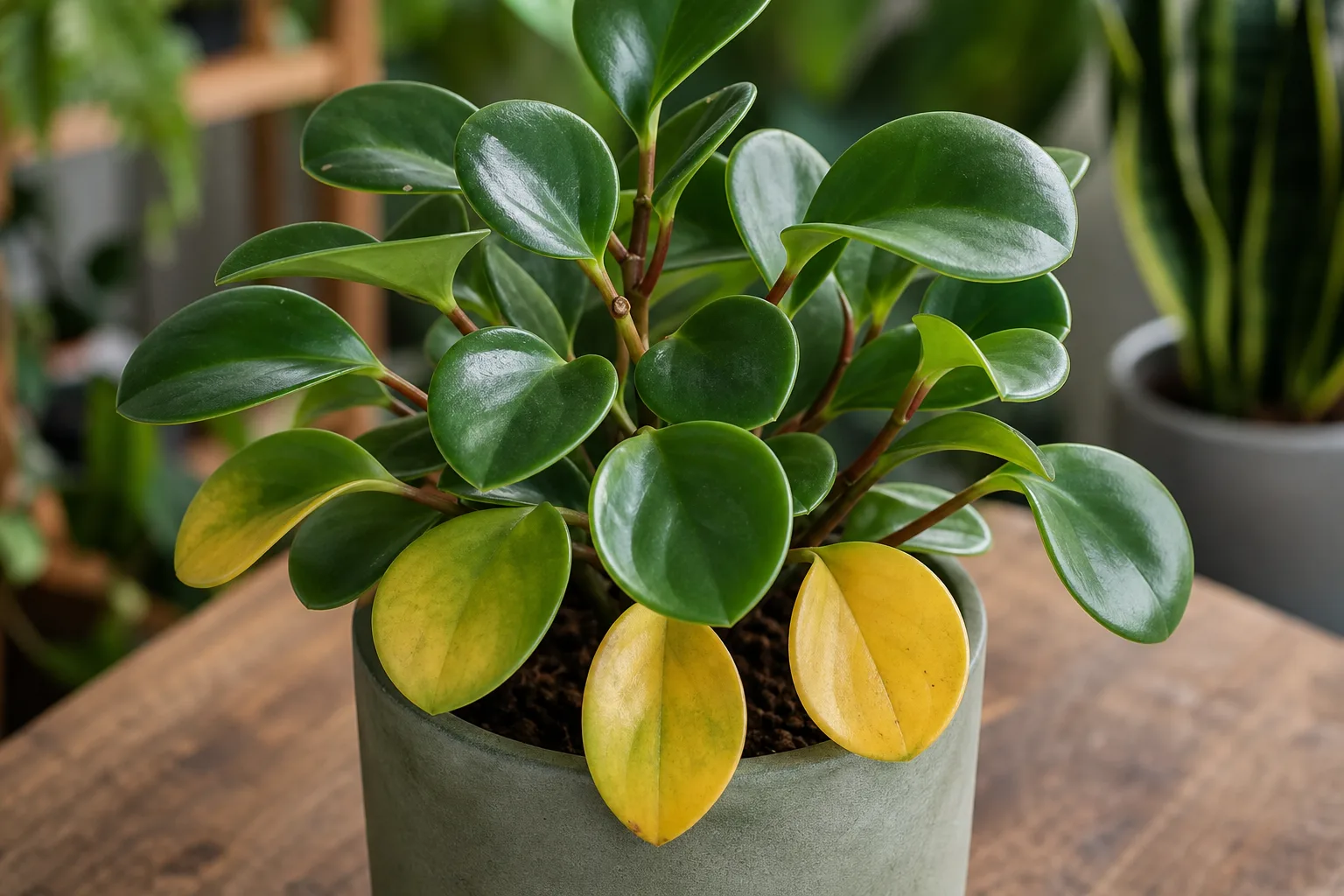
Yellow Leaves on Raindrop Peperomia: Causes, Checks & Fixes
This guide covers yellow leaves on Raindrop Peperomia. See also the general Yellow Leaves guide, watering, and light pages for this plant.
Yellow Leaves on Raindrop Peperomia: Causes, Checks & Fixes
Quick answer
Yellow leaves on Raindrop Peperomia (Peperomia polybotrya) almost always trace to how the root zone is managed-not hunger. This upright species carries fleshy, glossy, teardrop-shaped leaves on a compact, erect habit with a smaller root system than many houseplants. When soil stays wet, roots lose oxygen and lower foliage yellows first while petioles go limp.
First step: stop watering and confirm moisture 5–7 cm deep before you change anything else. If stems are firm, dry-down may be enough. If stem bases feel soft or soil smells sour, escalate to the overwatering guide or root rot guide-this page covers every yellow-leaf cause; those pages carry the full wet-root rescue ladder.
For baseline care rhythm, see the Raindrop Peperomia watering guide.
What yellow leaves look like on Raindrop Peperomia
Watch the peltate teardrop leaves and green stems together. On healthy plants, each thick glossy blade attaches near the center of the leaf, creating a slight dimple that makes limp petioles easy to spot when roots fail.
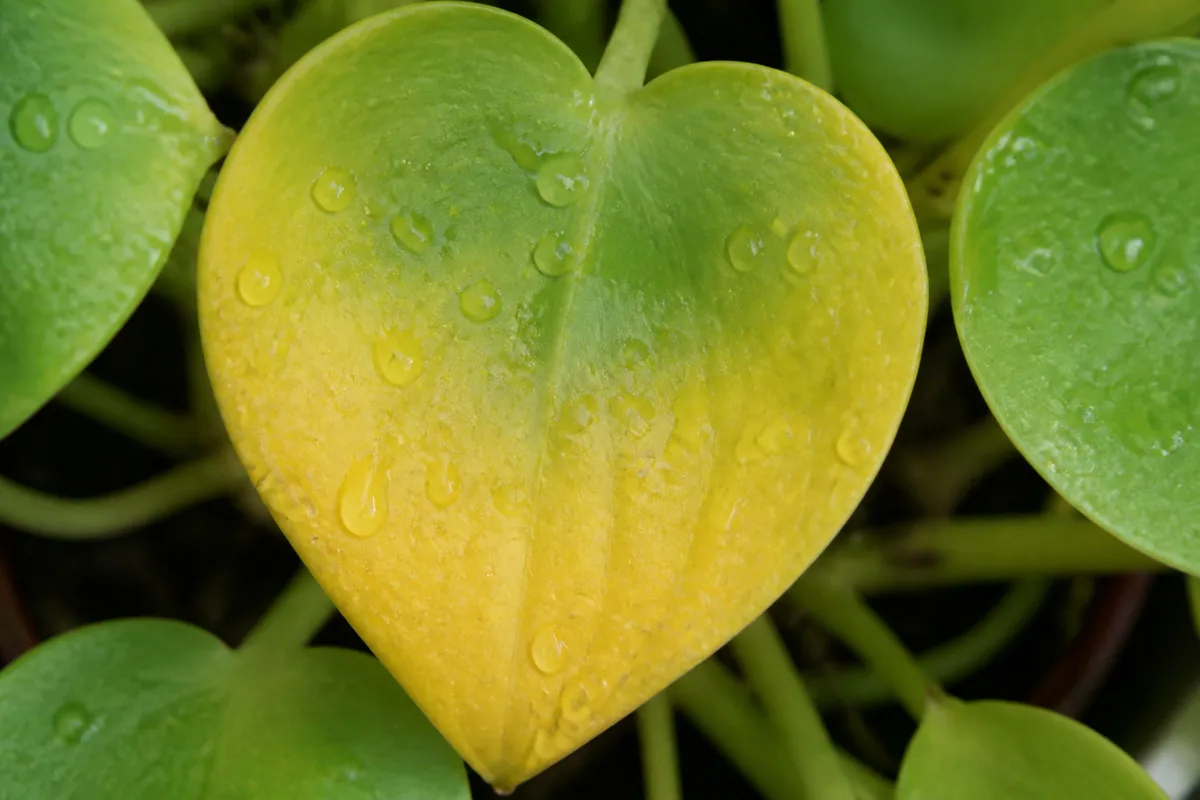
Yellow Leaves symptoms on Raindrop Peperomia - compare with healthy tissue on the same plant.
Overwatering pattern: Yellowing often starts on lower leaves while upper teardrops still look full. Gloss dulls on normally shiny green foliage. Petioles lose springiness and hang even though blades still feel thick. Stem bases where leaves meet soil may soften-the line between chronic wet feet and advancing rot.
Underwatering pattern: Yellowing may appear on more leaves at once with a very light pot and mix dry 5–7 cm down. Teardrop edges feel slightly thin or crisp, but stems usually stay firm. A thorough soak perks the plant within hours-unlike the wilt-with-wet-soil trap.
Light-stress pattern: Pale small new leaves and leggy stretch over weeks-not sudden bottom-up yellowing. Often paired with slow dry-down in dim corners that masks overwatering.
Natural aging: One or two yellow lower leaves on an otherwise firm upright plant with appropriate soil moisture is normal renewal-not an emergency.
Why Raindrop Peperomia gets yellow leaves
Overwatering (most common)
Chronic wet soil is the top cause. NC State Extension notes Raindrop Peperomia prefers moist, well-drained soil-damp in a breathable pot, not constantly saturated. Clemson HGIC warns that peperomia will drop leaves if overwatered and recommends letting the soil dry out between waterings.
An oversized pot holds water around a tiny root ball for days. Low light slows transpiration, so summer watering rhythm becomes excessive in winter. The wilt-with-wet-soil trap-limp yellow lower leaves while mix stays damp-means damaged roots cannot move water, not that the plant needs another drink.
For the full dry-down checklist, recovery ladder, and fungus-gnat notes, use the overwatering on Raindrop Peperomia guide rather than repeating every rescue step here.
Underwatering
Raindrop Peperomia stores moisture in fleshy leaves, so it tolerates brief dry spells-but repeated drought still yellows foliage. A light pot, dry mix at depth, and crisp teardrop edges on firm stems point here. Confusing underwatering limpness with overwatering root failure is common; pot weight and moisture at depth separate them. Details: underwatering on Raindrop Peperomia.
Natural lower-leaf senescence
Upright peperomias renew from the top. Shedding one or two oldest lower teardrops while new glossy leaves open above is normal if stems stay firm and soil moisture is appropriate. Worry when multiple leaves yellow in a week or yellowing climbs the stem.
Low light and slow water use
Raindrop Peperomia prefers bright, indirect sunlight. In dim north rooms or short winter days, the plant photosynthesizes less and the pot dries slowly-while calendar watering continues. Pale stretched new growth and persistent damp soil together create yellow leaves that look like overwatering even when you water “correctly.” Cross-check the not enough light guide.
Nutrient deficiency (rare)
True deficiency yellowing-often with pale new growth on otherwise dry appropriate soil-is uncommon on indoor Raindrop Peperomia compared with chronic wet roots. If you have watered on a wet-soil schedule for months, fix oxygen and drainage before reaching for fertilizer. Long-depleted mix in an old pot is a separate case; see magnesium deficiency only after roots and watering rhythm are stable.
Pilea confusion
Raindrop Peperomia is commonly confused with Pilea peperomioides. Many growers keep pilea on a lighter, more frequent watering rhythm. Treating P. polybotrya the same way keeps mix damp too long and yellows lower leaves within weeks.
Lookalike symptoms to rule out
| Pattern | Leaf look | Soil / pot | Stem / new growth | Likely cause | Next step |
|---|---|---|---|---|---|
| Bottom-up yellowing, dull gloss | Soft yellow lower teardrops, limp petioles | Heavy, wet at 5–7 cm | Firm or softening at base | Overwatering / root stress | Stop water → overwatering |
| Wilt despite wet mix | Yellow lower leaves, full-looking blades | Damp days after watering | Petioles limp, may soften | Root damage / early rot | Inspect roots → root rot |
| Crisp yellow, thin edges | Dry-feeling teardrops | Light pot, dry at depth | Firm green stems | Underwatering | Deep soak once → underwatering |
| One or two bottom leaves only | Single old yellow blade | Appropriate moisture | Firm upright stem, glossy new top leaves | Normal senescence | No action if isolated |
| Pale small new leaves, leggy stretch | Older leaves may yellow slowly | Can stay wet in dim room | Long gaps between nodes | Low light (+/- wet soil) | Brighten placement → not enough light |
| Sudden limp collapse | Multiple yellow leaves fast | Normal or wet | Soft stem bases, sour smell | Advanced rot | Unpot immediately → root rot |
| Limp teardrops, soil variable | Yellow or dull, not crisp | Any moisture | Wilt pattern without clear wet/dry | General wilt confusion | Wilting guide |
How to confirm the cause
- Pattern - Bottom-up yellowing with wet soil suggests overwatering. All-over crisp yellow with dry soil suggests underwatering. One or two lower leaves on a firm plant suggests aging.
- Pot weight - Heavy feel days after watering supports wet roots; very light pot after a missed week supports thirst.
- Moisture at depth - Press your finger 5–7 cm into the mix near the pot edge-not just the surface. Cool clinging material means wait, not water.
- Stem firmness - Gently wiggle petioles at the soil line. Soft collapsing bases confirm root or stem trouble; firm tissue supports dry-down first.
- Gloss check - Dull teardrops on normally shiny foliage often precede drop when roots are stressed.
- Light exposure - Dim corners that also keep soil wet are the most common Raindrop yellow-leaf trap. Compare placement against the light guide.
- Smell and roots - Sour odor or mushy roots on unpotting confirm rot over simple aging. Unpot only if wet soil and decline continue after one full dry-down cycle, or if stems soften.
First fix for Raindrop Peperomia (by confirmed cause)
Pick one path based on what you confirmed-do not repot, fertilize, and move to sun on the same day.
If overwatering or wet soil is confirmed
Stop watering immediately. Move to bright, indirect light with good airflow so the pot dries predictably. If stem bases are still firm, wait until the top 1–2 inches of mix feel dry before one thorough soak with full saucer drainage. If stems are soft or soil smells sour, follow the overwatering and root rot workflows before the next drink.
If underwatering is confirmed
Water thoroughly until excess drains, empty the saucer within 30 minutes, and resume the normal dry-down rhythm from the watering guide. Do not mist instead of watering.
If low light is the main driver
Move the pot to brighter filtered indirect light-within a few feet of an east window or behind a sheer curtain at south or west glass. Hold watering until the top layer dries unless soil is already bone dry. Deep dive: not enough light on Raindrop Peperomia.
If normal aging is confirmed
Remove the single yellow leaf if you prefer a tidy plant. Keep your existing watering rhythm and light placement. No repot or feed needed.
For all paths: Fully yellow blades usually drop and do not re-green. Do not fertilize until new growth is clean for two weeks-fertilizer on stressed wet roots adds salt stress without fixing oxygen loss.
Recovery timeline
| Phase | What to expect | Success signal |
|---|---|---|
| Days 1–3 | No new yellow leaves after dry-down or corrected watering | Pot weight dropping; soil drying at 5–7 cm |
| Week 1–2 | Mild overwatering cases stabilize; limpness eases on firm roots | Yellowing stops spreading up the stem |
| Weeks 2–4 | New small glossy teardrop leaves open firm at the top | Petioles regain stiffness on new growth |
| Weeks 3–6+ | Root trim and repot-slower rebound in winter or dim rooms | Firm stem bases; consistent new teardrops |
| Permanent | Old fully yellow blades do not re-green | Focus on apical nodes, not salvaging every old leaf |
Worsening signs: yellowing climbs to new growth while soil stays wet, stem bases soften further, sour smell intensifies, or no new growth appears after four weeks of corrected care-escalate to root rot diagnosis.
Recovery example: A Raindrop in a heavy wet 6-inch pot in a dim north room showed three yellow lower teardrops with dull gloss and limp petioles while mix stayed damp 5–7 cm down. After stopping water, moving to bright east indirect light, and waiting until the top 1–2 inches dried completely, the first firm glossy new teardrop leaf opened at the top in about 12 days-old yellow blades dropped, but the upright habit stabilized without Raindrop Peperomia repotting guide because stem bases stayed firm.
What not to do
Do not fertilize yellow leaves on wet soil. Do not repot into a much larger pot hoping for recovery-oversized pots keep compost wet longer and cause roots to rot. Do not mist foliage to “help” stressed leaves-NC State Extension advises avoiding wetting the leaves to prevent leaf spots; misting does not fix soggy roots.
Do not water because teardrop leaves look slightly soft without checking soil-limpness from root failure and limpness from drought need opposite responses. Do not keep the plant in a cachepot holding standing water.
Raindrop Peperomia is non-toxic to cats and dogs, but still handle gently when inspecting roots and keep trimmed debris away from curious pets.
How to prevent yellow leaves next time
Pair bright indirect light with moist, well-drained soil and a container only slightly larger than roots. Let compost partially dry between waterings-for Raindrop Peperomia that means the top 1–2 inches, per the watering guide. Reduce frequency when growth slows in cooler months. Empty saucers after every drink.
Track pot weight weekly until you know your plant’s dry-down rhythm in its current window. Keep care notes separate if you also grow Pilea peperomioides-different species, different expectations.
When to worry
Act quickly when:
- Stem bases feel soft while soil is wet or sour-smelling
- Multiple leaves yellow and collapse within days
- The upright plant wilts flat despite wet mix
- Yellowing spreads to new top growth after you already dried the pot down once
Yellow leaves alone on one or two lower nodes with firm stems and glossy new teardrops at the top are usually not urgent. If the main stem is mushy throughout, check whether firm tissue remains higher on the stem for propagation cuttings before discarding the plant.
Related Raindrop Peperomia problems
Use this page as the yellow-leaf differential hub; follow the link that matches what you confirmed:
- Raindrop Peperomia overview - species baseline and Pilea comparison
- Overwatering on Raindrop Peperomia - wet soil, gnats, and full rescue ladder
- Root rot on Raindrop Peperomia - mushy roots and trim-and-repot protocol
- Underwatering on Raindrop Peperomia - dry wilt vs. rot confusion
- Wilting on Raindrop Peperomia - limp teardrops on wet vs. dry mix
- Not enough light - pale growth and dim-corner dry-down
- Raindrop Peperomia watering - dry-down rhythm and seasonal adjustments
- Raindrop Peperomia light - placement and gloss maintenance
- Raindrop Peperomia propagation - stem-cutting backup if main stem fails
Conclusion
Yellow leaves on Raindrop Peperomia usually trace to wet roots in a compact, fleshy-leaved plant-often worsened when dim light slows dry-down or when Pilea watering habits carry over. Run the lookalike table, apply one cause-matched first fix, and judge recovery by new glossy teardrop leaves on stiff stems-not old blades re-greening. If wet soil and sour smell align, move to the overwatering and root rot guides before changing fertilizer or sun exposure.
How we wrote and verified this guide: Recommendations were checked against NC State Extension, Clemson Cooperative Extension, Royal Horticultural Society, Missouri Botanical Garden, and ASPCA references cited inline. Author: sai-ananth. Reviewer: LeafyPixels Review Board. Methodology: plant problem guidance is reviewed against botanical references, extension resources, and LeafyPixels plant-care data before publication. Claims validation: claims-validator-v1 pass with inline external links documented below. Last reviewed: 2026-06-16.
When to use this page vs other Raindrop Peperomia guides
- Raindrop Peperomia watering guide - Use for routine moisture checks before assuming yellow leaves is the main issue.
- Raindrop Peperomia problems hub - Browse all 20 common issues on this species.
- Not Enough Light on Raindrop Peperomia - Different entry point when symptoms overlap with yellow leaves.