Raindrop Peperomia Repotting: When, How & Mistakes
Raindrop Peperomia Repotting: When, How & Mistakes
Raindrop Peperomia Repotting: When, How & Mistakes
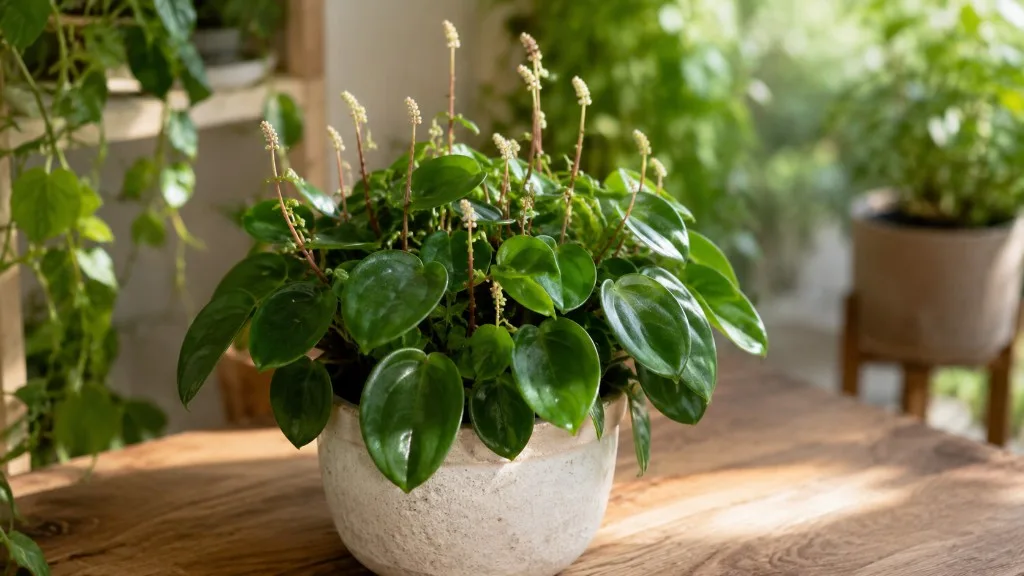
Raindrop Peperomia (Peperomia polybotrya) looks sturdy. The glossy, teardrop-shaped leaves are thick enough to store water, and the plant sits upright like it could handle a rough afternoon. Then you tug it out of its pot and discover a root system that is shallow, brittle, and easy to snap. That mismatch - tough-looking foliage above, delicate roots below - is the whole reason repotting Raindrop Peperomia overview feels riskier than repotting a pothos or a snake plant. Get the timing, pot size, and soil wrong, and the plant wilts for weeks. Get them right, and it pushes out fresh coin-shaped leaves within a month.
This guide covers every decision that matters: when repotting is actually necessary, the best season to do it, how to choose a container that will not drown the roots, the soil ratios that drain fast enough for P. polybotrya, a full step-by-step procedure with gentle handling built in, and the post-repot care that determines whether your plant recovers cleanly or slides into rot.
If symptoms persist, see the Brown Leaves on Raindrop Peperomia guide.
Why Repotting Raindrop Peperomia Requires Extra Care
Raindrop Peperomia belongs to the Piperaceae family - the same botanical family as black pepper - and is native to the tropical understory of Colombia, Peru, and Ecuador. In the wild it grows in filtered light on the forest floor, often in shallow pockets of humus where water passes through quickly and roots never sit in standing moisture. That ecology explains almost every repotting rule you are about to read.
Unlike deep-rooted tropicals that send roots hunting for water at the bottom of a tall pot, Raindrop Peperomia keeps most of its absorbing surface in the upper few inches of soil. The roots are oxygen-sensitive: they need air moving through the mix as much as they need moisture. When ranking pages tell you to “just repot like any houseplant,” they are skipping the part that matters most for this species - how easily the root zone turns anaerobic in fresh, wet, oversized soil.
The Shallow, Fragile Root System
Peperomia roots are fine and fibrous, with relatively little structural strength compared to woody houseplants. NC State Extension describes P. polybotrya as an erect, compact houseplant reaching roughly 10 to 12 inches with a shallow root profile that is prone to damage during transplant. Snap a main root while teasing the ball apart and the plant may lose several leaves before it stabilizes. Strip too much old soil away - a technique called bare-rooting that works fine on some succulents - and you remove the fine root hairs that actually absorb water and nutrients.
The practical takeaway is simple: repot only when you have a clear reason, handle the root ball like eggshell, and change as little as necessary to solve the problem. A root-bound Raindrop Peperomia in old but functional soil is less dangerous than a healthy-looking plant moved into a pot twice the size with dense, wet mix packed around untouched roots.
Raindrop Peperomia also stores water in its semi-succulent leaves, which is why it is sometimes grouped with easy-care succulents in care articles. That comparison is misleading. The leaves hold moisture; the roots do not. Clemson HGIC notes root rot from overwatering is the most common peperomia disease - overwatering after repotting is the number-one killer because the foliage can stay plump and green for days while roots suffocate underneath.
When to Repot Raindrop Peperomia
Most healthy Raindrop Peperomia plants need a full repot every two to three years, not because the calendar says so but because potting mix breaks down, salts accumulate, and roots eventually circle the container. Some specimens happily stay in the same pot longer if the mix still drains well and growth is steady. Others - especially fast growers in bright light - show crowding within eighteen months. Treat the plant’s behavior as the trigger, not a fixed schedule.
Repot when two or more of the signs below appear together. One isolated symptom might point to watering or light instead.
Visible Signs of Root Crowding
Lift the nursery pot and look at the drainage holes first. Healthy exploration shows a pale root tip. Crowding shows thick roots circling the hole, matting against the pot wall, or growing upward toward the surface because they have nowhere else to go. When you slide the plant out, a solid white or tan root mat that holds the soil shape like a brick is the classic root-bound picture.
Other above-soil clues include a top-heavy plant that wobbles despite firm stems, new leaves arriving smaller and thinner than older ones, and water that runs straight through the pot in seconds because the root mass has displaced soil. Raindrop Peperomia is not a fast vertical grower - mature indoor specimens usually reach about 10 to 12 inches (roughly 1 foot) - so stunted size combined with a pot that feels disproportionately small is another nudge to inspect the roots. If you are unsure, the safest diagnostic step is a dry-day unpotting: slide the plant out, look at the root color and density, and slide it back if everything looks healthy and the mix still crumbles freely.
Soil Breakdown and Stalled Growth
Sometimes the roots are fine but the soil is not. Peat and organic components decompose into finer particles over time. Perlite floats to the top. The mix holds moisture longer after each watering, fungus gnats appear, or the surface smells faintly sour. You may notice the pot staying wet for days even though you have not changed your Raindrop Peperomia watering guide. That is often a soil-structure problem, not a discipline problem.
Growth that stalls in spring and summer despite good light and appropriate feeding is a late-stage signal. Before you repot for that reason alone, confirm the plant is not root-bound from underwatering stress, pest damage, or cold drafts. If the roots look white and firm and the mix still drains within a reasonable window, adjust care first. If the mix is compacted, repotting with fresh substrate is the fix.
Best Time of Year and How Often
The best window to repot Raindrop Peperomia is spring through early summer, when lengthening days and warmer temperatures push the plant into active growth. Roots regenerate faster, and minor transplant shock clears within one to two weeks instead of hanging on for a month.
Early fall can work in mild climates or consistently warm homes, but avoid winter repotting unless you are responding to an emergency - severe root rot, a pot that has cracked from root pressure, or a plant so root-bound that normal watering is impossible. During low-light months, recovery slows and wet fresh mix sits around fragile roots longer. If winter arrives and your plant is only mildly crowded, top-dress instead: scrape away the top inch of old mix and replace it with fresh, airy soil without disturbing the root ball.
How often should you repot? For most indoor Raindrop Peperomia plants, every two to three years is a reasonable baseline. Refresh soil on that interval even if the pot size stays the same. Jump pot size only when roots clearly need more horizontal room. Raindrop Peperomia tolerates being slightly snug better than it tolerates swimming in empty wet soil, so resist the urge to “give it room to grow” with a dramatic upgrade.
Choosing the Right Pot Size and Material
Pot choice is where enthusiastic owners accidentally cause the problems they were trying to prevent. Raindrop Peperomia wants a container that matches its shallow root habit, not its leaf spread.
The One-Size-Up Rule
Move up one pot size only - roughly 1 to 2 inches (2.5 to 5 cm) wider in diameter than the current container. A plant in a 4-inch pot goes into a 5- or 6-inch pot, not an 8-inch bowl. The extra soil volume in an oversized pot holds moisture the root system cannot use quickly, creating a persistent wet zone that invites root rot before the plant fills the space.
Depth matters too. A shallow pot that is wider rather than tall usually suits Raindrop Peperomia better than a deep cachepot-style container, because most roots live in the upper profile. If you must choose between slightly too shallow and noticeably too deep, err shallow with excellent drainage.
Always use a pot with at least one drainage hole. Decorative pots without holes need a nursery pot inside, and you must empty the saucer after every watering. Raindrop Peperomia in sealed containers is a short timeline to rot, no matter how gritty your mix is.
Terracotta, Plastic, and Drainage Holes
Unglazed terracotta wicks moisture through its walls and dries the root zone faster - a genuine advantage if you tend to water on schedule rather than checking soil dryness. Plastic holds moisture longer, which can help in very dry homes but punishes heavy-handed waterers. Glazed ceramic behaves closer to plastic unless it is unglazed on the inside.
There is no universal winner. Match the material to your habits. If you already underwater and the leaves occasionally feel slightly soft before you notice, plastic or glazed ceramic in a modest size may be fine. If gnats, sour soil, or chronic droop after watering sound familiar, terracotta plus a airy mix is the safer pairing.
Best Soil Mix for Repotting
Raindrop Peperomia needs a fast-draining, airy potting mix with enough organic matter to hold a little moisture between waterings but enough coarse structure to let oxygen reach the roots. Standard peat-heavy indoor potting soil used straight from the bag often compacts within months and stays wet too long right after repotting - exactly when the plant is most vulnerable.
The species prefers a mildly acidic root zone, roughly pH 6.0 to 6.6, though precise pH testing is optional for most hobbyists if drainage performance is good. NC State lists acceptable soil pH as acidic to neutral for this species.
A Simple Recipe That Drains Fast
A reliable starting mix you can measure with a scoop or cup:
- 50% quality peat-free or standard indoor potting mix
- 25% perlite or pumice
- 25% orchid bark, coco chips, or coarse coco coir
Blend dry before adding water. The finished mix should feel loose, crumble easily in your hand, and never form a tight ball when squeezed. Many growers also succeed with a commercial African violet mix amended with extra perlite, because that product category is already formulated for fine-rooted plants that hate wet feet.
Avoid fine sand unless it is labeled horticultural grade and coarse; play sand compacts and blocks air. Skip “moisture control” potting soils with water-retaining crystals - Raindrop Peperomia does not need them and they extend drying time in a fresh repot.
Clemson HGIC notes peperomia should be planted in a well-drained houseplant mix and can remain in the same pot for several years without needing annual repotting.
Can you use regular potting soil? Yes, but only if you amend it heavily - at minimum one part perlite or bark to one part soil. Unamended mix is the most common hidden reason repotted peperomias decline within six weeks.
Step-by-Step: How to Repot Raindrop Peperomia
Repotting Raindrop Peperomia is a slow, gentle task. Rushing it is how roots break. Set aside twenty to thirty minutes, work over a table covered with newspaper or a repotting mat, and keep tools clean.
What to Prepare Before You Start
Gather a new pot one size up with drainage, your blended mix, a hand trowel, clean scissors or pruning snips, a chopstick or pencil, and a watering can. Water the plant lightly one day before repotting so the root ball holds together but is not soggy. Dry soil crumbles apart; soaking wet soil smears onto roots and makes inspection harder.
If you are reusing a pot, scrub it with hot water and mild soap. If the previous occupant had rot or pests, rinse with a diluted hydrogen peroxide solution and let it dry completely.
Removing the Plant and Inspecting Roots
Turn the pot on its side and squeeze the sides to loosen the root ball before pulling. Grasp the plant at the base of the stems, not by the leaves - Raindrop Peperomia petioles snap easily. Slide the plant out in one piece if possible.
Inspect the roots under good light. Healthy roots are white to pale tan and firm. Dark, mushy, or hollow roots get trimmed back to solid tissue with clean scissors. If you remove more than a third of the root mass due to rot, consider staying in the same pot size or even slightly smaller until the plant recovers.
Tease only circling roots at the bottom and outer edges with your fingers. Do not shake off all the old soil. Leave a core of original mix around the center of the root ball unless it smells sour or is clearly degraded. That preserved zone protects fine root hairs and reduces shock.
Planting at the Correct Depth
Add enough fresh mix to the bottom of the new pot so the plant will sit at the same depth it occupied before - the base of the stems should meet the soil line exactly as they did in the old container. Burying stems deeper invites stem rot; sitting too high exposes roots and dries the crown.
Center the root ball and fill around the sides with mix, tapping the pot gently to settle without compacting. Use a chopstick to poke air pockets near the edges, not to ram soil downward. Firm lightly until the plant stands without wobbling. Do not press the surface into a hard crust.
Water lightly until a small amount runs from the drainage hole, then stop. This first watering settles mix around roots; it is not a full soak. Empty any saucer immediately.
Post-Repotting Care for the First Month
The four weeks after repotting matter more than the repot itself. Raindrop Peperomia has no bonus points for heroics - it wants stability, moderate moisture, and patience.
Watering, Light, and When to Fertilize Again
For the first two to three weeks, water less than your normal routine. Check the top 1 to 2 inches of mix with your finger; water only when that zone feels dry. The root system is re-establishing contact with new soil, and excess moisture in unused pot space is the main risk.
Place the plant back in bright, indirect light - the same exposure it had before, or slightly softer if it was in very strong window light. Avoid direct sun for the first week; stressed roots cannot supply water fast enough to prevent leaf scorch.
Hold fertilizer for at least four weeks, longer if the plant still looks wilted. Fresh mix contains enough nutrients for initial recovery, and salts from fertilizer can burn tender new root tips. When growth resumes with firm new leaves, resume a diluted balanced liquid feed at half strength during spring and summer only.
Mild transplant shock - slight leaf droop, one or two older leaves yellowing, a pause in new growth - is normal for one to two weeks. New glossy leaves in the correct size and color mean recovery is on track. Damaged leaves will not revert; watch the center of the plant instead. Full root re-establishment typically takes four to six weeks, even when visible shock fades sooner. Resist moving the plant repeatedly between rooms during that window; stable light and temperature reduce unnecessary stress while fine roots knit into the fresh mix.
According to the ASPCA, peperomias including Peperomia species are listed as non-toxic to cats and dogs. Chewing may cause mild stomach upset from mechanical irritation, not chemical poisoning, but keep plants out of reach if your pets are destructive diggers during the vulnerable post-repot phase.
Common Repotting Mistakes to Avoid
Most Raindrop Peperomia repotting failures trace back to a short list of repeatable errors. Avoid these and your success rate climbs sharply.
- Jumping two pot sizes up. The empty wet soil moat around a small root ball is the fastest route to rot.
- Bare-rooting or washing all old soil away. You strip fine absorbing roots and extend shock by weeks.
- Using unamended potting mix. Dense peat holds water in the exact week the plant cannot handle it.
- Watering heavily right after repotting. Light settling water yes; full soak no - especially in a larger pot.
- Fertilizing immediately. Wait until you see active new growth and at least four weeks have passed.
- Repotting in deep winter without an emergency reason. Recovery stalls and wet mix lingers.
- Compacting soil with heavy hand pressure. Air pockets are not the enemy; waterlogged anaerobic zones are.
- Confusing Raindrop Peperomia with Pilea peperomioides (Chinese money plant). They look similar from a distance but have different root habits and care profiles - repotting advice is not interchangeable.
- Repotting while the plant is already stressed from pests, extreme underwatering, or cold damage. Fix the primary problem first unless root rot is the primary problem.
- Skipping drainage holes because the decorative pot is pretty. No hole, no long-term success with this species indoors.
If leaves droop hard after repotting and the mix stays wet for more than five days, unpot, trim any mushy roots, let the ball air-dry for several hours in shade, and repot into fresh dry mix in a smaller pot if you overshot on size. Restart the light-watering recovery clock.
Conclusion
Raindrop Peperomia repotting rewards patience and punishes enthusiasm. The plant does not need a new home every year, and it certainly does not need a dramatic upgrade “so it can grow bigger.” Repot every two to three years - or sooner only when roots circle, mix breaks down, or watering behavior becomes impossible to read - and do the work in spring or early summer when possible. Choose a pot one size up, shallow rather than deep, with a drainage hole and a material that matches how often you actually water. Fill it with a loose, fast-draining mix heavy on perlite and bark, handle the root ball gently without bare-rooting, water lightly once, then back off on moisture and fertilizer for the first month.
Get those few decisions right and Raindrop Peperomia responds with the firm, glossy leaves that made you buy it - often within a few weeks of new growth. Get them wrong and the same plant looks like a watering mystery for a month while roots quietly fail underneath. The difference is not green thumb luck. It is matching repotting technique to a shallow-rooted, semi-succulent-leaved species that has been telling growers the same story for years: less disturbance, less water, less pot - and a mix that breathes.
When to use this page vs other Raindrop Peperomia guides
- Raindrop Peperomia overview - Start here for whole-plant context before deep-diving this topic.
- Raindrop Peperomia problems hub - Jump to symptom-specific fix guides when this care topic does not resolve the issue.
Related Raindrop Peperomia guides
- Raindrop Peperomia overview
- Raindrop Peperomia watering
- Raindrop Peperomia light
- Raindrop Peperomia soil
- Raindrop Peperomia propagation
- Raindrop Peperomia fertilizer
- Raindrop Peperomia problems
Related tool
Try the Pot Size Calculator with raindrop-peperomia pre-selected to estimate needs for your setup.