Watering Raindrop Peperomia: Schedule, Soil Checks
Watering Raindrop Peperomia: Schedule, Soil Checks, and Mistakes
Watering Raindrop Peperomia: Schedule, Soil Checks, and Mistakes
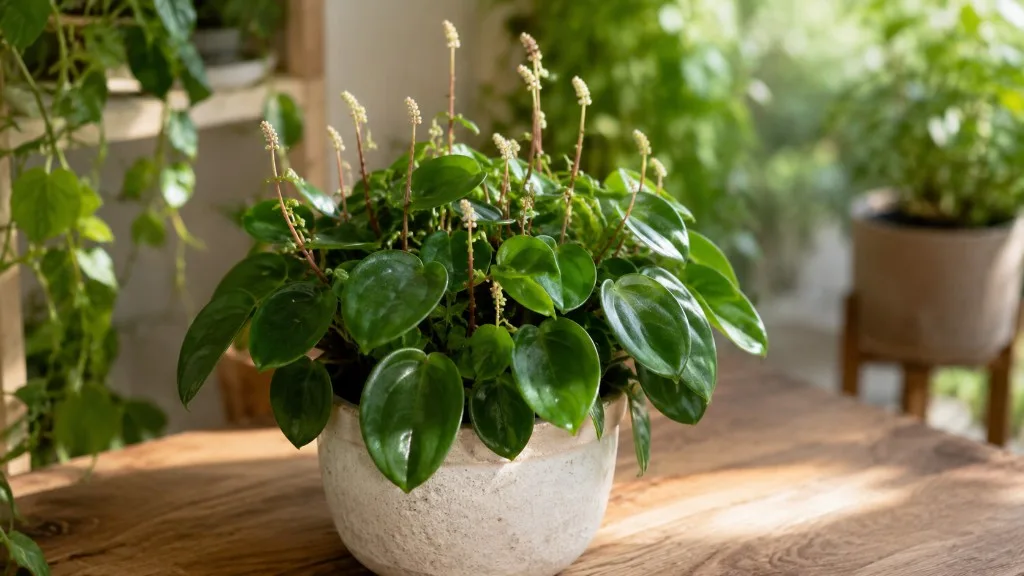
Raindrop Peperomia looks sturdy - thick, glossy, teardrop-shaped leaves that seem built to shrug off neglect. That appearance is exactly why so many growers kill it with kindness. Raindrop Peperomia (Peperomia polybotrya) stores water in those succulent-like leaves and runs a small, compact root system that cannot tolerate sitting in wet soil for days. The plant is far more forgiving of a slightly late watering than of a pot that never dries. The practical rule is simple: let the top of the mix dry before you water again, confirm with a real soil check rather than a calendar, water thoroughly when the plant is ready, and drain every drop of runoff. This guide walks through how often that actually means in a typical home, how to read the pot before you pour, what overwatering looks like on Raindrop Peperomia overview, and how to recover when the mix has stayed soggy too long.
If symptoms persist, see the Brown Leaves on Raindrop Peperomia guide.
Why Raindrop Peperomia Is Easy to Overwater
Peperomias occupy an awkward middle ground in houseplant care. They are not desert succulents, but they are not moisture-loving ferns either. Raindrop Peperomia evolved on the forest floor of South American tropical regions (Colombia, Ecuador, and Peru), where soil drains quickly through leaf litter and roots access oxygen between rain events. In your home, the same plant often sits in a peat-heavy indoor mix, inside a decorative cachepot, under dim light, getting a dutiful splash every Sunday whether it needs it or not. That combination is tailor-made for root rot.
The leaves tell part of the story. Raindrop Peperomia’s thick, glossy foliage acts as a water reservoir. When the root zone runs slightly dry, the plant can draw on stored leaf moisture and stay upright longer than a thin-leaved tropical would. Clemson HGIC notes that peperomia prefers to dry out between waterings, and NC State Extension warns that root rot can result from overwatering. That dry-top guidance exists because the leaves already buffer short dry spells - adding water while the mix is still damp stacks risk on top of stored moisture the plant is not using yet.
The root system is the other half. Raindrop Peperomia keeps a small, shallow root mass relative to its leaf display. An oversized pot holds a large volume of mix that stays wet around a tiny root ball - the classic hidden overwatering setup. Beginners see a lush plant and upsize into a statement ceramic pot “so it has room to grow,” then wonder why stems soften and lower leaves yellow within weeks. The room to grow was air around the roots, not extra wet soil.
Raindrop Peperomia is also commonly confused with Pilea peperomioides, which prefers a different watering rhythm. If you keep Raindrop Peperomia’s mix lightly moist at all times, you will overwater Peperomia polybotrya in most indoor setups. Treat it on its own terms: dry top, thorough drink, full drain, repeat.
How Much Water Raindrop Peperomia Actually Needs
A useful starting principle for all Raindrop Peperomia is this: give a full watering when the top one to two inches of mix are dry, then let the pot dry down again before the next session. The amount per pour matters less than how completely you rewet the root ball when it is time. A few tablespoons dribbled on the surface every few days keeps the top damp while the center stays inconsistently moist - then leaves droop, you add another sip, and the roots never experience a clean wet-dry cycle.
When you do water, soak evenly across the soil surface until water runs freely from the drainage holes. That deep pass rehydrates the full root zone. Raindrop Peperomia prefers moist, well-drained potting mix with added perlite or a similar fast-draining blend; the mix should accept water quickly and release excess within minutes, not hold a swamp at the bottom of the pot. Clemson HGIC recommends a well-drained houseplant mix and draining the pot before returning it to the saucer so excess can escape.
The cycle Raindrop Peperomia tolerates best is full drink → partial dry-down → full drink. It does not want permanently damp soil. It also does not want to sit bone dry for weeks in a hot window - the leaves can only compensate so long before wilting becomes structural damage. The goal is a rhythm where the top dries predictably, the root zone gets oxygen between sessions, and the leaves stay firm and upright.
How much water in milliliters or cups? Ignore that framing. A four-inch pot might need a quarter liter when dry; a six-inch pot might need twice that. Pot weight and finger depth tell you when, not a measuring cup.
How Often to Water Raindrop Peperomia Indoors
Indoor Raindrop Peperomia in active growth - Raindrop Peperomia light guide, normal room temperatures, a appropriately sized pot - typically needs water roughly every 7 to 14 days. That range is not a schedule. It is what many homes observe once they switch from calendar watering to check-first watering. A plant on a warm east window in summer may dry in a week. The same plant in a cool north room in winter may go three weeks between thorough waterings. The interval follows evaporation and growth speed, not the day of the week.
Check Raindrop Peperomia at least twice a week during the growing season. Do not water by default. Run the moisture checks, then water or walk away. After two weeks in the same spot, you will know whether your plant behaves like a seven-day Peperomia or a twelve-day Peperomia. That personal baseline beats any blog chart because it accounts for your pot material, your mix, your light, and whether the AC runs all day.
If someone tells you Raindrop Peperomia needs water “once a week,” treat that as a reminder to look at the plant, not permission to pour. Two identical-looking pots in the same room can differ by several days if one sits closer to a vent or in stronger light. Weekly autopilot watering is the single most common reason healthy Raindrop Peperomias develop yellow lower leaves by month three.
Finger Test, Skewer Probe, and Pot Weight
The finger test is the fastest daily check. Press your finger into the mix one to two inches deep near the pot edge, away from the stem. If the soil feels cool, cohesive, or clings to your skin, wait. If it feels dry and crumbly at that depth, it is time to consider watering - but confirm with pot weight if you are still learning this plant.
The pot weight test is the most reliable signal for repeat growers. Lift the pot right after a thorough watering and notice the heft. Lift it every few days. A pot that feels dramatically lighter has lost much of its available moisture. Combine weight with the finger test when unsure: light pot plus dry top one to two inches equals water; heavy pot plus limp leaves equals trouble, not thirst.
A wooden skewer or chopstick works as a low-tech backup. Insert it to mid-pot depth, wait thirty to sixty seconds, pull it out. Damp stick means wait; dry stick with a light pot means water. A cheap soil moisture meter can help if you distrust your fingers, but read it at multiple depths - surface readings lie on peat mixes.
Raindrop Peperomia has one signal that cuts through confusion: leaf firmness. Healthy leaves feel thick and springy. As the plant dries down, leaves may soften slightly before wilting. If leaves are firm and the top inch is still damp, you do not need to water regardless of what the calendar says.
Let the Top Dry Before You Water Again
“Let the top dry” is the phrase every Raindrop Peperomia care guide repeats. It is also the phrase beginners misapply most often. Dry does not mean the surface turned a lighter colour for an hour after yesterday’s misting. Dry means the top one to two inches of mix have lost enough moisture that the root zone is approaching its next drink, not sitting in leftover saturation from the last one.
Clemson HGIC frames this as letting the soil dry out between waterings, with reduced frequency in winter as growth slows. Some experienced growers allow the mix to dry more thoroughly between sessions - especially in dim rooms or after overwatering scares - because Peperomia polybotrya’s leaf storage buys margin on the dry side. The non-negotiable part is never watering into wet soil. The flexible part is whether you wait for the top inch or the top two inches, which you calibrate after watching your pot for a few cycles.
If you are ever unsure between watering today and waiting two more days, wait. Raindrop Peperomia survives brief dry spells better than it survives chronic wet feet. That bias toward dryness is not neglect - it matches how the plant’s anatomy works.
Surface Dry vs Root-Zone Dry
Surface colour deceives on peat-based indoor mixes. The top can look pale and dusty while an inch down the mix is still cool and damp - especially in low light or after a shallow watering that never reached the center. Conversely, in a very airy perlite-heavy mix under strong light, the surface may dry in a day while the core still holds usable moisture. That is why depth matters.
Surface dry alone is not enough - confirm at one to two inches. The sweet spot is top dry, middle moist but not soggy, bottom drained and airy.
Seasonal Watering Schedule for Raindrop Peperomia
Raindrop Peperomia is a warm-season grower indoors even when it never sees frost. Its water use tracks temperature, day length, and new leaf production more closely than the date on the calendar. A seasonal framework helps you anticipate change without sliding back into blind weekly watering.
In spring, dry-down accelerates as light strengthens - a plant that needed water every twelve days in February may need it every seven to nine days by May. In summer, bright indirect light may require water every 7 to 10 days. In fall, stretch intervals as evaporation drops. In winter, cool dim rooms may need water only every 14 to 21 days - reduce frequency, not thoroughness. Clemson HGIC notes peperomia drops leaves when overwatered and benefits from reduced watering as growth slows in cooler months.
Summer Growth and Winter Slowdown
Summer mistakes cluster around two habits: watering every Sunday because “that’s what houseplants need,” and upsizing into a huge pot right before the hottest weeks, which traps moisture around small roots. Heat increases evaporation, but an oversized wet pot overrides that effect. If Raindrop Peperomia pushes new glossy leaves steadily and the pot dries on a predictable rhythm, your interval is probably correct. If new growth stalls while the mix stays damp, light or overwatering - not thirst - is the likely issue.
Winter slowdown does not mean ignore the plant. Raindrop Peperomia still transpires in heated rooms. A pot that took ten days to dry in July may take eighteen in January in the same window - but a four-inch pot on a radiator shelf may still dry in a week. Adjust by check, not by memory of summer frequency. The dry-top rule does not change in winter; only the days between checks lengthen.
Watering Raindrop Peperomia by Pot Size and Root Mass
Pot size changes the schedule immediately, often more than season. Raindrop Peperomia is a compact plant - mature height is typically about 10 to 12 inches (roughly 1 foot) - and it prefers a snug pot relative to its root mass. A four-inch nursery pot dries fast and may need water every week in active growth. A gallon pot with the same root mass holds a reservoir of wet mix the roots cannot reach or use, extending dry time artificially while keeping the center soggy.
After Raindrop Peperomia repotting guide into a larger container, expect slower dry-down until roots explore the new volume. Many growers overwater freshly repotted Raindrop Peperomia because they keep the old schedule. If you upsized, reset your expectations and check weight daily for two weeks.
Terracotta breathes and dries faster than glazed ceramic or plastic. The same plant in terracotta may need water two days sooner than in plastic in identical conditions. Cachepots - decorative outer pots without drainage - hide standing water unless you lift the inner pot every time. Raindrop Peperomia in a cachepot is one of the fastest paths to stem rot because runoff collects invisibly at the bottom.
If the plant is rootbound, water may channel down the sides and out the bottom while the core stays dry, mimicking underwatering symptoms. In that case repotting into a slightly larger container with fresh airy mix often stabilizes watering behavior more than changing your calendar.
The Right Way to Water Raindrop Peperomia
Technique matters because sloppy watering creates wet crowns, uneven root hydration, and saucers full of stale water - all problems Raindrop Peperomia tolerates poorly.
Water slowly and evenly across the soil surface until moisture exits the drainage holes. A rush of water often tunnels through dry peat along the pot wall and out the bottom while the center stays dry. If that happens, pause, let the pot absorb for five minutes, and water again lightly until the surface darkens evenly.
Use room-temperature or tepid water. Very cold tap water can shock warm roots on a sunny windowsill. Raindrop Peperomia is not as finicky as some calatheas about water chemistry, but temperature still affects uptake.
Empty the saucer within fifteen to thirty minutes of watering. Standing water re-saturates the bottom root zone, blocks oxygen, and produces the classic paradox: wilting plant, wet soil. If you use a decorative cachepot, lift the inner nursery pot to water at the sink, drain fully, then return it. Never let Raindrop Peperomia sit in a puddle.
Aim water at the soil, not the leaf crown. Thick Raindrop Peperomia leaves shed water reasonably well, but repeated splashing into the stem base in dim, stagnant air encourages rot where leaves meet the stem. A narrow-spout watering can gives control.
Bottom watering - setting the pot in a tray of water until the surface moistens - is optional but useful when mix has gone hydrophobic and water runs off the top. Bottom water until the surface darkens, then drain completely. Do not leave the pot soaking for hours; Peperomia roots still need air.
Morning watering is a sensible default because any incidental splashes dry during the day. If your only reliable time is evening, still prioritize drainage over timing.
Signs You Are Overwatering Raindrop Peperomia
Overwatering is the silent killer because Raindrop Peperomia can look thirsty while roots are drowning. Watch for these patterns together, not in isolation:
Wilting despite wet soil is the hallmark. Roots damaged by low oxygen cannot transport water, so thick leaves droop even though moisture is present. Adding more water accelerates decline.
Yellow lower leaves often appear when the root zone stays wet too long. Older leaves yellow first; new growth may look pale or stop entirely. Clemson HGIC lists root rot from overwatering as the most common peperomia disease and recommends adjusting watering habits alongside mix review.
Soft, collapsing stems near the soil line suggest advanced trouble - stem rot moving up from saturated crown tissue. The stem may feel mushy where it should be firm.
Sour or musty smell from the mix indicates anaerobic conditions - bacteria breaking down organic matter in waterlogged soil. That smell is your cue to stop watering and inspect roots.
Edema or blistering on leaf surfaces can appear when roots take up water faster than leaves transpire it, sometimes linked to overwatering combined with low light.
If several signs align, stop watering, move the plant to brighter indirect light if it was in dim conditions, confirm drainage holes are open, tilt the pot to dump hidden cachepot water, and inspect roots if decline continues. Mushy brown roots need trimming, fresh well-draining mix, and often a smaller pot matching the reduced root mass.
Signs Raindrop Peperomia Is Thirsty or Underwatered
Underwatered Raindrop Peperomia is usually more straightforward than overwatered. The plant tells you earlier, and recovery is faster if you act before leaves crisp.
Noticeable wilting or drooping with a light, dry pot and dry top one to two inches points to genuine drought. After a thorough watering, firm leaves often return within a few hours - unlike overwatering wilting, which persists into the next day despite wet mix.
Dry, crumbly soil pulling away from the pot edge means the root ball went too dry. Water may run straight through cracks along the wall without rewetting the center. Fix by bottom-soaking until the surface moistens, or watering in two passes ten minutes apart.
Leaf curl or slight cupping can accompany drought stress, especially under hot, dry air. Check depth before assuming thirst - cupping alone without dry soil may be heat or light stress.
Older leaf drop after a single dry episode is normal; repeated boom-and-bust cycles weaken fine roots and make the plant react badly when water finally returns.
When rehydrating a very dry pot, water until drainage appears, wait ten minutes, water once more, then drain completely. Do not leave the plant in standing water as compensation for drought.
Raindrop Peperomia is more forgiving of underwatering than overwatering, but that forgiveness has limits. Chronic neglect still damages roots and reduces the glossy leaf display that makes the plant worth keeping.
Soil Mix and Drainage as Hidden Watering Factors
Your watering skill cannot overcome a bad mix or a pot without holes. Raindrop Peperomia wants good drainage in loamy, well-draining potting mix with added perlite - enough structure to hold moisture briefly without compacting into an oxygen-free mass. A practical home blend might be roughly 60 to 70 percent quality potting mix and 30 to 40 percent perlite, or a commercial African violet mix which is already fast-draining. Clemson HGIC recommends planting peperomia in a well-drained potting mix with enough aeration to prevent water sitting around roots.
Dense, aged indoor mix that has collapsed into a brick will stay wet on top and repel water in the center - the perfect trap for well-meaning weekly watering. If water runs off the surface instantly, the problem is mix structure, not thirst.
Drainage holes are non-negotiable for Raindrop Peperomia. Decorative pots without holes, or holes blocked by roots and debris, produce overwatering symptoms despite careful attention. If you love a hole-less pot, keep the plant in a plastic nursery pot inside it and never add water to the outer shell.
Perlite, pumice, or coarse bark increase air space. Straight garden soil in a small indoor pot compacts and suffocates Peperomia roots within weeks.
If your pot dries unevenly - wet bottom, dry top - the plant may be rootbound or the mix may have separated into layers. Repotting with fresh, uniform airy mix often fixes watering behavior more reliably than changing your interval.
How Light and Humidity Change Watering
Watering does not happen in a vacuum. Light drives water use more than any calendar. Raindrop Peperomia in bright indirect light transpires steadily and dries the pot on a shorter cycle. The same plant in medium indirect light or a dim corner may take nearly twice as long to reach dry-top status - and stays vulnerable to overwatering because evaporation is slow.
If you move a Raindrop Peperomia closer to a window for better growth, reset your watering expectations the same week. More light means more water use; it also means the plant can recover faster from minor root stress - but only if the mix still dries between sessions.
Humidity plays a secondary role. Raindrop Peperomia tolerates average household humidity (40 to 50 percent) without misting. Very dry air below thirty percent may increase transpiration slightly, shortening the dry-down window in small pots. High humidity above sixty percent does not mean you can keep soil wetter - roots still need oxygen regardless of air moisture.
Temperature between 18°C and 26°C (65°F and 78°F) suits active growth. Cool rooms slow water use; hot rooms accelerate it. Do not compensate for cool dim winters by watering more often - wait for dry top instead.
Recovering From Overwatered Raindrop Peperomia
If you caught overwatering early - yellowing just started, stems still firm, mix damp but not sour - the fix is often simple: stop watering until the top two inches dry completely, improve light if the plant was in a dim spot, and empty any hidden saucer water. Raindrop Peperomia can stabilize without repotting when roots are stressed but not destroyed.
If wilting persists more than 48 hours despite your pause, or the stem base feels soft, unpot the plant and inspect roots. Healthy Peperomia roots are pale and firm. Brown, mushy, foul-smelling roots are rot. Trim affected tissue with clean scissors, let cut surfaces air-dry for an hour, and repot into fresh airy mix in a pot sized to the remaining root mass - often smaller than the old pot.
Remove yellowed or soft leaves so the plant is not supporting failing tissue while roots recover. Do not fertilize during recovery; new nutrients cannot help damaged roots and may burn tender regrowth.
After repotting, water once thoroughly, drain, then wait for the full dry-top cycle before watering again. Recovery growth - small new leaves or firming existing ones - may take two to four weeks. Patience beats repeated rescue watering.
When to Repot After Root Rot
Repot when more than roughly one-third of the root mass is mushy, when the mix smells anaerobic, or when stems are soft at the base. Surface yellowing alone without root damage may not require repotting if you correct watering immediately.
Choose a pot only slightly larger than the trimmed root ball. Fill with fresh perlite-heavy mix; do not reuse soggy medium. Severe cases may not recover - stem cuttings from healthy tissue above the rot line are a reliable backup.
Common Raindrop Peperomia Watering Mistakes and Quick Fixes
Mistake: Watering on a calendar. Fix: Use the calendar as a reminder to check soil, not as a trigger to pour. Two pots in the same room can differ by several days.
Mistake: Daily sips instead of full drinks. Fix: Water until drainage when the top one to two inches are dry, then let the mix dry again. Sips keep the surface damp and the habit broken.
Mistake: Leaving runoff in the saucer or cachepot. Fix: Empty standing water after every session. Roots need air as much as water.
Mistake: Oversized decorative pots. Fix: Match pot volume to root mass. Raindrop Peperomia looks better slightly root-snug in airy mix than swimming in wet soil.
Mistake: Chasing wilt with water without checking. Fix: Wilting plus heavy wet pot means root stress; wilting plus light dry pot means drought. Different problems, different fixes.
Mistake: Using heavy garden soil indoors. Fix: Use porous potting mix with perlite. Garden soil compacts in containers and suffocates small Peperomia roots.
Mistake: Misting as a watering substitute. Fix: Misting does not replace root-zone watering and can keep leaf surfaces wet in stagnant air. Water the soil when dry.
Mistake: Keeping the mix “lightly moist” at all times. Fix: Raindrop Peperomia is not a fern. Let the top dry between thorough waterings.
Building a Simple Weekly Watering Routine
You do not need a spreadsheet. You need a repeatable loop that respects how Raindrop Peperomia actually behaves.
Twice a week in warm, bright months: Finger-test the top one to two inches. Lift the pot if unsure. Water deeply only when dry at depth. Empty saucers and check cachepots.
Once a week in cool, dim months: Same checks, longer expected intervals. Do not assume winter means “barely water” - small pots near heaters still dry.
Every time you water: Water until drainage, discard runoff, confirm leaves feel firm within a day. If they stay soft with wet mix, investigate roots instead of adding more water.
Once a month: Evaluate growth and adjust check frequency by a day or two based on what the plant shows. Reset the routine entirely when you change light or repot.
Conclusion
Watering Raindrop Peperomia well comes down to principles that stay constant even when the calendar changes: let the top one to two inches of mix dry before you pour, check soil and pot weight instead of watering on autopilot, water thoroughly until drainage when the plant is ready, and never leave the roots sitting in runoff. Indoor pots in active growth often land on a seven-to-fourteen-day rhythm during warm months and stretch toward fourteen to twenty-one days or longer in cool winter rooms - but your finger and the pot’s weight always override those ranges.
Raindrop Peperomia stores water in its thick leaves and runs a small root system that punishes soggy soil far more than occasional dry spells. Give it airy mix, a right-sized pot with drainage, bright indirect light, and a check-first routine. Do that and you will spend less time rescuing soft stems and yellow lower leaves - and more time enjoying firm, glossy teardrop foliage that actually earns its place on the windowsill.
When to use this page vs other Raindrop Peperomia guides
- Raindrop Peperomia overview - Start here for whole-plant context before deep-diving this topic.
- Raindrop Peperomia problems hub - Jump to symptom-specific fix guides when this care topic does not resolve the issue.