Leggy Growth on Raindrop Peperomia: Causes, Checks & Fixes
Quick answer
Leggy growth on Raindrop Peperomia means long thin stems and small pale teardrop leaves from too little light-not a fertilizer problem. Move to bright indirect light, rotate weekly, then prune stretched stems after new compact growth appears.
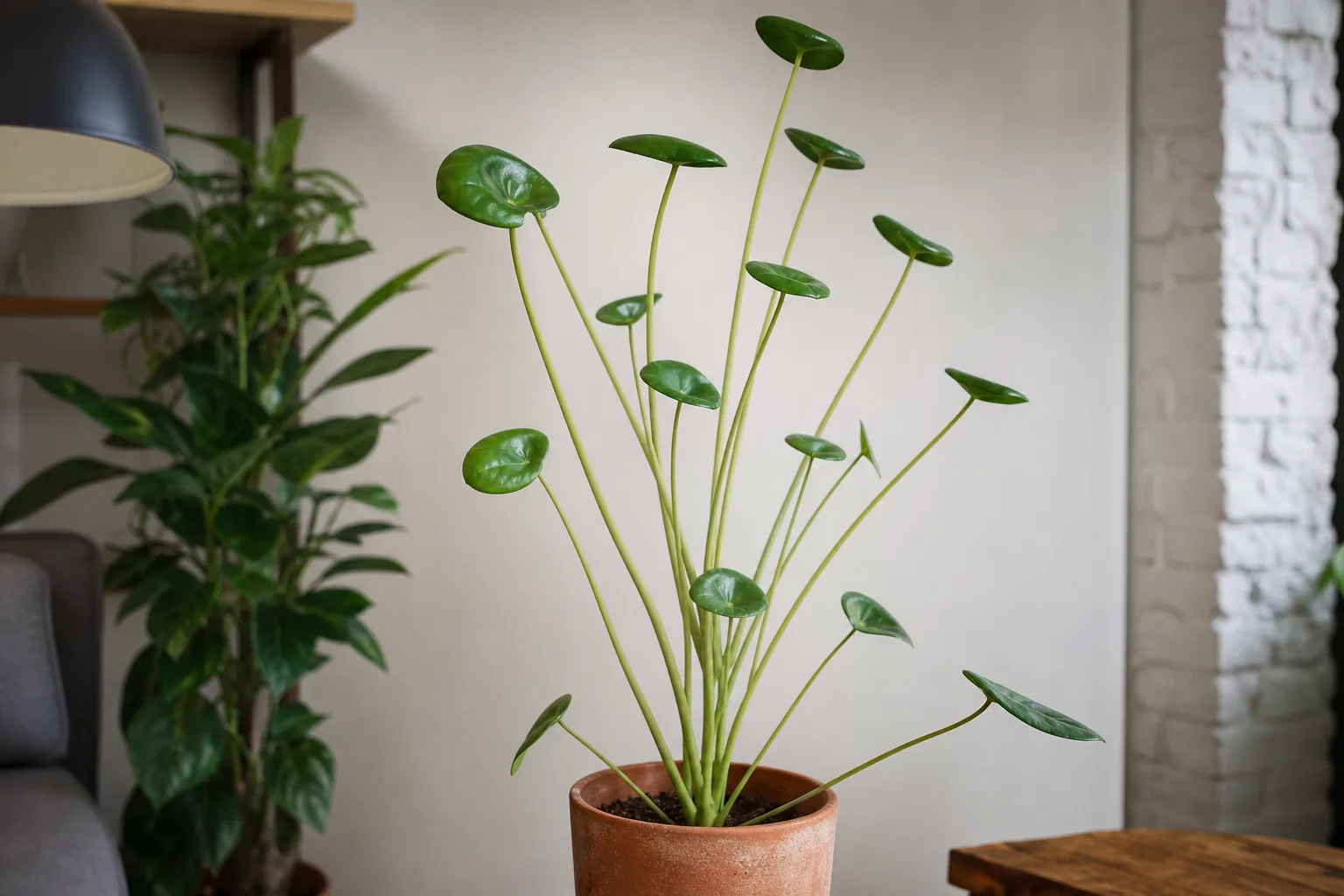
Leggy Growth on Raindrop Peperomia: Causes, Checks & Fixes
This guide covers leggy growth on Raindrop Peperomia. See also the general Leggy Growth guide, watering, and light pages for this plant.
Leggy Growth on Raindrop Peperomia: Causes, Checks & Fixes
Quick answer
Leggy growth on Raindrop Peperomia (Peperomia polybotrya) is etiolation-the plant stretching toward light when photons are too scarce. A healthy specimen has a compact, erect habit with fleshy, glossy, teardrop-shaped leaves spaced closely on stiff green stems. In dim corners, internodes lengthen, new leaves arrive smaller and duller, and the whole plant leans toward glass. This is almost always a light problem, not hunger.
Scope note: This page is the canonical guide for leggy morphology, pruning stretched stems, and propagation backup after you improve brightness. For placement diagnostics, hand-shadow confirmation, and window-distance troubleshooting, see not enough light on Raindrop Peperomia. For lux targets and window orientation, see the Raindrop Peperomia light guide.
First step: move the pot to brighter indirect light before you fertilize, repot, or prune. Rotate weekly. Give the plant two weeks in the new spot, then trim the longest bare stems if new teardrop leaves are emerging closer together.
What leggy growth looks like on Raindrop Peperomia
Raindrop Peperomia should read as a tidy upright plant roughly a foot tall and wide, with thick coin-like leaves attached at the center of each blade (peltate). Leggy plants break that silhouette in predictable ways.
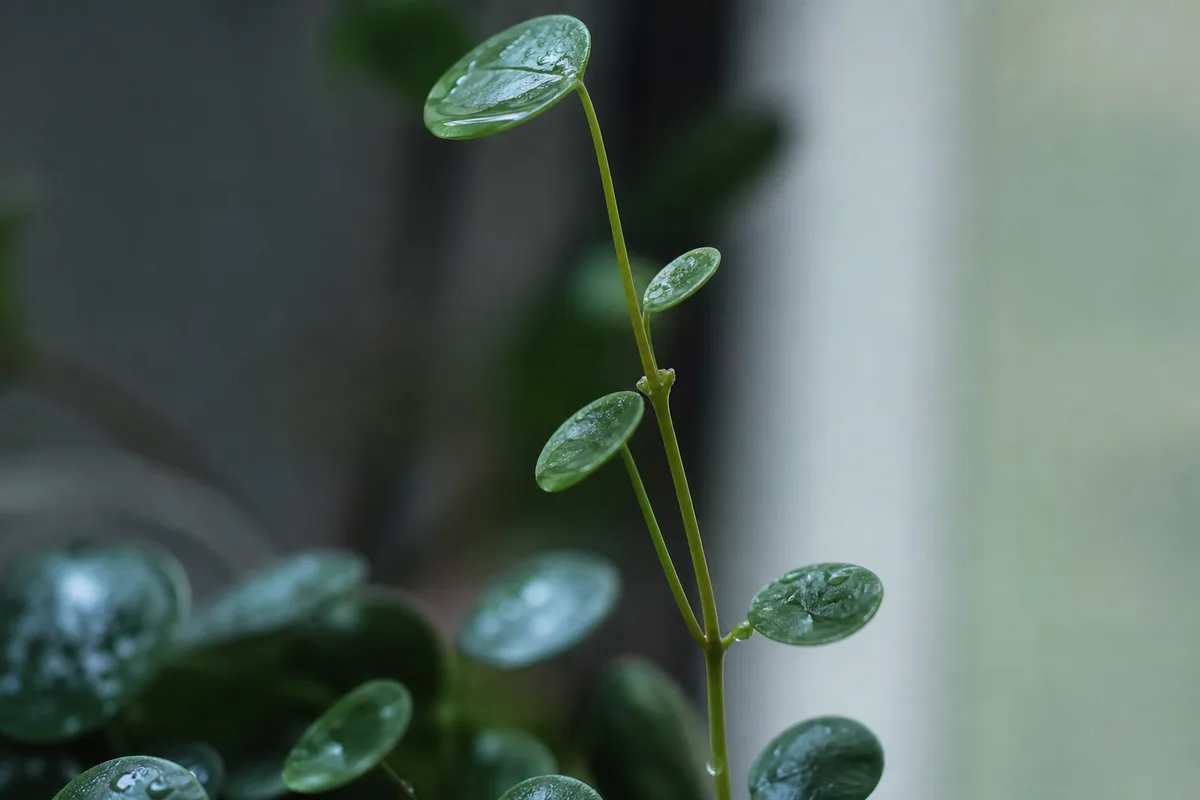
Leggy Growth symptoms on Raindrop Peperomia - compare with healthy tissue on the same plant.
Typical signs include:
- Long gaps between alternate teardrop leaves along the main stem
- Smaller, paler new leaves with less gloss and a softer feel than mature foliage
- Loss of the raindrop dimple on under-lit new leaves-they stay flat and thin instead of plump and peltate
- Stems bending or leaning hard toward the brightest window
- Bare lower sections where older leaves dropped while the tip keeps stretching
- One-sided growth when the pot never rotates toward uneven window light
Growth can look faster than usual-but the tissue is weaker, not healthier. Fast stretch in low light is etiolation, not vigor.
Winter often worsens existing stretch as daylight shortens, even if you have not changed watering. Compare your plant against the Raindrop Peperomia overview for the compact upright silhouette this species is sold to achieve.
Why Raindrop Peperomia gets leggy
Insufficient light is the main cause
Raindrop Peperomia evolved as a tropical forest understory plant native to Colombia, Ecuador, and Peru, where filtered canopy brightness is the norm. Indoors it prefers bright, indirect sunlight-not a distant shelf in a dim room. When light intensity drops, the plant elongates stems to reach a brighter zone. Botanists call this etiolation: longer internodes, thinner tissue, and smaller leaves built with less stored energy.
North-facing rooms far from the window, interior desks, and blocked windowsills are frequent triggers. Human eyes adapt to dim spaces; the plant does not. A spot that looks “fine” to you may deliver far below the 10,000 to 20,000 lux indirect range that supports compact teardrop foliage-see the light guide for window placement detail.
The upright erect habit magnifies legginess. Unlike trailing peperomias that hide stretched internodes along vines, every centimeter of reach shows on Raindrop Peperomia’s stiff main stem.
Low light pairs with slow water use
Leggy Raindrop Peperomia in shade transpires slowly. Soil stays damp longer, which raises overwatering and root rot risk on a species with a smaller root system than many houseplants. Legginess and yellow lower leaves from wet roots can overlap-fix light and watering rhythm together when both patterns appear. Cross-check overwatering if mix stays wet for weeks while stems stretch.
Less common contributors
Uneven light without weekly rotation produces one-sided stretch. Heavy fertilizing in dim conditions can push weak elongated growth the plant cannot support. Overcrowding from nearby plants blocks light on one side. These are secondary; increase usable light first.
How to confirm the cause
Work through these checks before changing anything else:
- Light on the leaves, not the room. Stand where the pot sits at midday. Hold your hand between the leaves and the window. A soft, diffuse shadow means usable indirect light; no shadow suggests low light; a sharp dark shadow means direct sun on the leaves. Full hand-shadow protocol: not enough light guide.
- Compare new growth to old. Are the youngest teardrop leaves smaller, duller, and farther apart than foliage from when you bought the plant? Is the characteristic raindrop dimple missing on new blades?
- Check lean direction. Strong tilt toward one window confirms the plant is actively seeking light.
- Rule out root trouble. Leggy plus firm stems and dry-down cycles that match your watering is light stress. Leggy plus constantly wet soil and soft stem bases suggests overlapping water problems-address both via overwatering and root rot guides.
- Season check. Did stretching begin or worsen in late fall or winter when daylight dropped?
If long internodes, small pale new leaves, and window-leaning appear together, insufficient light is confirmed. You do not need to unpot for this diagnosis.
The first fix to try
Move the plant to brighter indirect light-one step at a time, not a sudden jump into harsh sun.
For most homes that means:
- East windowsill - gentle morning sun, then bright indirect light the rest of the day; pot on sill or within one foot of glass
- Bright north sill - consistent medium to bright indirect exposure without burn risk
- Three to five feet back from south or west glass with a sheer curtain filtering midday beams, per the light guide
- Grow light 12 to 18 inches above the crown for 12 to 14 hours daily if natural light is insufficient
Partial shade outdoors translates to bright filtered light indoors: strong ambient brightness without midday rays beating directly on fleshy leaves for hours.
That single move is the first fix. Give the plant one to two weeks in the new spot before pruning or fertilizing. Rotate the pot a quarter turn every week so stems grow upright instead of permanently tilted. If the plant lived in deep shade for months, acclimate over seven to fourteen days rather than jumping onto an unfiltered west sill.
Step-by-step recovery
Once light improves, secondary steps rebuild shape:
- Watch new nodes. After two weeks, check whether the newest leaf emerges closer to the previous one and feels firmer. That confirms the placement is working.
- Prune stretched stems after new growth appears. Cut leggy stems just above a node-the point where leaves attach to the round green stem. Use clean, sterilized scissors. Removing up to one-third of total length per session is safer than stripping the whole plant at once. Target the longest bare sections first; leave shorter side shoots if they still carry healthy teardrop foliage. Full technique: Raindrop Peperomia pruning guide.
- Propagate healthy tip cuttings. Trimmed tops with two or three leaves root easily in moist, airy mix once light is fixed-cuttings from a still-dim plant will stretch again. See propagation for mix, humidity dome, and rooting timeline.
- Adjust watering. Brighter light dries pots faster. Clemson HGIC recommends letting peperomia soil dry between waterings; check soil before every drink rather than keeping the old calendar from the dim corner.
- Add supplemental light if needed. Windowless offices and deeply shaded rooms may need a full-spectrum LED 12 to 14 inches above the canopy for 12 to 14 hours daily.
Do not repot during recovery unless roots are clearly failing. Legginess rarely requires a larger pot-and oversized containers make wet-soil problems worse.
Recovery example
A Raindrop Peperomia on an interior desk roughly four feet from north glass showed internodes over 5 cm apart and flat, pale new teardrop leaves (March 2026). After moving to an east sill at 30 cm from the pane with weekly quarter-turns, the first plump glossy teardrop on a shorter internode appeared in three weeks. Soil dry-down dropped from about nine days to four-confirming faster transpiration in better light. Old stretched stem sections below the new growth remained long; a single prune above the lowest healthy node in April produced a bushier crown by late May.
Recovery timeline
Existing elongated internodes do not shrink back. Old stretched stem sections stay long even after light improves. Judge recovery by new growth: tighter spacing, full-size glossy teardrop leaves, and upright stiff stems.
| Phase | What to expect |
|---|---|
| Weeks 1–2 | Plant may look unchanged; watch for firmer new tip growth and faster soil dry-down |
| Weeks 3–4 | New teardrop leaves emerge rounder, closer together, and glossier than recent pale growth |
| Weeks 5–8 | Side shoots develop from nodes after optional pruning during spring or summer growth |
| Winter | Slower rebound possible; supplement with grow light rather than waiting for stretch to self-correct |
Bushier side shoots from pruning may take another four to six weeks during active growth. Winter recovery is slower but still possible with bright placement or artificial light.
Worsening signs: Continued yellowing with sour wet soil, soft stems at the soil line, or new leaves that stay tiny and pale after six weeks in bright indirect light-recheck distance from glass, review root rot, or add a grow light.
Lookalike symptoms to rule out
| Pattern | Stem / spacing | Leaves | Soil / pot | Likely cause | Next step |
|---|---|---|---|---|---|
| Leggy etiolation | Long gaps, active lean toward window | Small pale new teardrops, dimple loss | May stay damp in dim corner | Insufficient light | Brighten placement → this guide |
| Normal mature height | Compact spacing, upright | Full-size glossy teardrops | Normal dry-down | Healthy ~1 ft plant | No fix needed |
| Overwatering droop | May not stretch | Limp petioles, yellow lower leaves | Heavy, wet at depth | Wet roots | Overwatering |
| Cold slowdown | Little new growth, minimal stretch | Limp or dropped leaves | Normal moisture | Temperature below ~18°C | Warm room; do not overwater |
| Too much direct sun | Uneven lean | Bleached or crispy window-facing patches | Normal | Light excess | Filter or pull back |
Mistakes to avoid
- Pruning without fixing light. Cut stems will stretch again if brightness stays too low.
- Jumping from deep shade to direct south-window sun. Acclimate over seven to fourteen days to avoid scorched teardrop leaves.
- Fertilizing leggy plants in dim spots. Nutrients cannot replace photons and may drive weak growth.
- Assuming fast stretch equals health. Rapid stem extension in low light is etiolation, not vigor.
- Ignoring one-sided lean until stems flop. Rotate weekly early; staking is a temporary crutch, not a cure.
- Watering on the old calendar after a big light increase. Brighter exposure dries mix faster-check soil depth before each drink.
How to prevent leggy growth next time
Place Raindrop Peperomia where bright indirect light is realistic all year-not only where the pot looks best in the room, since too much shade can lead to poor, straggly growth. An east window, a bright north window close to the glass, or a filtered south or west exposure three to five feet back works well for long-term compact form.
Rotate the pot weekly during active growth. Supplement with a grow light in winter if trees, buildings, or heavy curtains cut daylight. Match watering to how fast the pot dries in that light level.
Raindrop Peperomia is non-toxic to cats and dogs, so a well-lit shelf is safer than a dim floor corner for both the plant and curious pets-but light still matters more than placement convenience. Contact your veterinarian if a pet ingests a large amount of any houseplant.
When to worry
Legginess alone is cosmetic and reversible with light correction. Worry when legginess pairs with wet soil that never dries, soft collapsing stem bases, or widespread leaf yellowing. Those patterns suggest root trouble layered on top of low light and need soil inspection-not just a brighter window. Follow root rot if the crown softens.
If the plant keeps stretching after a clear light upgrade for more than six weeks, the spot is still too dim. Move closer to the source or add artificial light rather than waiting for the plant to adapt to inadequate brightness.
Related Raindrop Peperomia guides
Use this page as the leggy morphology, pruning, and propagation hub; follow the link that matches what you need:
- Raindrop Peperomia overview - species baseline and compact upright silhouette
- Not enough light - placement diagnostics and hand-shadow confirmation
- Raindrop Peperomia light - lux ranges, window orientation, grow lights
- Raindrop Peperomia pruning - node cuts and one-third rule detail
- Raindrop Peperomia propagation - tip-cutting backup after light fix
- Raindrop Peperomia watering - dry-down rhythm when light changes
- Overwatering - dim-corner wet soil overlap
- Root rot - soft crown when legginess pairs with chronic wetness
Conclusion
Leggy growth on Raindrop Peperomia is etiolation from insufficient light before it is a fertilizer or repotting problem. Confirm stretch with long internodes, small pale teardrop leaves, and window lean; move to bright indirect light as the first fix; then prune and propagate only after new compact growth proves the placement works. Old elongated internodes never shorten-judge recovery by glossy new teardrop leaves on tighter spacing, not by whether bare stems fill in on their own. If wet soil and sour smell overlap with stretch, address overwatering in the same week you brighten the window.
How we wrote and verified this guide: Recommendations were checked against NC State Extension, Clemson Cooperative Extension, UMD Extension, Royal Horticultural Society, and ASPCA references cited inline. Author: sai-ananth. Reviewer: LeafyPixels Review Board. Methodology: plant problem guidance is reviewed against botanical references, extension resources, and LeafyPixels plant-care data before publication. Claims validation: claims-validator-v1 pass with inline external links documented below. Last reviewed: 2026-06-17.