Raindrop Peperomia Pruning: When, How, and Mistakes to Avoid
Raindrop Peperomia Pruning: When, How, and Mistakes to Avoid
Raindrop Peperomia Pruning: When, How, and Mistakes to Avoid
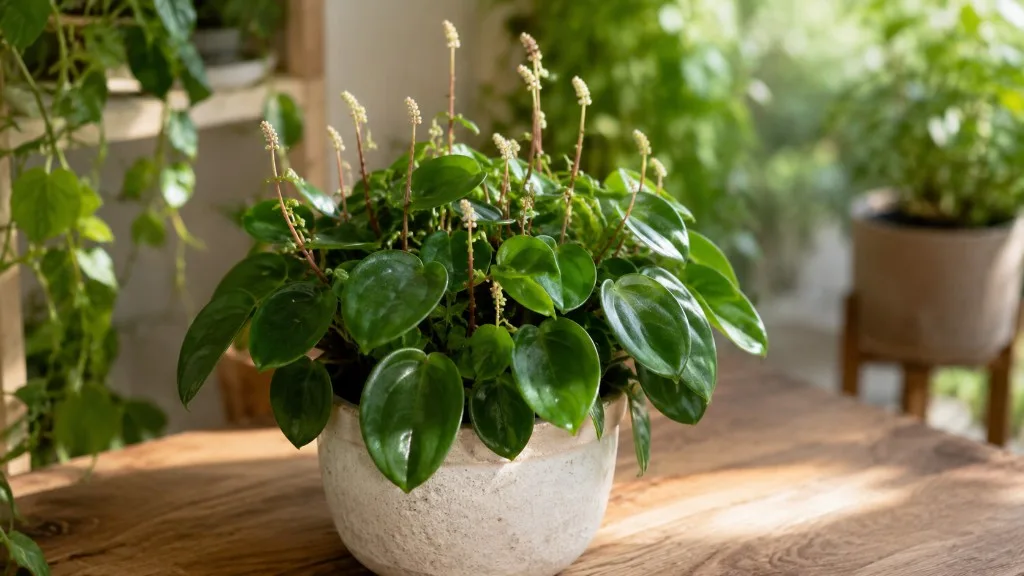
Raindrop Peperomia pruning starts with one simple job: remove any fully yellow, soft, torn, or brown leaves at the petiole base using clean, sharp scissors. Peperomia polybotrya is an upright, compact houseplant with thick glossy teardrop leaves - not a trailing vine you shear back hard. Once dead tissue is gone, you can decide whether leggy stems need shortening above a node or whether the real problem is low light or an oversized wet pot.
NC State Extension describes Raindrop Peperomia as an erect plant maturing to about one foot tall with fleshy, peltate leaves whose petioles attach near the center underside. Clemson HGIC notes that peperomias branch when you prune a stem above a leaf node. That growth model - light cleanup plus selective topping - fits Raindrop Peperomia overview far better than hedge-style cutting.
What Pruning Does for Raindrop Peperomia
Pruning on Raindrop Peperomia serves three practical jobs indoors: it removes tissue that drains energy or invites rot, redirects growth into a tighter crown, and supplies stem or leaf cuttings for propagation.
Because leaves store water and the root system stays relatively small, the plant replaces foliage slowly. Pruning cannot instantly fix a stretched silhouette if the pot stays wet or light stays weak. It removes the worst leaves, encourages side shoots from nodes on topped stems, and keeps the glossy teardrop display readable instead of cluttered with yellowing lower foliage.
Leggy stems with small leaves at the tip and bare lower stem are a light problem as much as a shape problem. A node cut helps, but brighter indirect light is what keeps new leaves full-sized after the cut.
What to Check Before You Cut
Walk through a short inspection before any shaping cut:
- Leaf firmness. Healthy Raindrop Peperomia leaves feel thick and springy. Soft, translucent, or collapsing leaves usually mean excess moisture or root stress - not a cue to strip the whole plant.
- Pot weight and soil dryness. Lift the pot. If mix stays wet for a week or more in normal household conditions, delay hard pruning until Raindrop Peperomia watering guide and drainage improve.
- Stem color and texture. Firm green stems are safe to shorten. Mushy brown stems at the base signal rot - cut back to firm tissue only after you know roots are viable.
- Node location. On each stem, find the slightly raised points where leaves and future branches emerge. Your shaping cuts belong just above these nodes, not through the bare internode between them.
- Light level. Stretched internodes and pale small new leaves mean the plant is searching for light. Plan a brighter spot before expecting pinching to hold a compact shape.
If more than one-third of the leaves look damaged and the soil smells sour, treat this as a care emergency first. Dry the pot down, confirm roots, then prune only what is clearly dead or diseased.
The First Cut to Make
Remove dead, damaged, or fully yellow leaves first - and only those.
Support each failing leaf with your fingers and cut the petiole where it meets the main stem. Do not pull leaves; peltate teardrop leaves tear unevenly and can damage the stem collar. This single cleanup step is safe any time of year and tells you how much healthy foliage remains before you consider shortening live stems.
If every leaf looks firm and green, stop after inspection. Raindrop Peperomia rarely needs scheduled pruning on a healthy compact plant.
When to Prune Raindrop Peperomia
Best Season for Shaping Cuts
Pinch or shorten live stems from late spring through summer, when the plant is actively growing. NC State Extension lists greenish-white flower spikes in summer, though indoor specimens flower infrequently. Active warmth and longer days mean faster callusing and quicker side shoots after a node cut.
Dead or fully yellow leaves can come off any time. Light grooming in early fall is fine if the plant is still pushing new leaves.
When Not to Prune
Hold off on removing live foliage when:
- Soil stays wet and leaves feel soft or translucent
- The plant wilted after a recent heavy watering - roots may be failing
- You just brought it home or repotted it within the last two weeks
- Winter growth has stalled and the pot dries very slowly
Pruning live tissue during root stress removes photosynthetic leaves the plant needs to recover. Fix watering, pot size, and light first; trim yellow leaves only until the plant stabilizes.
Where to Cut on Raindrop Peperomia
Removing Damaged or Yellow Leaves
Cut at the petiole base where the leaf stem meets the main stem. Leave the node on the stem intact - that is where future branches can form. For a partially damaged teardrop leaf with firm green tissue elsewhere, remove the whole leaf rather than snipping the blade tip; peperomia leaves do not regrow from partial cuts.
Brown crispy tips on otherwise firm leaves often trace to low humidity or inconsistent watering. Removing the entire leaf is optional; address the underlying care issue before repeated cosmetic trimming.
Shortening Leggy Stems
For stretched stems, cut 5–10 mm above a node, angling the blade slightly so water runs off the cut face. Choose the highest node that leaves a balanced crown - usually one where a healthy leaf sits just below your cut. Clemson HGIC recommends pruning above a leaf node so the plant branches.
Do not cut through the middle of an internode. Without a node at the cut, the top section dies and the stub may rot before anything useful sprouts.
Trimming Spent Flower Spikes
Indoor Raindrop Peperomia rarely blooms, but if greenish-white rat-tail spikes appear and fade, snip them at the base once they brown. Clemson HGIC notes that removing peperomia flower spikes lets the plant focus energy on foliage. Use the same sterilized snips as for leaves.
How to Prune Raindrop Peperomia Step by Step
- Sterilize tools. Wipe blades with 70% isopropyl alcohol. Iowa State University Extension recommends alcohol for home disinfection between plants.
- Remove dead and yellow leaves at each petiole base. Collect debris from the soil surface so it does not hold moisture against the crown.
- Identify the longest leggy stem. Trace down to the node where you want the new top - typically where a full-sized leaf attaches.
- Cut 5–10 mm above that node. One stem per session is enough on small plants; wait two weeks before topping another if the plant looks stressed.
- Set cuttings aside if you plan to propagate firm green tips with at least one node.
- Move to brighter indirect light if internodes were long. Water only after the top half of the mix dries.
- Watch the cut site for new side shoots over the next two to four weeks during active growth.
How Much You Can Safely Remove
Treat one-third of live foliage as the maximum per session. Raindrop Peperomia has a small root volume relative to its fleshy leaves; removing more than that at once slows recovery and raises rot risk in a wet pot.
Dead and fully yellow leaves do not count toward the limit - take them all off. If the plant is mostly yellow from overwatering, remove only clearly dead tissue until roots recover, even if the plant looks sparse for a while.
On a single-stem young plant with only four or five leaves, one node cut may remove 20% of the canopy - that is acceptable when the stem is firm and the pot dries normally between waterings.
Tools and Sanitation
Use fine-point snips or scissors rather than large shears. Thick blades crush peperomia stems and leave ragged wounds.
Sterilize before and after working on any plant with soft stems or leaf spots. Raindrop Peperomia is listed as non-toxic to cats and dogs by the ASPCA, so handling trimmings is low risk - still discard cuttings if pets chew houseplants habitually.
Avoid getting sap or wet leaf debris on upholstery; wipe the glossy peltate surfaces dry if you mist during aftercare.
Using Pruning Cuts for Propagation
Healthy trimmings need not go to waste. NC State Extension lists stem and leaf cuttings as recommended propagation for this species.
Stem tip cuttings: Take a 3–5 inch section with one to two firm leaves and at least one node. Remove lower leaves, let the cut end callus for a few hours, then root in moist perlite or a peat-perlite mix. Keep humidity high and light bright but indirect.
Leaf cuttings: A firm leaf with about an inch of petiole can root in moist medium; new plantlets emerge from the petiole base over several weeks.
Use only firm green tissue. Mushy yellow stems from overwatering will rot in propagation trays.
Aftercare and Recovery
After pruning, keep care boring: Raindrop Peperomia light guide, allow the mix to dry fully between waterings, and skip fertilizer until you see new growth. Missouri Botanical Garden notes Raindrop Peperomia as a compact low-maintenance houseplant that prefers good drainage - wet mix after trimming is the fastest way to lose a cut stem.
Do not repot on the same day as a hard prune unless roots are clearly circling and the plant is stable. Stack one stressor at a time.
Recovery Timeline
- Dead leaf removal: Immediate visual improvement; no downtime.
- Light node pinch: Side shoots often appear within two to four weeks in spring and summer.
- Stem tip propagation: Roots typically form in three to six weeks in warm humid conditions.
- Recovery from overwatering yellowing: Weeks to months - pruning alone does not speed root healing.
Signs Pruning Worked
New leaves emerge near the cut node with normal teardrop size, stem color stays green and firm, and the plant stops dropping additional leaves. A tighter crown with shorter internodes on fresh growth means light and pruning aligned.
Signs you cut too much or timed it wrong: continued yellowing, soft stem tips, no new shoots after six weeks in summer, or crown collapse. Stop trimming, dry the pot down, and reassess roots.
Common Pruning Mistakes
- Pruning to fix overwatering. Removing yellow leaves helps hygiene, but live-tissue cuts on a wet plant make recovery harder.
- Cutting mid-internode. The top dies; the stub may rot before branching.
- Pulling leaves instead of cutting. Tears damage stem tissue on peltate petioles.
- Skipping light correction after pinching. New growth stays stretched in dim corners.
- Keeping an oversized pot. Excess soil holds moisture; the plant looks leggy and weak no matter how often you trim.
- Propagating mushy stems. Soft cuttings rot - wait for firm growth.
- Shearing the whole crown. Raindrop Peperomia is not a hedge; selective node cuts preserve the teardrop display.
Conclusion
Raindrop Peperomia pruning is selective maintenance on a compact upright plant: remove failing leaves at the petiole base first, shorten leggy stems 5–10 mm above a node in spring or summer, and pair any shaping cut with brighter indirect light and dry-down watering. Respect the one-third limit, sterilize your snips, and use firm trimmings for stem or leaf propagation. Pruning shapes a healthy plant and cleans up damage - it does not replace fixing wet soil, weak light, or root stress.
When to use this page vs other Raindrop Peperomia guides
- Raindrop Peperomia overview - Start here for whole-plant context before deep-diving this topic.
- Raindrop Peperomia problems hub - Jump to symptom-specific fix guides when this care topic does not resolve the issue.
- Leggy Growth on Raindrop Peperomia - Escalate here when pruning adjustments are not enough.