Nutrient Lockout on Raindrop Peperomia: Causes, Checks &
Quick answer
On Raindrop Peperomia, nutrient lockout usually means roots cannot absorb minerals already in the pot-often from fertilizer salt buildup, winter feeding, or stressed roots-not a simple shortage. First step: stop feeding, check for white crust on the soil surface, and flush with plain water if salts are present.
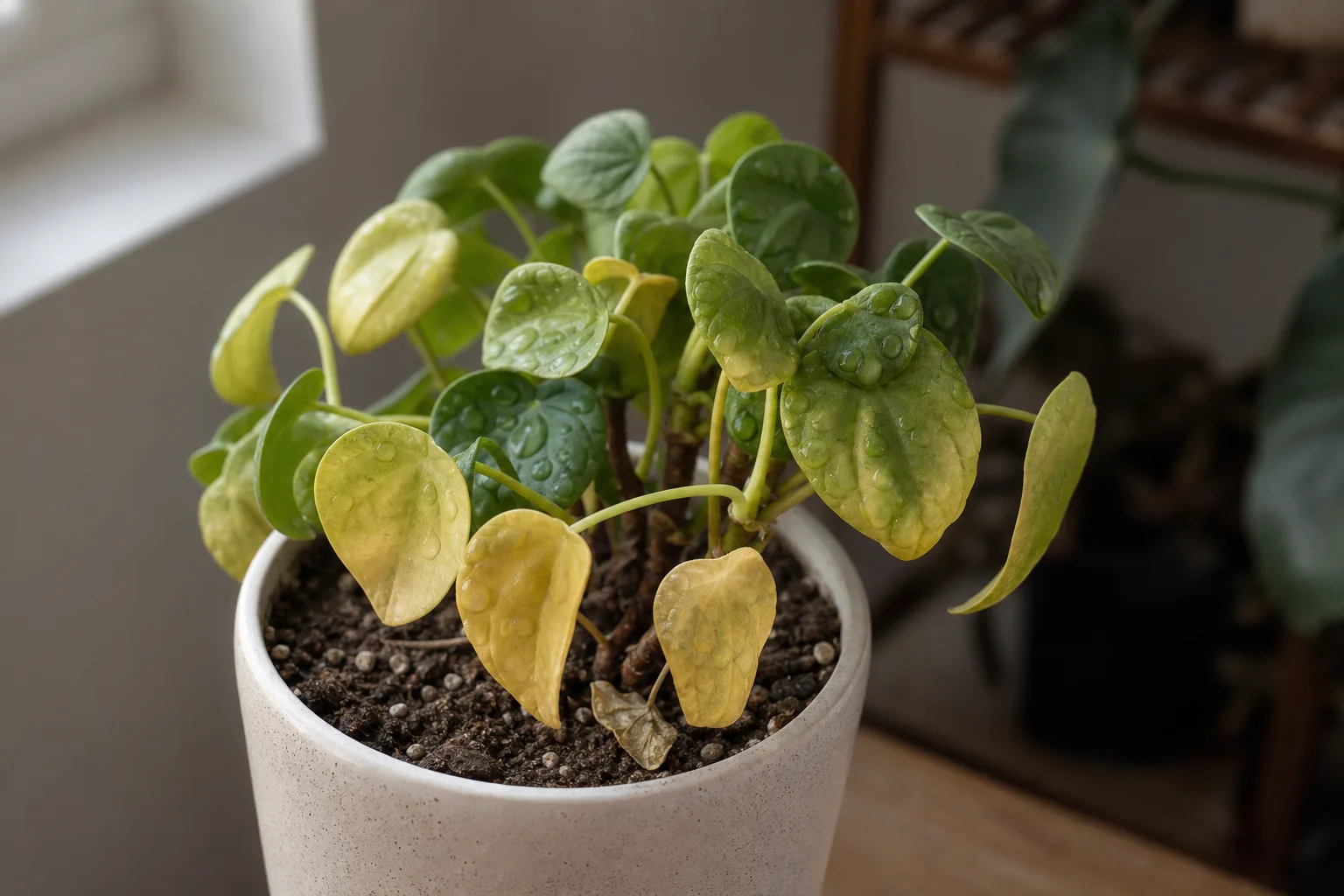
Nutrient Lockout on Raindrop Peperomia: Causes, Checks & Fixes
This guide covers nutrient lockout on Raindrop Peperomia. See also the general Nutrient Lockout guide, watering, and light pages for this plant.
Nutrient Lockout on Raindrop Peperomia: Causes, Checks & Fixes
Quick answer
On Raindrop Peperomia (Peperomia polybotrya), nutrient lockout at home usually means roots cannot absorb minerals already in the pot-from soluble salt buildup, feeding when growth is slow, or stressed roots-not classic hydroponic pH lockout and not simple nitrogen hunger. Collectors often keep feeding when new teardrop leaves stay pale, hoping fertilizer will green them up; that fed-but-failing pattern is this page’s focus.
First step: stop all fertilizer and look for white crust on the soil surface or pot rim. If you see salt deposits, or you recently fed at full label strength, flush with plain water until clear runoff drains from the bottom. Do not add more fertilizer until new leaves emerge firm and glossy.
This page owns uptake-block triage when feeding fails despite salts or crust. Environmental tip burn without recent feed belongs on brown tips. Pale stretched growth without salt signs in a dim corner belongs on not enough light. Post-recovery feeding rhythm lives on the fertilizer guide; dry-down checks align with the watering guide.
Lockout vs. brown tips vs. low light on Raindrop Peperomia
Raindrop Peperomia has no separate fertilizer-burn page on LeafyPixels-salt injury and environmental tip burn overlap across this URL and brown tips. Use the table below to route before you flush or feed again.
| Pattern | Lead sign | Soil / roots | Route |
|---|---|---|---|
| Nutrient lockout | Fed but pale new teardrops | Crust possible; firm roots | Flush + feed pause (this page) |
| Salt tip burn after feed | Crispy tips days after dose | Crust common; firm stems | This page first; brown tips if no feed history |
| Low light fade | Small pale leaves, long internodes | No crust; slow dry-down | Not enough light |
| True nitrogen hunger | Uniform pale growth, zero feed history | No crust; firm roots | Fertilizer guide after light check |
| Root rot | Rapid yellowing, soft stem base | Wet, sour; mushy roots | Root rot |
| Iron / pH pattern | Lower leaves yellow, green veins | No crust; old mix | Optional pH test; see yellow leaves |
What nutrient lockout looks like on Raindrop Peperomia
Lockout and true deficiency can look alike on this compact light feeder, but the teardrop leaf pattern and your feeding history usually separate them.
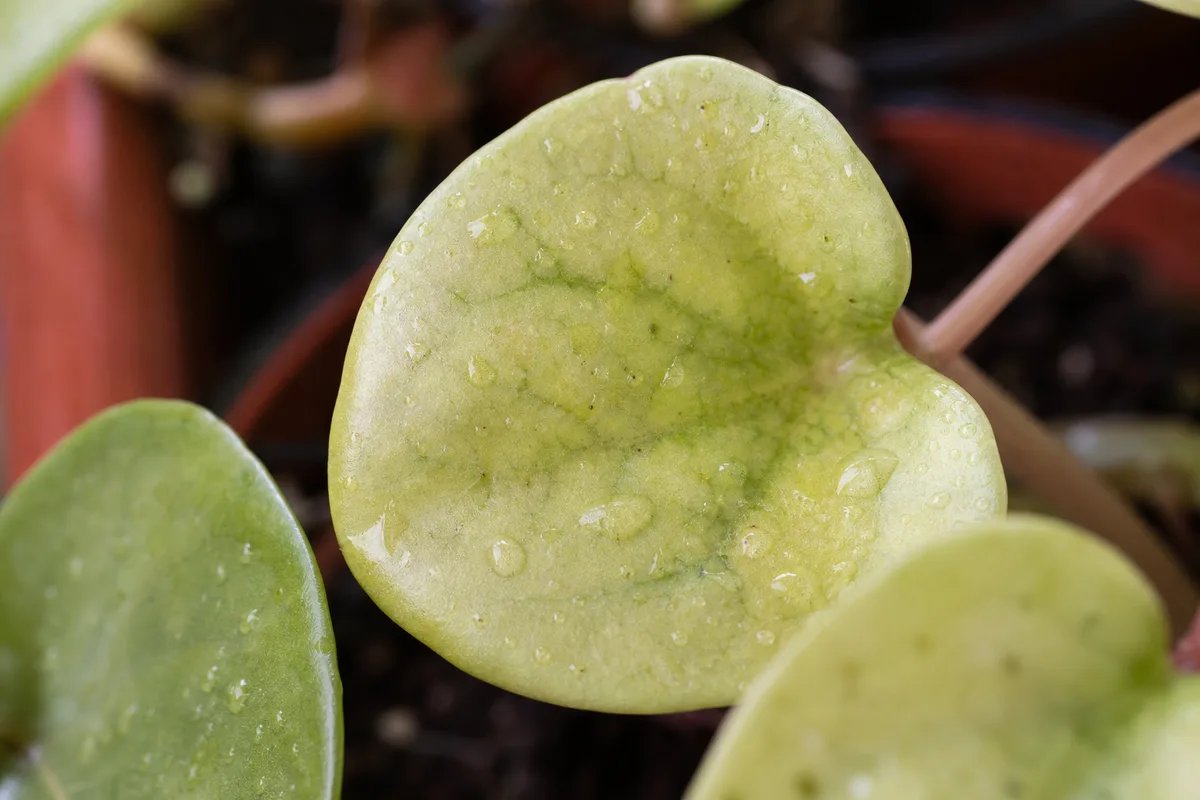
Nutrient Lockout symptoms on Raindrop Peperomia - compare with healthy tissue on the same plant.
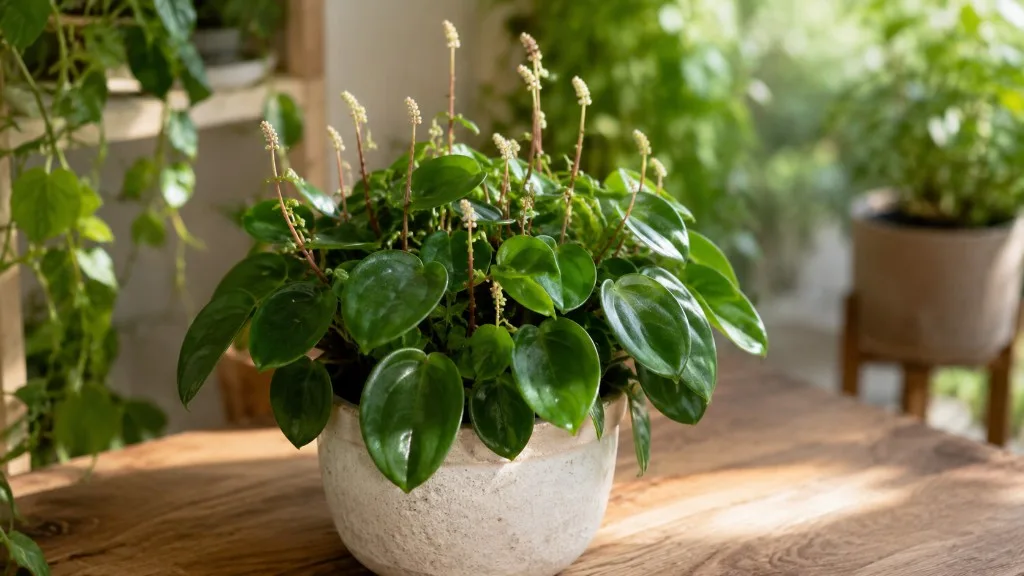
Diagnostic check at home: pale new teardrops with weak gloss plus white crust on the soil rim points to lockout; small pale leaves in a dim spot with no crust points to low light instead.
Pale or stunted new teardrop leaves
Watch the glossy teardrop leaves and upright green stems together. Lockout often shows as dull or pale new leaves that stay small while older foliage still looks green-a frustrating mismatch because the plant looks hungry but does not respond to more fertilizer.
Unlike larger houseplants, Raindrop Peperomia has thick fleshy leaves that store some moisture but show salt stress quickly on delicate root tips. New growth fails first because fine root hairs at the uptake zone burn before the thick teardrop tissue shows full decline. When the whole plant looks washed out-not just one aging lower leaf-and stems stay firm, lockout or salt stress is more likely than normal leaf drop.
White crust and tip burn after recent feeding
A white crust on the soil surface, pot rim, or saucer often follows repeated liquid feeding, especially at full label strength. Brown crispy leaf tips or margins after a recent dose suggest fertilizer salt deposits rather than dry air alone.
The response test is the fastest confirmatory step on this species: if another half-dose of fertilizer worsened tip burn within days, stop feeding and flush before adding anything else.
Lockout vs. root rot vs. light starvation
Firm green stems with pale new teardrops and possible crust point to lockout. Soft mushy stem base, sour smell, and wet heavy pot point to overwatering or root rot-fertilizer will burn damaged roots further. Long gaps between leaves, weak upright stems, and a north-facing corner without crust point to not enough light before any nutrient fix.
Why Raindrop Peperomia gets nutrient lockout
Light-feeder biology and salt accumulation
Raindrop Peperomia is a light feeder, not a hungry one. Its forest understory origin means it tolerates lean soil far better than heavy feeding. Excess soluble feed builds up faster than this slow grower uses it-especially in small pots that dry slowly or sit in oversized containers where roots cannot process salts.
Salt buildup from over-fertilizing or feeding too often blocks root uptake. Excessive fertilizer causes soluble salts to concentrate as water evaporates from the pot; those salts can draw moisture from root tips and impair nutrient absorption even when minerals remain in the mix.
Small root mass in oversized pots
Raindrop Peperomia carries a small root system adapted to nutrient-poor rainforest floors. In an oversized pot, wet mix surrounds a modest root ball for days. Salts from each feed sit in saturated mix longer than the plant can use them-a common hidden trigger in decorative planters one or two sizes too large. Match pot size to root mass per the repotting guide when flush recovery stalls.
Feeding stressed, waterlogged, or winter-dormant plants
Feeding at the wrong time deepens the problem. Clemson HGIC recommends fertilizing peperomia only when actively growing in spring and summer with low-strength liquid fertilizer occasionally. Winter feeding when reduced light slows growth concentrates unused salts while roots absorb water slowly.
Stressed roots cannot process nutrients you add. Raindrop Peperomia with wet, compacted mix, recent repotting shock, or damaged roots from overwatering will burn when fed. Never fertilize a dry, wilted, newly repotted, or pest-stressed plant-roots need active growth and moderately moist, not saturated, mix.
Depleted or compacted two-year-old mix
Old, exhausted potting mix in a plant that has not been repotted in two or more years may be chemically depleted or compacted. Wet, poorly aerated mix impairs root function, so fertilizer burns damaged tissue instead of supporting new glossy leaves. Fresh airy mix from the soil guide often works better than another heavy feed on exhausted peat.
How to confirm the cause
Work through these checks before changing anything beyond stopping feed:
- Recent feeding history - Multiple liquid feeds in the past month, especially above half strength, raise salt-lockout odds on Raindrop Peperomia.
- Salt signs - White mineral crust on soil surface, pot edges, or exterior clay pots.
- Soil moisture and roots - Heavy wet pot with soft stems points to overwatering; a light dry pot with slightly thin leaves differs from lockout.
- Light check - Bright indirect light supports steady growth; pale stretched plants in dim corners may be light-starved, not locked out.
- Leaf pattern - Lower-leaf yellowing with green veins can indicate iron issues tied to pH; uniform pale new growth after feeding points to salt stress.
- Response test - If another half-dose of fertilizer worsened tip burn within days, stop feeding and flush.
- Mix age - Has the plant sat in the same pot more than two years without repotting? Depletion and compaction become likely alongside salt buildup.
Decision branch: crust + heavy feed history → lockout protocol below. No crust + north corner + stretched pale teardrops → not enough light. Obvious tip necrosis within days of one dose with crust → stay on this page and cross-check brown tips for water-quality overlap.
First fix for Raindrop Peperomia
Stop all fertilizer immediately and flush the soil with plain room-temperature water if you suspect salt buildup.
Run water through the pot until it flows freely from drainage holes-use a volume at least equal to the pot size, as University of Maryland Extension recommends for leaching excess salts. Empty the saucer. Repeat once more a few hours later or the next day, following Colorado State leaching guidance for potted plants.
Hold fertilizer for three to six weeks. Keep the plant in bright indirect light per the light guide if it is not already there. Return to dry-down watering: allow the mix to dry completely before the next drink.
Do not repot and flush and prune on the same day. One correction first, then watch new growth.
Mild, moderate, and severe recovery branches
| Severity | Signs | First action | Sibling routing |
|---|---|---|---|
| Mild | Pale new teardrops, light crust, firm stems | Stop feed + single flush + three-week pause | Stay on this page |
| Moderate | Widespread pale leaves, thick crust, two-year-old mix | Double flush + scrape surface crust + repot if flush fails | Brown tips if tips dominate without recent feed |
| Severe | Wilting on wet soil, soft stem base, sour roots | Unpot, trim rot, fresh mix-no feed | Root rot immediately |
If crust returns within two weeks after two thorough flushes, repot into fresh perlite-rich mix per the soil guide rather than flushing a third time blindly.
Step-by-step recovery
After the initial flush and feeding pause:
- Stop fertilizer; scrape visible white crust from the soil surface if present.
- Flush with clear water two to three times over seven to ten days, draining fully each time.
- Adjust light - Place Raindrop Peperomia where it receives bright indirect light most of the day. Gloss on the next teardrop leaf tells you whether energy uptake is improving.
- Resume watering by dryness - Allow the mix to dry completely before watering per the watering guide.
- Repot if mix is exhausted - If the plant has not been repotted in two or more years and flushing did not help, move to fresh potting mix with perlite in spring. Do not feed on repot day.
- Reintroduce feed cautiously - After three to six weeks, if new teardrop leaves emerge firm and glossy, offer balanced liquid fertilizer at half label strength once, matching the fertilizer guide rhythm of every four to six weeks in spring and summer-not weekly full strength.
- Leach periodically - If you use synthetic fertilizer regularly, leach the soil with clear water every four to six months to prevent salt buildup.
- Trim damaged leaves - Brown burned leaf tips will not green back; trim for appearance once growth stabilizes.
Recovery timeline
Mild salt stress corrected with flushing may show greener new teardrop leaves within three to six weeks in warm bright conditions. Severe burn with widespread tip crisping takes longer and may require repotting into fresh mix. Judge recovery by new leaf quality, not old foliage-Raindrop Peperomia’s slow habit means progress shows on the newest glossy teardrops first.
Repot recovery from depleted mix may take three to six weeks before growth pace picks up. Winter recovery is slower-hold expectations until longer days return.
Lookalike symptoms and causes to rule out
Not enough light - Long gaps between leaves, pale small teardrops, and weak upright stems in a north-facing corner. Move to brighter filtered light per the light guide before blaming nutrients. See not enough light.
Overwatering or root rot - Soft mushy stem base, sour smell, wet heavy pot. Fix drainage and dry-down first on the watering guide; fertilizer will burn damaged roots. See root rot when roots are mushy.
Brown tips without feed history - Dry crispy tips on firm leaves with no crust often trace to tap water or humidity, not lockout. See brown tips.
True nitrogen deficiency - Rare on Raindrop Peperomia that has never been fed through a full growing season. Deficiency lacks heavy salt crust and often follows zero feeding, not repeated doses. Confirm light first, then the fertilizer guide.
Underwatering - Very light pot, slightly thin-feeling leaves, and crisp edges without salt crust or recent feeding history. See underwatering.
Magnesium or mobile nutrient patterns - Interveinal yellowing on older leaves without recent feed may fit magnesium deficiency better than salt lockout when no crust is present.
Mistakes to avoid
Do not double fertilizer on pale Raindrop Peperomia leaves-that deepens salt lockout even when the plant looks hungry. Do not feed dry or stressed plants; apply fertilizer to moist soil and avoid feeding newly repotted plants for several weeks. Do not use full-strength outdoor doses in small indoor pots. Do not assume every yellow leaf needs nitrogen-check light, moisture, and salt first.
Raindrop Peperomia is listed as non-toxic to cats and dogs, but handle gently when inspecting roots. If a pet chews the plant, contact your veterinarian or ASPCA Animal Poison Control at (888) 426-4435-do not wait for symptoms to worsen.
How to prevent nutrient lockout next time
Feed at half strength every four to six weeks from spring through early fall per the fertilizer guide; pause in winter when growth slows. Let compost partially dry between waterings and flush containers occasionally if you use synthetic liquid feed. Repot every one to two years so mix does not become salt-saturated or depleted. Never stack repotting, pruning, and heavy feeding on the same week.
When to worry
Escalate if stems collapse at the base, crown softness spreads, or roots are brown and mushy when unpotting-follow root rot rescue after repotting into fresh dry mix. Widespread bleached new growth after heavy feeding may need full mix replacement, not another fertilizer dose. If soluble salts remain high after flushing, replace growing media in smaller pots rather than continuing to feed.
Switch to root rot when the stem base softens on wet mix. A few pale teardrops on an otherwise stable slow-growing Raindrop after one missed flush is manageable. Widespread wilting on moist soil after heavy feeding needs same-day root inspection.
Related Raindrop Peperomia guides
- Raindrop Peperomia overview - species biology and compact upright habit
- Fertilizer guide - conservative post-recovery feeding schedule
- Watering guide - dry-down rhythm during flush recovery
- Light guide - bright indirect placement for recovery
- Brown tips - environmental tip burn without recent feed; this page owns fed-but-failing uptake block
- Not enough light - pale teardrops without salt signs
- Root rot - mushy roots and soft stem base escalation
- Yellow leaves and magnesium deficiency - overlapping pale-foliage patterns
- Overwatering - wet mix overlap before resuming feed
Conclusion
Nutrient lockout on Raindrop Peperomia is usually an uptake problem, not a simple shortage. Salt crust, recent heavy feeding, oversized pots, and old compacted mix are the top triggers on this light feeder. Stop feed, flush salts when present, restore bright indirect light and proper dry-down watering, then reintroduce diluted fertilizer only after new glossy teardrop leaves prove roots are working again. When tip burn dominates after one heavy dose without ongoing fed-but-failing pale growth, cross-check brown tips; when teardrops fade without crust in a dim corner, use not enough light first. When the stem base softens on wet mix, route to root rot immediately.