Curling Leaves on Raindrop Peperomia: Causes, Checks & Fixes
Quick answer
Curling on Raindrop Peperomia usually means moisture stress-dry soil, low humidity, or wet roots-or too much direct sun. Check pot weight and soil moisture at depth before you water, mist, or move the plant.
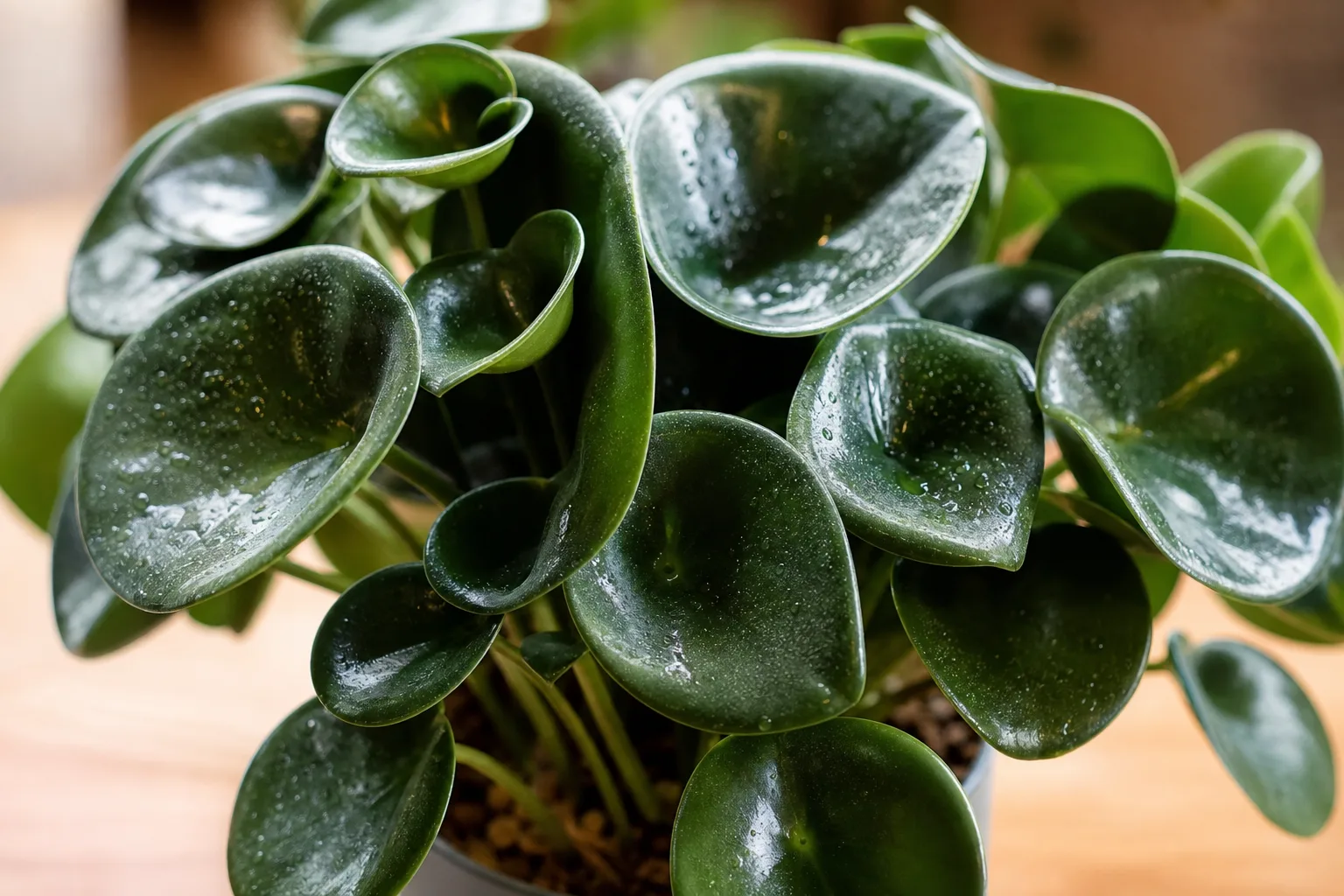
Curling Leaves on Raindrop Peperomia: Causes, Checks & Fixes
This guide covers curling leaves on Raindrop Peperomia. See also the general Curling Leaves guide, watering, and light pages for this plant.
Curling Leaves on Raindrop Peperomia: Causes, Checks & Fixes
Quick answer
Curling on Raindrop Peperomia (Peperomia polybotrya) is usually the plant reducing exposed leaf surface under stress-not a leaf disease. Plants wilt and leaves curl when roots cannot supply sufficient moisture to stems and foliage. On this compact upright plant with fleshy, glossy teardrop leaves, the same curl can also follow overwatering that damages roots, direct sunlight that scorches leaves, or very dry winter air. Your first move: lift the pot, probe moisture deep in the mix, and note whether the curl is on new dome-shaped leaves or on older established ones.
What curling leaves look like on Raindrop Peperomia
Healthy Raindrop Peperomia holds fleshy, bright green, teardrop-shaped leaves on stiff upright stems. Each leaf is peltate-the petiole attaches near the center-so a slight natural dome on brand-new leaves is common. Those young leaves often look cupped for a week or two, then flatten as they harden.
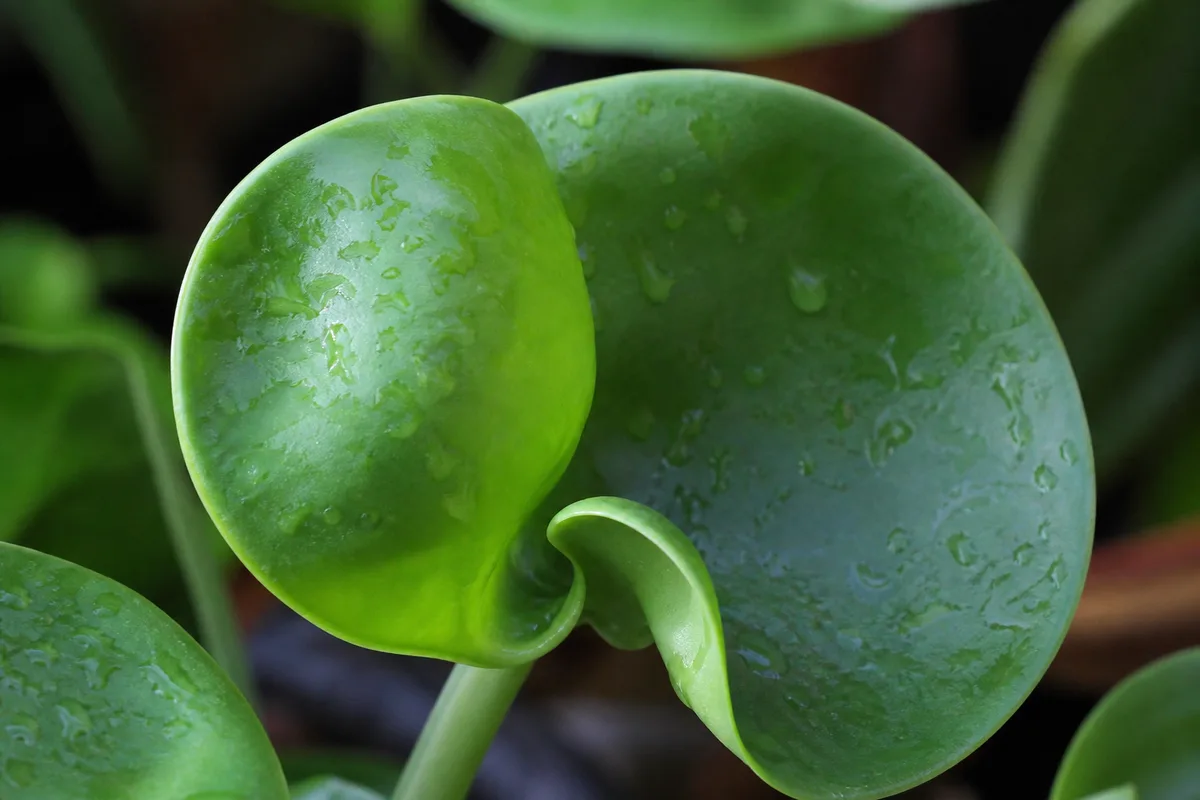
Curling Leaves symptoms on Raindrop Peperomia - compare with healthy tissue on the same plant.
Stress curl looks different. Underwatering curl usually hits multiple mature leaves at once. Teardrop blades roll inward or cup upward while feeling slightly thinner or less springy at the edges. The pot feels light and the mix is dry well below the surface.
Overwatering curl can appear alongside yellowing on lower leaves. Yellowing or curling of peperomia leaves indicates overwatering when soil stays wet and stems soften at the base. The outer leaves may still look glossy while the crown weakens.
Light-stress curl often shows on the side facing a hot window. Leaves cup or fold to shade themselves from direct sunlight that can scorch peperomia foliage. You may see pale or bleached patches on the exposed face.
Low-humidity curl tends to start at leaf margins on otherwise firm teardrops, sometimes with fine stippling on undersides from spider mites that thrive in dry conditions. Raindrop Peperomia thrives in high humidity but tolerates average household levels-extreme dry air near heating vents pushes it past that tolerance faster than a missed watering in an otherwise stable room.
Why Raindrop Peperomia gets curling leaves
Raindrop Peperomia stores water in thick leaves, yet it still depends on a small root system that rots quickly when kept too wet. That makes curl ambiguous: drought and drowning both disrupt turgor in fleshy tissue.
Underwatering is the most common persistent cause indoors. Raindrop Peperomia needs the mix to dry out between waterings. When roots sit in dry mix too long, leaves curl to cut water loss. Hydrophobic dry pockets in old soil make this worse-surface watering runs down the sides while the center stays desert-dry.
Overwatering damages fine roots so they cannot absorb water even when soil feels wet. Excess water reduces oxygen in the soil and damages fine roots, producing wilt-like curl that mimics drought. Oversized decorative pots prolong wet soil around tiny roots-a hidden trigger on this slow-growing upright plant.
Light and heat stress add another lane. Raindrop Peperomia wants bright, indirect sunlight. Midday sun on a south window or hot glass touching leaves triggers cupping as a self-shading response. Winter radiator blasts dry leaf edges and increase transpiration from small teardrop surfaces faster than roots replace moisture.
Low humidity matters most in heated winter rooms. Most indoor environments lack sufficient humidity, particularly in winter. Raindrop Peperomia adapts better than thin-leaved tropicals, but prolonged dry air near vents can still curl margins on firm leaves.
Pests are worth ruling out when new growth stays twisted. NC State recommends monitoring spider mites, mealybugs, fungus gnats, and scale on Raindrop Peperomia overview. Mite feeding on expanding tissue can leave permanently distorted new leaves even after humidity improves.
How to confirm the cause
Work through these checks in order before changing anything:
- Is it a new leaf? A single cupped teardrop at the stem tip on firm soil often means normal maturation-not stress.
- Pot weight. Light and dry suggests underwatering; heavy days after watering suggests poor drainage or chronic overwatering.
- Moisture at depth. Insert a finger or chopstick 5–7 cm into the mix. Dry throughout confirms drought. Cool, clinging soil at mid-depth with a heavy pot confirms saturation.
- Stem bases. Firm upright stems point away from rot; soft, collapsing bases with wet soil confirm crown trouble.
- Light exposure. Note hot south glass, grow lights too close, or leaves pressed against a window pane.
- Air placement. Radiators, heat vents, and fireplace drafts dry teardrop surfaces fast.
- Pest signs. Hold leaves to the light and check undersides and petiole joints for stippling, webbing, or white cottony patches.
If mature leaves keep curling after you corrected dry soil with one thorough soak, or wet soil never dries within two weeks, unpot and inspect roots. Brown mushy roots with a sour smell confirm rot; firm white roots with dry mix confirm thirst or hydrophobic soil.
The first fix to try
Check pot weight and soil moisture at depth before you water, mist, or relocate the plant.
That single diagnostic step prevents the two most expensive mistakes on Raindrop Peperomia: flooding a plant that is curling from root rot, or raising humidity while the mix is bone-dry.
If the pot is light and the mix is dry throughout, water once thoroughly until water runs from drainage holes, wait a few minutes, and empty every saucer. Do not water again until the top half of the mix approaches dry.
If the pot is heavy and soil stays wet, do not water. Move the plant to brighter indirect light with good airflow so the mix can dry. If stem bases soften, unpot, trim mushy roots, air-dry 24 hours, and repot into fresh fast-draining mix in the smallest pot that fits trimmed roots.
If soil moisture is balanced but leaves on the window side are cupping, shift the pot to bright filtered light away from hot glass-do not compensate with extra water.
Step-by-step recovery
Dry curl recovery
Water deeply once, then leave the plant alone. Check whether mature teardrop leaves relax within 24–48 hours. If soil repels water, bottom-soak the pot in room-temperature water for 20–30 minutes, then drain fully. Avoid misting as a primary fix-it does not rehydrate the root zone and wetting peperomia leaves can cause leaf spots.
Wet curl recovery
Stop all watering until the top half of the mix dries. Remove standing water from saucers and decorative outer pots. If yellowing spreads with limp stems, unpot gently, rinse away wet soil, and cut rotted roots back to firm tissue. Repot with well-draining potting mix plus perlite in a pot matched to root size. Wait at least a week before the first cautious watering after a root rescue.
Light and humidity recovery
Move Raindrop Peperomia to stable Raindrop Peperomia light guide away from hot glass and vent blasts. If margins stay crisp on firm leaves, group nearby plants or use a small humidifier to raise local moisture-grouping plants collectively raises humidity in their area. Do not mist fuzzy or glossy leaves heavily; improve ambient air instead.
Pest-related curl recovery
If stippling or webbing appears, isolate the plant and rinse leaf undersides thoroughly. Treat active infestations per label directions; raising humidity alone will not clear mites. Judge recovery by whether new teardrop leaves emerge flat and glossy, not by whether old cupped leaves fully flatten.
Recovery timeline
Simple dry curl often relaxes within one to three days after proper watering and looks normal within a week. Light-stress curl improves once exposure is corrected-watch the next leaf unfurl flat. Wet curl with early root damage may take two to four weeks to stabilize once the mix dries and damaged roots are trimmed. Severe crown rot may not recover the original plant; propagation from firm stem sections becomes the realistic path.
Judge progress by new firm teardrop leaves along upright stems and stable stem bases, not by whether every older cupped leaf reopens. Older severely curled or scorched leaves usually stay shaped that way until replaced.
Lookalike symptoms
Drooping leaves overlap with curl when petioles hang under their own weight. Both trace to water at the roots-check moisture and stem firmness first; the fix path is the same.
Crispy leaf edges from low humidity or fluoride often appear without full cupping. If margins brown but the teardrop center stays plump and soil dries on schedule, fix placement and humidity rather than watering more.
Leggy growth from dim light produces long thin stems that lean, but mature leaves stay flat. Brighten light rather than changing water.
Yellow leaves frequently accompany wet-soil curl on lower crown leaves. Yellowing without curl on old leaves at the base may mean natural aging-widespread yellow plus cupped limp leaves on wet soil means root stress.
Mistakes to avoid
- Watering immediately because cupped leaves look thirsty without checking whether the pot is already heavy and wet.
- Misting leaves instead of fixing root-zone moisture or ambient humidity.
- Assuming every dome-shaped new leaf is a crisis-wait for maturation before changing care.
- Placing Raindrop Peperomia in direct midday sun to “help” a stressed plant.
- Fertilizing a curling plant before moisture and light are corrected.
- Compensating for dry winter air by watering more often-wet soil around a small rootball is more dangerous than dry air on this species.
How to prevent curling next time
Learn how fast your specific pot dries in your home’s light, not on a generic schedule. Let compost partially dry between waterings, use drainage holes, and avoid leaving the pot standing in water. Match pot size to roots; a compact upright plant in a shallow breathable pot dries faster and is easier to monitor than one buried in a deep cachepot.
Keep bright indirect sunlight so the plant uses water predictably. In winter, reduce watering when growth slows and keep pots away from heating vents. Inspect glossy leaf undersides weekly during dry months to catch spider mites early.
When to worry
Treat curling as urgent when wet soil, sour smell, and soft stem bases appear together-crown rot spreads quickly on peperomias with small root systems. Also escalate if mature leaves keep curling after you corrected dry soil with a thorough watering, if new growth emerges repeatedly twisted with stippling, or if cupping spreads while the pot remains heavy.
Raindrop Peperomia is non-toxic to cats and dogs, so pest treatments and root inspections are safe from a toxicity standpoint-focus on fixing the growing condition, not emergency pet response.
Conclusion
Curling leaves on Raindrop Peperomia usually trace to moisture-too little at the roots, too much in the mix, or too little in the air-or to light and heat hitting glossy teardrop surfaces. Lift, probe, and distinguish new-leaf domes from stress curl before you pour. Dry gets one deep drink; wet gets a pause and possibly a root rescue; hot glass gets a move to filtered light. Flat new teardrop leaves along firm upright stems tell you the plant is winning; spreading cupping on wet soil or stippled new growth tells you to act fast.
When to use this page vs other Raindrop Peperomia guides
- Raindrop Peperomia watering guide - Use for routine moisture checks before assuming curling leaves is the main issue.
- Raindrop Peperomia problems hub - Browse all 20 common issues on this species.
- Low Humidity on Raindrop Peperomia - Different entry point when symptoms overlap with curling leaves.
- Not Enough Light on Raindrop Peperomia - Different entry point when symptoms overlap with curling leaves.