High Humidity on Raindrop Peperomia: Causes, Checks & Fixes
Quick answer
Raindrop Peperomia tolerates average home humidity but stagnant air above 60–70% with wet soil or damp leaves invites edema, fungal leaf spots, and soil mold on fleshy teardrop foliage. First step: improve airflow and let the mix dry before you mist again or seal the plant in a humid enclosure.
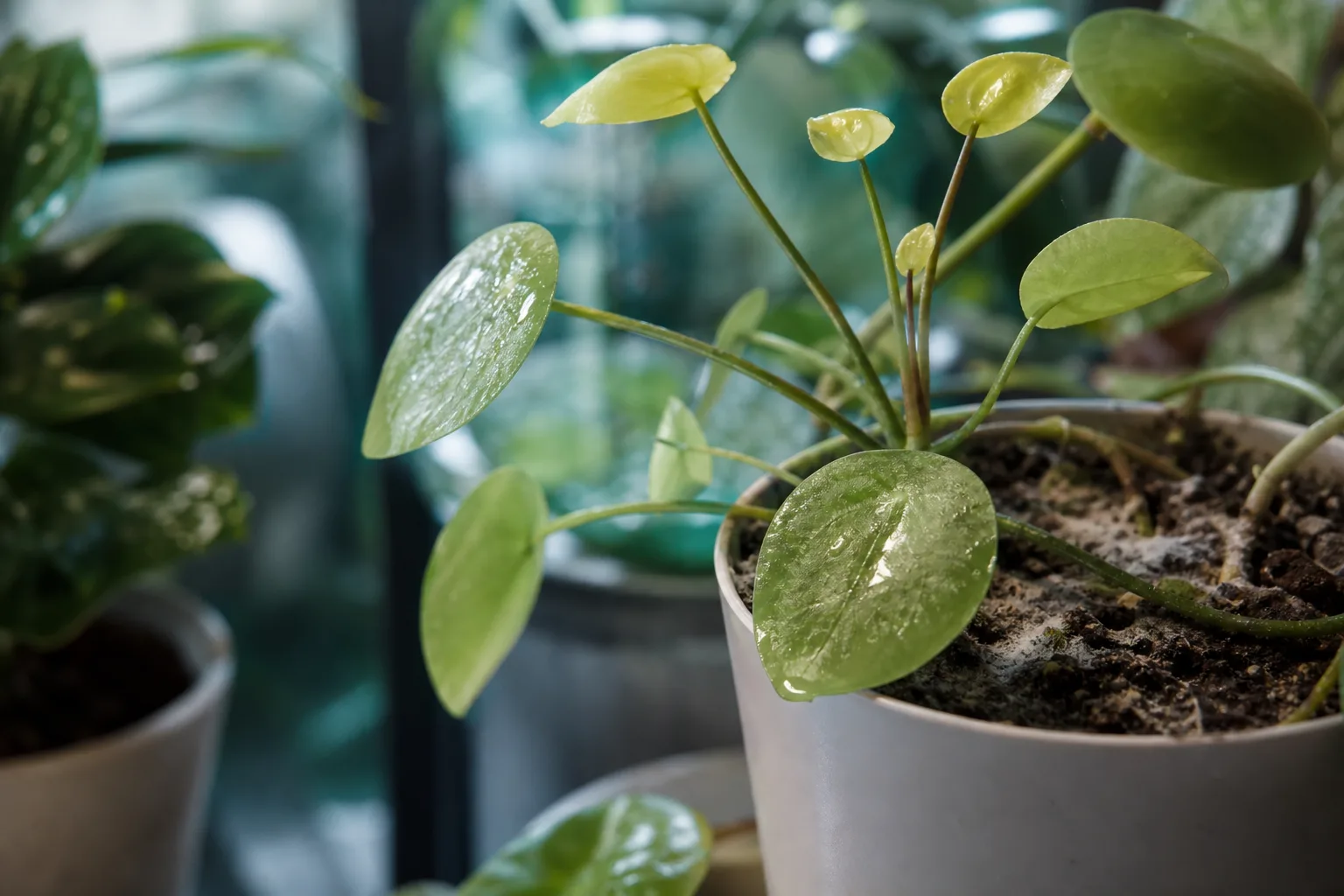
High Humidity on Raindrop Peperomia: Causes, Checks & Fixes
This guide covers high humidity on Raindrop Peperomia. See also the general High Humidity guide, watering, and light pages for this plant.
High Humidity on Raindrop Peperomia: Causes, Checks & Fixes
Quick answer
Raindrop Peperomia is a compact tropical with fleshy, teardrop-shaped leaves that stores moisture in its foliage and tolerates the humidity of the average household around 40–50%. The problem is not moderate humidity itself-it is stagnant, saturated air with no movement, wet leaves that never dry, and humidity pushed far above that range in sealed corners while soil stays wet.
First step: improve airflow at the pot and let the top half of the mix dry before you mist again or close a dome. If a hygrometer reads above 70% in a closed bathroom, terrarium, or propagation box while blister-like bumps, leaf spots, or soil mold appear on glossy foliage, you have excess stagnant moisture-not a Raindrop Peperomia that needs more steam.
What high humidity problems look like on Raindrop Peperomia
High humidity damage on Raindrop Peperomia shows up as moisture-related physiological and fungal symptoms-not the crisp brown tips of dry air. The upright plant may still look perky while leaf surfaces or soil tell a different story.
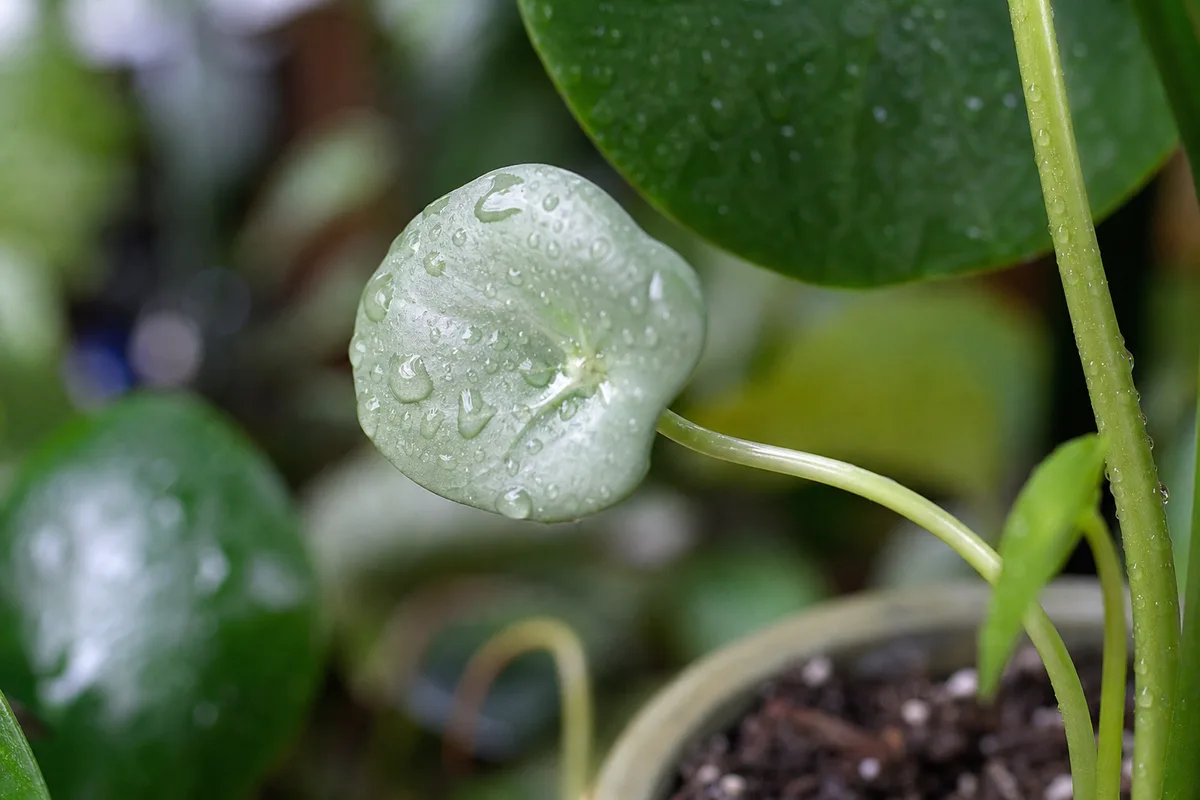
High Humidity symptoms on Raindrop Peperomia - compare with healthy tissue on the same plant.
Edema on teardrop leaves:
- Raised, blister-like bumps on the underside of fleshy teardrop leaves
- Bumps that later turn tan, brown, or corky and flatten out
- Unlike pests, edema does not spread between plants-it reflects a water-balance upset inside the leaf
Fungal leaf spots:
- Brown or black spots with yellow halos on glossy green blades
- Spots that merge when foliage stays damp in still, humid air
- Often follows overhead watering or misting in a closed humid room-fungal leaf spots can be prevented by keeping leaves dry when watering
Soil surface mold and fungus gnats:
- Fluffy white or gray mold on the top of peaty mix when the surface stays wet in humid rooms
- Small fungus gnats around the pot when roots sit in wet, organic-rich soil
Soft stems and root stress:
- Mushy stems at the base with a heavy, wet pot
- Yellowing leaves that drop with little warning when overwatered pairs with stagnant humidity
- Unlike dry-air crisping, these leaves feel soft-not papery
What distinguishes Raindrop Peperomia from healthy moderate humidity:
A Raindrop Peperomia in proper 40–50% humidity with airflow shows firm upright stems, glossy teardrop leaves without fungal coating or corky bumps, and steady slow new growth. Problems show as edema blisters, spots, mold, or mush-not simply “the plant looks tropical.”
Why Raindrop Peperomia gets high humidity stress
Several indoor setups push this peperomia past the humidity–airflow balance its small root system tolerates.
Stagnant humid enclosures
Propagation domes left on mature plants, closed terrariums, or shower rooms with the door shut all day push relative humidity above what fleshy leaves tolerate when surfaces stay damp continuously. Warm moist soil plus cool, still humid air is the classic setup for edema on houseplants.
Fleshy leaves trap moisture differently than thin tropicals
Raindrop Peperomia stores water in its thick teardrop foliage and has a compact upright habit. Unlike a trailing vine with spaced leaves, its crown holds water between blades after misting or overhead watering-and still air keeps those leaves wet far longer than an open shelf.
Over-misting on top of humidifiers
Many owners run a humidifier to prevent brown tips, then mist twice daily in the same closed room. That stacks surface moisture on already humid air. Wetting leaves also increases leaf spot risk on peperomias-avoid wetting the leaves to prevent leaf spots when foliage does not dry quickly.
Small roots in oversized wet pots
Raindrop Peperomia has smaller root systems than many houseplants. An oversized pot holding wet mix in a humid room dries slowly, keeping roots saturated while leaves cannot transpire fast enough in stagnant air. That combination drives edema and root rot from overwatering faster than humidity alone.
Crowded plant shelves and bathrooms
Grouping many tropicals on one tray raises local moisture, but packed leaves block airflow between pots. A Raindrop Peperomia in a dim bathroom with daily showers but no fan often sits above 75% humidity with barely moving air.
How to confirm the cause
Run through these checks in order before changing humidity:
- Hygrometer reading at the pot. Sustained readings above 70% in a closed room suggest stagnant excess. Average 40–50% with good airflow is healthy for Raindrop Peperomia overview.
- Air movement. Note whether a fan, open door, or window crack moves air around the upright stems. Still corners trap moisture on glossy surfaces.
- Leaf moisture. Check whether leaves stay visibly wet for hours after misting or overhead watering.
- Soil moisture and pot weight. A heavy pot with wet surface soil in a humid room stacks risk. A light pot with firm leaves points away from humidity as the main issue.
- Bump and spot pattern. Corky raised bumps on leaf undersides suggest edema. Round spots with halos suggest fungal leaf spot. Soft mushy stems with wet soil suggest root stress.
- Enclosure type. Terrariums, propagation domes, and closed cabinets are common triggers on mature Raindrop Peperomia-not low humidity.
A simple room hygrometer near the pot helps, but placement, Raindrop Peperomia watering guide, and airflow often explain the damage more clearly than humidity alone.
The first fix to try
Improve airflow at the pot and let the top half of the mix dry before you add more moisture-stop misting leaves and open any closed humid enclosure.
Do not compensate by watering less while keeping the plant sealed in saturated air. Stagnant humidity with wet soil is the dangerous pair. Move Raindrop Peperomia to an open spot with Raindrop Peperomia light guide, run a small fan on low nearby if the room is humid, and resume your normal complete dry-down watering rhythm only after the mix has dried appropriately.
Step-by-step recovery
Once airflow is restored and excess surface moisture stops:
- Remove propagation domes or close terrarium lids on mature plants unless you are actively rooting cuttings.
- Water soil only at the base-avoid wetting teardrop leaves during recovery.
- Let the mix dry between waterings; do not keep soil moist “because humidity is high.”
- Trim fully dead or heavily spotted leaves only after conditions stabilize; corky edema scars on old leaves will not re-green.
- Treat fungus gnats if adults persist-drying the soil surface and improving airflow are the first controls before any drench.
Damaged leaf tissue from edema or spots will not fully heal. Judge recovery by firm upright stems, no new bumps on fresh teardrop leaves, and clean new growth at stem tips within two to four weeks once airflow and watering stabilize.
Lookalike symptoms
| What you see | More likely cause on Raindrop Peperomia |
|---|---|
| Corky bumps on leaf undersides in a humid closed room | Edema from wet soil + stagnant air |
| Brown spots after misting or overhead watering | Fungal leaf spot on wet foliage |
| Crispy dry edges on firm leaves near a radiator | Low humidity / heat blast-not excess moisture |
| Yellow limp leaves with heavy wet soil | Overwatering / root stress |
| Fine stippling and webbing on leaf undersides | Spider mites in dry conditions-not high humidity |
| White mold on soil surface with gnats | Wet organic mix in humid stagnant air |
Mistakes to avoid
Do not seal a mature Raindrop Peperomia in a humid terrarium long term-it needs drainage and air movement, not a steam room. Do not mist leaves directly when humidity is already high; surface moisture at the crown increases leaf spot and rot risk. Do not keep soil wet to “match” high humidity. Do not assume every bump means disease-edema is physiological and stops when water balance improves. Do not repot or fertilize a stressed plant until symptoms stabilize. Do not run a humidifier in a closed bathroom without a fan while also watering on schedule regardless of soil dryness.
How to prevent high humidity stress
Target average household humidity around 40–50% and stable temperatures between 65 and 75°F. In naturally humid rooms, prioritize airflow over adding more moisture. Use fast-draining mix with added perlite and pots sized to roots-not leaf spread-so watering stays predictable. Water when the top half of the mix has dried, drain saucers after each soak, and avoid overhead watering on glossy teardrop foliage. Space plants apart on bright shelves so transpiration does not create stagnant pockets between crowded leaves. Because Raindrop Peperomia is non-toxic to cats and dogs, it is easy to keep on open shelves where airflow is better than inside enclosed cabinets.
When to worry
High humidity alone is a moderate issue on Raindrop Peperomia when airflow is good. Escalate when stems soften at the base with soggy soil, when multiple leaves yellow and drop after spots spread, or when new growth stalls for more than a month after you fixed airflow and watering. Those patterns point to root rot or advanced fungal stress-not humidity you can fix with more steam-and need targeted intervention rather than higher humidity.
When to use this page vs other Raindrop Peperomia guides
- Raindrop Peperomia watering guide - Use for routine moisture checks before assuming high humidity is the main issue.
- Raindrop Peperomia problems hub - Browse all 20 common issues on this species.