Distorted Leaves on Raindrop Peperomia: Causes, Checks &
Quick answer
Distorted leaves on Raindrop Peperomia usually trace to edema from wet soil, thrips on tender new growth, or root stress from overwatering-not a mystery disease. First step: hold water, inspect the undersides of the newest teardrop leaves, and probe soil moisture before you change anything else.
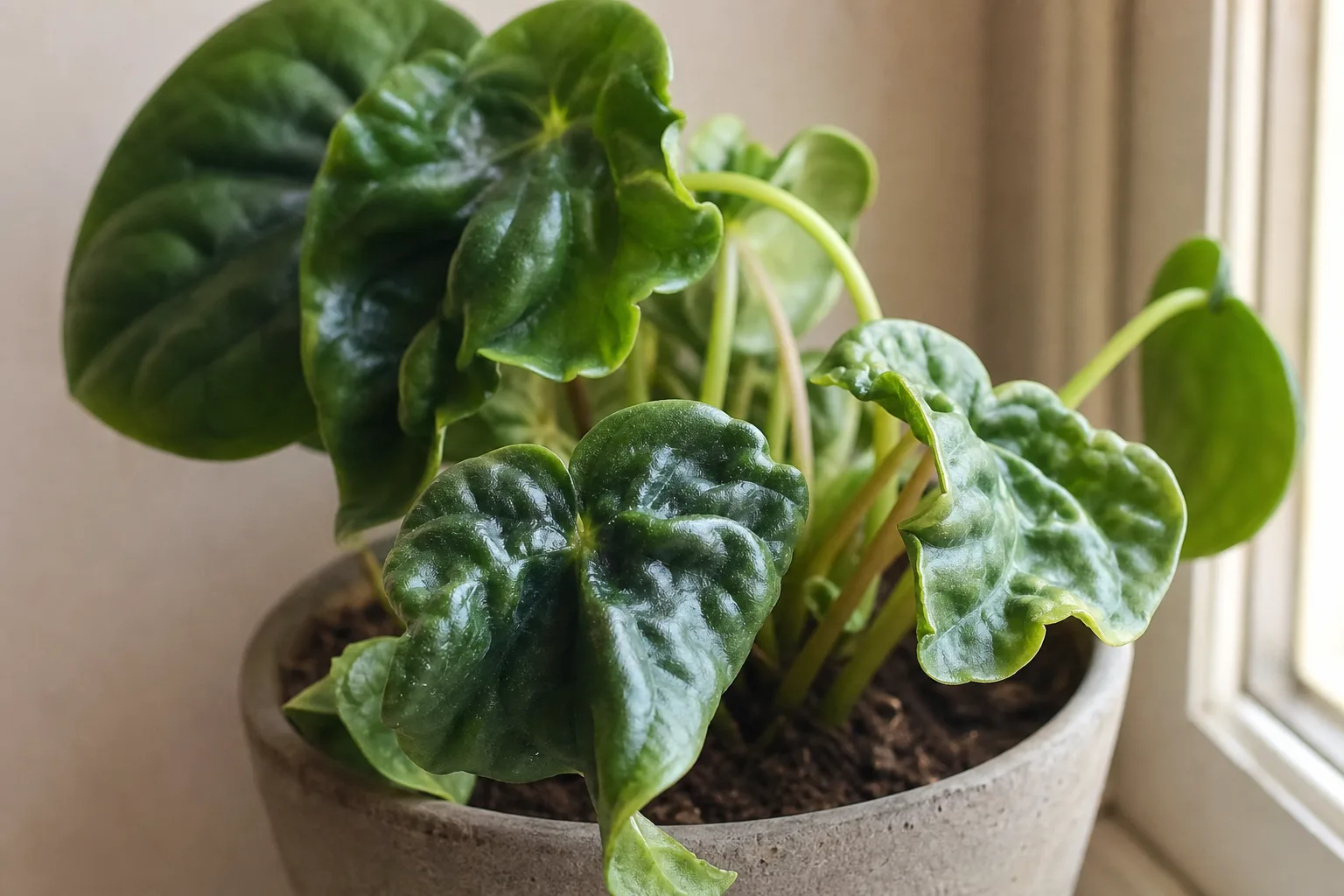
Distorted Leaves on Raindrop Peperomia: Causes, Checks & Fixes
This guide covers distorted leaves on Raindrop Peperomia. See also the general Distorted Leaves guide, watering, and light pages for this plant.
Distorted Leaves on Raindrop Peperomia: Causes, Checks & Fixes
Quick answer
Raindrop Peperomia (Peperomia polybotrya) is grown for its fleshy, glossy, teardrop-shaped leaves on a compact, erect habit. When those leaves open twisted, cupped, wrinkled, or covered in raised bumps, the cause is almost always environmental stress or pests-not a single mystery disease. On Raindrop Peperomia overview, the three most common drivers are edema from roots taking up water faster than leaves release it, thrips rasping tender new growth before leaves finish expanding, and overwatering weakening roots in an oversized wet pot.
First step: stop watering temporarily, inspect the undersides of the newest teardrop leaves under bright light, and confirm soil moisture at depth. That one check separates edema bumps from thrips stippling from root-stress distortion before you repot, spray, or prune.
What distorted leaves look like on Raindrop Peperomia
Healthy Raindrop Peperomia leaves are thick, springy, and symmetrically teardrop-shaped with a slight dimple where the peltate petiole attaches near the center. Distortion breaks that symmetry in predictable ways depending on the cause.
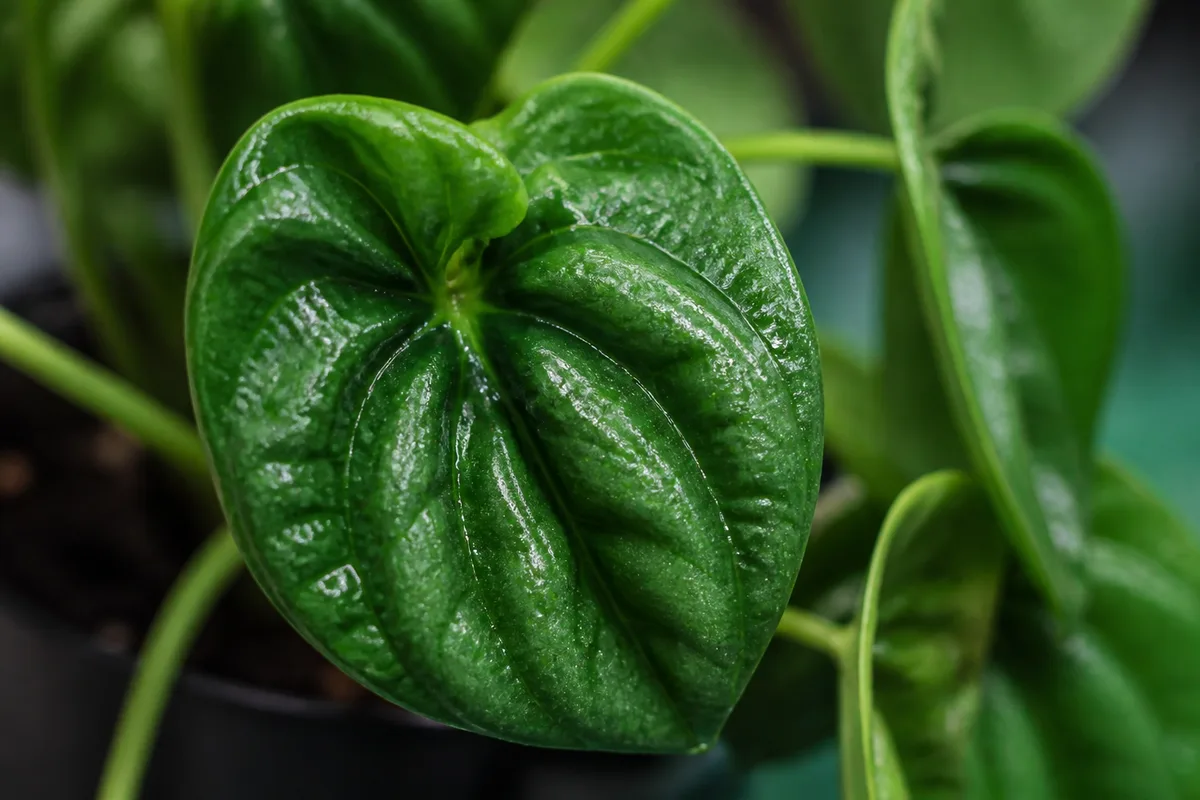
Distorted Leaves symptoms on Raindrop Peperomia - compare with healthy tissue on the same plant.
Edema shows as small raised, corky, or blister-like bumps-most visible on leaf undersides. Illinois Extension notes that on peperomia, oedema can cause raised pimply areas that later turn brown and corky, and severely affected leaves may become distorted and somewhat stunted. On Raindrop Peperomia, edema often hits the fleshy teardrop blades after a stretch of wet soil, cool nights, and stagnant air around dense foliage.
Thrips damage concentrates on the newest growth. UF/IFAS Extension documented thrips on green Peperomia where distortion appeared on upper leaves because thrips feed where leaves are most tender. As each teardrop leaf expands, it grows around the feeding damage and creates distorted edges with a dried, stippled look. Older leaves below may stay flat while every new leaf at the top comes out warped.
Overwatering stress rarely warps leaves in isolation, but chronic wet roots on this small-rooted species weaken new growth. Lower leaves yellow and drop, petioles go limp, and emerging teardrop leaves may look thin or uneven while the pot stays heavy. Clemson HGIC warns that peperomia will drop leaves if overwatered and recommends letting the soil dry out between waterings.
Why Raindrop Peperomia gets distorted leaves
Edema on fleshy teardrop foliage
Peperomias-including Raindrop Peperomia-carry thick, fleshy leaves similar to succulents. That storage tissue makes the plant sensitive to water imbalance. UConn’s IPM program notes that houseplants with fleshy leaves such as peperomia may be prone to edema when roots absorb water faster than leaves transpire it. Cell walls rupture, raised lesions form, and leaves can curl, distort, and drop.
Raindrop Peperomia is especially vulnerable when an oversized pot keeps mix damp for days, winter light is weak, and humidity is high without airflow. The plant prefers moist, well-drained soil-not a permanently saturated root zone. Edema is a physiological disorder, not an infection; it does not spread plant to plant.
Thrips on developing new growth
Thrips are small, mobile insects that feed on tender leaf tissue before it hardens. On Peperomia, UF/IFAS found that markedly infested leaves develop a dried-out, stippled appearance as leaves mature around early damage. Because Raindrop Peperomia produces new teardrop leaves from the top of its upright stem, thrips distortion clusters on the youngest foliage while older leaves may look normal-a key clue.
Thrips can move between houseplants. Isolate any Raindrop Peperomia with stippled new growth until you confirm whether pests are present.
Overwatering and root stress
NC State Extension notes that root rot can result from overwatering on this species. When roots lose oxygen in wet mix, the plant cannot deliver water and nutrients evenly to expanding leaves. New growth may look uneven, small, or weak even before obvious yellowing spreads. Raindrop Peperomia’s compact size-about one foot tall with less than twelve inches of planting space-means a small root ball in a large decorative pot is a common hidden trigger.
Less common causes
Cold drafts or sudden temperature drops can distort or cup new leaves on tropical houseplants. Raindrop Peperomia does best between 65 and 75 °F indoors. A plant near an AC vent may show warped new growth without bumps or stippling.
Direct sun after a move scorches the glossy teardrop surface rather than twisting it, but combined heat and uneven watering can produce odd new leaves at the crown. Keep the plant in bright, indirect sunlight.
Nutrient deficiency is a late suspect on Raindrop Peperomia. Rule out wet soil, edema, and thrips before reaching for fertilizer on a stressed plant.
How to confirm the cause
Work through these checks in order:
- Which leaves are affected? Edema and thrips hit new growth first. Distortion on only the top two to four teardrop leaves with flat older foliage below strongly suggests thrips or edema. Widespread limpness with wet soil points to roots.
- Leaf undersides under bright light. Raised corky bumps without insects = edema. Silvery stippling, dark frass specks, or tiny yellow larvae = thrips. UConn advises using a 10× to 20× hand lens on leaf undersides to separate thrips injury from edema.
- Soil moisture at depth. Probe 5–7 cm into the mix. Heavy, clinging soil with bumps confirms edema/overwatering overlap. Dry soil with cupped leaves suggests underwatering stress instead-rare for distortion but worth ruling out.
- Pot weight and drainage. A pot that stays heavy for days after watering in a dim corner is an edema setup. Confirm the drainage hole is clear and no cachepot holds standing water.
- Stem firmness. Soft stem bases with sour-smelling soil mean inspect roots before focusing on leaf shape alone.
- Recent changes. New grow light, repot, fertilizer spike, or window move in the weeks before distortion started narrows the cause.
First fix for Raindrop Peperomia
Hold the next watering, move the plant to Raindrop Peperomia light guide with gentle airflow, and inspect the undersides of the newest teardrop leaves under magnification.
This single step pauses the most common trigger-excess root-zone moisture-while you read whether bumps (edema) or stippling (thrips) are present. Do not repot, prune heavily, or spray insecticide until you know which pattern you are treating. Do not fertilize distorted leaves on wet soil.
If soil is clearly saturated and stems are still firm, continue the dry-down. If thrips are visible on new growth, isolate the plant before the next leaf unfolds. If stems are soft, shift to root inspection rather than waiting out edema alone.
Step-by-step recovery
If edema or overwatering is confirmed
- Let the top 1–2 inches of mix dry completely before the next thorough watering with full saucer drainage.
- Improve airflow around the glossy foliage-avoid crowding with other plants in a humid bathroom corner.
- Confirm the pot is sized to the root ball, not the leaf spread. RHS peperomia guidance warns that oversized pots keep compost wet longer.
- Remove only leaves that are mostly brown or collapsed; partially bumped teardrop leaves can stay if the plant is stabilizing.
- Judge recovery by the next leaves opening firm and symmetric-not by old tissue flattening.
Illinois Extension recommends avoiding overwatering and heavy, poorly drained soil mixes for peperomia oedema control and keeping the soil on the dry side while symptoms clear.
If thrips are confirmed
- Isolate Raindrop Peperomia from other houseplants.
- Rinse leaf undersides and stems with lukewarm water to knock down mobile thrips.
- Apply insecticidal soap or horticultural oil to new growth and undersides, following label directions for indoor use. Re-treat at the interval the label specifies because thrips reproduce quickly.
- Sticky blue or yellow traps near the pot help monitor population decline-UF/IFAS recommends sticky traps as a monitoring tool because thrips are hard to see.
- Do not expect warped leaves to straighten. Success means new teardrop leaves open flat and glossy.
If root rot is suspected
Unpot only when dry-down fails or stems soften. Trim mushy roots to firm tissue, repot into fresh airy mix in the smallest appropriate pot, and wait five to seven days before cautious watering. Take a firm stem cutting above any soft zone as backup.
Recovery timeline
Minor edema from one overwatering episode often stops spreading within one to two weeks once the mix dries and airflow improves. The bumped leaves remain blemished; watch for the next two teardrop leaves opening without new corky lesions.
Thrips recovery depends on breaking the reproduction cycle. Expect two to four weeks of treatment before consistently normal new growth. Distorted leaves produced during the infestation stay twisted permanently.
Root-stress distortion may take three to six weeks to resolve if stems stayed firm and roots were only mildly damaged. Mushy stems often mean the main plant will not recover-propagate from healthy tissue above the soft zone.
Signs of improvement: new leaves open symmetric and firm, petioles regain stiffness, bump formation stops, thrips counts on traps decline, pot weight drops predictably between waterings.
Signs of worsening: every new leaf emerges more distorted, stem bases soften, sour soil smell intensifies, or stippling spreads to adjacent plants.
Lookalike symptoms to rule out
Curling leaves from drought - Pot is very light, mix is dry deep down, leaves cup inward but lack corky bumps or stippling. Perks up after a thorough soak. Distortion here is temporary cupping, not permanent twisting.
Leggy etiolation from low light - Stretched stems and smaller pale leaves over weeks, not sudden warping of otherwise firm teardrop blades. Move to brighter indirect light; new growth should normalize in shape if thrips are absent.
Mealybugs or scale - White cottony clusters or brown bumps on stems and leaf axils, not silvery thrips stippling on expanding tissue. Distortion is secondary to heavy infestation.
Fungal leaf spots - Discrete brown or black spots with halos, often after leaves were kept wet during watering. NC State advises avoiding wetting the leaves to prevent leaf spots. Spots differ from edema’s raised corky blisters.
Mistakes to avoid
Do not prune every distorted leaf before fixing the cause-you remove photosynthetic tissue the plant needs while roots or pests are still active.
Do not mist heavily hoping to “plump” warped teardrop leaves. Extra surface moisture on dense foliage worsens edema risk and leaf spot pressure.
Do not repot into a larger container to “help” a struggling Raindrop Peperomia. More wet soil around a small root ball repeats the edema cycle.
Do not apply strong fertilizer on bumped or stippled leaves. Clemson HGIC recommends fertilizing only during active spring and summer growth-not on a stressed plant with wet roots.
Do not assume distortion is viral. Care stress and thrips account for most Raindrop Peperomia cases in home settings. Viral suspicion belongs only when sanitation, dry-down, and pest control fail and distortion keeps accelerating on every new leaf with no other pattern.
Raindrop Peperomia care cross-check
Distorted leaves return if the wider setup fights this species:
- Light - Bright, indirect sunlight so the plant uses water steadily and new leaves develop normally.
- Water - Let compost partially dry between waterings. Full soak, then dry-down-not constant dampness.
- Pot - Sized to roots in well-draining mix with perlite. Less than twelve inches of planting space is typical for this compact species.
- Airflow - Gentle movement around leaves reduces edema risk in humid rooms.
- Scouting - Check newest teardrop leaves weekly for stippling before thrips warp the next flush of growth.
How to prevent distorted leaves next time
Track how fast your pot dries in its window before setting a calendar schedule. Raindrop Peperomia in bright east light may need water every seven to ten days in summer but only every two to three weeks in a cool winter room.
Empty saucers within thirty minutes of watering. If you use cachepots, drain the inner nursery pot fully before returning it.
Run a hand lens over new growth when you water-thrips are easiest to stop before several warped leaves stack up at the crown.
Keep the plant distinguishable from Pilea peperomioides, which many growers water on a different rhythm. Raindrop Peperomia needs dry-down between drinks, not lightly damp mix at all times.
During humid seasons, a small fan or spacing from wall-hung plants improves transpiration balance and lowers edema pressure on fleshy teardrop foliage.
When to worry
Treat as urgent when distortion hits every new leaf for two or more weeks despite dry-down, when stem bases soften, or when thrips appear on multiple houseplants nearby.
Consider the main plant unsaveable when the entire stem is mushy from soil line up. Before discarding, check for firm tissue higher on the stem suitable for propagation cuttings.
Non-urgent: one or two bumped or slightly cupped new leaves on an otherwise firm plant after a single heavy watering. Dry-down and airflow often stop further distortion without Raindrop Peperomia repotting guide.
Conclusion
Distorted leaves on Raindrop Peperomia are a readable signal, not a dead end. Corky bumps with wet soil mean edema and dry-down. Stippled, twisted new growth alone means thrips and isolation. Limp stems with damp mix mean roots need attention before leaf shape will improve. Hold water, inspect the newest teardrop leaves, and treat the confirmed cause-not every possible fix at once. Recovery always shows in the next firm, glossy leaves opening at the top, because warped tissue on this species does not straighten once it hardens.
When to use this page vs other Raindrop Peperomia guides
- Raindrop Peperomia watering guide - Use for routine moisture checks before assuming distorted leaves is the main issue.
- Raindrop Peperomia problems hub - Browse all 20 common issues on this species.