Heat Stress on Raindrop Peperomia: Causes, Checks & Fixes
Quick answer
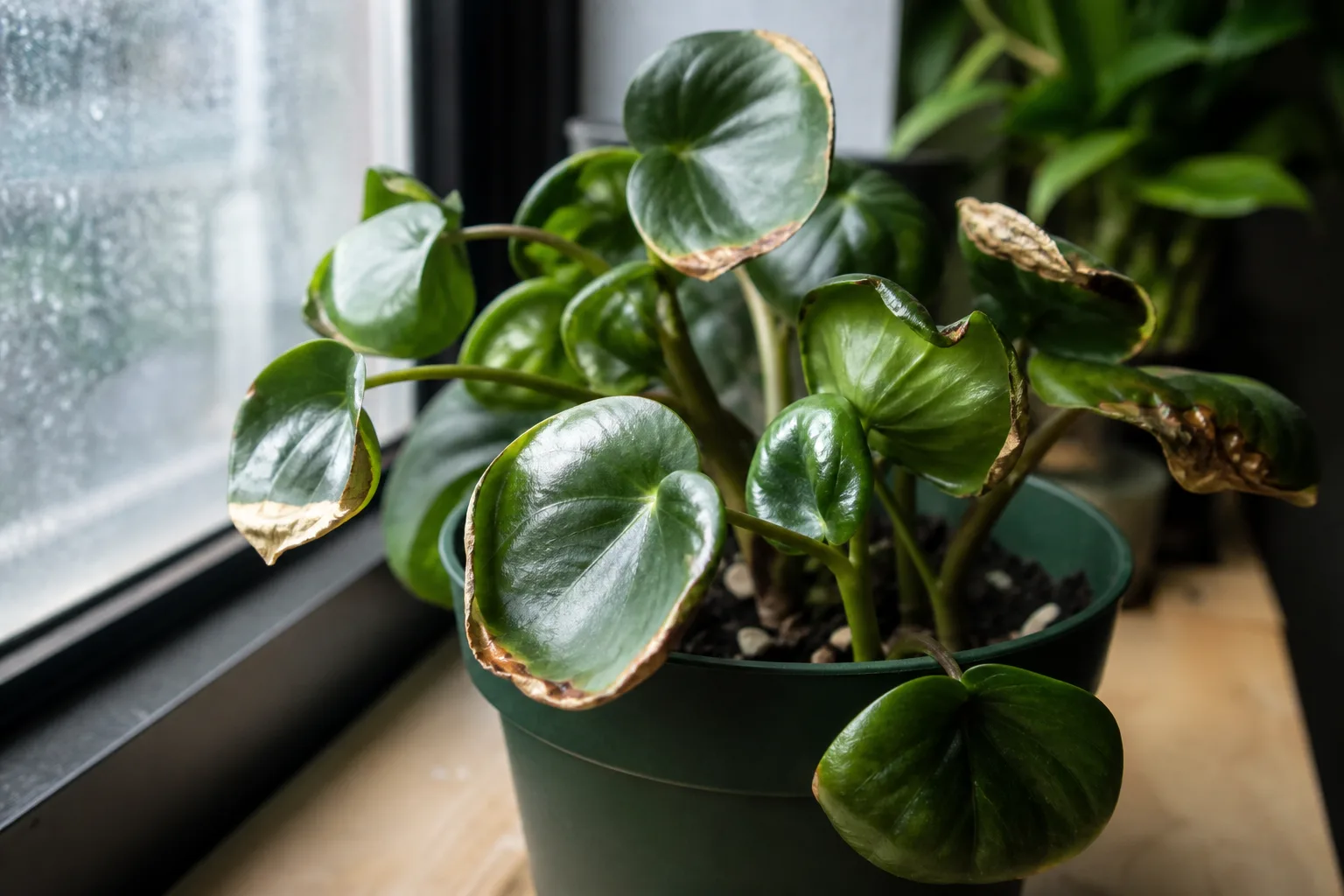
Heat stress on Raindrop Peperomia shows as limp glossy teardrop leaves, inward curling, and dull foliage when air or soil temperature climbs above its comfort zone. First step: move the pot away from heat vents, hot glass, and radiators before you change watering.
Heat Stress on Raindrop Peperomia: Causes, Checks & Fixes
This guide covers heat stress on Raindrop Peperomia. See also the general Heat Stress guide, watering, and light pages for this plant.
Heat Stress on Raindrop Peperomia: Causes, Checks & Fixes
Quick answer
Heat stress on Raindrop Peperomia (Peperomia polybotrya) is environmental damage-not a disease or pest. This compact upright species with fleshy, glossy teardrop leaves prefers bright, indirect sunlight and indoor temperatures between 65 and 75 °F. When hot air, radiant window glass, or heating vents push temperatures beyond that band, the plant loses water faster than its small root system can resupply. The classic picture is afternoon limpness: teardrop leaves hang soft, gloss dulls, and margins may curl inward or crisp brown-even when you have not changed your watering routine.
First step: move the pot away from the obvious heat source before you water, fertilize, or repot. Check whether Raindrop Peperomia sits beside a supply vent, on a radiator shelf, or within a few centimetres of hot south or west window glass. Heat stress and thirst look similar on limp foliage, but the fix starts with cooling the environment-not automatically adding water.
What heat stress looks like on Raindrop Peperomia
On this upright, compact species, heat damage usually shows on the outermost teardrop leaves first because those surfaces transpire the most and sit farthest from the cooler crown near the pot.
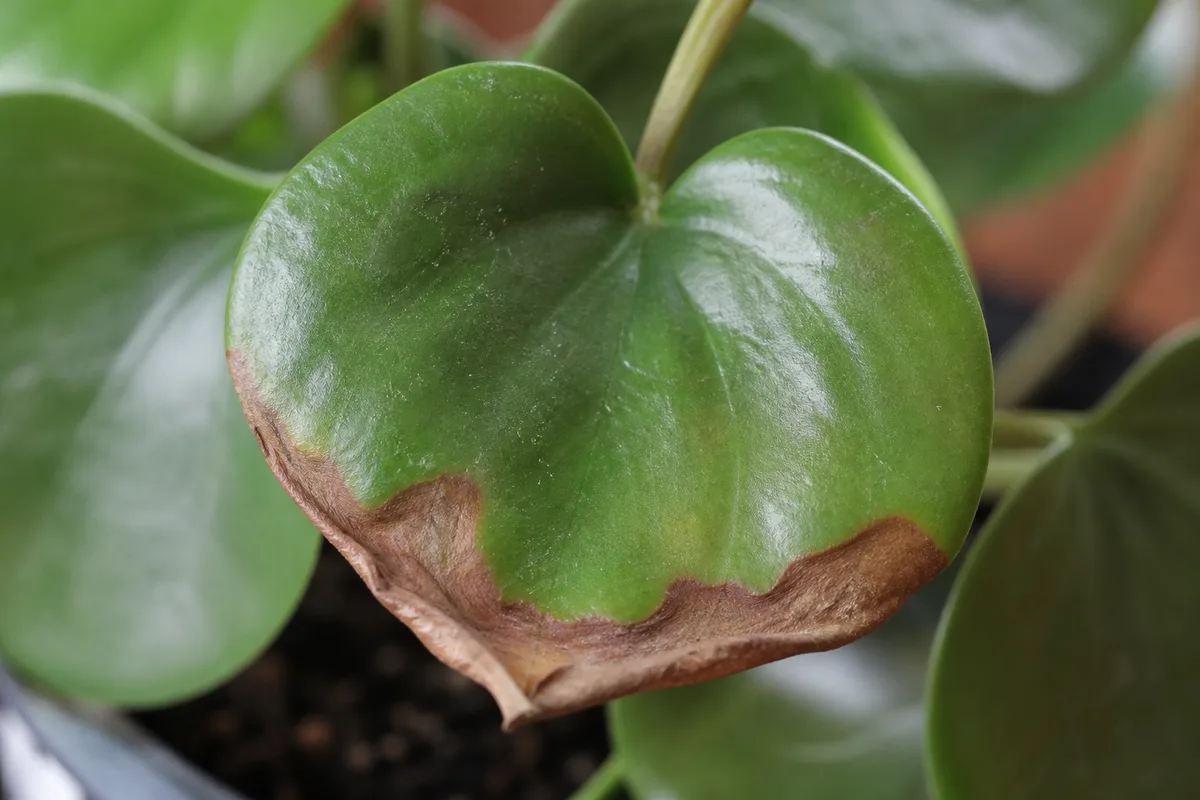
Heat Stress symptoms on Raindrop Peperomia - compare with healthy tissue on the same plant.
Typical heat stress patterns:
- Afternoon limpness worst between late morning and evening, often improving overnight when room temperatures drop
- Inward-curling glossy leaves with dull, faded green color on normally bright teardrop foliage
- Crispy brown margins or tips after repeated hot dry cycles near a heat source
- New teardrop leaves that stall, stay small, wrinkle during unfurling, or yellow at the tips during sustained heat
- Leaves closest to a window, vent, or heat source drooping while inner leaves near the stem still look firm
Temporary heat wilt on moist soil:
- Same limp upright look, but the mix is moist 3–5 cm down and the stem feels firm at the soil line
- Plant firms up by evening or early morning without extra water
- Common when sustained room temperatures climb above roughly 27–29 °C (80–85 °F) even on a well-watered Raindrop Peperomia
Heat compounded by placement:
West-facing afternoon sun through glass can scorch delicate peperomia leaves even when air temperature seems acceptable. A pot touching hot window glass heats the root zone too, which speeds soil drying and stresses the compact root ball Raindrop Peperomia overview keeps.
Why Raindrop Peperomia gets heat stress
Raindrop Peperomia is a tropical perennial from Colombia, Ecuador, and Peru that thrives in warm, humid climates on the forest floor. Indoors it tolerates average household humidity, but it still needs stable warmth-not hot dry blasts. RHS guidance for peperomias recommends a warm room around 18–30 °C (65–86 °F) in Raindrop Peperomia light guide, and explicitly warns to keep plants out of cold draughts and away from radiators.
The fleshy teardrop leaves store moisture, which helps Raindrop Peperomia survive brief dry spells-but they cannot buffer sustained heat plus low humidity near a vent. When leaf transpiration outpaces root uptake, plants wilt and leaves curl when roots cannot supply sufficient moisture. Short afternoon wilting on moist soil is reversible; prolonged heat without relief causes yellowing, leaf scorch, and drop.
Raindrop Peperomia’s small root system makes heat recovery tricky. Growers often see limp leaves and pour water, assuming drought. Wet soil around a tiny root ball in a hot spot creates a double stress: heat above and oxygen loss below. NC State notes root rot can result from overwatering on this species-exactly the risk when you compensate for heat with extra drinks.
Summer placement mistakes stack quickly: a west window with afternoon sun, a cachepot trapping heat, an AC vent blowing dry air across glossy leaves, or a sunroom that hits 32 °C (90 °F) on heat-wave days. Each factor alone may be manageable; together they produce the limp, curled, scorched pattern that reads like underwatering.
How to confirm the cause
Work through these checks before Raindrop Peperomia repotting guide, fertilizing, or soaking the plant:
- Time of day - Note whether limpness peaks in afternoon heat and eases by morning. That cycle points to heat stress rather than chronic underwatering.
- Pot weight and soil moisture - Probe 3–5 cm deep. Moist heavy soil with limp leaves fits heat wilt. Very light dry soil with limp leaves that stay flat overnight fits drought.
- Stem firmness - Pinch the main stem at the soil line. Firm tissue with limp leaves on moist soil confirms environmental heat stress. Soft hollow stems with sour soil mean rot-not this diagnosis.
- Heat map the spot - Scan within one metre for supply vents, radiators, hot window glass, enclosed sunrooms, and electronics that exhaust warm air.
- Leaf pattern - Outer teardrop leaves drooping first while inner crown leaves stay firm fits heat exposure. Uniform limpness across the whole plant on dry soil fits underwatering.
- Recent moves - Heat stress often starts within days of shifting the pot closer to a west window, onto a radiator shelf, or into a hot car during transport.
If limpness is afternoon-only, soil is moist, stems are firm, and a heat source sits nearby, you have confirmed heat stress without advanced root damage.
First fix for Raindrop Peperomia
Move the pot away from the obvious heat trigger into stable bright indirect light-before you change watering.
Pull it back from hot south or west glass, shift it off the radiator ledge, and rotate the pot so one side is not baking while the other stays shaded. RHS peperomia guidance notes that direct sun in summer can scorch the foliage; during heat waves, even indirect light near hot glass may be too much until temperatures drop.
Do not pour extra water because teardrop leaves look soft-check soil first. Do not fertilize a heat-stressed plant. Do not repot on day one unless stems are already soft or soil smells sour. Do not mist leaves hoping to cool them; NC State advises avoiding wetting the leaves to prevent leaf spots on peperomias, and surface misting does not fix hot dry air at the root zone.
Give the plant one to two nights in the cooler spot before deciding whether it needs water.
Step-by-step recovery
After the initial move:
- Let evening temperatures stabilize before assessing whether the plant needs a drink. If soil is still moist 3–5 cm down, wait.
- Raise ambient humidity moderately if crisp edges keep spreading on firm leaves-group nearby plants, use a small humidifier, or a pebble tray near (not under) the pot. Clemson HGIC notes peperomia will benefit from a humidifier in the winter; the same logic applies during dry heat waves.
- Water only when the top 1–2 inches of mix are dry, using room-temperature water. Heat-stressed roots need oxygen between drinks, not constant dampness.
- Hold fertilizer until new firm teardrop leaves appear at the stem tip-usually two to three weeks after conditions stabilize.
- Trim fully brown or black leaf tissue only after the plant stops dropping new damage. Partial crisping often halts once placement improves.
- Watch for spider mites if heat came with very dry air. Stippling on glossy leaf undersides needs pest treatment, not just cooler placement.
Scorched teardrop tissue will not re-green. Judge recovery by firm stems, stable pot weight between waterings, and new glossy leaves opening at the top-not old curled foliage lower on the stem.
Recovery timeline
Minor heat stress with firm stems often shows improvement within one to two weeks once placement and temperatures stabilize. Afternoon limpness should shrink to shorter windows; new teardrop leaves should open firm and glossy.
Moderate cases with repeated hot cycles may need three to six weeks before growth looks normal. Severe scorch across most leaves still recover if the stem base stays firm-trim dead tissue and wait for fresh crown growth.
Signs the plant is improving: evening firmness returns reliably, new leaves open without tip burn, yellowing stops spreading, and the pot dries on a predictable rhythm again.
Signs the problem is worsening: limpness persists into morning on moist soil, stem bases soften, sour smell develops, or multiple leaves drop within days despite cooler placement-inspect roots for rot compounded by heat-era overwatering.
Lookalike symptoms to rule out
Underwatering - Pot feels very light, mix is dry 3–5 cm down, leaves may thin slightly but stems usually stay firm. Perks up within hours of a thorough watering. Moist heavy soil rules this out.
Overwatering / root stress - Yellow limp leaves with wet heavy soil, soft stem bases, sour smell. Heat stress can trigger overwatering mistakes; if stems are soft, switch to root inspection-not more cooling alone.
Low humidity stress - Crispy margins on firm leaves in dry heated air, often near radiators. Overlaps with heat stress; fix placement and moderate humidity together.
Sunburn / scorched leaves - Pale bleached patches or crisp brown spots on leaves facing direct sun, distinct from uniform afternoon wilt. Move farther from glass or filter light with a sheer curtain.
Not enough light - Leggy stretched stems and pale growth over weeks, not sudden afternoon collapse. Often paired with slow drying-not acute heat wilt.
Mistakes to avoid
Do not water because teardrop leaves look slightly soft without checking soil-limpness from heat and limpness from drought feel similar but need opposite responses when soil moisture differs.
Do not leave the pot touching hot window glass. Radiant heat cooks leaves and roots faster than room air temperature suggests.
Do not blast AC directly across the plant while trying to cool it. Cold dry drafts stress peperomias almost as much as heat; aim for stable moderate air, not oscillating extremes.
Do not mist leaves as a primary fix. Surface moisture raises leaf spot risk without solving hot dry air at the crown.
Do not fertilize until new growth appears and Raindrop Peperomia watering guide is stable. Fertilizer on heat-stressed roots adds salt stress without fixing temperature.
Do not assume a west window is safe because the plant is a few feet back-afternoon glass heat can still scorch peperomia foliage in direct sun.
Raindrop Peperomia care cross-check
Heat recovery sticks only when the wider setup matches how this species grows:
- Light - Bright indirect sunlight; pull back from hot glass during summer heat waves.
- Temperature - Target 18–26 °C (65–78 °F); avoid sustained exposure above 27–29 °C (80–85 °F) near vents or glass.
- Humidity - Average household 40–50% is usually enough once heat blasts stop; add moderate humidity during dry heat spells.
- Water rhythm - Full drink when the top 1–2 inches dry; do not keep mix damp to “help” a heat-stressed plant.
- Pot size - Sized to the root ball, not the leaf spread-oversized wet pots fail faster in hot corners.
How to prevent heat stress next time
Scout placement before summer: note which windows get afternoon sun and which vents blow dry air. Move Raindrop Peperomia back from glass in June if last year brought curled teardrop leaves every August.
Use a room thermometer near the pot during heat waves-not just wall thermostat readings. Microclimates beside glass can run 5–10 °C hotter than the rest of the room.
Group plants to buffer dry air, but keep airflow around the upright crown so stagnant heat does not build in enclosed shelves.
Track pot weight weekly in summer so you water when the mix actually dries-not on a winter calendar that ignores faster evaporation in hot bright spots.
When moving plants outdoors for summer, Clemson guidance says wait until nights stay consistently 60 °F or higher and place in deep shade without direct sun-hot patios scorch Raindrop Peperomia faster than indoor heat stress.
When to worry
Treat as urgent when limp foliage persists into the next morning on moist soil with firm stems that suddenly soften, when crispy edges spread across most teardrop leaves during a sustained heat wave, or when new growth aborts completely for more than a month after you fixed placement.
Non-urgent: afternoon limpness that recovers overnight, one or two crisp outer leaves near a vent you already moved away from, or dull gloss that returns after a single hot day.
Consider stem cuttings as backup only if the main stem turns mushy from combined heat and overwatering-firm tissue above any soft zone can still propagate if the crown fails.
Conclusion
Heat stress on Raindrop Peperomia is a placement and temperature problem, not mysterious decline. The fleshy teardrop leaves store moisture, but they cannot outrun hot dry air beside vents, radiators, or baking window glass. Move the pot to stable bright indirect light first, confirm moist soil before you water, and let firm new leaves tell you recovery is working. Match indoor temperatures to the 65–75 °F band this species prefers, keep roots breathing between drinks, and pull back from direct summer sun that scorches peperomia leaves-that path saves most plants before heat-era overwatering turns a reversible wilt into root rot.
When to use this page vs other Raindrop Peperomia guides
- Raindrop Peperomia watering guide - Use for routine moisture checks before assuming heat stress is the main issue.
- Raindrop Peperomia problems hub - Browse all 20 common issues on this species.
- Brown Leaves on Raindrop Peperomia - Different entry point when symptoms overlap with heat stress.
- Curling Leaves on Raindrop Peperomia - Different entry point when symptoms overlap with heat stress.