Flowers Turning Brown on Raindrop Peperomia: Causes, Checks
Quick answer
Brown on Raindrop Peperomia flower spikes is usually spent senescence-the greenish-white mouse-tail inflorescences only last a couple of weeks indoors. First step: snip fully brown spikes at the base with clean scissors. If fresh green spikes turn mushy brown while soil stays wet, stop watering and check stem bases for rot.
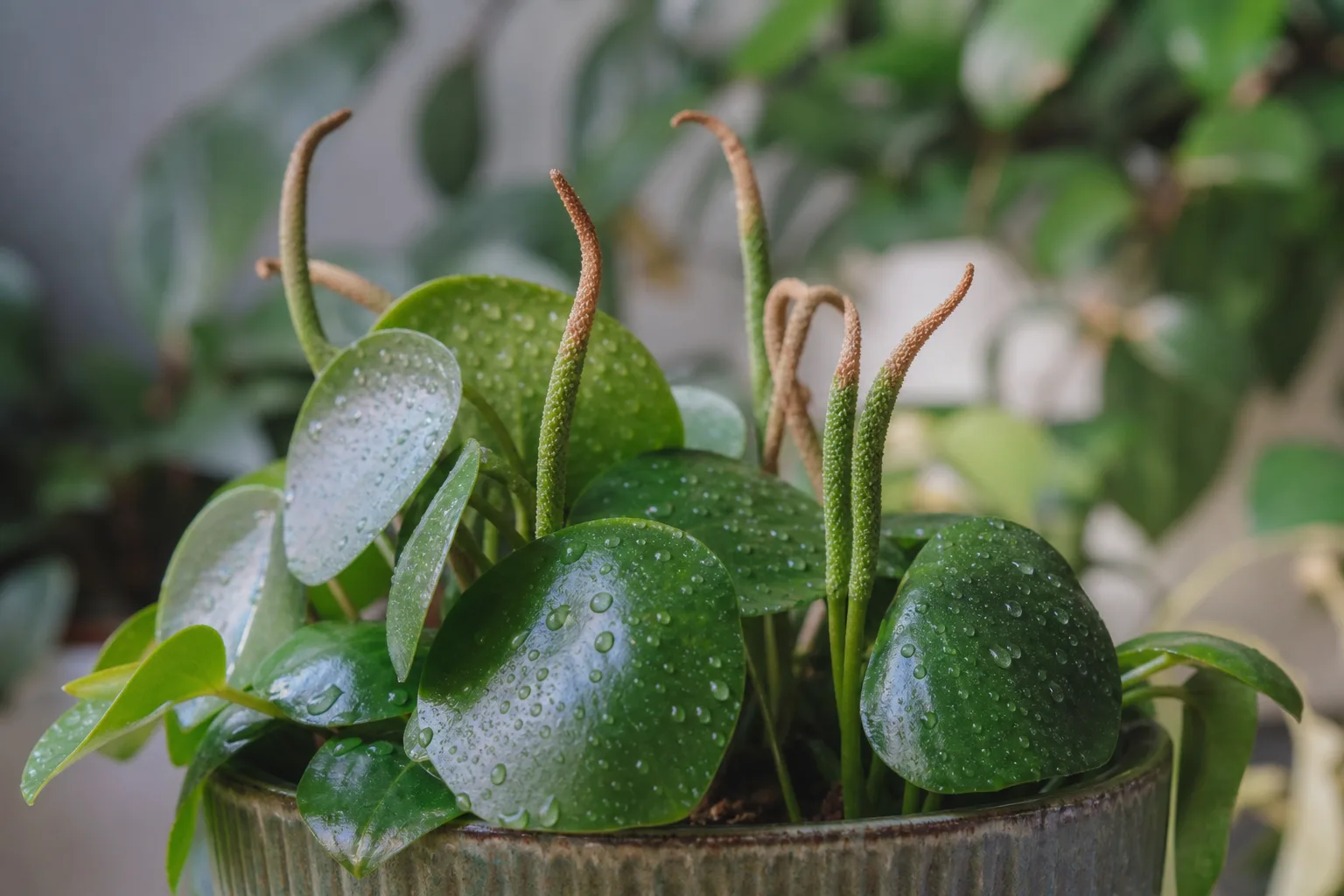
Flowers Turning Brown on Raindrop Peperomia: Causes, Checks & Fixes
This guide covers flowers turning brown on Raindrop Peperomia. See also the general Flowers Turning Brown guide, watering, and light pages for this plant.
Flowers Turning Brown on Raindrop Peperomia: Causes, Checks & Fixes
Quick answer
Brown on Raindrop Peperomia (Peperomia polybotrya) flower spikes confuses owners because the blooms do not look like traditional petals. This plant produces greenish-white, long, slender, tail-like spikes-often compared to mouse or rat tails-that bloom during the summer when the plant is mature and conditions suit it. As a houseplant, it rarely flowers, so seeing any spike at all is a good sign.
Those spikes are short-lived display structures, not long-lasting hibiscus-style blooms. After one to two weeks indoors, tissue dries evenly from green-cream to tan-brown. That uniform dry brown is normal senescence-not disease.
First step: snip fully brown, dry spikes at the base with clean scissors. If a fresh green spike turns soft, mushy brown while soil stays wet and the pot feels heavy, stop watering and inspect stem bases before the rot spreads to glossy teardrop leaves.
What brown flowers look like on Raindrop Peperomia
Raindrop Peperomia inflorescences rise on thin stalks above the glossy peltate leaves. Brown patterns fall into four common groups:
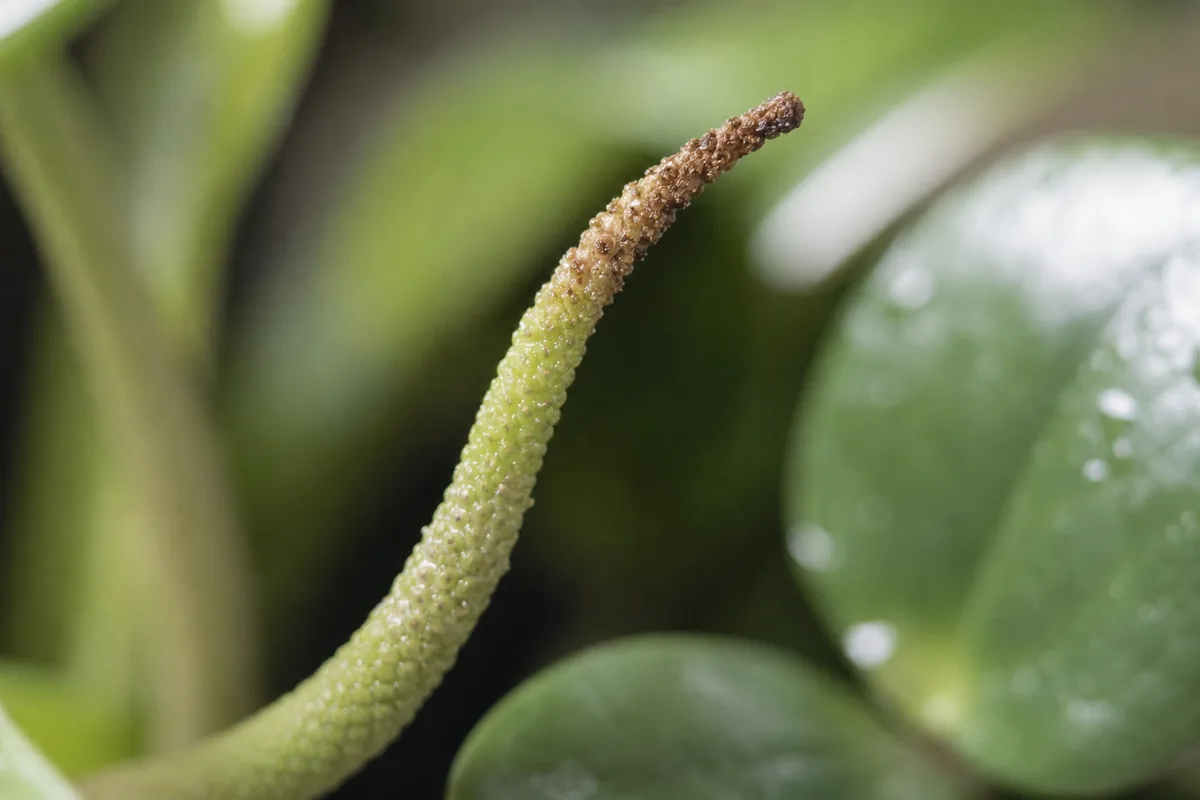
Flowers Turning Brown symptoms on Raindrop Peperomia - compare with healthy tissue on the same plant.
Normal spent-spike senescence (expected). An open spike that was pale green or cream gradually dries from tip to base over one to two weeks. Tissue feels papery and crisp, not wet. The spike stays attached until you remove it. Nearby teardrop leaves remain firm and bright green.
Rot on neglected spent spikes (preventable). Spikes left on the plant after they fade can soften and brown unevenly at the base, especially in humid stagnant air. The upper portion may look dry while the attachment point turns dark and mushy. This is decay of dead tissue, not a new disease attacking healthy flowers.
Stress browning on fresh spikes (problem). A newly emerged green spike turns tan-brown and limp within days-before it fully elongates. This often follows overwatering, a recent repot, cold drafts, or letting soil swing from bone-dry to soggy while the plant directs energy to bloom.
Whole-plant decline with brown spikes (urgent). Brown spikes plus yellowing lower leaves, soft stem bases, and sour-smelling wet soil point to root rot from overwatering-a root-zone problem that shows on whatever tissue the plant is growing, including flower spikes.
Less often, mealybugs at spike bases drain sap and cause spikes to shrivel brown without fully opening. Look for white cottony clusters where the stalk meets the main stem.
Why Raindrop Peperomia flowers turn brown
Peperomia polybotrya is a tropical perennial from Colombia to Peru with fleshy leaves that store water. Its Piperaceae-family spikes lack showy petals-the tiny flowers are packed along a slender axis. Indoor culture explains most browning.
Natural bloom fade by design. Peperomia spikes are not particularly decorative compared with the foliage. Once pollination finishes or the brief display window passes, the spike has no further purpose and senesces. Brown at end of life is normal, not a care failure.
Energy trade-off during bloom. Flowering draws resources from the compact root system. If watering, light, or humidity shift mid-spike, the plant may abort the inflorescence early-browning a green spike before it fully matures.
Overwatering while spikes are present. Raindrop Peperomia has a smaller root mass than its leaf spread suggests. Soggy mix in an oversized pot keeps roots wet for days. Root rot can result from overwatering, and stressed roots cannot support active spikes. Brown mushy spikes on wet soil are a warning to dry the root zone-not to add fertilizer.
Leaving spent spikes too long. Growers often note that faded spikes should be removed promptly; otherwise dead tissue can rot against living stems in humid conditions. Deadheading is hygiene, not optional cosmetic pruning.
Environmental shock during bud set. Like many flowering houseplants, peperomias abort blooms after Raindrop Peperomia repotting guide, room moves, or draft exposure even when long-term placement improves. A spike that browns within days of a care change usually reflects timing, not chronic disease.
Low light and immaturity. Bright, indirect sunlight supports both foliage and occasional summer spikes. Young plants or dim-corner specimens may never bloom; spikes that do form in weak light often fail to hold green and brown quickly.
How to confirm the cause
Work through these checks before repotting or feeding:
- Dry crisp vs soft mushy - Papery uniform brown on an old open spike means senescence. Wet brown at the base on a fresh spike means rot or overwatering stress.
- Spike age - Did the spike stand green and upright for at least a week? Longer display followed by even browning fits normal fade.
- Soil moisture and pot weight - Push a finger 5–7 cm deep. A heavy pot days after watering with failing spikes implicates wet roots.
- Stem base firmness - Wiggle the spike stalk where it meets the main stem. Soft collapsing tissue at the crown confirms trouble beyond the flower.
- Recent changes - Repot, move, vacation dry-down, or heavy watering within two weeks aligns with stress browning.
- Leaf check - Firm glossy teardrop leaves with only dry brown old spikes mean deadhead. Yellow lower leaves plus wet soil mean address roots first.
- Pest scan - Mealybugs or scale at nodes can brown spikes without whole-plant wilt.
If only open spikes are dry-brown and leaves stay firm in stable bright care, deadheading is enough. If fresh green spikes mushy-brown on wet soil, stop watering immediately.
First fix for Raindrop Peperomia
Snip fully brown, dry flower spikes at the base; if fresh green spikes are mushy brown on wet soil, stop watering and let the mix dry completely.
Use clean scissors to cut spent spikes where the stalk meets the main stem. Discard dry tissue. Do not pull spikes, which can tear thin green stems.
If spikes are rotting on wet soil: hold all watering until the pot feels light and the top several centimetres of mix are dry. Confirm drainage holes flow and empty saucers. Do not repot during recovery unless stem bases are already soft and smell sour.
If spikes aborted after a recent move or repot: return the plant to Raindrop Peperomia light guide and hold care steady-no new repot, no fertilizer-for two to three weeks.
If soil was bone-dry before spike failure: water once thoroughly until excess exits the pot, then resume the dry-down rhythm Raindrop Peperomia overview prefers. Let compost partially dry between waterings.
Do not fertilize a stressed plant to force rebloom. Do not mist spikes or wet foliage during recovery-avoid wetting the leaves to prevent leaf spots. One correction beats stacking interventions.
Step-by-step recovery
Once spent spikes are removed and watering is corrected:
- Keep bright indirect light without moving the pot while any new spike buds swell.
- Water only after the mix dries completely-this plant stores water in fleshy leaves and tolerates dry spells better than soggy roots.
- Deadhead each dried spike as it appears so you can spot fresh green inflorescences easily.
- Scout stem bases every four to five days for firm green tissue and new upright teardrop leaves.
- Resume diluted balanced feed at half strength only after new healthy leaves unfurl-monthly at most during active growth, per general peperomia guidance.
- Treat mealybugs with alcohol on a swab if pests caused spike collapse-only after moisture is stable.
Recovery timeline
Dry brown spent spikes are cosmetic-remove them anytime. New green spikes may appear within two to six weeks during summer when light increases and the root zone stays appropriately dry. Spikes lost to one overwatering episode may need several weeks before the plant tries again.
Brown spike tissue does not re-green. Judge success by firm glossy leaves and fresh upright greenish-white spikes, not by old tissue reviving.
Lookalike symptoms
Faded flowers without necrosis - Pale washed-out cream spikes in weak light may dull before browning. Improve light before assuming rot.
Brown leaves on the same plant - Overwatering browns foliage while spikes fail. Scorched leaves from direct sun feel crisp; rot pairs with wet soil and soft stems.
Bud drop - Green spikes detach intact and fall off. Brown spikes stay attached as dried or mushy tissue. Detached spikes suggest sudden shock; attached dry brown suggests normal aging.
Leaf spot disease - Avoid wetting leaves to prevent leaf spots on foliage. Spots on leaves with healthy dry brown spikes only are separate from flower senescence.
Mistakes to avoid
Do not panic over dry uniform brown on a spike that has been open for two weeks-that is normal. Do not leave spent spikes on the plant for weeks in a humid bathroom; trim them promptly. Do not flood after seeing brown spikes when soil is already wet-watering too much can lead to root rot. Do not repot a blooming plant hoping for “more energy.” Do not apply full-strength fertilizer on a stressed compact peperomia. Do not overhead-water or mist spikes in stagnant humid air.
Raindrop Peperomia care cross-check
Flowering ties directly to baseline care. Bright, indirect sunlight with moist, well-drained soil in a container sized to the root ball-not the leaf spread-supports occasional summer spikes. Mature plants flower more readily than fresh cuttings. Indoor temperatures between 65 and 75°F suit steady growth. The plant tolerates average household humidity but needs fast dry-down between drinks more than extra misting.
How to prevent brown flowers next time
Deadhead spent spikes within a few days of fade. Site the plant in bright indirect light away from cold AC vents. Use a small well-draining pot and let soil dry completely before the next soak. Avoid repotting or room changes while green spikes are visible. Empty saucers after every watering. Reduce water in cooler months when growth slows. Listed as non-toxic to cats and dogs-safe to handle when trimming spent blooms.
When to worry
Routine dry brown spikes after one to two weeks of display are expected. Worry when fresh green spikes turn mushy brown while soil stays wet for days, stem bases soften near the soil line, lower leaves yellow and drop with sour-smelling mix, or no spikes attempt for a full summer despite mature size and bright stable care. Those patterns point to chronic overwatering, rot, or immaturity-not normal senescence.
Conclusion
Brown on Raindrop Peperomia flowers is usually two different stories: the dry tan spike that finished its short summer display, and the soft mushy spike on wet soil that signals root stress. Snip spent inflorescences promptly, keep the plant in bright indirect light, and let the mix dry completely between waterings. Fresh green mouse-tail spikes on firm teardrop leaves mean your plant is fine; repeated mushy brown spikes on a heavy wet pot mean fix the root zone before the next bloom cycle.
When to use this page vs other Raindrop Peperomia guides
- Raindrop Peperomia watering guide - Use for routine moisture checks before assuming flowers turning brown is the main issue.
- Raindrop Peperomia problems hub - Browse all 20 common issues on this species.