White Spots on African Violet: Causes, Checks & Fixes
Quick answer
Rub a white spot with a dry finger first-powdery mildew smears and spreads; mineral crust feels gritty in splash zones; cottony clusters in leaf axils point to mealybugs. Bottom-water only, improve airflow, and isolate before spraying fuzzy foliage.
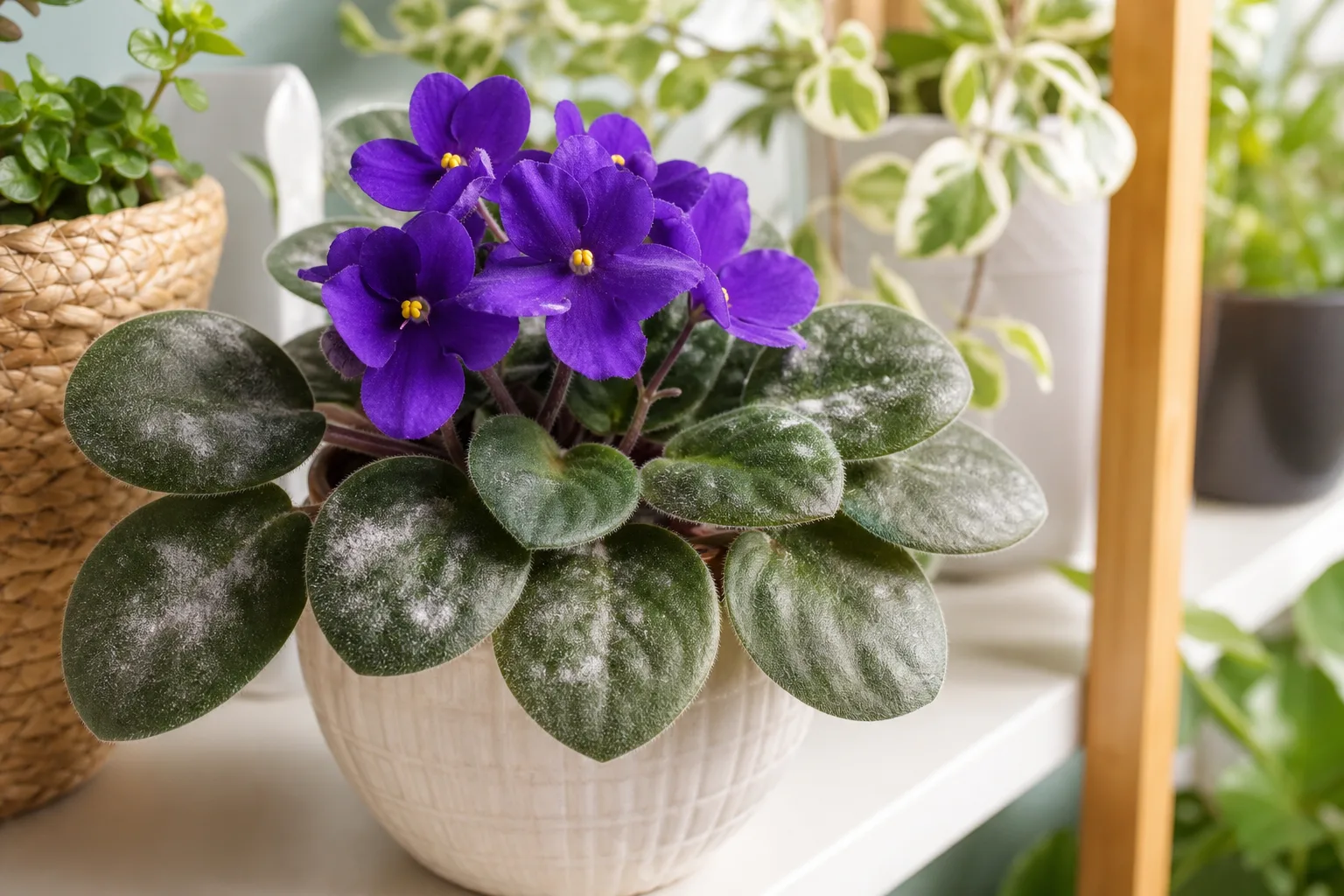
White Spots on African Violet: Causes, Checks & Fixes
This guide covers white spots on African Violet. See also the general White Spots guide, watering, and light pages for this plant.
White Spots on African Violet: Causes, Checks & Fixes
Quick answer
White spots on African Violet velvet leaves are not one problem-they are a visual alarm that can mean powdery mildew, hard-water minerals, cold-water ring spots, mealybugs, or plain dust. Before you spray anything, rub one spot with a dry finger:
- Smears like flour and appears on several leaves → treat as powdery mildew: isolate, pinch affected tissue, and improve airflow.
- Feels gritty and sits only where water touched the leaf → minerals or cold-water damage; fix water quality and keep foliage dry.
- Cottony clumps tucked in leaf axils or the crown → mealybugs; dab with alcohol, do not mist.
On Saintpaulia, fuzzy leaf surfaces trap moisture and show every splash-so the first fix is almost always stop wetting leaves and bottom-water from a saucer with room-temperature water.
What white spots look like on African Violet
African Violet leaves are covered in fine hairs that hold water droplets and make white marks unusually visible. The pattern matters more than the color alone.
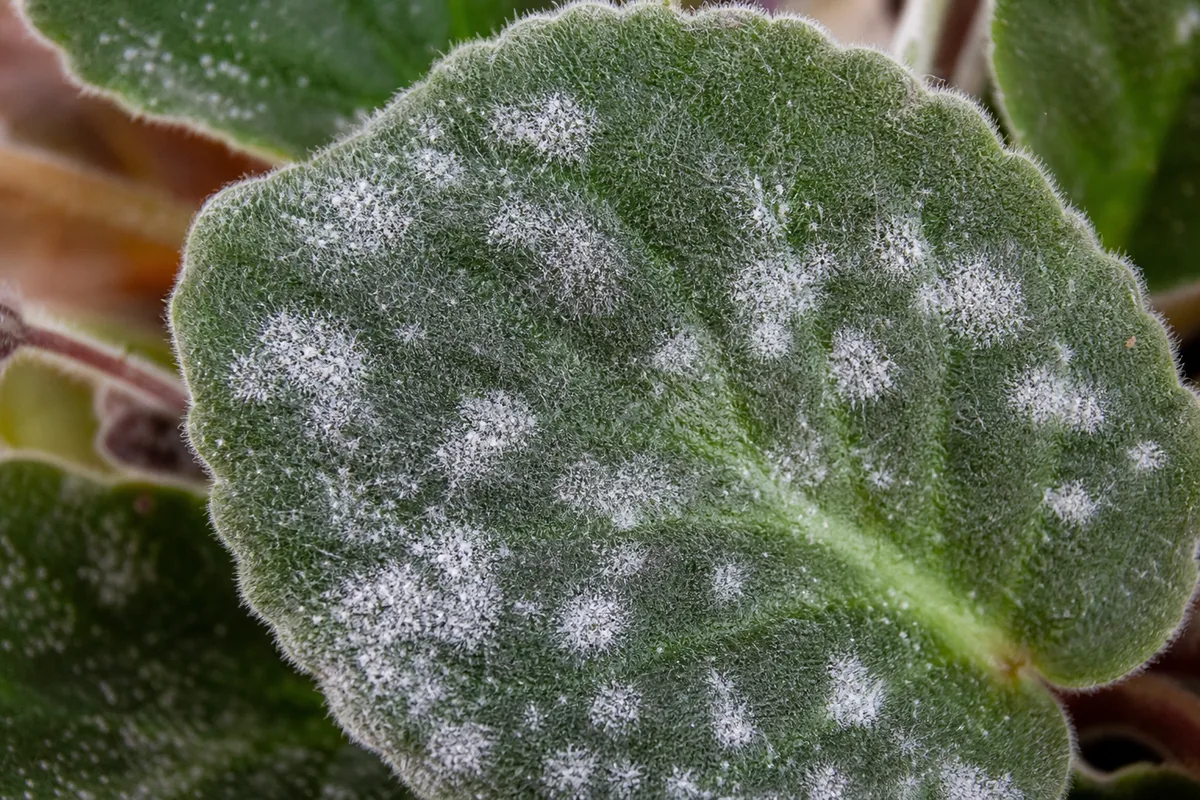
White powdery mildew patches on African violet velvet leaf surfaces - the coating smears when rubbed and can spread to neighboring tissue within days.
Powdery mildew
A white powdery substance may appear on leaves, petioles, petals, or flower stems. Spots often start small and circular, then merge into a dusty mat. On dark blossoms the coating is easier to see than on pale varieties, even though white-flowered plants can be slightly more susceptible. Unlike dust, the coating partially wipes but leaves a faded patch and returns within days on neighboring tissue.
Mineral deposits from hard water
Chalky white crust appears only on areas that got wet-splash zones from overhead watering, misting habits, or droplets that rolled off the pot rim. The deposit feels gritty, does not spread to dry leaves, and stays in the same place week after week. This overlaps with salt buildup when white grit concentrates on the pot rim and lower leaves resting against it.
Cold-water ring spots
Pale tan or yellowish ring-shaped marks form when cold water touches relatively warm velvet leaves. Damage is permanent on that tissue and follows the splash pattern, not random spread across the rosette.
Mealybugs and other pest lookalikes
Waxy white cotton clusters in leaf axils, along petioles, or inside the crown are insects, not fungus. They may sit still while mildew dust spreads evenly across leaf faces. Thrips cause silvery stippling and black specks rather than floury patches-check for scrape marks if spots look metallic, not powdery.
Why African Violet gets white spots
Winter humidity and still air favor mildew
Outbreaks of powdery mildew on houseplants typically occur in winter or early spring when heating dries room air unevenly, plants cluster on windowsills, and air circulation drops. African violets, begonias, ivy, jade, and kalanchoe are susceptible indoors. Crowded shelves let spores move pot to pot without you noticing.
Bottom-watering culture still leaves splash risk
Most growers water from below to protect fuzzy foliage, which is correct-but accidental top splashes during feeding, wick reservoir overflow, or saucer slosh still deposits minerals. Wick and self-watering systems keep mix evenly moist yet do not leach salts that accumulate in the soil; minerals rise to the surface and can creep onto leaf bases.
Cold water and fridge habits
Room-temperature water is non-negotiable on African Violet overview. If cold water touches relatively warm leaves, it will cause yellowish spots or streaks on the upper leaf surfaces-ring spots that look like white or tan patches and never heal on affected tissue.
Pests hide where you do not look during watering
Mealybugs nest in the tight rosette center-the zone you skip when you only fill a saucer. A new purchase or crowded gesneriad collection can introduce insects that mimic white dust until you lift inner leaves.
How to confirm the cause
Work through these checks in order before choosing a treatment path.
Rub test: powder vs. grit vs. cotton
- Dry-finger rub - Mildew smears and may leave a thin film; mineral crust resists and feels sandy; mealybugs lift as distinct waxy beads.
- Spread test - Watch the same leaf for one week. Mildew expands to new surfaces; mineral spots stay fixed; mealybugs grow cottony clusters in axils.
- Location check - Splash-zone-only marks point to water chemistry or cold water; crown-centered cotton points to insects.
- Neighbor scan - Mildew and mealybugs often appear on nearby streptocarpus, gloxinias, or other gesneriads on the same shelf.
Symptom lookalike comparison
| What you see | More likely cause | Quick check |
|---|---|---|
| Floury dust spreading across leaf faces | Powdery mildew | Smears dry; new leaves affected within days |
| Chalky crust only on wet areas | Hard-water minerals | Gritty; does not spread to dry foliage |
| Tan or yellow rings after watering | Cold-water ring spot | Follows splash pattern; permanent on that leaf |
| Cottony clumps in axils or crown | Mealybugs | Crushes pink; sticky honeydew nearby |
| Silvery specks + black frass | Thrips | Scrape marks on leaf surface |
| White crust on pot rim + margin burn | Salt buildup | Gritty rim ring; contact burn on lower leaves |
| Loose dust on upper leaf only | Household dust | Wipes clean; no return unless dust resets |
If mildew is confirmed and patches keep spreading despite cultural fixes, continue with the dedicated powdery mildew guide for fungicide escalation and gesneriad isolation detail.
First fix for African Violet
Pick one path based on your rub test-do not spray, leach, and alcohol-treat on day one.
If mildew is most likely
Isolate the plant, pinch off leaves and flowers with active powder, and discard them in the trash-not the compost pile. Increase spacing between pots and run gentle room airflow. Altering the indoor environment is the best way to control powdery mildew on houseplants: more space, a small fan, and dry foliage beat spraying alone. Bottom-water only and pause fertilizer until new center leaves open clean.
If patches persist after one to two weeks of cultural control, test diluted neem oil or a labeled houseplant fungicide on one outer leaf first-velvet foliage can react under strong light. Spray leaf surfaces only; keep product out of the crown. See the powdery mildew deep-dive before repeated chemical applications.
If minerals or cold-water rings fit
Switch to room-temperature distilled, rainwater, or filtered water if tap water is hard. Stop misting and overhead watering permanently on this species. Gently dab existing crust with a barely damp soft cloth if it bothers you cosmetically-do not scrub. For chronic rim crust from wick or bottom-watering routines, top-flush the mix periodically and review the salt-build-up guide.
If mealybugs fit
Move the plant away from the collection and dab every visible insect with a cotton swab dipped in rubbing alcohol mixed with an equal amount of water. Inspect the crown with a magnifier; repeat every few days. Do not shower the rosette. Full treatment steps live on the mealybugs page.
Recovery timeline
Cultural mildew control often stops spread within one to two weeks; clean new leaves tell you the environment is right. Mineral and cold-water marks are permanent on old tissue-judge success by whether new growth stays spot-free. Mealybug recovery takes longer: expect two to four weeks of repeated alcohol passes before honeydew stops and center leaves enlarge normally.
Heavily coated or ring-damaged outer leaves rarely look perfect again. Remove them once the cause is controlled so the rosette channels energy into fresh center growth.
What not to do
Do not mist African Violet leaves to “wash off” mildew-do not mist plants and avoid wetting the leaves when watering; wet velvet spreads spores and invites crown rot. Do not top-water with cold tap water from the fridge; ring spots are permanent. Do not compost infected leaves indoors. Do not spray neem or fungicide across the whole plant without a test leaf-fuzzy foliage burns easily under grow lights. Do not assume every white mark is mildew and reach for chemicals when a rub test would have pointed to minerals or mealybugs.
How to prevent white spots next time
Bottom-water from a saucer and keep foliage dry during every feed and flush. Keep plants in well-ventilated areas and avoid overcrowding, especially in winter when gesneriads crowd on windowsills. Use room-temperature water; soften or filter if mineral crust returns after every watering cycle. Quarantine new violets for two weeks before placing them beside a collection-mealybugs and mildew both travel on shared shelves.
If you wick-water, top-flush occasionally to leach minerals and avoid community reservoirs that can spread soil pests between pots. Align routine care with the African Violet overview and watering guide so prevention stays consistent.
When to worry
Escalate when powdery patches cover most of the rosette despite isolation and airflow changes, when white cotton spreads to multiple plants in a gesneriad collection, or when new center leaves stay tiny and distorted after you have ruled out mites and salts. Chronic indoor mildew that returns every humid season may need a local extension office review of your room conditions-not another round of untested sprays on velvet leaves.
When to use this page vs other African Violet guides
- African Violet watering guide - Use for routine moisture checks before assuming white spots is the main issue.
- African Violet problems hub - Browse all 52 common issues on this species.
- Mealybugs on African Violet - Different entry point when symptoms overlap with white spots.
- Powdery Mildew on African Violet - Different entry point when symptoms overlap with white spots.
- Black Spots on African Violet - Different entry point when symptoms overlap with white spots.