Thrips on African Violet: Causes, Checks & Fixes
Quick answer
Thrips on African Violet usually show up first as yellow pollen dust and distorted blooms. First step: remove every open flower and bud, isolate the plant, then confirm with a tap test before starting weekly labeled treatment.
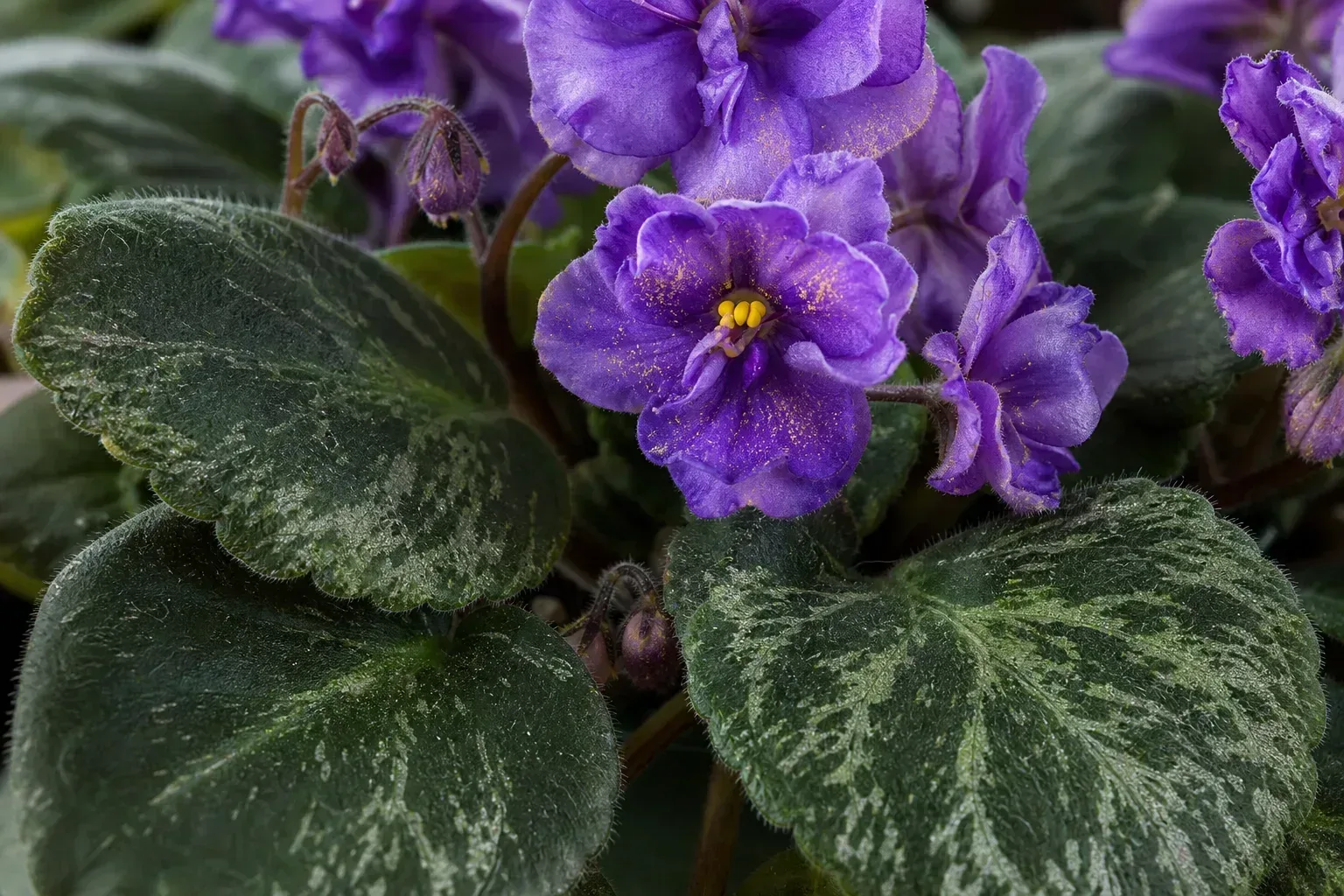
Thrips on African Violet: Causes, Checks & Fixes
This guide covers thrips on African Violet. See also the general Thrips guide, watering, and light pages for this plant.
Thrips on African Violet: Causes, Checks & Fixes
Quick answer
Thrips on African Violet are tiny insects that feed in blooms and on leaf surfaces, often leaving yellow pollen dust on petals and silver-gray streaks on foliage. Thrips are a common pest for African violets and are usually hard to see until damage is already visible.
First step: remove every open flower and bud, then isolate the plant. Blooms are the main feeding and breeding zone on African Violet-leaving them on while you spray wastes treatment and lets thrips keep reproducing inside buds you cannot coat evenly.
Do not shower fuzzy leaves or soak the crown on day one. African Violet foliage marks easily when wet, and water pooling in the rosette invites crown rot-a worse emergency than thrips alone.
First 24 hours: what to do now
Use this sequence before you buy or mix any spray:
- Disbud completely. Snip every open flower and every bud. Bag the debris and discard it outside the collection area-do not compost infested blooms.
- Isolate the violet. Move it to another room or a closed shelf away from neighbors. Thrips adults fly and walk between pots on shared stands.
- Run the tap test. Hold white paper under an open bloom (from a neighbor plant if you already removed yours) or tap leaf clusters over paper. Tiny fast-moving insects about 1/16 inch confirm thrips.
- Inspect the whole stand. Check every African Violet on the same shelf for pollen dust, streaked blooms, or silver leaf undersides-even plants that look fine from above.
- Hang one sticky trap at canopy height near the isolated plant. Note the date and any insects caught.
- Do not repot, fertilize, or bottom-water heavily into the crown on the same day. Stress plus wet foliage makes recovery harder.
If the tap test is negative but you see pollen dust on a neighbor, treat the stand as exposed and continue monitoring for 48 hours before assuming you are clear.
Why thrips show up first in blooms
African Violet culture makes blooms the early warning system-and the hardest place to treat. Growers bottom-water to keep fuzzy leaves dry, so routine care often skips close bloom inspection. Thrips exploit that gap.
Blooms are softer and more attractive than mature leaves. Thrips thrive on the flowers and leaves of African Violets, especially leaf undersides and closed buds. They feed by rasping plant tissue and sucking cell contents, which explains the silvered, scarred look on damaged tissue.
Entry routes are predictable. New plants from a show or shop, cut flowers on the same windowsill, and summer airflow through open windows are the usual sources. Banded greenhouse thrips (Hercinothrips femoralis) are commonly associated with African violets in indoor collections.
Small size hides the pest. Adults are about 1/16 inch, yellowish to blackish, and easier to detect after tapping or blowing on blooms. Their narrow bodies fit inside tight crowns and unopened buds where sprays miss unless you plan for those sites.
Why African Violet is different from generic houseplant advice: disbudding is not optional here. On a foliage-heavy philodendron you might treat leaves alone; on African Violet, blooms harbor the breeding population. Crown moisture risk also limits how aggressively you can spray fuzzy rosettes-see the treatment section below.
What thrips look like on African Violet
The first clue is often a light yellow powder on petals: pollen spilled from anthers as thrips feed, not normal shed from a mature bloom. Flowers may streak, fade, collapse early, or open smaller than usual.
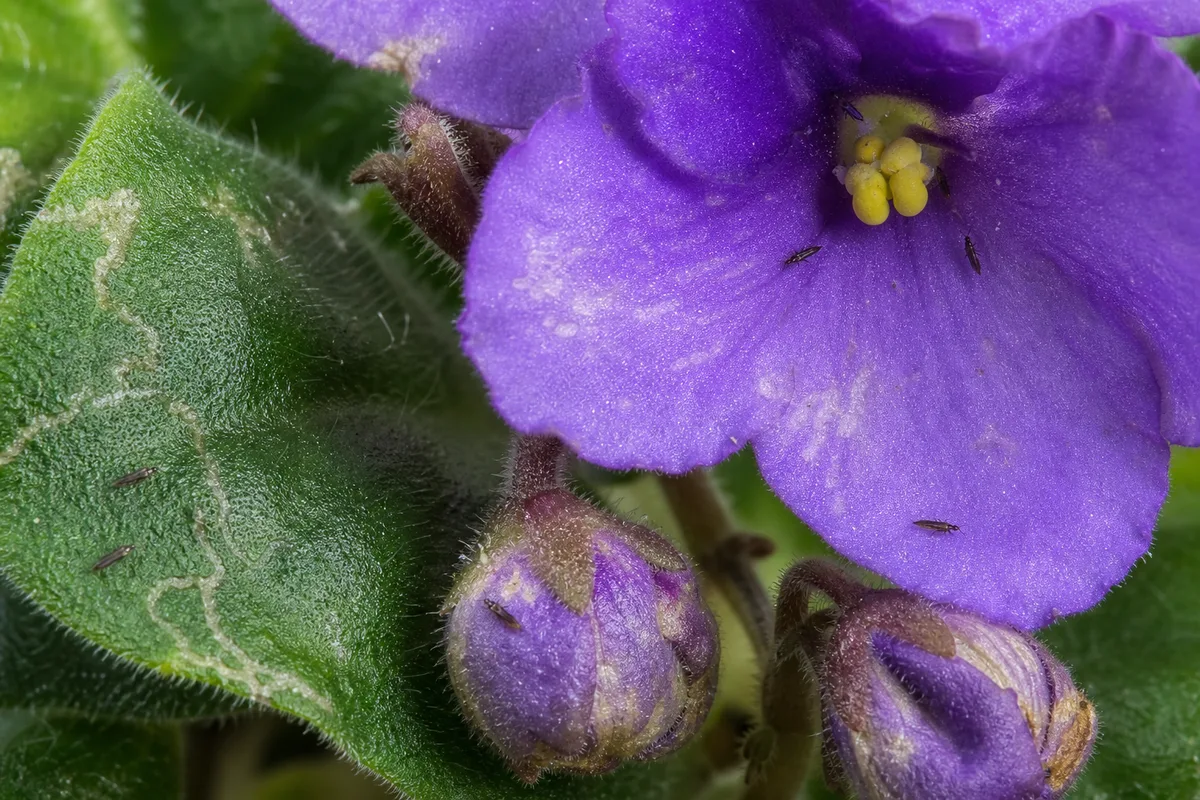
Thrips symptoms on African Violet - compare with healthy tissue on the same plant.
On leaves, damage appears as silver or gray streaking where cells were scraped. Silvery spots on flowers and foliage are a typical thrips sign on African violets. You may also see tiny dark specks of waste near heavy feeding zones.
Adult thrips run quickly when disturbed. Larvae are pale and wingless and hide on undersides and in bud scales.
Documented case snapshot: three-week recovery arc
This pattern matches what growers report after following disbud-first treatment-not a guarantee, but a realistic checkpoint map:
| Week | What was visible | Action taken |
|---|---|---|
| Week 0 | Yellow pollen dust on two open blooms; silver streaks on two inner leaf undersides | All buds removed; plant isolated; insecticidal soap applied to undersides and crown edges |
| Week 1 | No blooms left; old silver streaks unchanged; sticky trap caught three adults | Second soap application; neighbor violets on same shelf treated preventively |
| Week 2 | Tap test negative; one new bud nub showed no dust when inspected with a lens | Third application; trap counts falling |
| Week 3 | New leaves opening without fresh silvering; first clean bud swelling | Returned to stand with trap still monitoring; weekly bloom checks resumed |
Damaged petals and scarred leaves from week 0 never healed-they were replaced by clean new tissue. That is normal success, not treatment failure.
How to confirm thrips
Work through these checks in order so you do not treat the wrong pest:
- Tap test. Hold white paper under open flowers or the crown. Tap or blow gently. Moving specks confirm active thrips.
- Underside streak check. Look for silver-gray streaks on the bottom surface of inner leaves-the combination of pollen dust plus underside streaks is a strong diagnostic pair on African Violet.
- Bloom life check. Blotchy petals, shortened bloom duration, or buds that blast before opening alongside dust or streaks fit thrips better than ordinary aging.
- Sticky trap catch. Blue or yellow sticky traps help detect flying thrips indoors. Adults on the card support the diagnosis even when you miss them on the plant.
- Neighbor scan. If one violet on a shelf has pollen dust, inspect every pot on that shelf before treating only the symptomatic plant.
Confirmed diagnosis - pollen dust or silver streaks plus moving specks on white paper or adults on a trap. Suspected - streaks or dust without a positive tap may need repeat tests on three separate mornings; cool thrips move slowly.
Thrips vs lookalikes on African Violet
| What you see | Likely cause | Key check |
|---|---|---|
| Yellow pollen dust on petals; silver underside streaks | Thrips | Tap test shows moving specks |
| Cottony white masses in crown or leaf axils | Mealybugs | Clusters stay put; crush pink on swab |
| Sticky honeydew on leaves; soft green bumps on buds | Aphids | Visible colonies without magnification |
| Fine webbing; stippled older leaves | Spider mites | Mites on undersides; dry air stress |
| Soil-level gnats; no pollen dust on blooms | Fungus gnats | Insects fly from mix, not from flowers |
| Stunted center growth; tight crown; no silver streaks | Cyclamen mites | Requires magnification; see extension ID help |
If pollen dust and flower streaking are absent, pause before treating for thrips and re-check for these alternatives.
Treatment plan by outbreak severity
Match your response to how far thrips have spread. All paths start with complete disbudding and isolation.
| Severity | Signs | First actions | Treatment intensity |
|---|---|---|---|
| Early - one plant | Pollen dust or streaks on one violet; neighbors look clean | Disbud, isolate, tap test confirm | Insecticidal soap on undersides and crown edges; weekly repeat × 3; one sticky trap |
| Moderate - same shelf | Two or more violets with dust, streaks, or trap catches | Disbud every affected plant; group isolate if possible | Treat every violet on that shelf, not only symptomatic ones; thrips spread quickly between pots |
| Heavy - collection-wide | Fresh damage on new blooms after prior sprays; traps stay busy | Full collection disbud; separate clean from exposed | Spinosad or labeled houseplant product after soap cycle; strict weekly intervals; consider discarding crowns that stay soft |
One-plant early infestation
After disbudding and isolation, apply insecticidal soap to leaf undersides, petiole bases, and crown edges where thrips cluster. Insecticidal soaps only work on direct contact and have no residual effect-coverage matters more than product strength.
- Use a commercial labeled soap, not homemade dish soap, which can burn fuzzy African Violet leaves.
- Test one leaf and wait 24 hours before full application.
- Keep spray out of the crown center; mist undersides and let foliage dry before returning the plant to normal light.
- Repeat weekly for at least three cycles to catch newly hatched larvae. Optimara recommends follow-up sprays at seven-day intervals after the first application.
Multi-plant spread
When more than one violet on a stand shows symptoms-or one shows symptoms and others share the same airspace-treat the whole group. Mobile adults do not respect pot boundaries.
Work plant by plant: disbud, spray undersides, move to a holding area. Do not return any plant to the main collection until tap tests and traps stay quiet for two weeks across the treated group.
Crown and foliage safety during sprays
African Violet leaves spot when cold water hits warm fuzzy tissue, and water sitting in the rosette promotes rot. Spray in morning or evening when the room is moderate. Tilt pots slightly so runoff does not pool in the crown. If you use bottom-watering normally, keep that routine but avoid splashing the center until foliage is fully dry.
After 3 failed cycles: escalation
Escalate when, after three weekly treatments at labeled intervals with complete disbudding and thorough underside coverage:
- fresh pollen dust appears on any new bud
- new leaves keep silvering
- sticky trap counts rise instead of fall
- multiple plants relapse after temporary improvement
At that point:
- Reidentify the pest with a hand lens or extension office-cyclamen mites and thrips need different approaches.
- Switch to spinosad or another labeled product approved for thrips on ornamentals if soap alone failed. Spinosad is listed for thrips control on houseplants and often works better than soaps alone when repeated contact sprays underperform.
- Tighten isolation-separate clean plants from exposed plants physically, not just by a few inches.
- Contact your local cooperative extension office for region-specific product rotation guidance.
- Consider discarding individual plants with soft crowns, severe leaf loss, or repeated failure when the rest of the collection is at risk. A firm crown with scarred but functional leaves is usually worth saving.
Recovery timeline and success checks
Expect a bloom pause after disbudding, even when treatment is working. Damaged petals and scarred leaves do not heal; success is measured by clean new growth. Injured tissue stays damaged until it drops or is pruned and replaced by new growth.
| Phase | What to expect | Success signal |
|---|---|---|
| Days 1–3 | No blooms; old streaks unchanged | Isolation complete; first spray dry without leaf spotting |
| Week 1 | Trap may still catch adults | No new silver streaks on the newest inner leaf |
| Week 2–3 | First bud nubs may appear | Tap tests negative; trap counts dropping |
| Week 4+ | New blooms may open | Clean petals without pollen dust; weekly checks stay clear |
Failure looks like fresh pollen dust on every new bud, silvering on every emerging leaf after three weekly cycles, or spread to plants that were never treated. That is when escalation-not another single spray-is the right move.
What not to do
- Leave blooms on while treating. Buds shelter thrips and hold pollen for reinfestation.
- Stop after one spray. Thrips eggs hatch in cycles; one application rarely clears a population.
- Soak the crown. Water pooling in the rosette risks crown rot on a plant already under stress.
- Treat only the visibly affected pot when neighbors share a shelf or window.
- Rotate random products every few days. Consistency and repeat timing at label intervals matter more than switching actives mid-cycle.
- Compost removed blooms. Bag and discard infested flowers outside the growing area.
Prevention routine
Before buying, tap or blow gently on leaves to disturb hidden thrips. Quarantine new violets for at least two weeks before placing them into your main stand.
Keep a weekly flower check in your grooming routine-even when the plant is between bloom cycles, inspect inner leaves and trap cards. Blue or yellow sticky traps are recommended for detecting flying thrips indoors. Pair traps with bloom inspection so you catch problems before visible flower damage spreads across the collection.
Align prevention with sound culture from the African violet overview and watering guide-healthy violets recover faster, but prevention here is really about early detection in blooms, not more humidity or fertilizer.
Related African Violet guides
- African violet overview - light, watering, and bloom culture basics
- Mealybugs on African Violet - cottony crown clusters without pollen dust
- Aphids on African Violet - sticky honeydew and soft bud clusters
- Spider mites on African Violet - stippling and webbing on older leaves
- Crown rot on African Violet - soft rosette center after wet crown sprays
- African violet fertilizer - hold feed until new growth looks normal after pest stress
Before you spray again
Yellow pollen dust on petals means disbud first, confirm with a tap test, then treat on a weekly schedule-not a one-time soap mist with blooms still attached. Silver streaks without any blooms left mean keep spraying undersides and watching traps, not assuming the pest is gone because flowers are gone.