African Violet Pruning: When, How, and What to Cut First
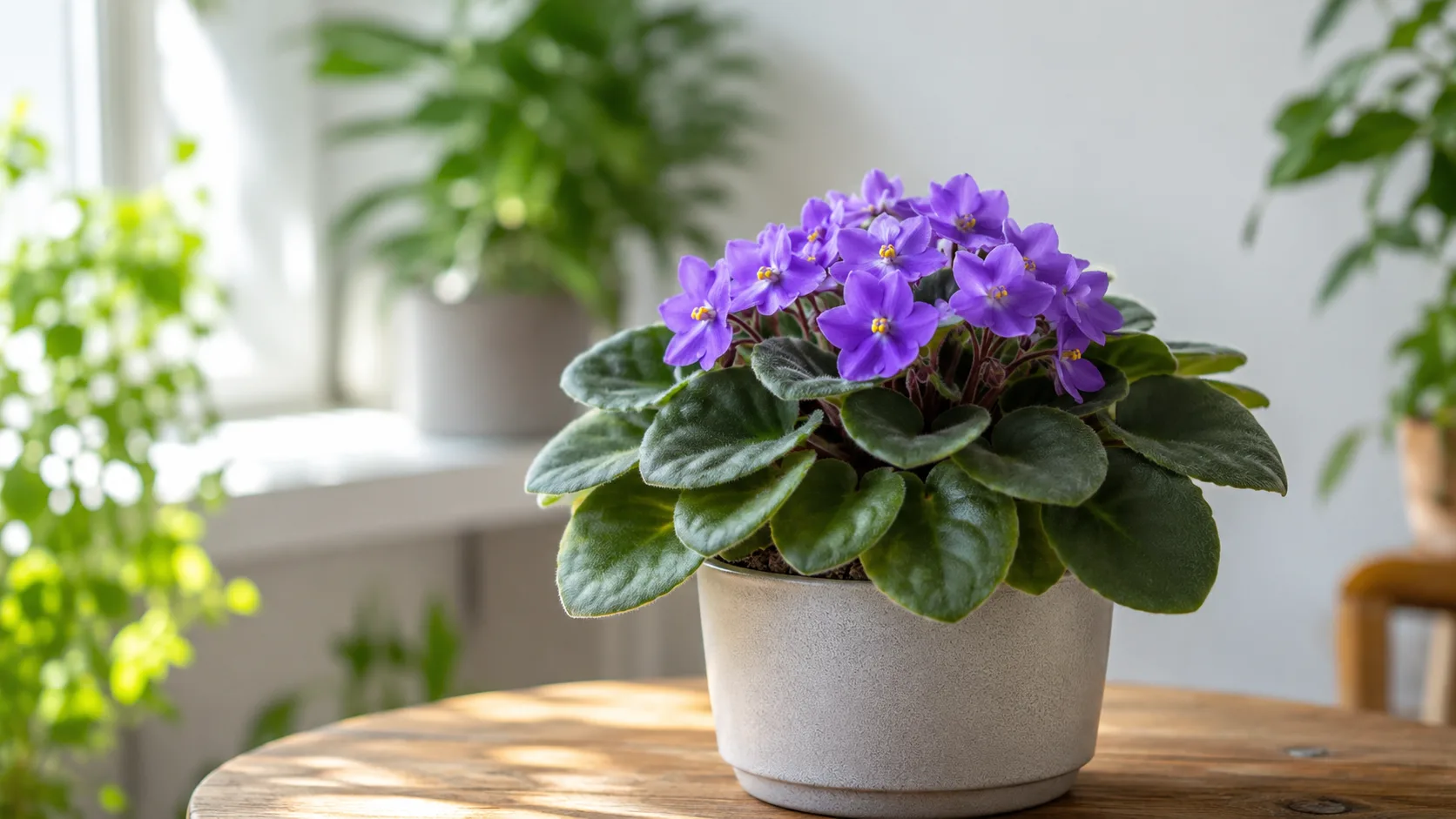
African Violet Pruning: When, How, and What to Cut First
African Violet Pruning: When, How, and What to Cut First
Quick Answer
African violet pruning is regular grooming, not a dramatic cutback. Start by removing spent flowers and finished bloom stalks with clean small scissors or tweezers. Then take off yellow, damaged, or badly placed lower leaves at the petiole base. On standard single-crown rosettes, remove suckers - side shoots forming a second crown - while they are still small. Protect the central crown at all times; damage to the growing point can stop flowering until a new crown forms.
Unlike vining or woody houseplants, African violets (Streptocarpus sect. Saintpaulia) grow from one compact rosette. The Royal Horticultural Society notes that routine care involves removing fading leaves and spent flower stems at the base, and that no other pruning or training is normally required.
When to Groom an African Violet
Groom when there is something specific to remove - not on a fixed seasonal calendar. Indoor African violets under steady light can bloom and shed old leaves year-round, so maintenance follows plant condition rather than outdoor pruning seasons.
A light inspection every one to two weeks is enough for most plants. The African Violet Society of America recommends checking each plant closely for spent flowers, small leaves, yellowed leaves, and suckers, then removing them as needed.
Deadhead as soon as individual blooms fade. Remove yellow lower leaves when the color change is clear and the leaf is no longer firm. Remove suckers while they are tiny, before they develop into a competing crown.
Signs the Plant Needs Attention
Look from above and from the side. Common grooming triggers include:
- Limp, brown, or papery spent flowers still attached to stalks
- Bare bloom stalks with no buds remaining
- Yellow or soft leaves on the lowest row
- Torn, creased, or pest-scarred leaves
- Small clustered side growth that looks like a miniature plant (a sucker)
These are normal maintenance signals. A full, overlapping rosette is healthy - African violets naturally grow in close layers, and the outer leaves are the plant’s energy system.
When to Hold Off
Delay cosmetic grooming if the plant is clearly stressed unless you are removing dead, diseased, or rotting tissue. A limp plant in wet soil may have root rot on African Violet; cutting healthy leaves will not fix overwatering on African Violet or poor drainage. The University of Minnesota Extension notes that wilted African violets in moist soil often suffer from root problems linked to overwatering.
Also avoid heavy leaf removal during active crown rot, severe pest infestation, or immediately after a cold shock. Fix the underlying condition first, then groom once the plant stabilizes.
What Grooming Does - and Does Not Do
Correct grooming keeps the rosette clean, open, and balanced. Removing spent blooms stops the plant from maintaining old flower structures. Taking off yellow lower leaves removes tissue that no longer contributes energy. Removing suckers on single-crown plants preserves symmetry and prevents a second crown from competing for light and nutrients.
Pruning does not guarantee more flowers. If the plant has weak light, cold drafts, soggy soil, or fertilizer imbalance, grooming alone will not restore bloom. The African Violet Society of America explains that suckers sap energy from the primary crown and reduce flowering while still attached.
What grooming can improve: appearance, airflow around crowded growth, easier pest inspection, and rosette symmetry. What it cannot fix: chronic no-bloom from poor light, a long exposed neck, or root failure.
What to Inspect Before You Cut
Before touching scissors, inspect these areas:
- The crown - the central growing point where new leaves emerge. It must stay dry, intact, and unbruised.
- Bloom stalks - follow each stalk down to its base. Note whether buds remain.
- The lowest leaf row - older leaves yellow here first as the plant renews from the center.
- Leaf axils - side growth between leaves may be a sucker or an emerging bloom stalk.
- The stem below the leaves - a visible bare “neck” means African Violet repotting guide correction, not more leaf stripping.
Turn the pot as you work. Most crown damage happens when someone pulls from one side without seeing where the stalk or petiole joins the plant.
The First Cut to Make
First, remove only dead, damaged, or clearly spent material with clean tools.
That means faded individual blooms, finished bloom stalks with no buds left, yellow or mushy lower leaves, and obviously broken tissue. Do not start by removing healthy leaves, pinching the crown, or tackling suckers before the easy cleanup is done.
This order matters because spent flowers and decaying leaves are low-risk removals that immediately improve inspection. Once the plant is clean, you can decide whether sucker removal or shape correction is actually needed.
How to Deadhead African Violet Blooms
Deadheading is the safest and most common form of African violet pruning. Old flowers turn limp, dry, or brown. Leaving them in place makes the plant look tired and can trap moisture against fuzzy leaves.
The RHS recommends removing fading flowers regularly and snipping the whole stem at the base once the last flowers on that stem have faded.
Removing Single Spent Flowers
When a bloom cluster still has opening buds, remove only the spent flower. Pinch or snip where the small flower stem meets the larger bloom stalk. Use fingers if the bloom releases easily; use fine scissors if it sits close to healthy buds.
Do not yank upward. Bloom stalks attach firmly, and a hard pull can snap the entire stalk or knock off unopened buds. After removal, lift fallen petals from leaf surfaces with tweezers rather than rubbing velvety foliage.
Removing Finished Bloom Stalks
Once every flower on a stalk has faded, remove the entire stalk at the base. Slide small pointed snips carefully into the rosette and cut as close to the origin as you can without scraping the crown. Dry, loose stalks may detach with a gentle side-to-side motion.
Do not leave stubs in the middle of a stalk or above the leaves. Clean base removal keeps the plant easier to inspect for new buds and suckers.
How to Remove Yellow and Damaged Leaves
African violets grow from the center outward, so the oldest leaves sit on the outer edge. Removing them is normal maintenance - but healthy leaves feed the plant, so the goal is selective removal, not thinning the rosette bare.
When removing a leaf, take the whole leaf and petiole back to the main stem. The African Violet Society of America notes that leaves and blossom stems can often be removed by rocking them side to side until they pull loose.
If a leaf resists, use clean snips near the petiole base. A clean cut beats tearing the crown or neck.
Yellow Lower Leaves
Yellow leaves usually appear on the bottom row as older foliage ages out. The African Violet Society of America recommends removing yellowing leaves because they no longer add strength to the plant.
Remove them once yellowing is clear and the leaf feels soft or limp. Waiting until the leaf collapses can leave decaying tissue near the soil line.
One yellow outer leaf is normal. Many yellow leaves at once, plus a soft crown or wet soil, point to watering, root, or light problems - pruning removes the symptom but not the cause.
Torn or Pest-Damaged Leaves
Remove leaves that are torn, badly creased, mushy, pest-scarred, or pressing awkwardly against the crown or pot rim. Minor spots from handling or cold water splashes do not require removal if the leaf is still firm and green.
Do not cut leaves in half for shape. Half leaves look unnatural, do not regrow cleanly, and leftover petiole stubs create clutter. If a leaf is unwanted, remove it whole at the base.
Healthy leaves removed during grooming can be saved for propagation. Smithsonian Gardens describes rooting African violet leaves with about one inch of petiole in a moist sand-and-vermiculite mix until plantlets form.
How to Remove Suckers
A sucker is a secondary crown - a side shoot that can grow into a full second plant. On standard single-crown African violets, suckers distort the rosette and compete with the main growing point for energy.
Remove suckers while they are small. Tiny suckers can often be scraped away with a fingernail, dull pencil, small knife, or sucker-removal tool. Larger suckers need careful separation so you do not gouge the mother crown.
Sucker vs Bloom Stalk
This is the most common beginner mistake. A bloom stalk rises as a stem that will carry buds. A sucker looks like a tiny plant with multiple small leaves forming a new growing point.
The African Violet Society of America offers a practical rule: if emerging growth has only two leaves, it may be a bloom stalk; once it has three or more leaves, it is definitely a sucker.
When growth is ambiguous, wait a few days. Buds round out on bloom stalks; suckers keep producing small leaves in a cluster.
Single-Crown vs Trailing Types
“Remove all suckers” applies to standard single-crown rosettes, not to every African violet. Trailing varieties are bred to form multiple crowns and a spreading shape. On a trailer, removing every side crown works against the plant’s natural habit.
The African Violet Society of America explains that trailers develop secondary crowns and that careful selection of which crowns to keep can improve overall form.
For single-crown plants: remove suckers early, keep one central growing point, and maintain an even leaf ring. For trailers: remove weak or inward-growing crowns, keep strong ones that fill the pot evenly, and step back to assess the whole plant.
Fixing a Bare Neck
A neck is the bare stem visible between the soil line and the lowest leaves. It forms as old lower leaves are removed and the crown grows upward. A short neck on an older plant is normal. A long neck makes the plant top-heavy and harder to water correctly.
Pruning alone cannot fix a leggy African violet. Groom spent growth and yellow leaves first, then repot the plant lower so the bare neck is buried in fresh mix while keeping the crown above the soil. Burying the crown invites rot; burying a firm healthy neck stabilizes the plant.
The RHS advises using a container only slightly larger than the rootball and warns that overly large pots can deter flowering.
Do not keep stripping lower leaves to make a necked plant look compact - that often lengthens the exposed stem further.
Tools and Sanitation
Use the smallest tool that gives control:
- Tweezers - spent petals, tiny debris near the crown
- Small pointed scissors or snips - bloom stalks and resistant petioles
- Fingers - spent blooms and loose dry stalks when they release easily
The University of Minnesota Extension recommends tweezers or a small pointed pruner for removing dead leaves and spent flowers.
Wipe blades with rubbing alcohol before use, especially if you recently trimmed a plant with pests or rot. Work in good light. Keep water out of the crown during grooming; if leaves were washed, blot moisture from the center afterward. The African Violet Society of America warns that water sitting in the crown can contribute to rot in cool or stagnant conditions.
Aftercare and Recovery
After routine grooming, return the plant to its normal spot with African Violet light guide and consistent bottom watering. Avoid cold water on leaves, harsh direct sun, or heavy fertilizer on a stressed plant. The University of Minnesota Extension recommends moistening dry potting mix with plain water before fertilizing to reduce root burn risk.
Most light grooming needs no special recovery period. The plant should look cleaner immediately, and new growth should continue from the crown within one to three weeks under good conditions.
Signs Grooming Worked
- Spent blooms and bare stalks are gone
- The rosette looks more even and open
- New leaves continue emerging from the center
- New bloom stalks appear within a few weeks on a healthy plant
- No bruising, softening, or collapse at the crown
Signs You Cut Too Much or Too Soon
- Crown feels soft, wet, or dark after grooming
- Many healthy leaves removed at once, leaving a sparse rosette
- Growth stalls for several weeks after heavy cleanup
- Bloom stalks removed by mistake, with no replacement buds forming
- Repeated yellowing continues despite aggressive leaf removal - a care problem, not a pruning problem
If the crown was damaged, stop grooming and focus on stable light, careful watering, and patience while the plant produces a new growing point.
Mistakes to Avoid
- Hard pruning the center - African violets are not shrubs. Never cut into the crown or remove large numbers of healthy leaves to force compactness.
- Manicuring leaf edges - trim whole leaves at the base instead of shaping with scissors.
- Leaving bloom stalk and petiole stubs - remove spent stalks and fading leaves at the base.
- Confusing pruning with bloom troubleshooting - long narrow leaves and no flowers often indicate insufficient light or cool temperatures, not a need for more leaf removal.
- Removing suckers on trailers - trailing types need multiple crowns; treat them differently from single-crown rosettes.
- Grooming a wet, rotting plant - fix root and soil problems before cosmetic work.
- Ignoring pests while trimming - mealybugs, aphids, and spider mites can distort new growth. Smithsonian Gardens recommends watching for insects, cottony secretions, and stunted new leaves.
Conclusion
African violet pruning is steady grooming: deadhead spent blooms, cut finished stalks at the base, remove yellow or damaged lower leaves, and control suckers on single-crown plants before they split the rosette. Use small clean tools, protect the crown, and match your approach to the plant type.
A well-groomed African violet does not look heavily pruned. It looks clean, balanced, and ready to bloom - with every unnecessary piece removed and the growing point left intact.
When to use this page vs other African Violet guides
- African Violet overview - Start here for whole-plant context before deep-diving this topic.
- African Violet problems hub - Jump to symptom-specific fix guides when this care topic does not resolve the issue.
- Leggy Growth on African Violet - Escalate here when pruning adjustments are not enough.
- Brown Tips on African Violet - Escalate here when pruning adjustments are not enough.